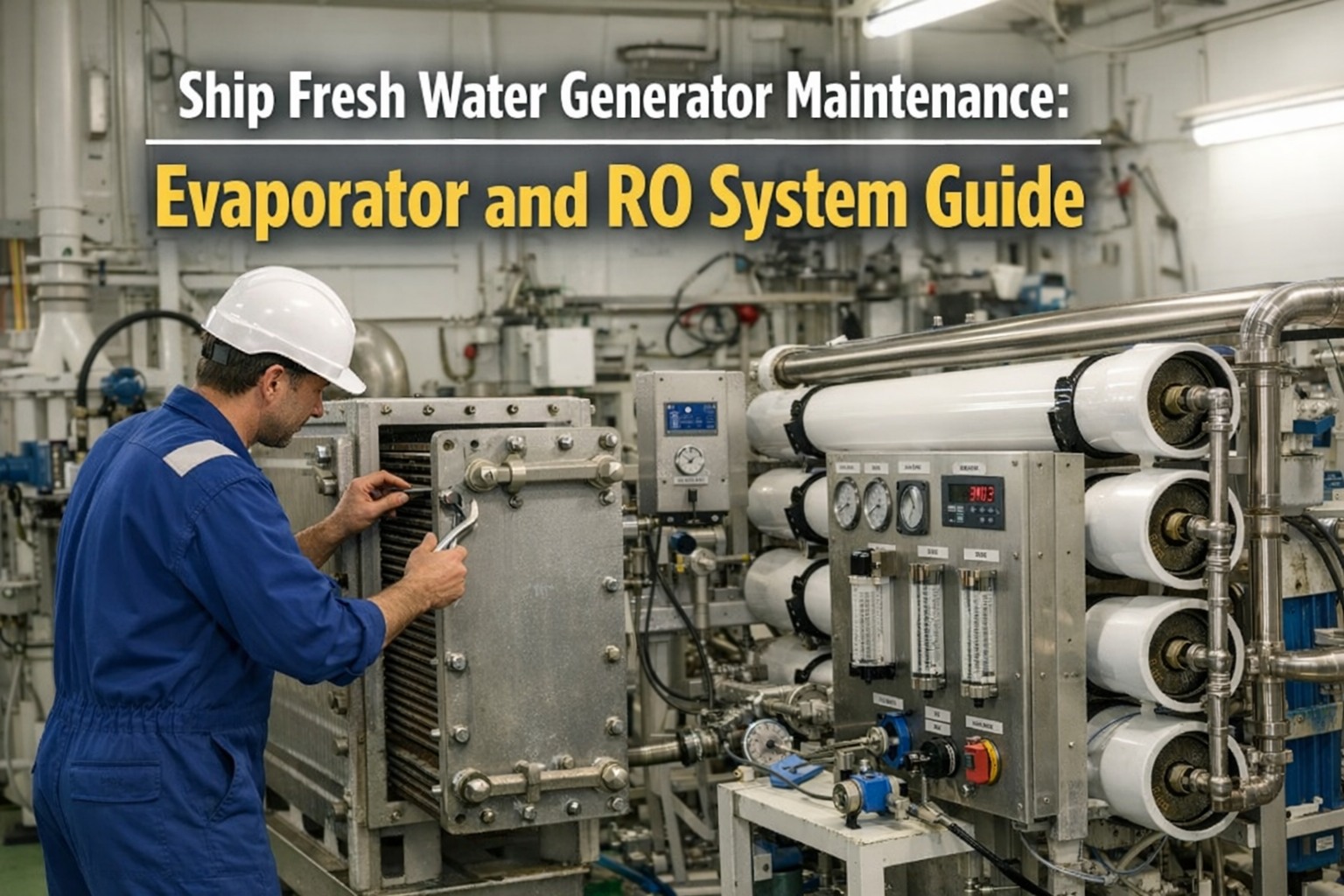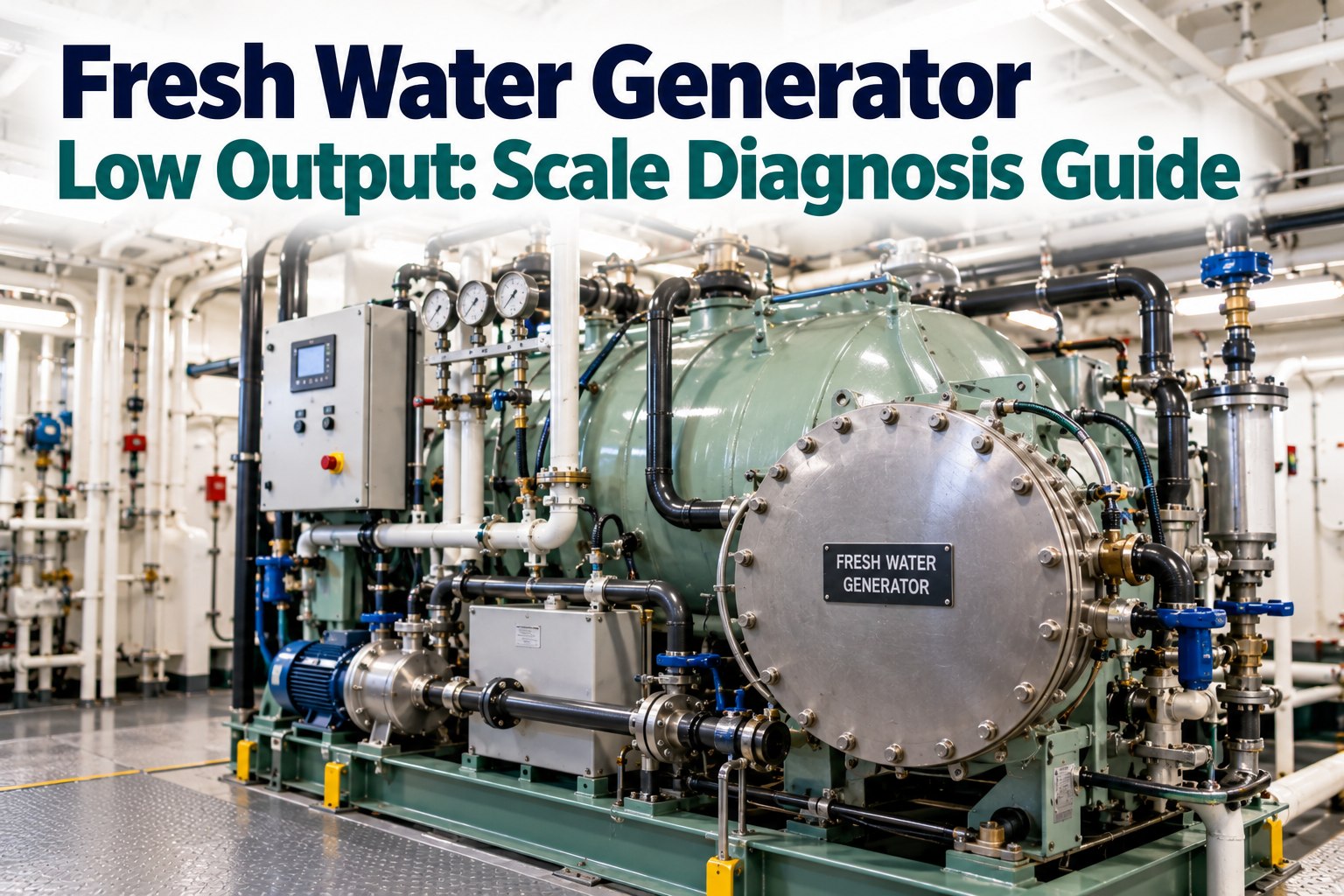
When the fresh water generator starts making less, the instinct is to open it up and clean the plates. Sometimes that is right. Just as often the cause is a worn ejector nozzle, a blocked feed orifice, warm seawater or an engine running at low load. This guide shows how to read the FWG's own gauges to find the cause, then descale properly when scale really is the problem. Log FWG readings free in Marine Inspection.
FWG low output: find the real cause before you open the evaporator
A vacuum fresh water generator is a balance of heat in, heat out and vacuum held. Scale upsets the first, fouling the second and a tired ejector the third. Each leaves a different fingerprint on the gauges.
Figures from Alfa Laval's JWP-26-C brochure and JWP-26 instruction troubleshooting. Your unit's manual sets its own values.
Fresh water generator low output: confirm it first
Before diagnosing anything, make sure output really has fallen and that the generator is being asked to do something it can. Four checks rule out most false alarms. For general upkeep, see our fresh water generator maintenance guide.
Time it into a pail
Water meters stick. Time the distillate into a 10 litre container and work out the real rate, as the maker's troubleshooting suggests.
Check the seawater temperature
Rated capacity is quoted at a set cooling water temperature (32°C for the JWP-26-C). Warmer sea means less condensing and less output.
Check the heat available
At low engine load, jacket water may arrive cooler or with less flow than the FWG needs. That is a heat shortage, not a fault.
Check the salinometer
If salinity is high, distillate goes back to the bilge or feed, so the tank fills slowly even when production is normal.
FWG low output diagnosis by symptom
Each common cause moves the readings in its own pattern. Compare today's figures with a log from when the unit was clean, and the pattern usually points at one place to look. See symptom trending in a demo.
| Likely cause | Heating water temperature fall across FWG | Evaporating temperature | Vacuum | Brine level / salinity | Look at |
|---|---|---|---|---|---|
| Scale on evaporator plates | ↓ smaller | ↓ lower | → normal | → normal | Evaporator plate stack, feed orifice |
| Fouled condenser (seawater side) | → or smaller | ↑ higher | ↓ weaker | → normal | Condenser plates, sea strainer |
| Low ejector pressure or worn nozzle | → | ↑ higher | ↓ weaker | ↑ brine rises; salinity may rise | Ejector pump, nozzles, overboard valve |
| Air leak into the shell | → | ↑ higher | ↓ weaker | → | Gaskets, cover joints, air test |
| Blocked feed orifice | ↓ smaller | → or higher | → | ↓ little brine | Orifice size and cleanliness |
| Not enough heating water | Inlet temperature or flow low | ↓ lower | → | → | Engine load, bypass valve setting |
Typical patterns for a single-stage vacuum FWG heated by jacket water; read them as pointers, not verdicts, and confirm against your maker's troubleshooting chart.
Evaporator scale: what it is and how to recognise it
Seawater carries calcium and magnesium salts that come out of solution as water boils away on the hot plate surface. Alfa Laval describes the deposits in fresh water generators as mainly carbonates, and an older test on an evaporator run with untreated seawater found the scale was about 91% calcium carbonate, with magnesium hydroxide, calcium sulphate and traces of silica and iron. Track cleaning intervals free.
What the scale was made of (untreated feed test)
Remainder: magnesium hydroxide, calcium sulphate hemihydrate, silica and iron oxide. Source: "Scale prevention in sea water evaporators", Virginia Tech archive.
Put a flake of scale in a little of your descaling acid. Carbonate scale fizzes and dissolves, so acid cleaning will work. A flake that sits there is something else, such as sulphate or silt, and needs mechanical cleaning or the maker's advice.
Know whether it is scale before the plates come out
Log heating water temperatures, vacuum, ejector pressure, brine level and output on every watch, and let the trend tell you which side of the FWG is in trouble.
Descaling the fresh water generator: chemical cleaning step by step
Alfa Laval's cleaning-in-place method circulates inhibited sulphamic or citric acid over the heat transfer surfaces without dismantling the unit. In one owner's case it stretched manual cleaning from about every two months to every six months or longer. Always follow the maker's manual and the chemical's data sheet.
Isolate and drain
Stop the unit, isolate heating water and seawater, drain and connect the circulating pump.
Degrease if needed
Oil films stop acid reaching the scale. Remove them first with an alkaline cleaner.
Circulate inhibited acid
Mix to the product's strength and temperature limit. One marine descaler, for example, is used at 10 to 20% and never above 40°C.
Vent and watch
Vent the circuit at its highest point to release gas. Hang a scale sample where it can be seen.
Judge the end point
When the sample has dissolved and fizzing has stopped, circulate a little longer. Top up if acid strength falls below half.
Rinse and neutralise
Rinse well, then circulate a weak alkaline solution to neutralise and passivate. Neutralise the drained effluent before disposal.
Leak test and restart
Pressure-test to the maker's limit (150 kPa for the JWP-26 leak test), restart and log a fresh clean baseline.
FWG vacuum loss and brine extraction problems
If the evaporating temperature rises while output falls, the vacuum side is usually to blame. The ejector does two jobs at once, pulling air and pulling brine, so one weak ejector produces both symptoms. Seawater supply problems often start further back, as our cooling water system guide explains.
Weak ejector
- Inlet pressure below 300 kPa (JWP-26): strainer, pump wear ring, impeller
- Nozzle worn or holding debris: clean or renew
- Back pressure above 60 kPa at the outlet: overboard valve and piping
Air leaks
- Vacuum will not build even with good ejector pressure
- Check cover gaskets, plate pack seals and sight glass joints
- Shell-and-tube units: air test at 0.05 MPa per the Sasakura manual
Brine not leaving
- Brine visible more than 20 mm up the sight glass means poor extraction
- Check the brine non-return valve and feed orifice size
- Left alone, brine carries over and salinity climbs
FWG performance log: the readings that spot scale early
Scale builds over weeks, so a single reading never shows it. The same few figures written down at the same load every day turn a slow decline into an obvious line on a chart. Pair the log with our engine room inspection checklist for the wider round.
| Reading | Why it matters | Warning sign |
|---|---|---|
| Heating water in and out | The temperature fall shows how much heat the plates pass | Fall shrinking at the same flow and load |
| Evaporating (shell) temperature | Links heat input and vacuum | Drifting away from the clean baseline |
| Vacuum | Shows ejector health and air tightness | Weaker than baseline |
| Ejector inlet and outlet pressure | Confirms the pump and overboard line | Inlet under maker's minimum; outlet too high |
| Seawater in and out of condenser | Shows condenser duty and sea temperature | Small rise across a fouled condenser |
| Brine sight glass level | Shows extraction | Level climbing |
| Output (meter, checked by pail) | The result everything else explains | Falling against the same conditions |
| Salinity | Guards water quality and boiler feed | Above the alarm point (2 ppm in the JWP-26 chart) |
Preventing scale and keeping distillate production steady
Most scale problems are made in normal running. A few habits keep the plates clean for longer and make every cleaning count. Keeping gaskets, nozzles and orifice plates on board is part of that, as covered in our critical spares guide.
Dose when the maker says
Run anti-scale dosing whenever the heating medium is above the maker's limit, and log the dosing rate with the readings.
Stay out of dirty water
Do not run the FWG in port, rivers or near the coast; contaminated feed fouls fast and risks the water quality.
Keep the feed right
Check the orifice size and cleanliness; too little feed concentrates the brine on the plates.
Clean on trend, not habit
Plan the next CIP when the heating water temperature fall starts to shrink, not on a fixed date after the problem arrives.
How Marine Inspection keeps the FWG making water
The difference between a planned descale and an emergency one is usually whether anyone noticed the trend. Marine Inspection turns watch readings into a picture the chief engineer can act on. Start your FWG trend free.
Illustrative example, not measured data.
Watch readings as numbers
Temperatures, vacuum, pressures and output logged on a phone in the engine room, offline, and trended automatically.
A clean baseline after every descale
The cleaning job closes with fresh reference readings, so the next decline is measured from a known point.
From trend to work order
A shrinking temperature fall or rising brine level raises a planned job with the right spares, before the tank runs low.
Fresh water generator low output and scale: FAQs
Why is my fresh water generator output low?
The common causes are scale on the evaporator plates, a fouled condenser, a weak ejector or air leak reducing vacuum, a blocked feed orifice, or simply too little heating water or too warm a sea. The gauges usually show which.
How do I know if the FWG is scaled up?
Output falls while vacuum stays normal, and the heating water leaves the evaporator warmer than it used to at the same flow. A flake of deposit that fizzes in acid confirms carbonate scale.
What acid is used to descale a fresh water generator?
Inhibited sulphamic acid or citric acid is the usual choice for cleaning in place. Follow the product's strength, temperature and contact-time limits, then rinse and neutralise.
Why does vacuum fall in a fresh water generator?
Usually low ejector water pressure, a worn or blocked ejector nozzle, high back pressure in the overboard line, or air leaking in through gaskets or joints.
Why is the FWG salinity high?
Brine not being extracted, a misfitted demister, a damaged gasket, a dirty salinometer electrode or a condenser leak. Running the unit too hard can also carry salt over.
How often should the FWG be descaled?
When the trend says so, rather than on a fixed date. With regular cleaning in place, one owner moved manual cleaning from about every two months to six months or more. See trend-based scheduling in a demo.
Keep the tank full by catching scale on the chart, not in the tank sounding
Watch readings, descaling jobs, clean baselines and spares on one record, so the next cleaning is planned and the generator keeps making water.