Oily Water Separator 15ppm Alarm Troubleshooting Guide
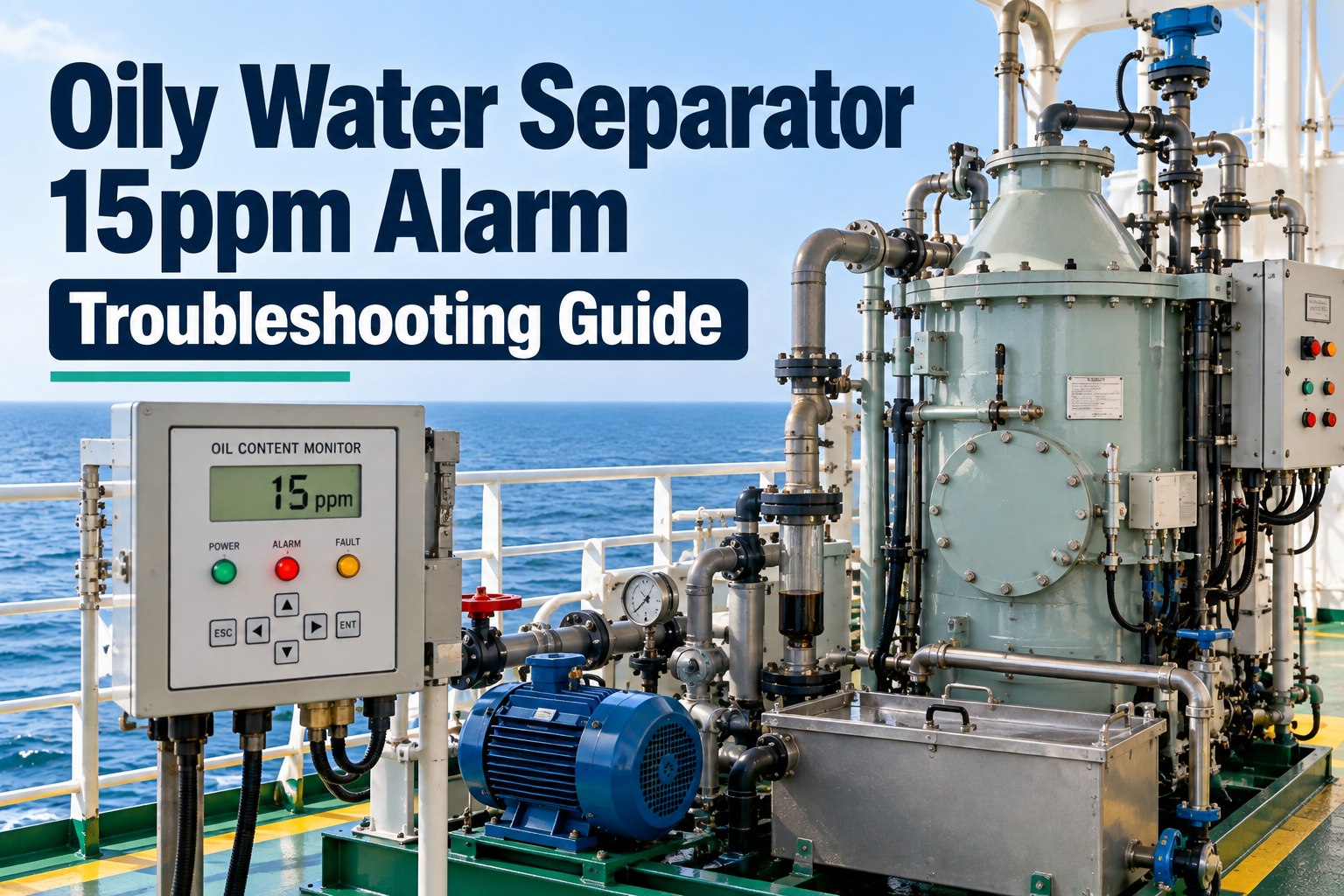
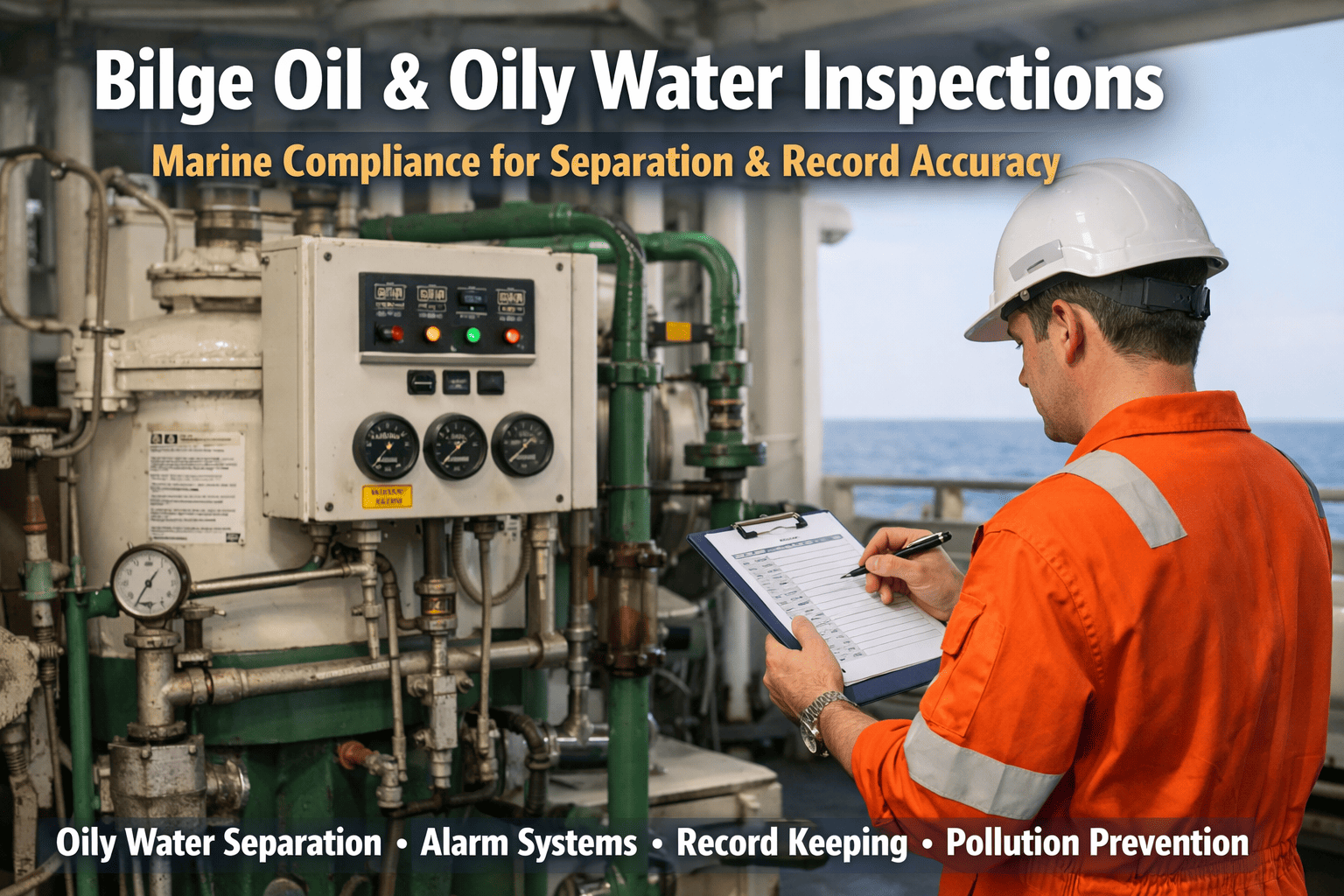
The 15 ppm alarm is the one piece of machinery on board that exists to stop you doing something. That makes it unlike every other fault you troubleshoot: the correct first assumption is not that the instrument is wrong, but that it is right. An oil content monitor that alarms has either detected oil in the effluent or lost the ability to see clearly, and only one of those two is a monitor fault. Working out which, in that order, is the whole job. Under MARPOL Annex I, Regulation 14, machinery space bilge water may only go overboard through a 15 ppm separator with an approved monitor, and under IMO resolution MEPC.107(49) that monitor must alarm within five seconds, divert the flow within twenty, and keep eighteen months of its own history on a recording device an inspector can read. This guide covers how to read the ppm trace before touching anything, a diagnostic order that separates real oil from a blind sensor, the five causes behind almost every persistent alarm, emulsion prevention, a maintenance schedule, and the Oil Record Book entries that have to match what the separator actually did. Start a free trial of Marine Inspection to log OWS runs, alarms and sludge disposal against the IOPP Certificate.
MARPOL Annex I Reg. 14 — IMO res. MEPC.107(49)
One path to the sea, and a monitor watching the last metre of it
Bilge water reaches the overboard valve through six stages. A persistent alarm is a fault in one of them — the diagnosis is a matter of finding which, in the right order.
There is no other outlet. Any hose, jumper or connection that puts bilge water past this line is a criminal offence, not a workaround — and the monitor’s own 18-month data record is usually what proves it happened.
Before diagnosing anything, it helps to know what the monitor is specified to achieve, because several “faults” are the equipment behaving exactly as designed.
15 ppmMaximum oil content of machinery space bilge water discharged from ships of 400 GT and above, with the ship en route and the equipment in operation. Special-area and Antarctic restrictions are tighter still.
5 secondsMaximum response time of the 15 ppm bilge alarm. If yours takes noticeably longer to react to a known sample, the instrument needs attention, not the separator.
20 secondsMaximum overall time from the effluent exceeding 15 ppm to the automatic stopping device having diverted the flow. The valve is part of the compliance case, not an accessory.
±5 ppmAccuracy limit for the alarm, checked against the maker’s instructions at IOPP Certificate renewal survey. The calibration certificate stays on board and must show the date of the last check.
18 monthsMinimum storage on the data recording device — date, time, alarm status and the operating status of the separator, displayable or printable for official inspection. Replacing the alarm unit does not erase that obligation.
Always alarmsThe alarm must activate whenever clean water is used for cleaning or zeroing. An alarm during a fresh-water flush is the instrument proving itself, not failing.
The one thing this guide will never help you do
There is no legitimate reason to bypass, restrict, dilute or otherwise defeat a 15 ppm monitor, and this guide does not cover how. Bypass arrangements and false Oil Record Book entries are prosecuted as crimes, not as pollution offences — typically against the individual engineers who operated or signed for them, with fines against the company and custodial sentences against crew in several jurisdictions. If the separator will not produce compliant effluent, the lawful answer is always the same: stop discharging, hold the water, and land it to a reception facility. A full bilge tank is an operational problem. A bypass is the end of a career.
Read the trace before you touch anything
Modern monitors log continuously, and the shape of the reading over a run tells you more than the alarm itself. Three patterns cover most cases, and each points somewhere different. See how run data and alarms are captured against each discharge so the pattern is there when you need it.
Three alarm patterns and what each one means
Indicative patterns. A steady low reading that alarms only on the flush is normal. A reading that climbs over an hour is usually the instrument losing its view; a reading that jumps within one or two samples is usually the water genuinely changing.
Diagnosing a persistent alarm, in order
The fresh-water flush is the single most useful test on the machine, because it separates a dirty effluent from a blind sensor in about a minute. Run it first, every time.
Alarm diagnosis — first branch decides everything after it
The five causes behind almost every persistent alarm
01
Measuring cell fouling
The monitor works optically: light passes through a sample and a detector reads what the oil does to it. An oily film, scale or biological growth on the cell glass dims that path and the instrument reports what it sees — high oil. This is the classic slow drift on the trace. Clean the cell and sleeve to the maker’s procedure with the specified cleaning agent, never with an abrasive, and confirm the zero afterwards. If the reading only falls with the cell physically out of the machine, the sample line is also suspect.
02
Emulsified bilge water
Emulsions are the hardest thing a separator faces and the reason type testing includes a dedicated emulsion fluid — Test Fluid C, a mixture of residual and distillate fuel with a surfactant and iron oxide particles. Once detergent has stabilised oil into fine droplets, gravity will not separate them and the coalescer struggles. Emulsion shows on the trace as a step change rather than a drift. The fix is upstream: stop the chemical reaching the bilge, settle the holding tank longer, and decant the free oil off the top before running.
03
Coalescer saturated or channelled
The second stage works by letting small droplets merge on the element surface. Saturated with oil, blinded with solids, or channelled so water takes a short path through it, the element stops coalescing and passes fine oil straight to the monitor. Rising differential pressure across the stage is the early warning. Coalescers are consumables: they are renewed, not cleaned back to new, and running one past its condition simply moves the problem to the sensor.
04
The feed pump making the problem
A high-speed centrifugal pump shears oil droplets into an emulsion the separator then cannot undo — the machine is fighting damage done before the inlet. Slow positive-displacement pumps handle bilge water far better. If the OWS alarms reliably at high feed rates and behaves at low ones, suspect the pump and the flow rate before the separator itself, and run at the rate the maker specifies rather than the rate that empties the tank fastest.
05
Air locks, sludge and sample-line faults
Air trapped in the separator or in the sample line scatters light much as oil does, and produces erratic readings that make no sense against the water. Sludge built up in the first stage reduces residence time until oil carries over at the worst moment. Vent the unit properly on start-up, prove the sample line flows, and de-sludge on a schedule rather than when the alarm reminds you.
The separator’s own history is your best defence
Run times, alarm events, coalescer changes, sensor cleaning, sludge landed ashore and Oil Record Book entries that reconcile with all of it. Marine Inspection captures each run at the machine with photo evidence and keeps the trail fleet-wide, so the answer to “show me the last six months” takes a minute.
Keeping emulsions out of the bilge in the first place
No separator recovers a badly emulsified tank. Everything below is cheaper than a coalescer and faster than an alarm investigation.
Control the chemicals
Degreasers, tank cleaners and strong detergents are surfactants — they exist to emulsify oil. Use only products the separator maker permits, at the stated dilution, and keep them out of the bilge entirely wherever an alternative exists.
Fix the leaks feeding the well
A separator sized for drips cannot cope with a running leak. Every fuel, lube and hydraulic leak fixed at source is bilge water you never have to process, and it is the only measure that reduces both oil content and volume.
Settle, then decant
Give the holding tank real settling time and skim the free oil off the top to the sludge tank before running the OWS. Feeding a freshly stirred tank straight into the separator wastes the one stage that costs nothing.
Keep sea water and steam out
Sea water changes the density relationship the separator relies on, and live steam or hot condensate promotes emulsification. Both make an ordinary bilge far harder to process than it needs to be.
Run at the designed rate
Throughput above the rated flow cuts residence time in the gravity stage and pushes fine oil into the coalescer. Slower is almost always cleaner, and a slow compliant run beats a fast one that ends in diversion.
Brief the whole engine room
Most emulsions are created by someone who was not thinking about the OWS at all — cleaning a sump, flushing a filter, washing down a tank top. The separator’s worst day usually starts with a job that had nothing to do with it.
Maintenance schedule
Intervals below are a practical baseline; the maker’s manual and the IOPP survey regime always take precedence, particularly for the alarm’s accuracy check.
Interval
Task
What good looks like
Every run
Record start and stop times, position, quantity processed, peak reading and any alarm
Entry matching the monitor’s own data record, with the ship’s position logged
Every run
Vent the separator on start-up and confirm the sample line is flowing
Steady reading from the first minute, no erratic spikes from trapped air
Every run
Confirm the three-way valve returns to the bilge tank on alarm
Diversion within 20 seconds, valve seen to move, no flow to the overboard line
Weekly
Fresh-water flush and zero check of the measuring cell
Alarm activates during the flush as designed, reading returns to near zero
Weekly
Check and record differential pressure across the coalescer stage
A trend written down each week, not a single reading taken at survey time
Monthly
Clean the measuring cell and sleeve with the specified cleaning agent
Glass clear, no film or scale, zero confirmed afterwards
Monthly
De-sludge the first stage and check the oil-level probe and drain solenoid
Probe responds to a known level, drain valve opens and closes cleanly
Monthly
Function-test the automatic stopping device and time the response
Alarm inside 5 seconds, full diversion inside 20, both recorded
Quarterly
Inspect the feed pump, suction strainer and non-return valves; verify flow rate against the plate
Rated flow, no cavitation, pump not being run above its designed speed
Quarterly
Download or print the data recording device and file it with the run records
Continuous record with no unexplained gaps in the 18-month history
As required
Renew the coalescer element on differential pressure or condition, not on hope
Change recorded with reason and hours run; old element inspected before disposal
Annual / IOPP renewal
Accuracy check of the 15 ppm alarm to the maker’s instructions; internal inspection of the separator
Within ±5 ppm, calibration certificate on board showing the date of last check
Annual
Verify seals on the overboard line and confirm the piping matches the IOPP supplement drawing
Seals intact and numbered, no undocumented connection anywhere on the system
Troubleshooting matrix
Symptom
Likely causes, in order
What to do
Alarm within a minute of starting, every run
Air not vented; sample line air-locked; sludge left in stage 1 from the last run
Vent fully, prove sample flow, de-sludge before starting rather than after alarming.
Fresh-water flush and zero check. If clean water reads high, clean the cell; if it reads zero, the water is genuinely getting worse.
Reading jumps in one or two samples
Emulsion reaching the unit; coalescer channelled or collapsed; free oil layer drawn in
Stop, return to the tank, settle and decant. Check coalescer differential pressure before restarting.
Clean water still reads high
Fouled or damaged cell; failed lamp or detector; flush solenoid not admitting clean water
Clean the cell, verify the flush is actually reaching it, then treat as an instrument fault for the maker’s procedure.
Erratic readings with no pattern
Air bubbles in the sample; loose sensor connection; unstable feed pressure
Bleed the sample line, check wiring and earthing, stabilise the feed rate.
Alarm correct but valve does not divert
Solenoid failed; valve seized; control air lost; wiring fault
Stop discharging immediately. This is a detainable defect — the separator may not be used to discharge until it is repaired and retested.
Separator will not take suction
Strainer blocked; suction valve shut; pump worn; heavy sludge in the well
Clear the strainer, check the line-up, then the pump. Clean the well rather than pumping sludge into the unit.
Frequent oil-level probe alarms
Oily film on the probe; genuine high oil layer; drain solenoid not opening
Clean the probe, confirm the drain actually discharges to the sludge tank, then look at how much oil is arriving.
Coalescer differential pressure rising fast
Solids in the feed; emulsified water; element at end of life
Improve settling and filtration upstream. Renew the element and record the reason.
Gap in the data recording device
Power interruption; unit replaced; memory fault
Investigate and document at the time. An unexplained gap is treated as evidence of tampering until you can show otherwise.
Oil Record Book entries that reconcile
Inspectors rarely start with the machine. They start with the book, compare it against the monitor’s data record and the sludge tank soundings, and look for a story that holds together.
Code C — collection and disposal of residues
Sludge transfers, quantities and tank soundings. Sludge generated over a voyage should be plausible against fuel consumed and purifier running hours.
Code D — non-automatic discharge of bilge water
Quantity, start and stop times, position and method. This is the entry most often incomplete, usually missing the position or the stop time.
Code E — automatic discharge
Where the system discharges automatically, with time and position when the mode was activated. Automatic does not mean unrecorded.
Code I — additional procedures and remarks
Equipment failures, alarms that stopped a discharge, repairs. A recorded failure with a repair record is a normal operating event; an unrecorded one looks like something else.
Signatures and countersignature
Every entry signed by the officer in charge, every completed page countersigned by the Master. The book is retained three years from the last entry.
Reception facility receipts
Filed and reconcilable with the quantities in the book. Receipts are the part of the trail an inspector can verify independently, so they carry weight.
Frequently asked questions
QWhy does the alarm sound during a fresh-water flush?
ABecause it is required to. MEPC.107(49) specifies that the alarm activates whenever clean water is used for cleaning or zeroing, so that the flush can never be used to mask a reading. An alarm during the flush is the instrument working correctly.
QHow quickly must the system react when the effluent exceeds 15 ppm?
AThe 15 ppm bilge alarm must respond within 5 seconds, and the overall time from the effluent exceeding 15 ppm to the automatic stopping device having diverted the flow must not exceed 20 seconds. If yours is slower, both the alarm and the valve arrangement need investigating.
QHow long must the monitor keep its data?
AAt least 18 months, recording date, time, alarm status and the operating status of the separator, and it must be displayable or printable for inspection. If the alarm unit is changed, the ship still has to be able to produce the earlier data for the remainder of that period.
QThe monitor reads high but the effluent looks clear. Which do I believe?
AThe monitor, until a fresh-water flush proves otherwise. Emulsified oil at 20 to 30 ppm looks like clean water to the eye. Run the flush: if clean water reads near zero, the instrument is right and the water is not. Never discharge on the basis of appearance.
QWhat causes emulsions in bilge water?
ASurfactants, mostly — degreasers, tank cleaners and strong detergents washed into the bilge — combined with mechanical shear from a fast centrifugal feed pump, and made worse by heat and fine solids. Once formed, an emulsion will not settle out, which is why type testing uses a dedicated emulsion fluid containing fuel oil, a surfactant and iron oxide particles.
QCan I keep discharging if the alarm is faulty?
ANo. The monitor and the automatic stopping device are conditions of the discharge, not accessories to it. With either inoperative, machinery space bilge water is held on board and landed ashore, the defect is entered in the Oil Record Book under Code I, and the discharge waits for a repaired and retested system.
QHow often is the 15 ppm alarm calibrated?
AAccuracy is checked at IOPP Certificate renewal surveys in accordance with the manufacturer’s instructions, within a ±5 ppm limit, and the calibration certificate showing the date of the last check stays on board. Routine cell cleaning and zero checks between surveys are the crew’s job and should be logged.
QWhat do inspectors look at first?
AThe Oil Record Book against the monitor’s data record and the sludge tank soundings, then the seals and piping on the overboard line, then the calibration certificate. Machinery condition comes after the paperwork, because the paperwork is where inconsistencies show up.
Make every OWS run reconcile before anyone asks
Run records, alarm events, coalescer and sensor maintenance, sludge landed and Oil Record Book entries in one place — captured at the machine, with due-date alerts for cell cleaning, valve testing and IOPP accuracy checks across the fleet.