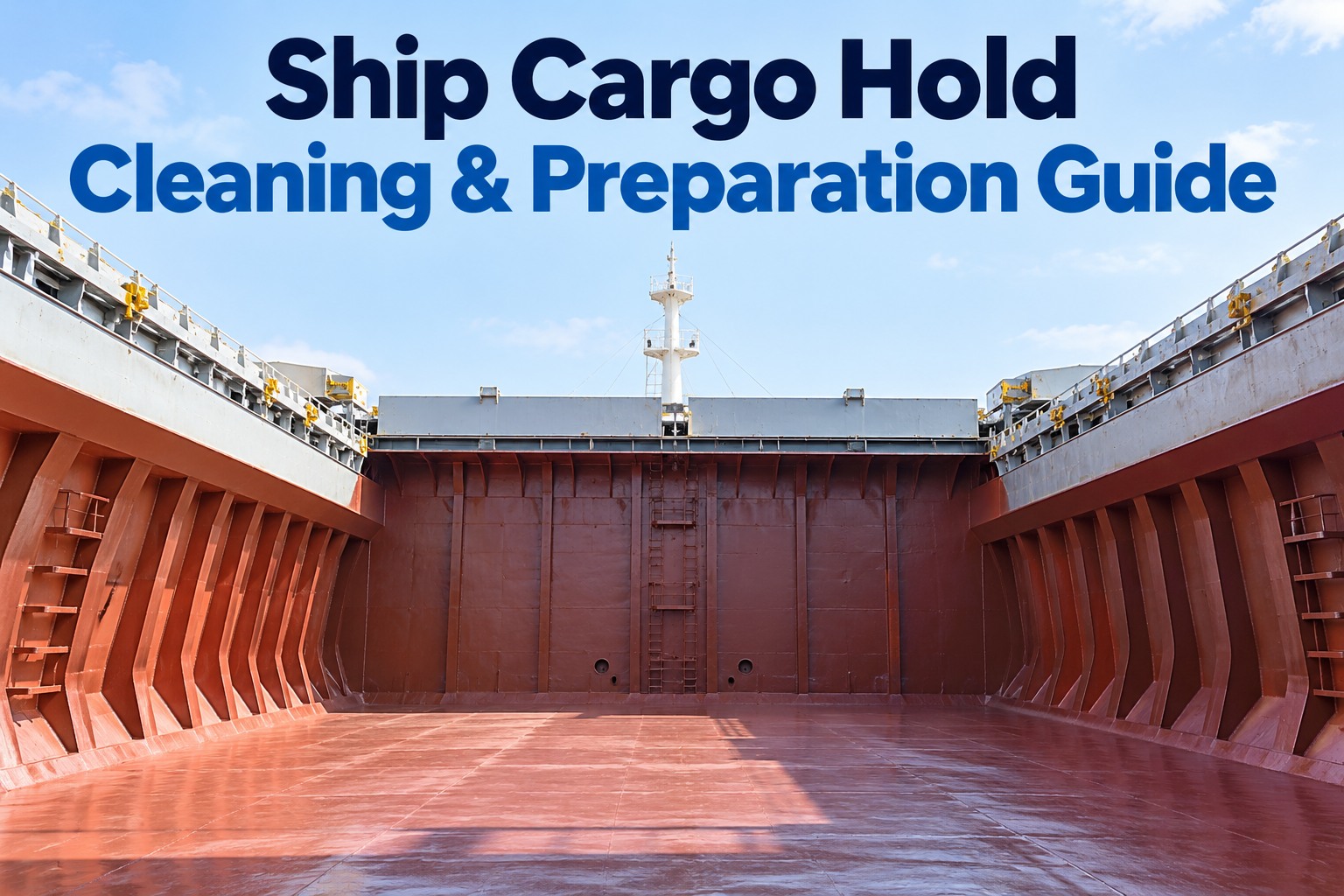
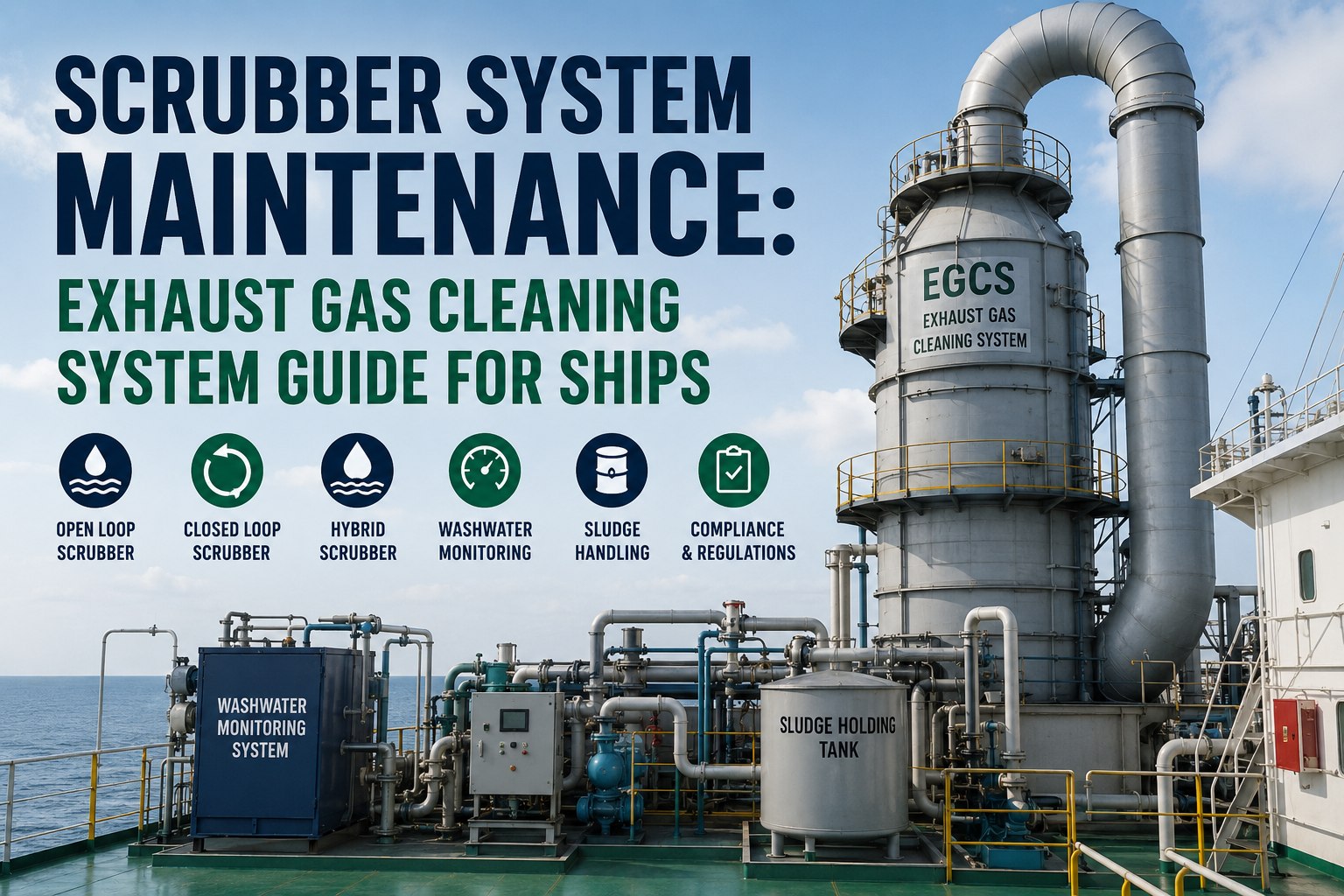
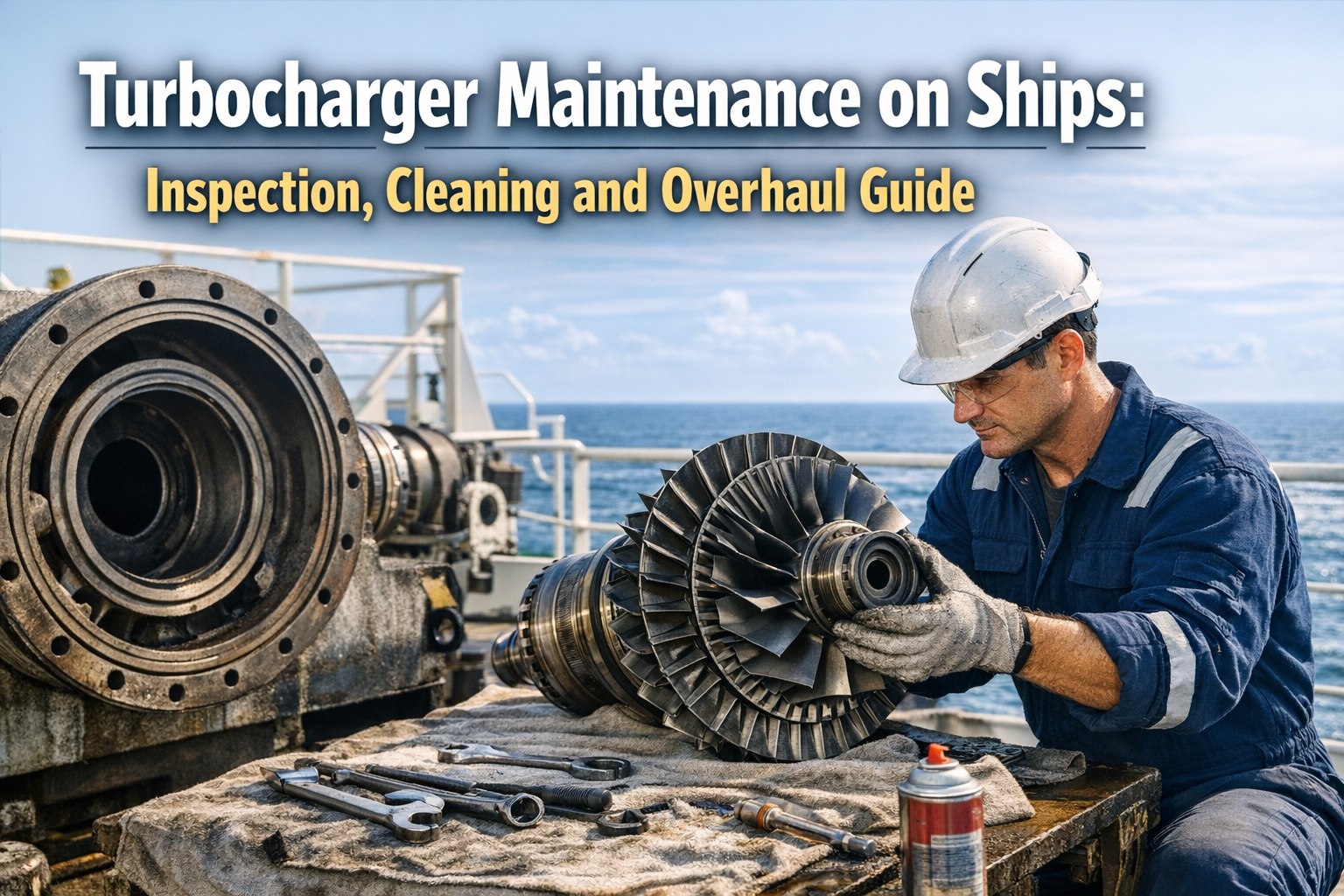
Hold cleanliness is a contractual standard before it is a housekeeping one. The charterparty names a grade — hospital clean, grain clean, normal clean, shovel clean, load on top — and that word decides how many hours the crew will spend on wires and staging, what chemicals go over the side, and whether the ship passes the shipper’s inspection on the first attempt or sits at anchor failing it a second time on the charterer’s clock. The grades are not interchangeable, they are not a matter of opinion, and the surveyor who arrives with a torch and a bottle of silver nitrate is checking against a written standard, not a general impression of tidiness. This guide covers what each grade actually demands, what an inspection covers compartment by compartment, the chloride test and why sea water washing gets ships rejected, a cleaning sequence that works, bilge wells, coatings and scale, hatch cover readiness, and the reasons holds fail first time. Start a free trial of Marine Inspection to run hold preparation checks with photo evidence per hold, per voyage.
Cleaning grades — what the charterparty is asking for
Five standards, and only one of them is the one you were chartered to meet
Each step up costs hours, chemicals and crew fatigue. Cleaning to a higher grade than the fixture requires wastes all three; cleaning to a lower one costs a failed inspection and off-hire.
These definitions are the industry’s common language, and a surveyor will apply them as written. Where the fixture uses a term not on this list, get it defined before sailing rather than after arrival.
Hospital clean
The strictest standard. Holds completely clean, dry and free of all loose scale, with paintwork fully intact throughout — including tank top, hopper sides, upper wing plating, frames and the underside of hatch covers. Demanded for high-value and sensitive cargoes such as chrome ore, rice and soda ash. In practice this standard is almost impossible to achieve with coatings in poor condition, which is why it tends to be an owner’s coating decision years before it is a crew’s cleaning decision.
Grain clean
Completely clean, dry, odour-free and gas-free, with all loose scale removed. The workhorse standard, required for grain, cement, fertiliser and sugar, and the one most fixtures call for. Tightly adhering scale and coating breakdown are generally tolerated where they are sound; loose material is not, because it ends up in the cargo.
Normal clean
Swept, clean, dry and free of residues of the previous cargo. Appropriate for coal, petcoke, salt and iron ore where the incoming cargo is not sensitive to traces of what came before — though “free of residues” still means free of residues, and it is regularly failed by ships that read it as “roughly swept”.
Shovel clean
Cleared by mechanical discharge, with several tonnes of the previous cargo permitted to remain. Typically for iron ore and similar bulk trades where the next cargo is the same or compatible. The quantity that may remain is a matter of agreement, so it belongs in writing.
Load on top
The new cargo is loaded directly onto the residue of the last. Restricted to specific cargoes, such as certain grades of coal, and only where contractually agreed. Never assume it — loading on top without written agreement is a cargo claim waiting to be made.
What a hold inspection actually covers
A surveyor works a hold systematically, and knowing the route lets the crew check the same places first. The points below are where inspections are won and lost. See how a hold-by-hold check with photographs is recorded so the same evidence is available if the result is disputed.
Hold section — the six areas checked in every inspection
1
Hatch cover underside, coaming and drainsRust scale on the cover underside falls into the cargo after loading. Check compression bars, rubbers, drain channels and non-return valves.
2
Upper wing sloping plate and framesThe area crews reach last and surveyors check first. Residue lodged on frame brackets and the slope dislodges with the first sea.
3
Side shell frames and bracketsEvery bracket is a shelf. Loose scale here is the commonest reason a grain clean hold is failed.
4
Hopper sloping plateWashes down easily but dries slowly. Standing water at the hopper knuckle after a wash is a failed inspection in waiting.
5
Tank top and ceilingInspected closely for residue, coating breakdown and damage from grabs. Plate damage found here also matters for the next loading plan.
6
Bilge wells, strums and coversOpened, emptied, cleaned, dried and re-covered. More holds fail on bilge wells than on any single other item.
Salt water, chlorides and the silver nitrate test
Sea water washing is fast, free and the source of a large share of rejections. A surveyor tests a rinse sample or a swab with silver nitrate solution: chlorides present turn it cloudy white, and that result ends the discussion regardless of how clean the hold looks.
Sea water wash, fresh water rinse
Sea water does the bulk work; fresh water removes the chlorides it leaves behind. The final rinse is not optional for grain clean and above, and it has to reach everywhere the sea water reached — including frames, brackets and the cover underside.
Dry completely, then check again
Salt shows itself as the surface dries. A hold that passed a visual check wet can show white bloom hours later, which is why the last inspection is made on a dry hold, not on a hold that has just been rinsed.
Ship sweat undoes finished work
Warm moist air meeting cold steel condenses and starts rust bloom on a hold that was signed off days earlier. Ventilate to the dew point rule appropriate to the passage and re-check before arrival rather than assuming the result holds.
Know where the wash water goes
Hold washings containing cargo residues are regulated under MARPOL Annex V and the residue’s classification — particularly for cargoes harmful to the marine environment — decides whether they may be discharged at all. Record positions and quantities in the Garbage Record Book.
Evidence that the hold was ready when you said it was
Hold-by-hold preparation checks with dated photographs of the tank top, frames, bilge wells and cover undersides — captured on a phone in the hold, so a disputed rejection is answered with a record rather than a recollection.
Sweep down from the top, dry. Remove bulk residue before any water is used. Water on dry residue makes a paste that sticks to frames and doubles the work.
2
Work top down, every time. Cover underside, upper wing, frames, side shell, hopper, tank top. Cleaning the tank top first guarantees doing it twice.
3
Sea water wash with the hold bilges ready. Confirm the bilge suction, strums and non-return arrangements work before you start putting water into the hold, not after.
4
Chemicals only where they are needed. Follow the maker’s dilution and contact time, protect the crew, and remember that a chemical left on the steel too long attacks the coating you are trying to preserve.
5
Fresh water rinse, thoroughly. Everywhere the sea water went. This is the step that decides the silver nitrate result.
6
Remove loose scale mechanically. Scrapers, needle guns and wire brushes where required by the grade. Tightly adhering scale is usually acceptable for grain clean; loose scale never is.
7
Dry with ventilation, not time. Fans and open covers where weather allows. A hold closed up wet will not dry, and it will bloom.
8
Bilge wells last, then seal. Clean, dry, test the suction, fit the covers and burlap or sacking as required, and record that it was done.
9
Final inspection dry, with good light. Walk the same route the surveyor will, with a torch, and photograph each area as found.
Bilge wells decide more inspections than anything else
Opened and physically cleaned
Not pumped and declared clean. Residue in the well from the previous cargo contaminates the new one and is the first thing a careful surveyor asks to see.
Suction proved before loading
A well that cannot be pumped during the voyage turns a small ingress into wet cargo. Test it with water and confirm the non-return arrangement holds.
Covers, strums and screens fitted
Correct covers in place, screens intact, and the sacking or burlap arrangement the cargo requires. Missing strum covers let cargo into the line and block it at the worst moment.
Dry, and recorded as dry
Sound the wells before loading and log the result. A dry sounding at the start of the voyage is what makes a later rise in level meaningful evidence rather than an argument.
Coatings and scale — the long game
How hard a hold is to clean is decided by its coating condition, and coating condition is decided years earlier. A hold with sound paint washes down in hours; the same hold with breakdown across the upper wing takes days and will still struggle at grain clean.
Tightly adhering scale is usually acceptable, loose scale is not. The test for grain clean is whether material will come away and reach the cargo, not whether the steel looks new.
Touch up every voyage, not every docking. Small areas made good while the hold is empty and dry prevent the large-scale breakdown that eventually costs a fixture.
Grab damage on the tank top spreads. Bare steel corrodes, lifts the surrounding coating and produces exactly the loose scale that fails inspections.
Record coating condition per hold. A photographic record across voyages shows whether the deterioration is gradual or a step change from one cargo or one discharge port.
Match the specification to the trade. A ship regularly fixed for grain, cement or fertiliser justifies a different coating decision from one in a coal and ore trade.
Hospital clean starts with the paint. Fully intact paintwork is part of the definition, so a ship with breakdown cannot reach that standard however long the crew works.
Hatch covers are part of the hold
A hold can be immaculate and still fail, or pass and still ruin the cargo, on the strength of its hatch covers. They are inspected for cleanliness and tested for weathertightness, and the two are separate questions.
Underside condition
Scale and residue on the cover underside falls onto the cargo once loaded and once the ship works in a seaway. It belongs in the cleaning scope, not outside it.
Rubbers and compression
Packing intact and resilient, compression bars straight and unwasted, correct compression achieved across the length. Permanently set rubber does not seal, whatever it looks like.
Drain channels and non-return valves
Blocked drains put water on the wrong side of the seal. Clear them, prove the non-returns, and check them again after cleaning debris has been washed around.
Weathertightness testing
Hose test, ultrasonic testing or chalk test as appropriate to the situation. Ultrasonic testing has the advantage of locating the leak path rather than only proving one exists.
Cleats, wedges and securing
All present, free and correctly adjusted. Covers that rely on their own weight in a seaway work, and working covers leak.
Coaming top and drains
Wastage at the coaming top plate is a common finding and directly affects the seal. It is a steel repair, not a cleaning task, and needs planning.
Why holds fail first time
Chlorides from sea water washing. No fresh water rinse, or a rinse that missed the frames and the cover underside.
Loose scale on frames and brackets. The shelves nobody reaches, checked by every surveyor with a torch.
Residue in bilge wells. Pumped out rather than opened and cleaned.
Hold not dry. Closed up wet, or inspected before it had dried and bloomed.
Hatch cover underside ignored. Cleaned to the coaming and no further.
Odour from the previous cargo. Grain clean requires odour-free, and fishmeal, fertiliser and some chemicals linger in coatings.
Rust bloom from ship sweat. A hold prepared early in the passage and never re-checked before arrival.
Wrong grade cleaned. Nobody read the fixture, and the ship arrived normal clean for a grain clean charter.
Preparation schedule
When
Task
What good looks like
On fixture
Read the cleaning grade in the charterparty and confirm any term that is not standard
Grade agreed in writing before the ship starts cleaning
Before discharge completes
Plan the cleaning: staging, equipment, chemicals, fresh water available, crew hours
Resources confirmed while there is still time to order them
Immediately after discharge
Dry sweep while residue is still loose; remove bulk material before any water
Holds swept before the first hose is run
Cleaning
Wash top down, chemicals where needed, fresh water rinse everywhere
Rinse reaching frames, brackets and cover undersides, not just the flats
Cleaning
Remove loose scale mechanically to the grade required
Nothing that will come away and reach the cargo
After washing
Open, clean, dry and test bilge wells; fit covers, strums and sacking
Wells physically clean, suction proved, sounding recorded as dry
After washing
Dry with ventilation; do not close up a wet hold
Steel dry to the touch everywhere, including hopper knuckles
Before arrival
Re-inspect dry with a torch; photograph each area of each hold
Evidence dated close to arrival, not to the day cleaning finished
Before arrival
Hatch covers: underside clean, rubbers and drains checked, weathertightness confirmed
Covers included in the hold scope, test result recorded
Before arrival
Ventilate to the appropriate dew point rule; check for sweat and bloom
Ventilation decisions logged, no fresh rust bloom on arrival
At inspection
Accompany the surveyor; record what is raised and photograph any area questioned
Findings captured at the time, with the ship’s own evidence alongside
Each voyage
Touch up coating damage and record hold coating condition per hold
A photographic history that shows the rate of deterioration
Troubleshooting matrix
Problem
Likely causes, in order
What to do
Silver nitrate test positive
No fresh water rinse; rinse missed frames or cover underside; sea water trapped in a corner
Re-rinse with fresh water everywhere, dry fully, retest. Do not argue the visual appearance.
Rust bloom appearing after cleaning
Ship sweat from ventilating at the wrong time; hold closed up wet; chlorides still present
Ventilate on the correct dew point rule, dry thoroughly, and re-check for chlorides before re-doing the work.
Loose scale keeps appearing on the tank top
Coating breakdown overhead on frames and upper wing shedding after cleaning
Deal with the source overhead. Sweeping the tank top again without touching the frames repeats indefinitely.
Odour remains after cleaning
Previous cargo absorbed into coating breakdown; residue in bilge wells or behind ladders
Clean the wells and hidden areas, ventilate for longer, and use an approved deodorising treatment where permitted.
Bilge will not pump
Strum or line blocked with cargo; non-return valve stuck; suction lost
Clear and prove it before loading. A blocked bilge line discovered at sea cannot usually be fixed there.
Standing water at the hopper knuckle
Insufficient drying time; no ventilation; hold closed after rinsing
Open up, run fans, and physically mop the corners. Ventilation alone will not clear a puddle.
Hatch cover leaks on test
Set or damaged rubber; wasted compression bar; distorted cover; blocked drain
Locate the path with ultrasonic testing rather than guessing, then repair the specific defect.
Surveyor rejects on paint condition
Grade requires intact paintwork; breakdown across upper areas
Confirm which grade was fixed. If it is hospital clean, the answer is a coating programme, not more cleaning.
Cargo residue found after passing inspection
Dislodged from upper wing or cover underside once the ship worked in a seaway
Extend the cleaning scope upward next time and photograph those areas specifically at the final check.
Dispute over the cleaning standard
Grade not defined in the fixture; non-standard term used
Fall back on the written definitions, and get the term clarified with charterers before the next fixture uses it.
Frequently asked questions
What is grain clean?
Holds completely clean, dry, odour-free and gas-free, with all loose scale removed. It is the standard most commonly fixed, and it covers grain, cement, fertiliser and sugar among others.
How is hospital clean different?
It adds fully intact paintwork to the grain clean requirements. That makes it a coating condition question as much as a cleaning one — a hold with breakdown cannot reach it however long the crew works.
Why do holds fail the silver nitrate test?
Chlorides left by sea water washing. The fresh water rinse either was not done or did not reach the frames, brackets and hatch cover underside where sea water went.
Is tightly adhering scale acceptable?
For grain clean it generally is, provided it is sound. Loose scale is not acceptable at that grade, because it reaches the cargo. Hospital clean is stricter again.
What is shovel clean?
Cleared by mechanical discharge, with several tonnes of the previous cargo permitted to remain. It is used mainly in iron ore and similar trades, and the quantity tolerated should be agreed in writing.
Can hold washings go overboard?
It depends on the cargo residue and its classification under MARPOL Annex V, particularly whether the cargo is harmful to the marine environment. Check the rules for the residue and the area, and record the discharge in the Garbage Record Book.
Why do bilge wells fail so often?
Because they are pumped rather than opened. A surveyor expects them physically cleaned, dried, with suction proved and covers correctly fitted — and they are easy to check.
When should the final check be made?
On a dry hold, with a torch, as close to arrival as practical. A hold signed off days earlier can bloom with rust from ship sweat, so the record that matters is the one taken last.
Are hatch covers part of the hold inspection?
Yes. The cover underside is inspected for cleanliness, and rubbers, compression bars, drains and non-return valves are checked separately for weathertightness. Both can fail a hold.
Pass the hold inspection the first time, with the record to prove it
Grade-specific preparation checks, hold-by-hold photographs, bilge well sign-off and hatch cover results — captured in the hold and held across the fleet, so cleaning standards do not depend on who is on board.