Roughly seven out of every ten Port State Control deficiencies raised under the Ballast Water Management Convention have nothing to do with the treatment system and everything to do with the paperwork. Since the convention came into force, incorrect or inadequate record-keeping in the Ballast Water Record Book has been the single largest source of BWM deficiencies, which is a striking finding: ships are largely treating their ballast water correctly and then getting caught out recording it. The IMO recognised this and responded decisively, completely overhauling the record book. From 1 February 2025 a new, highly structured Ballast Water Record Book format is mandatory, deliberately modeled on the proven Oil Record Book from MARPOL, using lettered operational codes to eliminate the ambiguity that generated all those deficiencies. Alongside it, from 1 October 2025 the rules for electronic record books tightened, requiring flag approval and a ship-specific declaration. For the chief officers, masters and technical superintendents who carry this compliance, the message is clear: the D-2 treatment standard is only half the obligation, and the record book is where inspections are actually won or lost. This guide sets out ballast water compliance in 2026 — the D-2 standard and the three-part framework, why record-keeping drives the deficiencies, the new code structure, the electronic record book rules, and what inspectors now verify. To keep ballast water records accurate, correctly coded and inspection-ready across your fleet, start a free trial or book a demo.
COMPLIANCE GUIDE · BWM CONVENTION
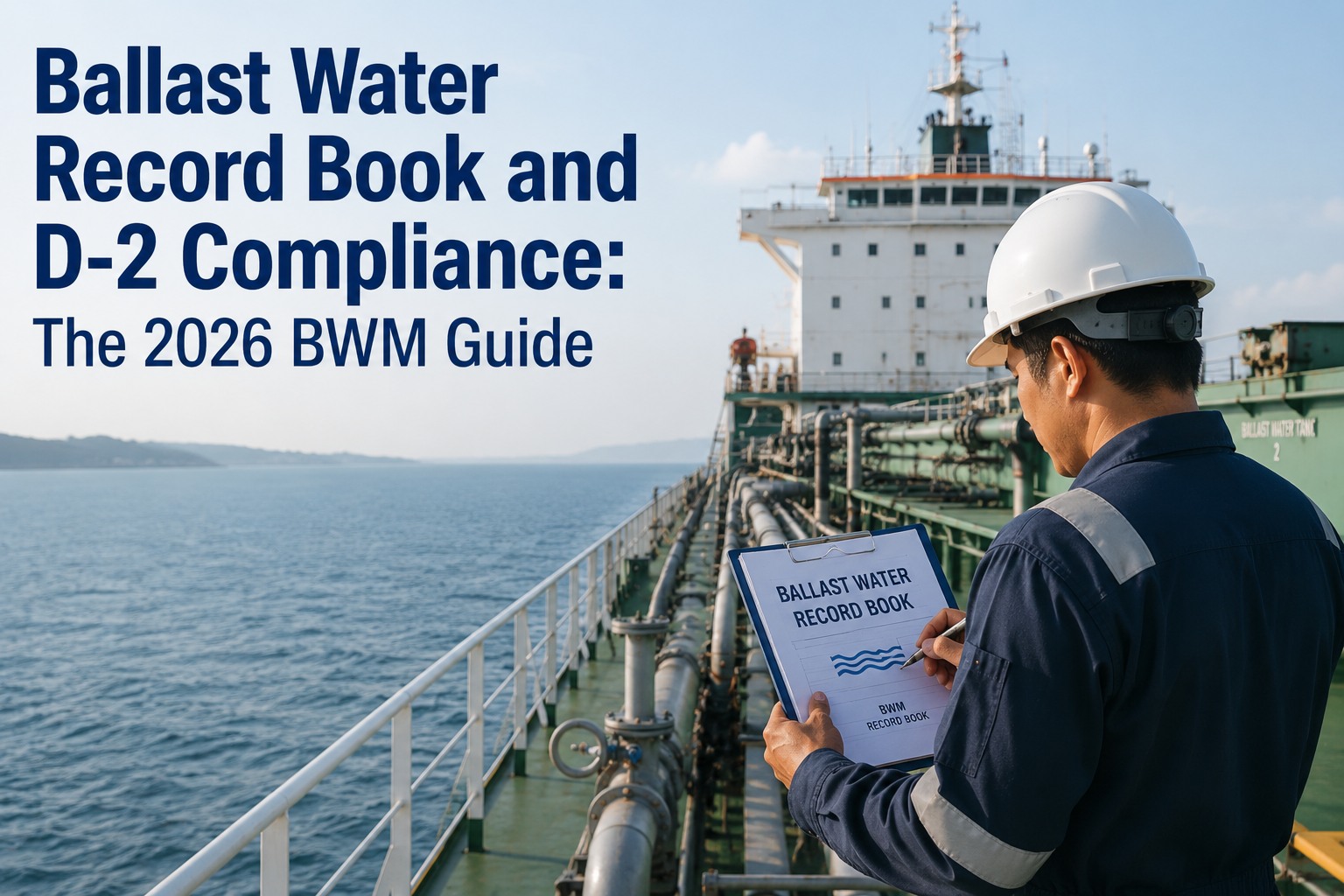
Ballast Water Record Book and D-2 Compliance: The 2026 BWM Guide
Ballast Water Management compliance in 2026 — the D-2 discharge standard, the three-part framework, the revised record book format mandatory since February 2025 with its new lettered codes, the electronic record book rules, and how to avoid the record-keeping deficiencies that dominate BWM inspections.
~70%
Of BWM deficiencies come from record-keeping
1 Feb 2025
New record book format became mandatory
Codes A–H
Lettered operational codes, like the Oil Record Book
The Three-Part Compliance Framework
Ballast water compliance rests on three connected requirements, not one. A ship can have an excellent treatment system and still fail an inspection if the plan or the record book is deficient, which is exactly what the deficiency statistics show. Understanding all three is the foundation.
PLAN
Ballast Water Management Plan
A ship-specific, approved plan setting out how ballast water is managed on board, including the recording requirements for the record book and details of any exemptions granted under the convention. It is the procedural foundation the other two parts rest on.
TREAT
Treatment to the D-2 standard
An approved Ballast Water Treatment System meeting the D-2 discharge standard, which sets strict limits on the concentration of viable organisms in discharged ballast water. Type approval requires both land-based and shipboard testing to confirm biological efficacy in real conditions.
Ballast Water Record Book
RECORD
A record book maintained on board documenting every ballast water operation in the required format, retained for at least two years after the last entry and by the company for a further three years. This is where most deficiencies arise, and where the 2025 changes concentrate.
The D-2 standard is the environmental heart of the convention, aimed at preventing the transfer of harmful invasive aquatic species between ecosystems, and modern treatment systems, dominated by ultraviolet and electrolysis technologies, are generally capable of meeting it. But treating the water correctly is only part of demonstrating compliance. The convention requires the operation to be recorded correctly too, and it is the record, not the treatment, that an inspector reads first. To make sure the record matches the treatment across every operation, start a free trial or book a demo.
Why Record-Keeping Drives the Deficiencies
The central problem the 2025 changes were designed to solve is stark, and it explains why the record book deserves so much attention.
Around 70% of BWM deficiencies were record-keeping failures
Analysis since the convention took effect revealed that incorrect or incomplete entries in the Ballast Water Record Book accounted for over seventy per cent of all deficiencies related to the BWM Convention. The cause was diagnosed as the previous record book format itself: it was ambiguous, and conflicting interpretations of proper record-keeping arose across flag administrations, classification societies and Port State Control authorities. Industry bodies pushed the IMO for a clearer, standardised framework that would remove the room for arbitrary interpretation. The response was to completely overhaul the record book, modeling the new format on the proven, highly structured Oil Record Book from MARPOL — an approach that had already worked for decades. The lesson for operators is that the deficiencies were rarely about failing to treat ballast water; they were about failing to record it clearly and correctly, which is a solvable problem.
The New Code Structure — A to H
The revised record book, mandatory since 1 February 2025 under the amendment to the convention's Appendix II, organises entries by lettered operational codes, exactly as the Oil Record Book does. Each ballast water operation is recorded under its code with the specific item number and required particulars, which removes the ambiguity that generated the old deficiencies.
A
Ballast water uptake
The taking on of ballast water, with the date, position, quantity and tanks involved recorded in the structured format.
B
Internal transfer or treatment during a voyage
Circulation or treatment of ballast water on board during the voyage, capturing the operation and the system used.
C
Ballast water discharge for management
Discharge of treated ballast water in accordance with the management method, with position, quantity and tanks documented.
D
Discharge to a reception facility
Ballast water discharged ashore to a reception facility rather than to sea, recorded with the receiving facility details.
E
Exceptional discharge or uptake
Accidental or other exceptional uptake or discharge, with the circumstances and reasons recorded in full for transparency.
F
Failure of the treatment system
A new dedicated section for documenting any failure of the ballast water management system, a common gap the old format handled poorly.
G
Sediment-related operations
Cleaning and disposal of sediment from ballast tanks, now recorded explicitly so this often-overlooked operation is captured.
H
Additional operational entries and remarks
Other relevant operations and general remarks, including entries for challenging water quality conditions where treatment is affected.
i
New sections for failures and challenging water quality
Two additions matter especially. The revised format adds explicit provision for recording ballast water management system failures, so a treatment failure is documented properly rather than left as an ambiguous gap that an inspector reads as non-compliance. It also includes example entries for Challenging Water Quality conditions — where sediment-laden or otherwise difficult intake water affects treatment — giving crews a defined way to record and justify how they managed a situation the system could not fully handle. Both close exactly the kind of gap that generated deficiencies under the old format, but only if the crew know the new codes and use them, which is why familiarisation with the A-to-H structure is now a core compliance task.
Right operation, right code, every time
The new format removes ambiguity only if the crew apply the codes correctly. Marine Inspection guides each ballast water operation to its correct code and item number, prompts for the required particulars, flags a system failure for proper recording, and keeps the record consistent with the plan and the tanks — so record-keeping stops being the source of deficiencies.
The Electronic Record Book Rules
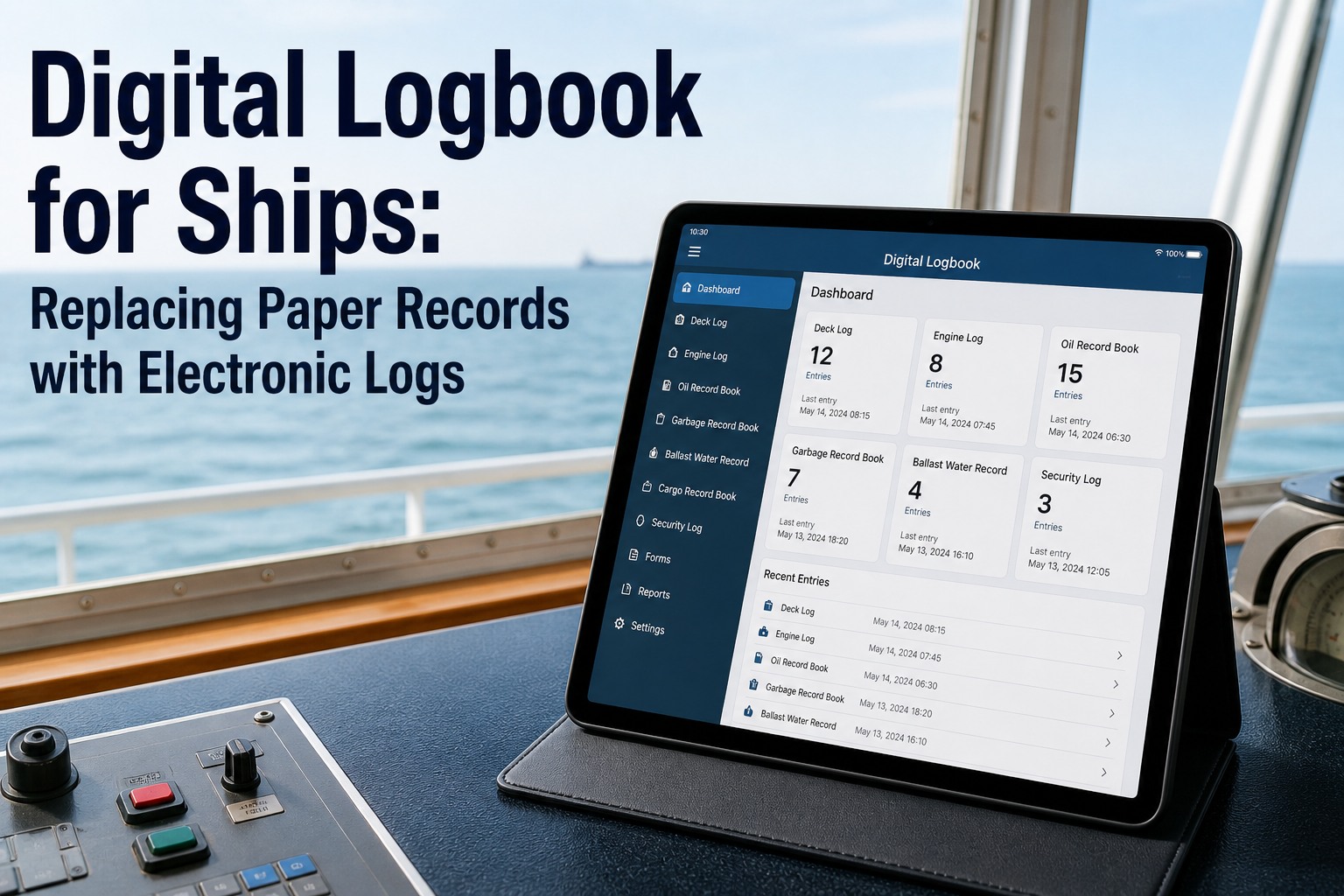
Electronic record books offer clear advantages over paper, and the convention now permits them under a defined framework. But from 1 October 2025 the rules tightened, and using an electronic book without meeting them is itself a compliance gap.
Previously, IMO guidance was simply that an electronic record should contain at least the information required by Appendix II. To provide consistency, the amendments to Regulations A-1 and B-2 of the convention now require that an electronic record book system be approved by the flag state administration, or by a recognised organisation where the flag permits, following dedicated guidelines. Approval carries a ship-specific declaration, and this declaration is what an inspector looks for: if a ship cannot present the electronic record book or its flag-issued declaration during an inspection, the officer may request an alternative verified copy or a hard copy for verification. In practice this means an electronic system delivers its benefits — legibility, consistency, easier cross-checking and no lost book — only when it is properly approved and the declaration is valid and available. The advantages of electronic recording are real, but they come with the obligation to use an approved system, so the choice is not simply paper versus digital but unapproved versus properly approved digital. To move to an approved electronic ballast water record with the declaration and format handled correctly, start a free trial or book a demo.
What Inspectors Now Verify
The new format gives Port State Control a far more precise verification tool, and inspections have sharpened accordingly. Knowing what officers check turns the record book from a liability into a straightforward pass.
Correct application of the new format and codes
That entries use the new A-to-H codes and item numbers correctly, in the mandatory format. Continued use of the old format, or misapplied codes, is now itself a finding.
Completeness and detail of every entry
That all operations are recorded, with the full particulars each code requires, and no gaps where an operation should appear. Completeness is exactly where the old ambiguity caused failures.
Proper documentation of system failures and sediment
That any treatment system failure is recorded under Code F and sediment operations under Code G, using the new sections rather than leaving these events undocumented.
Consistency across record, plan and tanks
That the record book entries, the procedures in the management plan, and the actual state of ballast water in the tanks all agree. Inconsistency between the three is a classic finding.
Valid electronic declaration where applicable
For ships using an electronic record book, that the ship-specific flag declaration is present and valid, and the system meets the approval requirement in force since October 2025.
Retention for the required period
That the record book is retained on board for at least two years after the last entry, and by the company for a further three years, and can be produced on demand.
Handled properly, ballast water compliance in 2026 is very achievable, because the hardest part — the record-keeping ambiguity that drove seventy per cent of deficiencies — has been deliberately engineered out. The vessel whose crew know the new A-to-H codes and apply them correctly, whose record book is complete and consistent with the plan and the tanks, whose treatment system failures are documented under the proper code, and whose electronic system, if used, carries a valid declaration, has closed the gaps that used to generate almost all BWM findings. With a further comprehensive set of amendments developed under the convention's experience-building phase approved in 2026 for adoption at the end of the year, the framework will keep evolving, so building disciplined, correctly coded record-keeping now is an investment that pays off through every future change. To keep ballast water records correctly coded, complete, consistent and inspection-ready across your fleet, start a free trial or book a demo.
Frequently Asked Questions
What is the D-2 standard?
The D-2 standard is the ballast water performance standard under the BWM Convention, setting strict limits on the concentration of viable organisms permitted in discharged ballast water, in order to prevent the transfer of harmful invasive aquatic species between ecosystems. To meet it, ships must use an approved Ballast Water Treatment System, and type approval of these systems requires both land-based testing under challenging water conditions and shipboard testing under actual operational conditions to confirm biological efficacy. Ultraviolet and electrolysis-based systems dominate the market. Meeting D-2 through treatment is one part of compliance, but it must be paired with a compliant management plan and correctly kept record book, since the record is what inspectors examine first.
What changed in the Ballast Water Record Book in 2025?
From 1 February 2025, a completely revised Ballast Water Record Book format became mandatory under the amendment to the convention's Appendix II. The new format is highly structured and modeled on the proven Oil Record Book from MARPOL, using lettered operational codes from A to H so each ballast water operation is recorded under its code with the required particulars. It adds new dedicated sections for documenting treatment system failures and sediment-related operations, and example entries for challenging water quality conditions. The change was made specifically to remove the ambiguity in the old format that had caused around seventy per cent of all BWM deficiencies. Crews must familiarise themselves with the new codes and apply them correctly, as flag and port authorities now require records in this format.
Why do so many BWM deficiencies come from the record book?
Because the previous record book format was ambiguous, and conflicting interpretations of what constituted proper record-keeping arose across flag administrations, classification societies and Port State Control authorities. Analysis since the convention took effect found that incorrect or incomplete entries in the Ballast Water Record Book accounted for over seventy per cent of all BWM-related deficiencies — meaning ships were largely treating their ballast water correctly but being caught out on how they recorded it. The IMO diagnosed the format itself as the root cause and overhauled it in 2025, adopting the structured Oil Record Book model to eliminate the ambiguity. This is encouraging for operators, because it means the largest source of BWM deficiencies is a record-keeping problem with a clear, achievable solution.
Are electronic ballast water record books allowed?
Yes. The convention permits electronic record books, and they offer real advantages over paper in legibility, consistency and retrieval. However, from 1 October 2025 the rules tightened: under the amendments to Regulations A-1 and B-2, an electronic record book system must be approved by the flag state administration, or a recognised organisation where the flag permits, following dedicated IMO guidelines, and it carries a ship-specific declaration. During an inspection, if a ship cannot present the electronic record book or the flag-issued declaration, the officer may request an alternative verified copy or a hard copy for verification. So an electronic system delivers its benefits only when properly approved with a valid declaration available — the requirement is not paper versus digital, but unapproved versus properly approved digital.
How long must the Ballast Water Record Book be kept?
The Ballast Water Record Book must be maintained on board for at least two years after the last entry is made, and then retained by the company for a further three years. It must be available for inspection on demand throughout that period. This retention requirement is one of the items Port State Control verifies, so a record book that cannot be produced, or that has gaps within the required period, is a finding in itself. Keeping the record complete, correctly formatted and accessible for the full retention window is part of being inspection-ready, and it is an area where an organised electronic system with proper retention handling has a clear advantage over loose paper books that can be misplaced or damaged.
What do PSC inspectors check for ballast water in 2026?
Inspectors now have a more precise verification tool and focus on several things: the correct application of the new A-to-H format and codes; the completeness and detail of entries for all operations; proper documentation of any treatment system failures under Code F and sediment operations under Code G using the new sections; consistency between the record book entries, the procedures in the management plan, and the actual state of ballast water in the tanks; for ships with electronic record books, the presence and validity of the ship-specific declaration; and retention for the required period. The common thread is that the record must be correctly formatted, complete, and consistent with both the plan and physical reality — which is exactly what the 2025 format change was designed to make verifiable.
Fix the Record-Keeping, Fix the Deficiencies
Since record-keeping drives around seventy per cent of BWM deficiencies, getting the record book right is the highest-leverage compliance move available. Marine Inspection guides each ballast water operation to its correct A-to-H code, prompts for required particulars, flags system failures for proper recording, keeps the record consistent with the plan and tanks, and handles retention — so the largest source of BWM findings simply stops arising across your fleet.