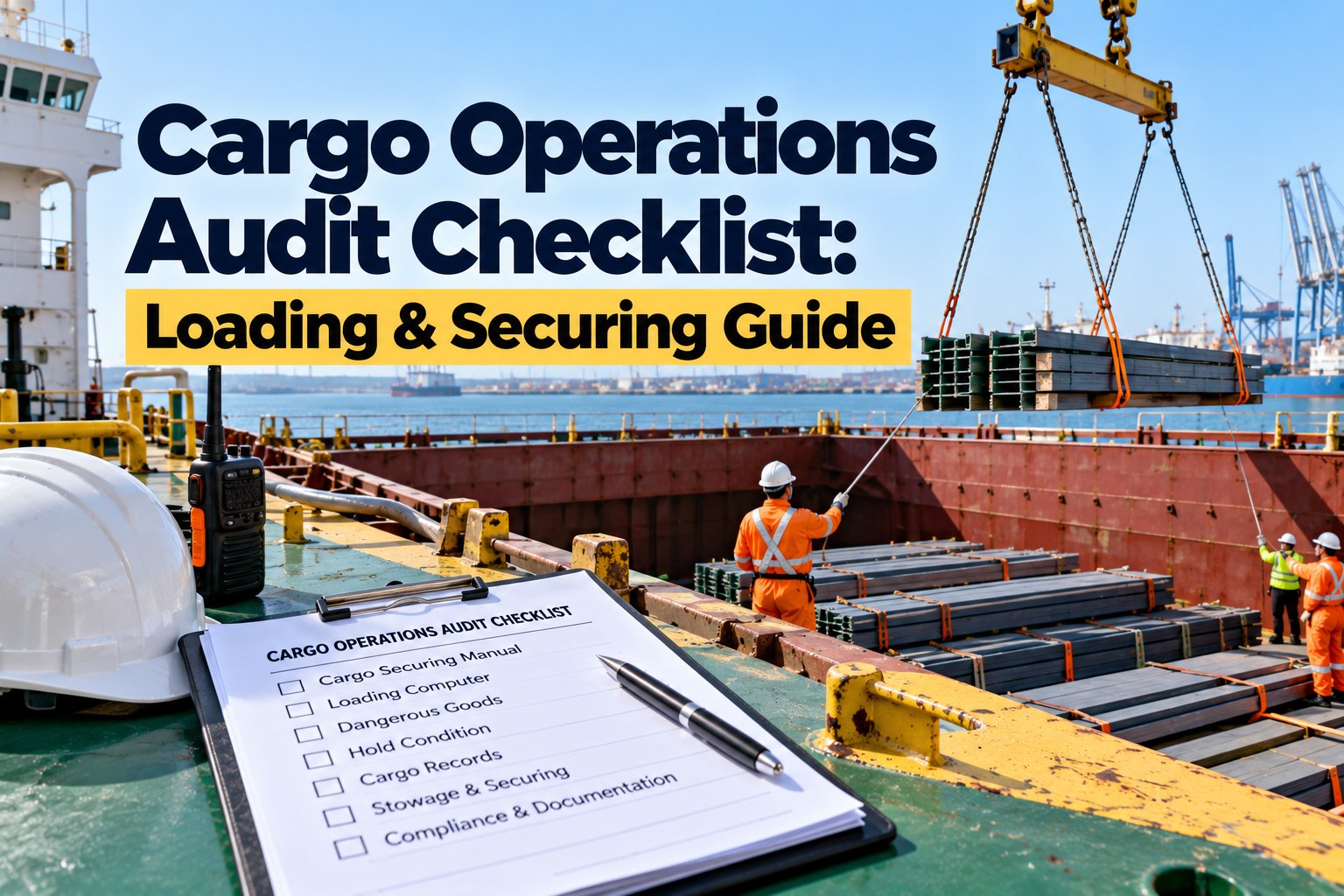
Cargo claims and cargo detentions usually trace back to something an audit could have found: a loading computer never tested, a moisture certificate out of date, a lashing plan that did not match the manual. This checklist gives QHSE managers the documents, the checks and the records to audit across containers, dry bulk, break bulk and dangerous goods, and shows how to hold every cargo audit and its evidence in Marine Inspection.
Cargo operations audit checklist: loading, securing, dangerous goods and the records behind them
Each cargo type fails in its own way, so the audit has to follow the cargo. The one rule every audit shares is that the paperwork, the plan and the hold must agree.
Why a cargo operations audit pays for itself
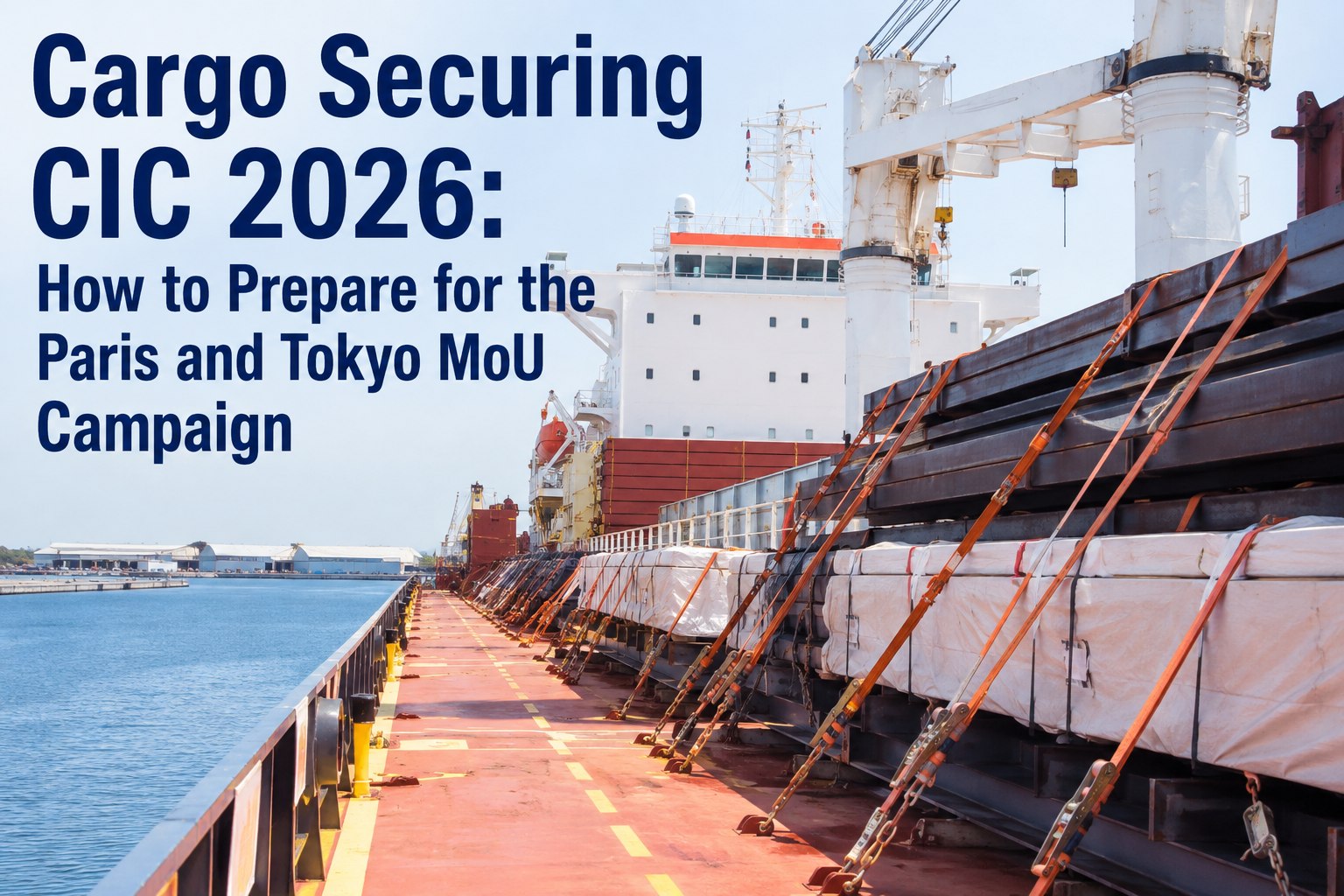
Cargo is where a ship can be lost and where most commercial disputes start. The numbers below come from very different trades, but the lesson is the same: the failure was usually visible in the documents before it happened. The 2026 Paris and Tokyo MOU campaign on cargo securing runs from 1 September to 30 November; our cargo securing campaign guide covers its questions. See campaign items tracked per ship.
Cargo audit documents: what must be on board and what to check in each
Start the audit with the documents, because each one is a promise about how cargo will be handled. The auditor’s job is to check the promise against the cargo on board today. Track every document’s expiry free.
| Document | Basis | What the auditor checks |
|---|---|---|
| Cargo Securing Manual | SOLAS VI/5 and VII/5 | Approved by the flag; gear on board matches its inventory; used for today’s stow |
| Stability booklet and loading instrument | Load Line / IS Code; IACS UR L5 | Software approved; annual test condition run and kept on board |
| Verified gross mass | SOLAS VI/2 | Every packed container has a VGM before it is loaded |
| Document of compliance for dangerous goods | SOLAS II-2/19 | Covers the classes and spaces being used |
| Dangerous goods manifest and stowage plan | SOLAS VII, IMDG Code | Manifest agrees with the plan and with what is stowed |
| Shipper’s cargo declaration and certificates | IMSBC Code | Group A cargoes have valid TML and moisture certificates |
| Grain loading documents | International Grain Code | Document of authorisation and grain stability calculations |
| Cargo gear register | ILO C152 | Thorough examinations and tests in date for cranes and loose gear |
Loading computer audit: proving the numbers can be trusted
A loading computer is only as good as its last test. Under IACS UR L5, the master runs at least one approved test condition at each annual survey and keeps the results on board, and all test conditions are checked with a surveyor at the special survey. Auditors also check that officers know the limits they are working to. See test results logged against each ship.
Annual test condition · illustrative result
Tolerances from IACS UR L5 for hull-form-based programs; the larger of the two values applies.
Cargo securing audit: the manual, the gear and the practice
The cargo securing audit asks one question three ways: does the manual describe this stow, is the gear on board the gear the manual lists, and was it used the way the manual says. Detailed lashing gear criteria are in our cargo securing and lashing equipment guide; log lashing gear inspections free.
Fits the cargo
Approved manual on board, revised if the ship’s trade or gear changed, and the stow on deck matches one of its arrangements.
Counted and certified
Inventory matches the manual, certificates on file, damaged items quarantined and removed.
Used as designed
Stack weights within limits, twistlocks locked, lashings tight and checked again at sea.
Every cargo document, every voyage, in one audit trail
Loading computer tests, securing records, dangerous goods documents and hold photos organised per voyage and ready for any inspector.
Dangerous goods audit: documents, stowage and segregation
Dangerous goods audits are a matching exercise. The manifest, the stowage plan, the compliance document and the containers on deck must all describe the same cargo in the same places. Misdeclared cargo cannot be fully controlled on board, which makes the checks the crew can do all the more important. See dangerous goods checks recorded per bay.
Compliance document covers it. Every class carried is permitted in the space where it is stowed.
Manifest matches the plan. Each UN number, class and position on the manifest appears on the stowage plan.
Segregation checked. Incompatible classes separated as the IMDG Code requires, including across hatch covers.
Units marked. Placards and marks visible and matching the declared class.
Emergency information ready. Emergency schedules and medical first aid guidance on the bridge for the cargo carried.
Crew know it. Officers can locate the dangerous goods on board and explain the response for each class.
Solid bulk cargo audit: IMSBC Group A and liquefaction
Liquefaction killed more bulk carrier crew than any other cause in the last ten years of Intercargo data. The IMSBC Code controls it through the shipper’s certificates, and the audit checks that the ship refused to load without them. Attach shipper certificates to each voyage free.
Can tests during loading are indicative only: a pass does not prove moisture is below the TML, but free water is a reason to stop loading and test. Loading should be suspended and hatches closed in rain. Guidance summarised from the Swedish Club.
Hold condition audit: before loading and after discharge
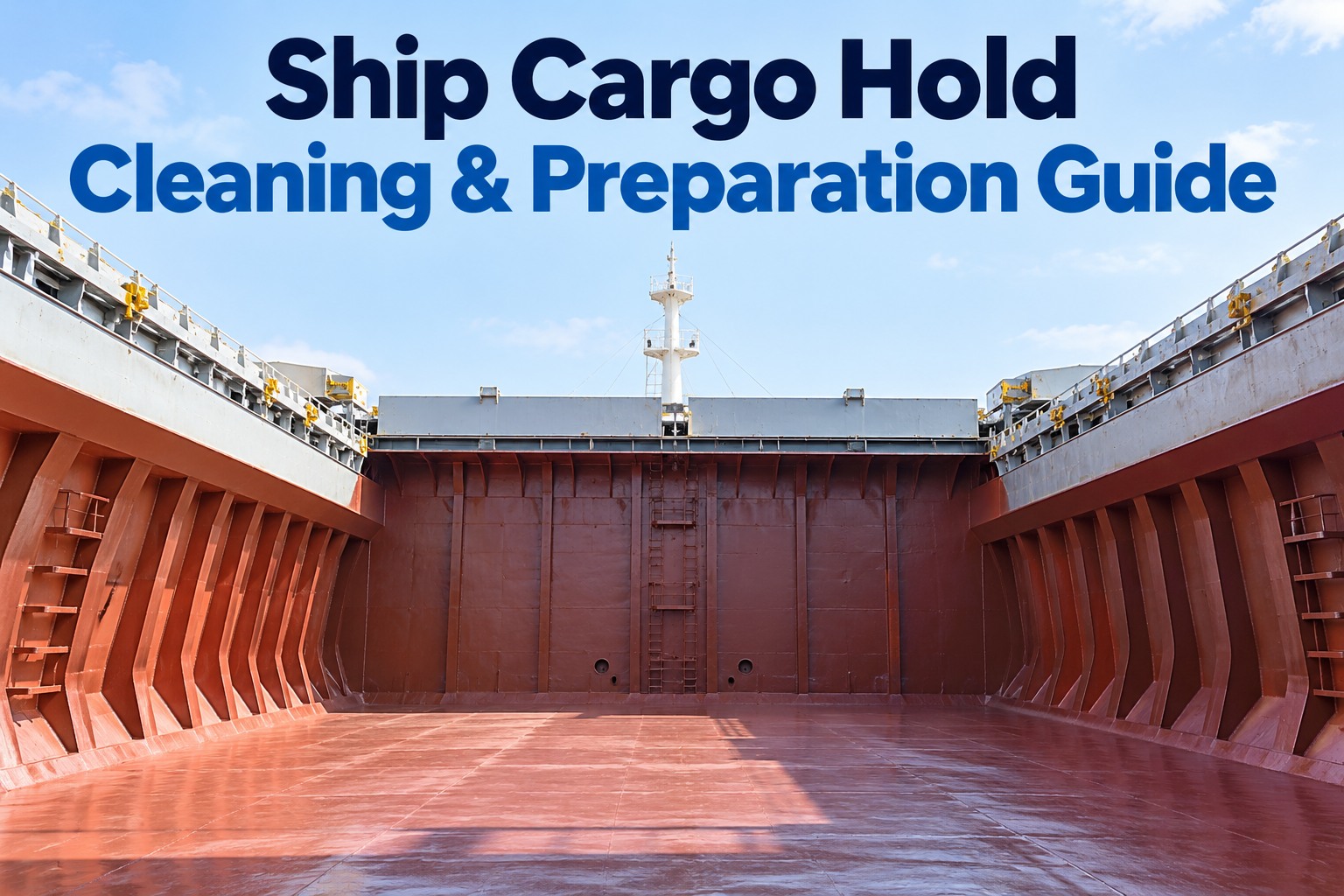
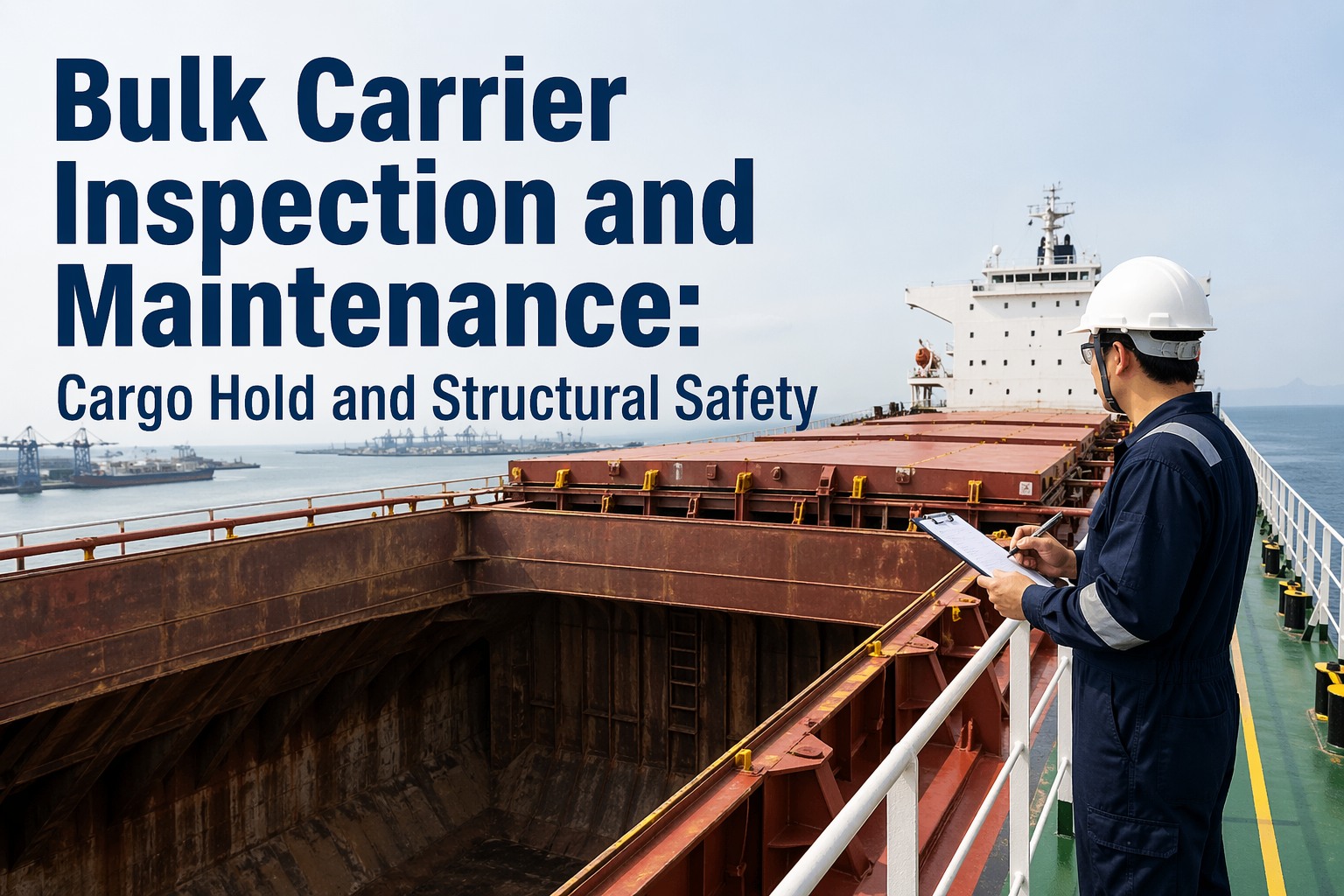
Hold condition decides whether the ship can accept the cargo and whether a damage claim can be defended. Audit the hold inspection records and then walk a hold. Hatch cover tightness is covered in our hatch cover testing guide, and cranes and lifting gear in the cargo handling equipment checklist.
Before loading
- Cleanliness to the standard the cargo needs, with photos
- Bilge wells clean, strum boxes and non-return valves working
- Hatch covers tested weathertight and records kept
- Fixed fire-fighting and ventilation ready for the cargo
During the voyage
- Ventilation logged as the cargo requires
- Bilges sounded and recorded
- Lashings and hatches checked after heavy weather
- Cargo temperatures logged where relevant
After discharge
- Stevedore damage reported in writing before departure
- Structural condition, ladders and coatings checked
- Residues handled as the cargo’s rules require
- Photos filed with the voyage record
Cargo operations audit checklist
Tick these items during the audit. The last group is the records file that defends the ship when a claim arrives months later.
Documents and stability
Securing and dangerous goods
Bulk cargo and holds
Claims records
How Marine Inspection turns cargo audit records into claim defence
A cargo claim is decided by what the ship can prove, often a year after the voyage. Marine Inspection files every cargo record against its voyage and shows, for any claim type, which evidence is in place and which is missing. The example below is an illustrative wet damage claim.
Cargo operations audit FAQs
What does a cargo operations audit cover?
Cargo documents and their validity, stability and loading instrument use, cargo securing, dangerous goods handling, solid bulk cargo certificates, hold condition, and the records that defend the ship against claims.
How often must the loading computer be tested?
Under IACS UR L5, at least one approved test condition is run at each annual survey, with results kept on board, and all approved test conditions at the special survey in front of a surveyor.
Is a Cargo Securing Manual required on every ship?
Ships carrying cargo units and other cargo that needs securing must carry an approved manual under SOLAS Chapters VI and VII. Solid bulk cargoes in bulk are outside its scope.
What certificates does a Group A bulk cargo need?
A TML certificate no more than six months old and a moisture content certificate from sampling and testing no more than seven days before loading, with the shipper’s declaration and the competent authority approval of sampling procedures.
What is verified gross mass?
The weighed gross mass of a packed container, which SOLAS requires the shipper to provide before the container is loaded. It protects stack weights and stability calculations.
Which cargo records matter most in a claim?
Hold inspection records, hatch cover test reports, mate’s receipts with remarks, letters of protest, and the ventilation, temperature and bilge logs for the voyage. Marine Inspection can assemble them into a claim file.
Load it, secure it, prove it
Audit cargo operations across the fleet and keep every certificate, log and photo ready for the inspector or the claims handler.