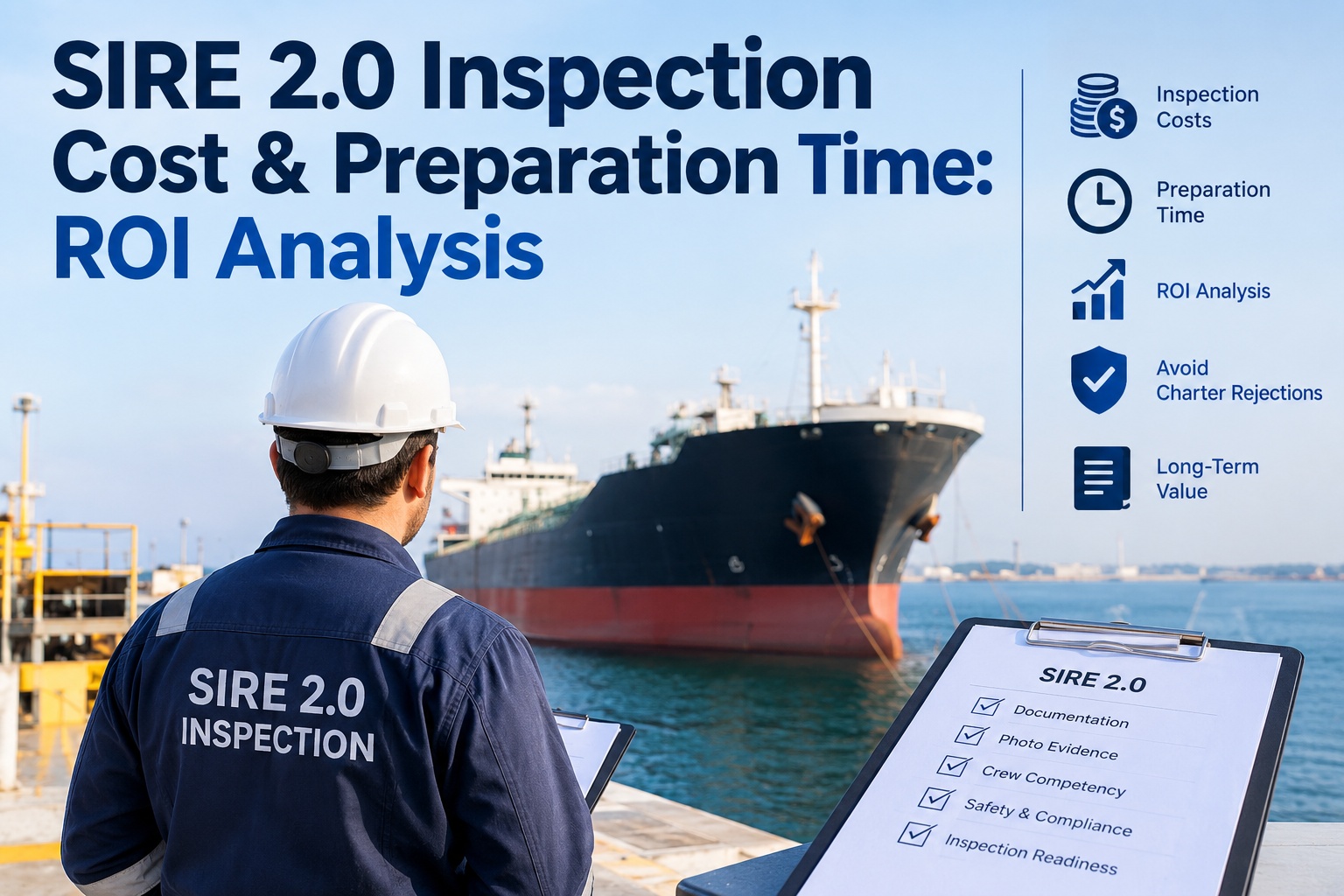
Under SIRE 2.0, a tanker can have flawless hardware and a perfect procedures manual and still collect a negative observation — because the person on watch could not explain, in their own words, how they actually do the job. That single shift captures why the vetting regime that replaced VIQ7 in September 2024 demands a completely different kind of preparation. The old inspection was a largely predictable checklist a crew could pre-polish. The new one is a risk-based, algorithm-compiled assessment where each question is judged across hardware, procedures and the human element at once, responses are graded rather than passed or failed, and the questions themselves change from one inspection to the next so there is no fixed list to rehearse. Preparation is now the difference between an inspection that validates your operation and one that generates costly observations that follow the vessel into every future charterer and terminal screening. And because oil majors, charterers and terminals use SIRE reports to decide whether to employ a vessel at all, the commercial stakes of getting it wrong are severe. This guide is a practical, phase-based preparation checklist for the masters and vetting superintendents who own that outcome — the three phases every inspection follows, the data and photo work that must be done before it is even scheduled, the hardware-procedures-human test to apply to every operation, and the failures that most often generate observations. To run SIRE 2.0 preparation as the continuous, auditable workflow the regime now rewards, start a free trial or book a demo.
COMPLIANCE GUIDE · OCIMF SIRE 2.0
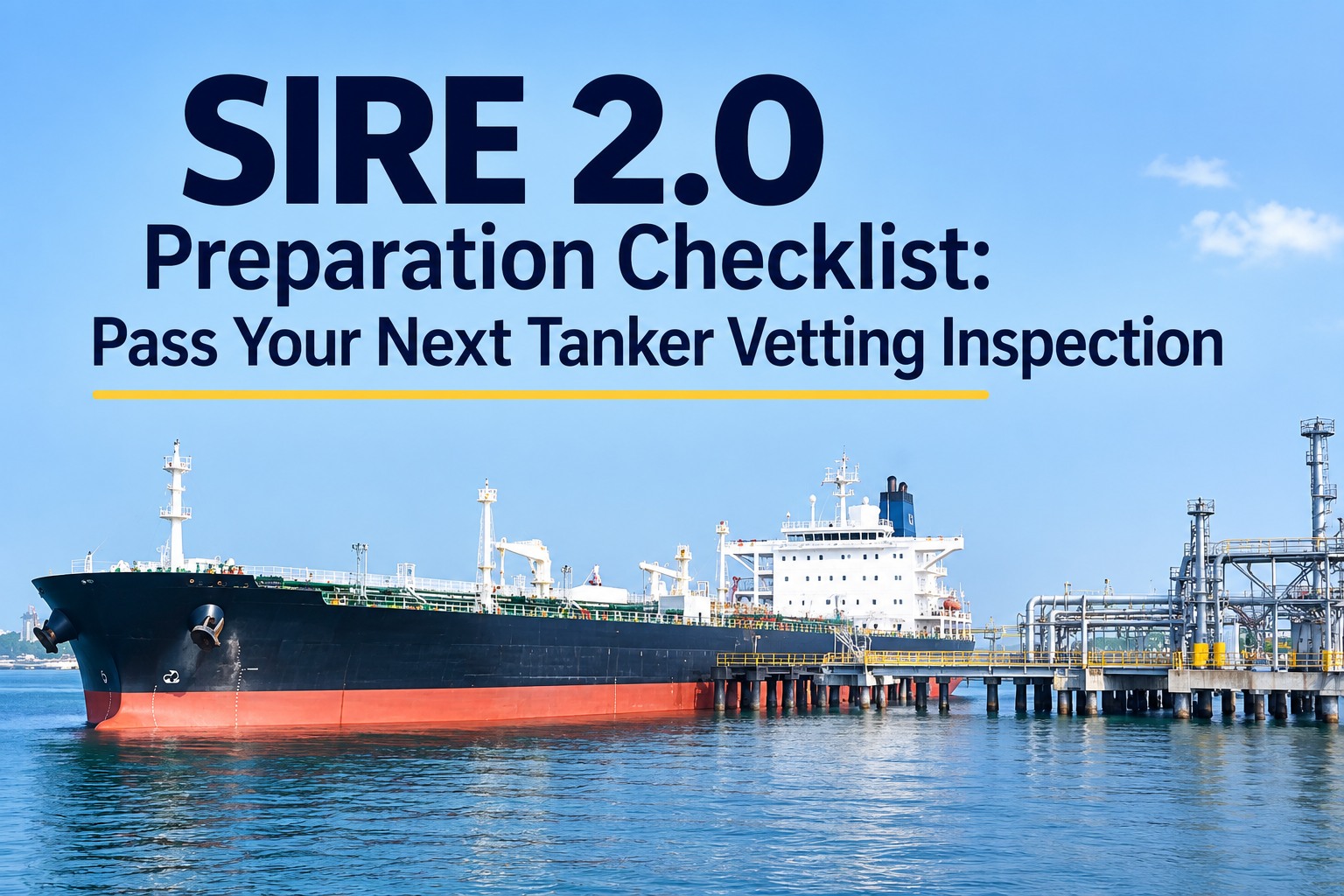
SIRE 2.0 Preparation Checklist: Pass Your Next Tanker Vetting Inspection
A practical, phase-based checklist for getting a tanker ready for an OCIMF SIRE 2.0 inspection — the HVPQ, PIQ and photo work done before scheduling, the hardware-procedures-human test for every operation, crew competency preparation, and the failures that generate observations.
Responses are graded, not pass or fail
Exceeds
As Expected
Largely
Not as Expected
Each question assessed across Hardware, Procedures and Human Factors
What SIRE 2.0 Actually Changed
Preparing effectively starts with understanding what is different, because the changes redefine what good preparation even means. SIRE 2.0 is not a tougher version of the old questionnaire; it is a different instrument built to reveal how a vessel really operates rather than whether it can produce paperwork on demand.
A bespoke questionnaire, not a fixed list
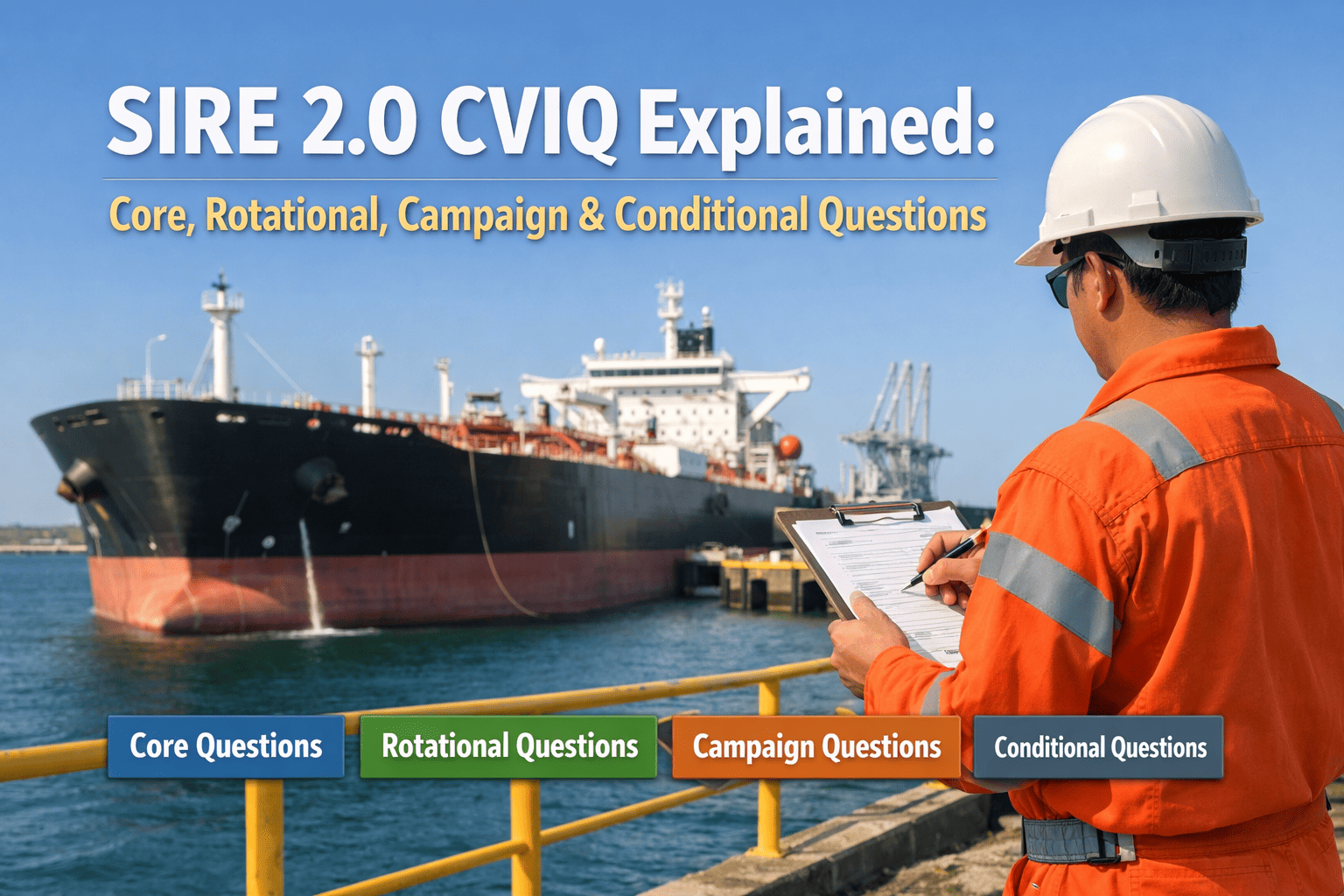
Instead of one standard questionnaire, each inspection uses a Compiled Vessel Inspection Questionnaire of roughly a hundred questions, drawn by algorithm from the full library and tailored to your vessel — around half the size of VIQ7's fixed set, and different every time.
Graded responses, not yes or no
Answers are graded across a scale rather than marked pass or fail, so the report reflects degrees of performance. Meeting the minimum is no longer the only bar; the regime distinguishes between as-expected and exceeds.
Three dimensions on every question
Every question is assessed across Hardware, Procedures and Human Factors at once, so a strong answer requires the equipment, the written procedure and the crew's demonstrated competence to all hold up together.
The human element is decisive
Inspectors interview crew at all levels to assess genuine understanding, and every negative observation must be linked to at least one Performance Influencing Factor, making the human element a documented part of any deficiency.
The practical consequence is that last-minute preparation and memorised answers no longer work. The operators succeeding under SIRE 2.0 treat readiness as a continuous discipline — photo repositories kept current, crew competency built through real drills, question coverage tracked across inspections, and past observations closed out and evidenced. The checklist that follows is how that discipline is applied in the three phases every inspection moves through. To digitise that continuous readiness workflow across your fleet, start a free trial or book a demo.
Phase One — Before the Inspection Is Even Scheduled
A significant part of SIRE 2.0 readiness is won or lost before an inspection is booked, in the data and evidence that describe your vessel to the system. Get this wrong and the algorithm generates the wrong questions, or your own declarations set traps the inspector will test.
PHASE 1 · DATA & EVIDENCE
Make the HVPQ current and accurate
The Harmonised Vessel Particulars Questionnaire describes your vessel to the system, and cargo-type and equipment entries directly trigger specific CVIQ questions. Inaccurate data means relevant questions are missed or irrelevant ones added, so update the HVPQ before renewing certificates and verify every entry.
Complete the PIQ truthfully — declare only what you can verify
The Pre-Inspection Questionnaire captures operational history and declarations, and these drive which conditional questions the algorithm selects. Verification questions will test your declarations, so declare superintendent inspections, specialist audits and operations like ship-to-ship only if they are genuinely complete and evidenced. Over-declaring invites questions you cannot answer.
Keep the Photo Repository within six months
SIRE 2.0 requires standardised vessel photographs, updated every six months, across safety-critical equipment, cargo areas, accommodation and engine spaces. This is not optional, and systematic digital collection and organisation across the fleet is what keeps it current rather than a scramble before each inspection.
Close out and evidence past observations
Although the compiler algorithm does not penalise a vessel for past negative observations, inspectors review previous reports during pre-boarding and verify whether corrective actions were completed and documented. Every prior finding should be closed with evidence the inspector can see.
Check for active campaign questions
When OCIMF runs a campaign, the related question appears in every CVIQ, so every vessel in the fleet must be prepared for it simultaneously. Track active campaigns and brief the whole fleet, because this is where fleet-wide communication becomes critical.
Your HVPQ and PIQ decide the questions — get them right
Accurate vessel data drives the right CVIQ, and truthful declarations avoid traps. Marine Inspection keeps HVPQ and PIQ data, the six-month photo repository, and corrective-action evidence connected and current per vessel — so Phase 1 is a maintained state, not a pre-inspection panic.
The Test to Apply to Every Operation
Because every CVIQ question is assessed across three dimensions, the single most useful preparation habit is to run every critical operation on board through the same three questions. If any one of the three fails, you have a gap the inspector will find.
Hardware
Is the equipment right?
Is the equipment fitted, correct, maintained and in working order for this operation — the physical, verifiable condition of the plant, systems and safety equipment involved.
Procedures
Is the procedure right?
Does a clear, correct, vessel-specific procedure exist in the safety management system for this task, and is it the procedure the crew are actually meant to follow — not a generic document that does not match the ship.
Human Factors
Can the person do it and explain it?
Can the actual crew member on watch perform the task and describe it in their own words — the decisive dimension, where a real understanding of the why behind the procedure is what an inspector is trained to probe.
i
Work as done, not work as imagined
SIRE 2.0 inspectors are trained to compare how a task is actually performed against how the procedure imagines it, and the human element is reinforced by OCIMF's nine Performance Influencing Factors — physical, psychological, organisational and social factors like fatigue, competence, supervision, communication and tools. Because every negative observation must be linked to at least one of these factors, crew competency is not a soft area but a documented driver of the vessel's vetting profile. The preparation that matters is building genuine understanding through real drills and familiarisation, so the person on watch can explain the task confidently under questioning rather than reciting a memorised line.
Phase Two — Crew Readiness for the Onboard Inspection
On the day, the inspector records responses on a tablet with GPS verification and photographs, and much of the assessment turns on the crew interviews. This is where the human element is won, and it cannot be prepared the night before.
PHASE 2 · CREW COMPETENCY
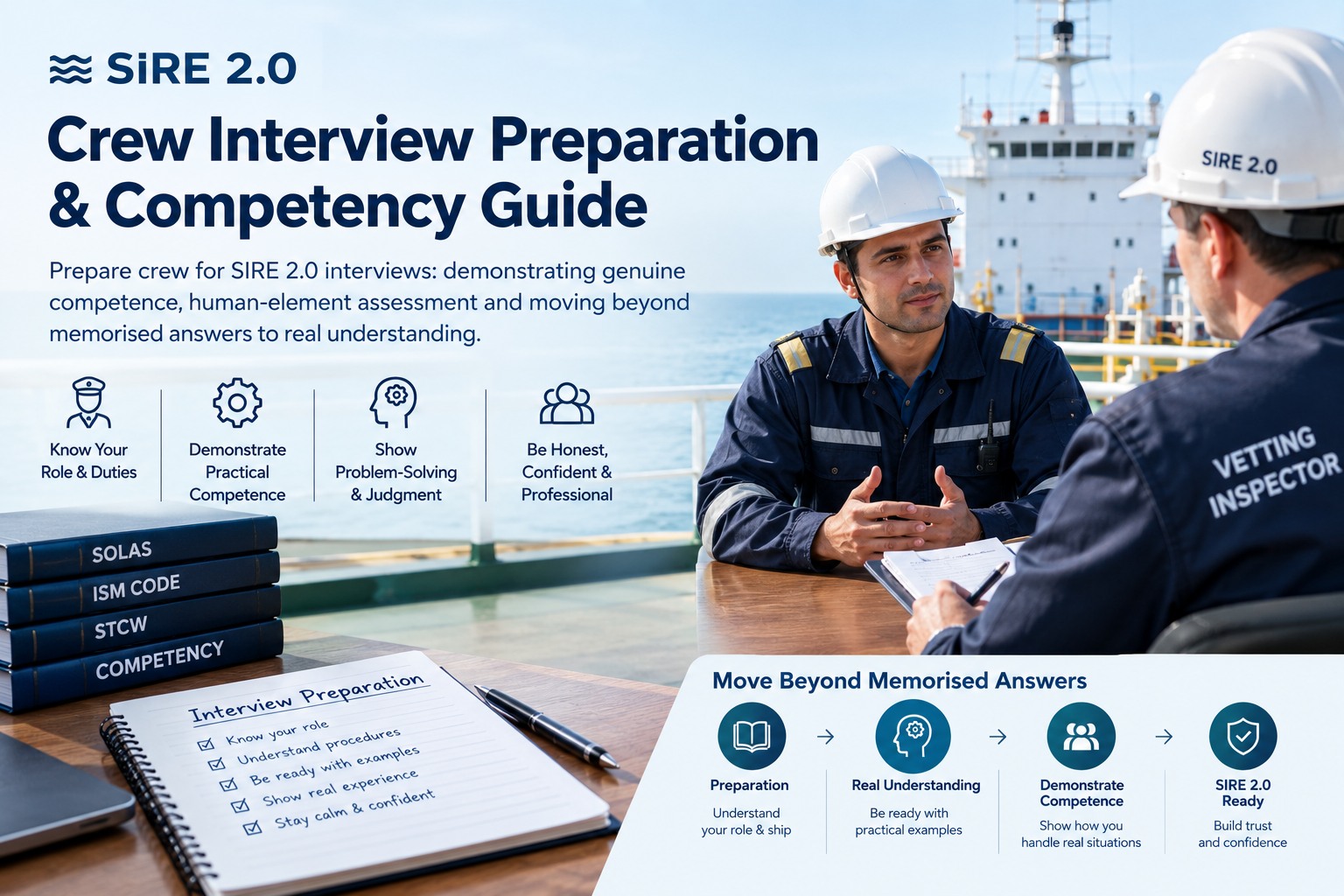
Prepare crew to answer in their own words
Every crew member should be able to articulate their role in emergency procedures, demonstrate familiarity with the safety management system, and explain safety-critical task steps in their own words rather than reciting memorised responses, which inspectors are trained to see through.
Run mock interviews to build confidence
Conduct mock interviews so crew are comfortable explaining their knowledge to an inspector, focusing training on the why behind procedures. Confidence under questioning comes from practice, and the mock interview is the single most effective preparation for the human-element assessment.
Self-assess against the CVIQ regularly
The master and senior officers should run their own regular inspections using the SIRE 2.0 question set as a reference, building familiarity with the question formats and performance-based expectations rather than meeting them cold on inspection day.
Document drills and familiarisation with evidence
Maintain continuous documentation of drills, training and maintenance with dates, participants and task-specific detail, because inspectors verify operational evidence rather than just certificates — the record must show competence was built, not merely claimed.
Consider a third-party pre-vetting inspection
An experienced external inspector provides an objective preview, identifying blind spots the crew have grown accustomed to and giving a realistic rehearsal of the official inspection before it counts.
Phase Three — Closing the Loop After the Inspection
The inspection is not the end of the workflow. How observations are handled afterward shapes both this vessel's standing and its next inspection, because the next inspector will check whether they were resolved.
PHASE 3 · CORRECTIVE ACTIONS
Convert every negative observation into a tracked action
Each negative observation, with its codified detail and mandatory Performance Influencing Factor linkage, should become a tracked corrective action with an owner and a deadline, not a note in a report that quietly lapses.
Address the root cause, not just the symptom
Because observations are linked to human and organisational factors, effective closure means addressing why the gap occurred — training, supervision, procedure clarity — rather than fixing only the surface finding.
Evidence the closure for the next inspection
Keep documented proof that each action was completed, since the next inspector reviews prior reports and verifies corrective actions during pre-boarding. Closed-and-evidenced findings protect the vessel's future vetting profile.
Track trends across inspections and the fleet
Watch for recurring observation types across vessels to identify systemic gaps, and track which rotational questions have been covered so preparation focuses on the areas due to appear next.
Run across all three phases, SIRE 2.0 preparation stops being a periodic scramble and becomes what the regime is designed to reward: a continuous state of readiness. The vessel whose HVPQ and PIQ are accurate, whose photo repository is always current, whose crew can explain their work in their own words, and whose past observations are closed and evidenced does not prepare for an inspection so much as stay prepared for one. That is also the operation that earns the strong vetting profile charterers, terminals and oil majors reward with employment — turning inspection readiness from a cost into a commercial asset. To bring HVPQ and PIQ data, the six-month photo repository, crew competency records and corrective-action tracking into one connected, always-ready system, start a free trial or book a demo.
Frequently Asked Questions
How do I prepare for a SIRE 2.0 inspection?
Preparation runs across three phases. Before scheduling, make the HVPQ and PIQ accurate and current, since they drive which questions the algorithm selects; keep the Photo Repository within six months; and close out past observations with evidence. For the onboard inspection, prepare crew to explain their tasks in their own words through mock interviews and real drills, self-assess against the CVIQ regularly, and document familiarisation with dates and detail. Afterward, convert every negative observation into a tracked corrective action, address the root cause, and evidence closure for the next inspection. The key is treating readiness as continuous rather than a last-minute effort, because memorised answers and rushed preparation no longer work under SIRE 2.0.
What is the CVIQ and how many questions does it have?
The Compiled Vessel Inspection Questionnaire is the bespoke question set generated for each inspection, of roughly a hundred questions — about half the size of the old VIQ7's fixed set — drawn by algorithm from the full SIRE 2.0 Question Library and tailored to your vessel. It falls into four categories: Core questions, which make up around half of every inspection and cover fundamental safety and pollution-prevention areas; Rotational questions, which vary across successive inspections so different areas are examined over time; Campaign questions, which OCIMF activates fleet-wide in response to industry trends; and Conditional questions, triggered by your specific HVPQ and PIQ declarations. Because the set changes each time, a vessel cannot pre-polish only a fixed list.
Why is the crew interview so important in SIRE 2.0?
Because SIRE 2.0 assesses every question across Hardware, Procedures and Human Factors, and the human element is often decisive. A vessel can have perfect equipment and a perfect procedure and still receive a negative observation if the crew member cannot demonstrate and explain the task in their own words. Inspectors are trained to compare work as done against work as imagined, and every negative observation must be linked to at least one of OCIMF's nine Performance Influencing Factors, such as fatigue, competence or supervision. This makes genuine crew competence a documented driver of the vessel's vetting profile, which is why mock interviews and real understanding of the why behind procedures matter far more than memorised answers.
How often must the SIRE 2.0 Photo Repository be updated?
The Photo Repository must be kept current within six months. SIRE 2.0 requires standardised vessel photographs across safety-critical equipment, cargo areas, accommodation and engine spaces, refreshed on that six-month cycle, and this is a mandatory requirement rather than an optional one. Keeping it current is difficult to do reactively, which is why systematic digital collection and organisation across the fleet is essential — the repository should be maintained as a standing task rather than assembled in a rush before each inspection. A lapsed or incomplete repository is an avoidable weakness that undermines otherwise strong preparation.
Should I declare everything in the PIQ?
No — declare only what you can fully verify and evidence. The PIQ declarations directly influence which conditional questions the algorithm generates, and verification questions will test what you claim, so over-declaring invites questions the crew cannot answer. Declare superintendent inspections, specialist audits and operations such as ship-to-ship transfers only if they are genuinely complete and documented to the required standard. Conversely, failing to declare an operation you do perform, such as ship-to-ship, means its questions will not be included when they should be. The principle is accuracy in both directions: declare truthfully, verify everything you declare, and do not claim readiness you cannot demonstrate.
Does a past negative observation hurt my next inspection?
The CVIQ compiler algorithm does not consider a vessel's or fleet's past inspection performance when generating the questionnaire — it uses only the HVPQ and PIQ data to select applicable questions, so past observations do not change which questions appear. However, SIRE 2.0 inspectors do review previous inspection reports and negative observations during their pre-boarding preparation, and they will verify whether corrective actions for past findings were completed and documented. This means an unresolved past observation can hurt you, not through the question set, but because the inspector checks that you closed it. Converting every observation into a tracked, evidenced corrective action is therefore essential to protecting your next inspection.
Stay Ready, Not Just Get Ready
SIRE 2.0 rewards continuous readiness, not last-minute preparation. Marine Inspection connects the whole workflow — accurate HVPQ and PIQ data, the six-month photo repository, crew competency and drill records, self-assessment against the CVIQ, and tracked corrective actions closing out every observation — into one auditable system per vessel. Turn tanker vetting from a periodic scramble into a maintained state of readiness that charterers and terminals reward.