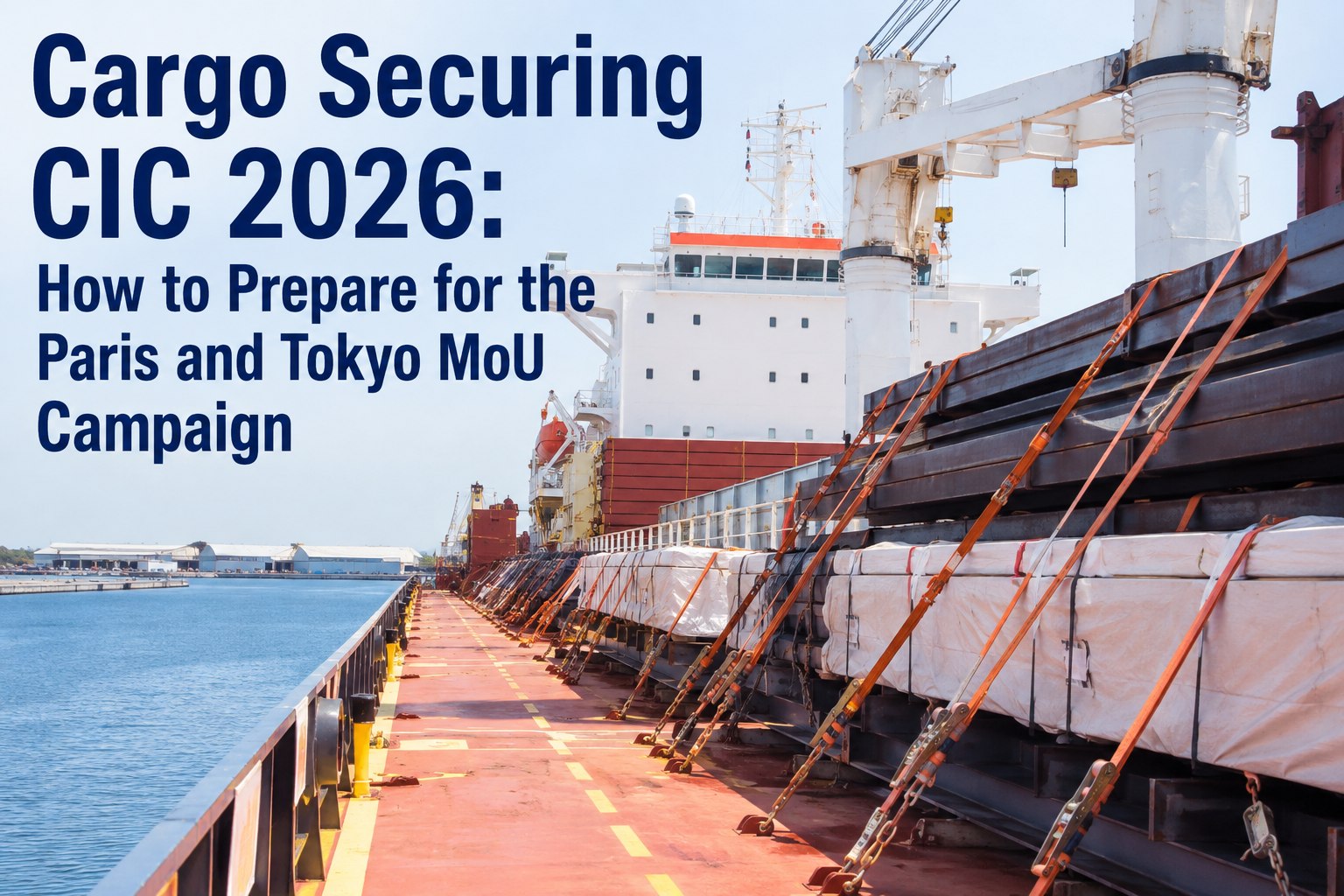
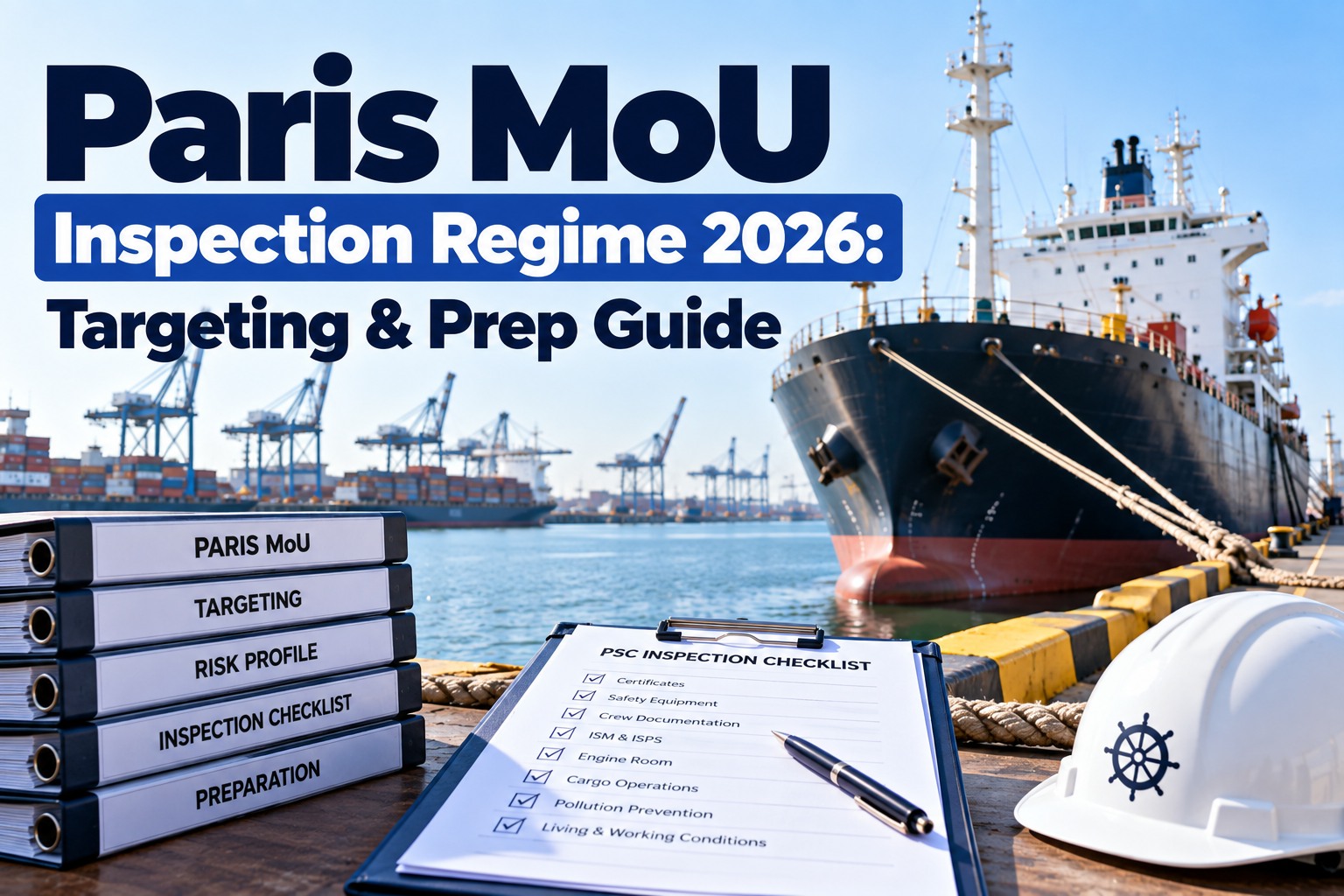
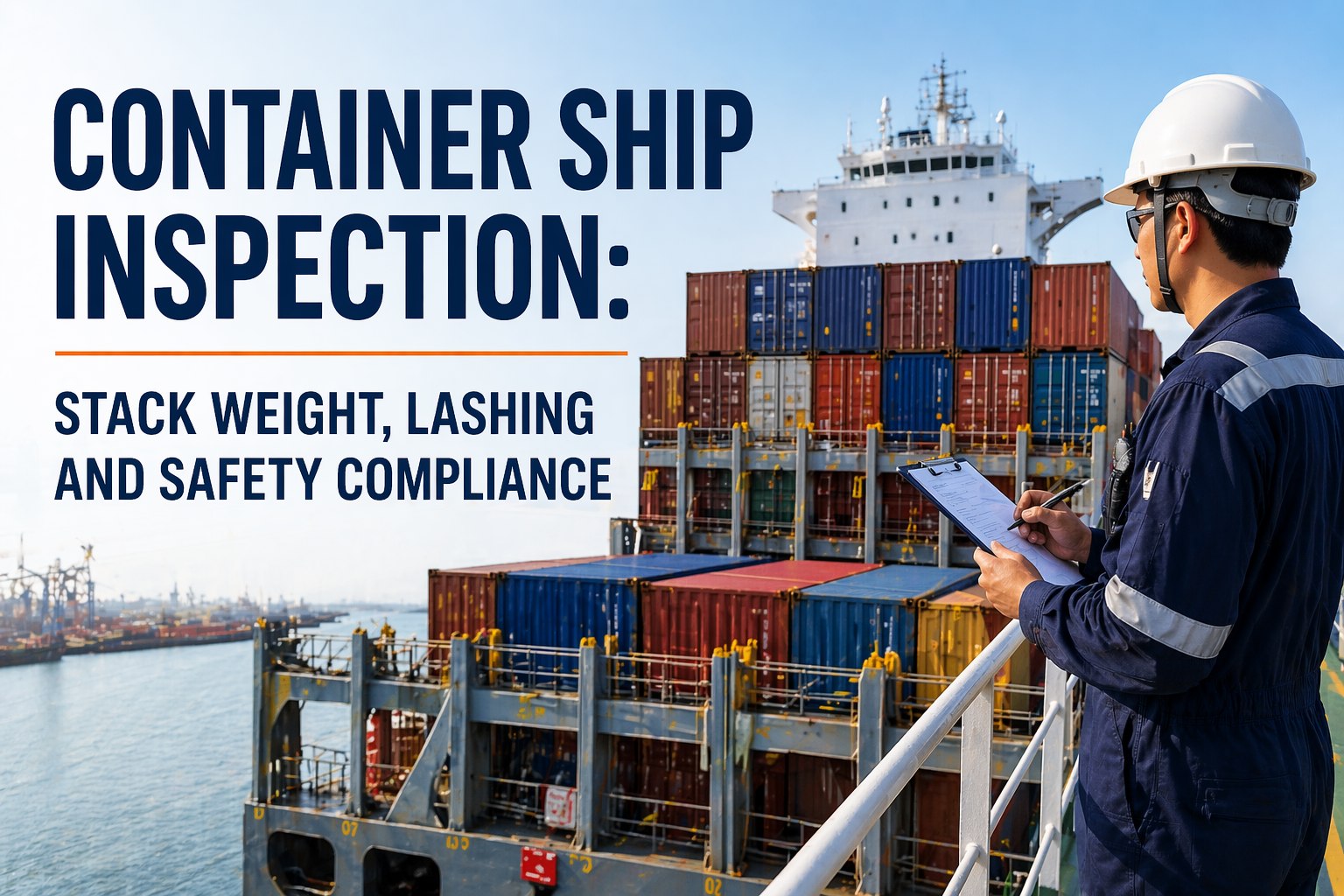
For three months from 1 September to 30 November 2026, every vessel calling at a Paris or Tokyo MoU port faces an inspection dynamic that does not apply the rest of the year. During the joint Concentrated Inspection Campaign on cargo securing, Port State Control officers apply a dedicated ten-question questionnaire on top of their routine inspection, and they apply it to every vessel they inspect, not only those already flagged. That changes the odds materially: a ship that would pass a normal inspection can pick up deficiencies, and potentially a detention, purely on cargo securing if its manual, its equipment or its crew's application of the procedures does not hold up. The questionnaire, published by the MoUs on 3 August 2026, contains ten questions of which seven can be grounds for detention, so this is not a paperwork exercise. And the timing gives operators a genuine advantage: with the questions known and the campaign not yet started, there is a short window to review procedures, verify equipment and drill the crew before the first campaign inspection rather than after a deficiency. This guide sets out how to use that window — what a Concentrated Inspection Campaign is and why it raises the stakes, the structure of the 2026 questionnaire, the five areas officers will concentrate on, and a preparation checklist to close the gaps before September. To turn the pre-departure securing checks your crew already run into records the office can see and evidence to an inspector, start a free trial or book a demo.
COMPLIANCE GUIDE · PSC CAMPAIGN 2026
Cargo Securing CIC 2026: How to Prepare for the Paris and Tokyo MoU Campaign
A preparation guide for the joint Paris and Tokyo MoU Concentrated Inspection Campaign on cargo securing, running 1 September to 30 November 2026 — the questionnaire structure, the five areas officers will check, and how to close the gaps before your next port call.
1 Sep–30 Nov
Campaign window across Europe and Asia-Pacific
10 questions
Published by the MoUs on 3 August 2026
7 detainable
Of the ten questions can be grounds for detention
Why a Campaign Changes the Inspection Dynamic
A Concentrated Inspection Campaign is an annual, themed add-on to routine Port State Control inspection. For three months, officers across a region work through a standard questionnaire on one chosen topic during every inspection they carry out, turning a regional concern into a quarter of focused, coordinated checking. Understanding how that differs from a normal inspection is the key to preparing for it.
It applies to every inspected vessel
The campaign questionnaire is applied on top of the standard inspection to every ship an officer inspects during the window, not only vessels already targeted. A ship subject to a routine inspection between September and November in a Paris or Tokyo MoU port will be checked against the cargo securing questions as well.
It raises the deficiency exposure
Because the questionnaire adds a focused set of checks on one topic, a vessel that would pass a routine inspection can collect a cargo securing deficiency it would not otherwise have faced. Inspection probability effectively rises across the board during the campaign.
CIC deficiencies carry full weight
A campaign deficiency is a normal PSC deficiency: it goes on the ship's record and can be detainable. With seven of the ten questions grounds for detention, a serious cargo securing failure during the campaign can hold the ship exactly as any other detainable finding would.
One inspection per MoU
A ship is subject to only one inspection under this campaign during the period, per MoU, so the exposure is bounded — but with vessels trading across both regions, and the window covering the peak of the year, most operators should treat every relevant port call as a potential campaign inspection.
The purpose behind all of this is data: the campaign collects information on compliance with SOLAS requirements for the loading, stowage and securing of cargo units and cargo transport units, and the results are published afterward to give a fleet-wide picture. For the individual operator, though, the practical reality is simpler — for three months, cargo securing is under a spotlight it does not normally face, and preparation needs to start before the campaign, not during it. To get the securing evidence and equipment records in order before the first campaign inspection, start a free trial or book a demo.
The 2026 Questionnaire Structure
The MoUs published the official questionnaire on 3 August 2026, and its structure tells you exactly where the detention risk concentrates. Knowing it lets preparation focus on what actually holds a ship rather than spreading effort evenly.
Ten questions, seven of them detainable
The questionnaire consists of ten questions verifying compliance with cargo securing requirements. Seven of these may be considered grounds for detaining the vessel where non-compliance is found, while questions 1, 6 and 10a and 10b should result only in non-detainable deficiencies. That balance is the important signal: the large majority of the questions carry detention potential, so cargo securing during this campaign is a high-stakes area where a single serious non-compliance can immobilise the ship. Preparation should therefore treat every item as potentially detainable in practice, while recognising that the bulk of the questions genuinely are. The questionnaire is applied uniformly by officers across both regions, so the assessment a vessel faces in Rotterdam is the same as the one it faces in Singapore.
The framework the questions rest on is well established and predates the campaign: the Code of Safe Practice for Cargo Stowage and Securing, SOLAS Chapters VI and VII, and each vessel's own flag-approved Cargo Securing Manual. The campaign does not introduce new requirements; it concentrates inspection on existing ones. That is reassuring, because it means a vessel already complying with its Cargo Securing Manual and maintaining its equipment has little to fear — and it means preparation is a matter of verifying and evidencing existing compliance rather than meeting a new standard.
The Five Areas Officers Will Concentrate On
Across the questionnaire, inspectors concentrate on five practical areas. These are where the checks land, and where preparation should focus.
01
The Cargo Securing Manual
On board, flag-state approved, vessel-specific, and current for the cargo actually being carried. A missing, generic or outdated manual is a fundamental finding, because the manual is the document against which everything else is judged.
02
Condition and maintenance of securing equipment
Lashing gear, twistlocks, turnbuckles and fittings surveyed, serviceable and maintained, with damaged devices removed and replaced. Inspectors check the physical condition of the equipment, not just its presence.
03
Availability of securing devices
Sufficient securing devices of the correct type available for the cargo carried, matching what the manual specifies. A shortfall in the right gear for the actual stow is a securing failure regardless of how well the available gear is applied.
04
Crew familiarisation and application
Whether the crew actually understand and apply the manual — the decisive human factor. The recurring finding across past cargo securing inspections is that procedures were in place but not always applied correctly, so knowing the manual is not enough; the crew must demonstrably use it.
05
Pre-departure securing checks and records
Whether securing is verified before departure and the check is logged and signed for every voyage. This is where a well-run operation proves its discipline, and where a digital, always-available record turns a claim of compliance into evidence an inspector can see.
Make the pre-departure securing check a record, not a routine
The five focus areas all come down to evidence an officer can verify. Marine Inspection turns the securing checks your crew already run into logged, signed, always-available records, ties equipment condition to a maintained inventory, and keeps the CSM and drill evidence to hand — so the campaign inspection finds a documented, disciplined operation.
Your Pre-Campaign Preparation Checklist
With the questionnaire published and the campaign approaching, the preparation is concrete and can be completed in the weeks before September. Work through these before your next port call in a campaign region.
Confirm the CSM is aboard, approved, vessel-specific and current
Verify the Cargo Securing Manual is the flag-approved version for this vessel, reflects the cargo actually carried, and is not a generic or superseded document. If the cargo profile has changed, confirm the manual still covers it.
Survey and inventory the securing equipment
Inspect lashing gear, twistlocks, turnbuckles and fittings, confirm a serviceable inventory sufficient for the cargo carried, and remove and replace any damaged devices. Record the condition so the maintenance history is evidenced.
Brief the cargo officer and deck crew on the CSM
Run a familiarisation session and a securing-procedures drill so the crew can demonstrate they understand and apply the manual, closing the most common gap between having procedures and following them.
Confirm pre-departure securing checks are logged and signed
Ensure securing is verified before departure and the check is recorded and signed for every voyage, so the discipline is not just done but evidenced. A digital, always-available log is far stronger than a paper form that may be missing.
Cross-check recent PSC findings for open or repeat items
Review your most recent inspection findings so you do not walk into the campaign with an open or recurring cargo securing deficiency, which would compound badly during a focused inspection.
Brief the whole fleet, not just one ship
Because the campaign applies fleet-wide across both regions, communicate the preparation to every vessel, so no ship arrives at a campaign port unprepared while others are ready.
Handled this way, the cargo securing campaign is a manageable, even beneficial event rather than a threat. The vessels that come through it cleanly are those whose Cargo Securing Manual is approved and current, whose equipment is surveyed and serviceable, whose crew can demonstrate they apply the manual, and whose pre-departure checks are logged and signed — which is to say, the vessels that were already doing cargo securing properly and can prove it. The campaign is also a useful prompt, because shortcomings in cargo securing often reflect wider operational risks that can lead to P&I claims and, in serious cases, to lost or shifted cargo at sea, so the preparation pays off well beyond the inspection window. And with the 2027 campaign already announced as enclosed space entry, the operators who build the habit of preparing for these campaigns methodically will find each one easier than the last. To keep cargo securing evidence, equipment records and drill logs organised and inspection-ready across your fleet through this campaign and the next, start a free trial or book a demo.
Frequently Asked Questions
When is the 2026 cargo securing CIC?
The joint Paris and Tokyo MoU Concentrated Inspection Campaign on cargo securing runs from 1 September to 30 November 2026. During this three-month window, Port State Control officers across Europe, the North Atlantic and the Asia-Pacific apply a dedicated cargo securing questionnaire alongside their routine inspections. Every vessel that is inspected during the period is checked against the campaign questions, and a ship is subject to only one inspection under the campaign per MoU. Because the window covers a busy trading period and applies across both major regions, most operators should treat any port call in a Paris or Tokyo MoU port during these three months as a potential campaign inspection and prepare accordingly.
How many questions are in the CIC questionnaire and how many are detainable?
The official questionnaire, published by the Paris and Tokyo MoUs on 3 August 2026, contains ten questions verifying compliance with cargo securing requirements. Seven of these may be considered grounds for detaining the vessel where non-compliance is found, while questions 1, 6 and 10a and 10b should result only in non-detainable deficiencies. This means the majority of the questionnaire carries detention potential, making cargo securing a high-stakes area during the campaign. The questions are applied uniformly by inspectors across both regions, so a vessel faces the same assessment regardless of which Paris or Tokyo MoU port it calls at during the window.
What will PSC officers check during the cargo securing campaign?
Officers concentrate on five areas: the Cargo Securing Manual, which must be on board, flag-state approved, vessel-specific and current for the cargo carried; the condition and maintenance of securing equipment such as lashing gear, twistlocks and turnbuckles; the availability of sufficient securing devices of the correct type for the cargo; crew familiarisation and whether the crew actually apply the manual; and pre-departure securing checks with logged, signed records for every voyage. The underlying framework is the Code of Safe Practice for Cargo Stowage and Securing, SOLAS Chapters VI and VII, and the vessel's own approved manual. The campaign concentrates inspection on these existing requirements rather than introducing new ones.
Can my ship be detained during the CIC?
Yes. A campaign deficiency is a normal Port State Control deficiency — it goes on the ship's record and can be detainable — and seven of the ten questions in the 2026 questionnaire can be grounds for detention. A vessel found without a valid Cargo Securing Manual, or with cargo not secured in accordance with the manual, could face detention during the campaign. The consequences are the same as any detention: immediate delay, direct costs, commercial impact through charter-party breach or lost berth windows, and a mark on the ship's thirty-six-month risk profile. This is why preparation before the campaign matters, since the detention risk is real and concentrated on one topic for three months.
How should I prepare for the cargo securing CIC?
Confirm the Cargo Securing Manual is aboard, flag-approved, vessel-specific and current for the cargo carried; survey the securing equipment and confirm a serviceable inventory, replacing damaged devices; brief the cargo officer and deck crew on the manual and run a familiarisation drill; ensure pre-departure securing checks are logged and signed for every voyage; cross-check recent PSC findings so you do not carry an open or repeat deficiency into the campaign; and brief the whole fleet rather than a single ship, since the campaign applies across both regions. With the questionnaire published ahead of September, there is a window to close these gaps before the first campaign inspection, which is the single biggest advantage available to operators.
Why does cargo securing matter beyond the inspection?
Because shortcomings in cargo securing often reflect wider operational risks and carry consequences far beyond a PSC deficiency. Poorly secured cargo can shift or be lost at sea, threatening the ship's stability and safety, and it is a frequent source of P&I claims, cargo damage, restows, delays and disputes with charterers. Past inspection campaigns have found that securing procedures were typically in place but not always applied correctly, and container vessels have required extensive restows to bring stowage back into compliance, at significant cost. So preparing for the campaign is not just about avoiding a deficiency; it is about the underlying safety and commercial discipline that good cargo securing represents, which protects the vessel, the cargo and the crew throughout the voyage.
Prepare Before September, Not After a Deficiency
The questionnaire is published, the campaign runs 1 September to 30 November, and seven of ten questions can detain a ship — but the window to prepare is open now. Marine Inspection turns pre-departure securing checks into logged, signed records, ties equipment condition to a maintained inventory, and keeps the CSM and drill evidence inspection-ready across your fleet. Walk into the campaign with a documented, disciplined operation an officer can verify at a glance.