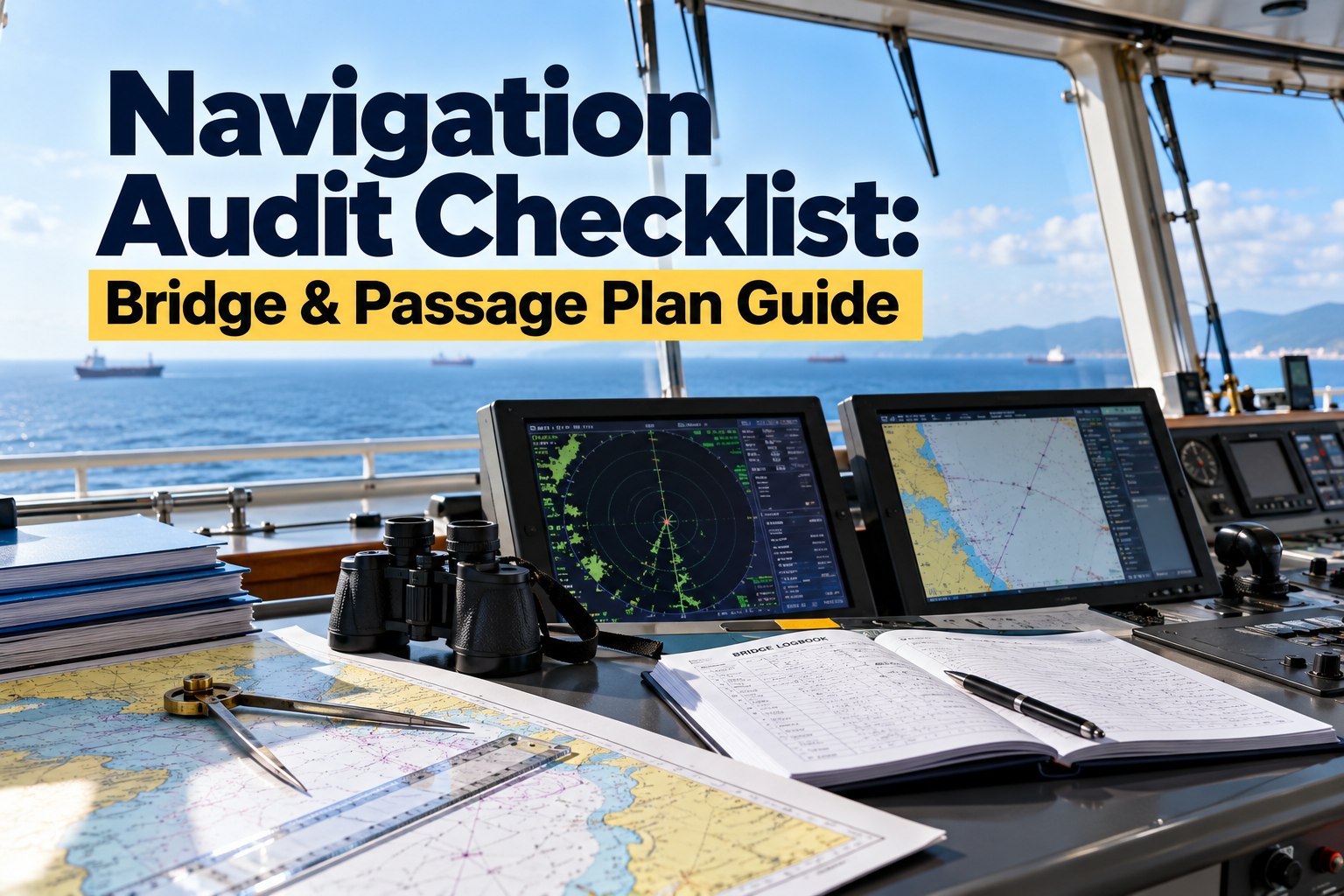
A bridge can pass a paperwork check and still be navigating unsafely. The gap shows only when the records are compared with each other: the plan against the ECDIS track, the logbook against the night orders, the correction log against the weekly notices. This checklist shows DPAs and masters how to audit the bridge the way an inspector does, and how to keep every navigation audit on record in Marine Inspection.
Navigation audit checklist: audit the bridge by comparing records, not by reading them one at a time
Each navigation record can look complete on its own. Put two side by side and the real practice appears: a plan that was never followed, a correction that was never applied, an alarm that was never heard.
Where the three disagree, the audit starts.
Why a navigation audit must test practice, not paperwork
Two well-known MAIB groundings show the problem. In both, a plan existed and the equipment was fitted, but the way it was used made the ship unsafe, and in one case audits and inspections had never noticed. For the inspection view of SOLAS Chapter V, see our SOLAS Chapter V navigation checklist; to see audits run from records, book a walkthrough.
Ro-ro passenger ferry, St Peter Port approaches
- Passage plan ignored extreme low tide and squat
- Cross-track alarm ignored; audible alarm disabled
- Safety contour set inappropriately; approved route not followed
- ECDIS misuse had gone undetected by audits and inspections
Chemical tanker, Varne Bank, Dover Strait
- Plan drawn straight across the bank by an unsupervised junior officer
- Master did not check the plan before departure
- Safety settings wrong for the area; audible alarm disabled
- Track history could not be recovered afterwards
Navigation audit records cross-check: where the truth shows
This is the core of the audit. Take one recent leg, ideally including a port approach, and compare these pairs of records. A mismatch is not automatically a finding, but every one needs an explanation. You can attach both records to the finding for free.
| Compare | With | A mismatch can reveal |
|---|---|---|
| Approved passage plan | ECDIS track history for the same leg | Plan not followed, or changed without being revised and re-approved |
| Deck logbook positions and courses | ECDIS position log and alarm log | Positions copied, not fixed; alarms raised but never logged |
| Master’s night orders | Logbook entries for the same night | Calling criteria met but master not called |
| Weekly notices and ENC correction service | ECDIS correction log and paper chart correction log | Corrections received but not applied, or applied late |
| Temporary and preliminary notices | Notes or manual objects on the ECDIS and charts | T&P notices on file but not on the route |
| NAVTEX and navigational warnings | Passage plan and route check | Warnings in force never assessed against the route |
| Watch schedule and rest hour records | Logbook watch entries and port times | Officers on watch who could not have had their rest |
| Compass error log | Watch routine and standing orders | Errors not taken each watch or after large course changes |
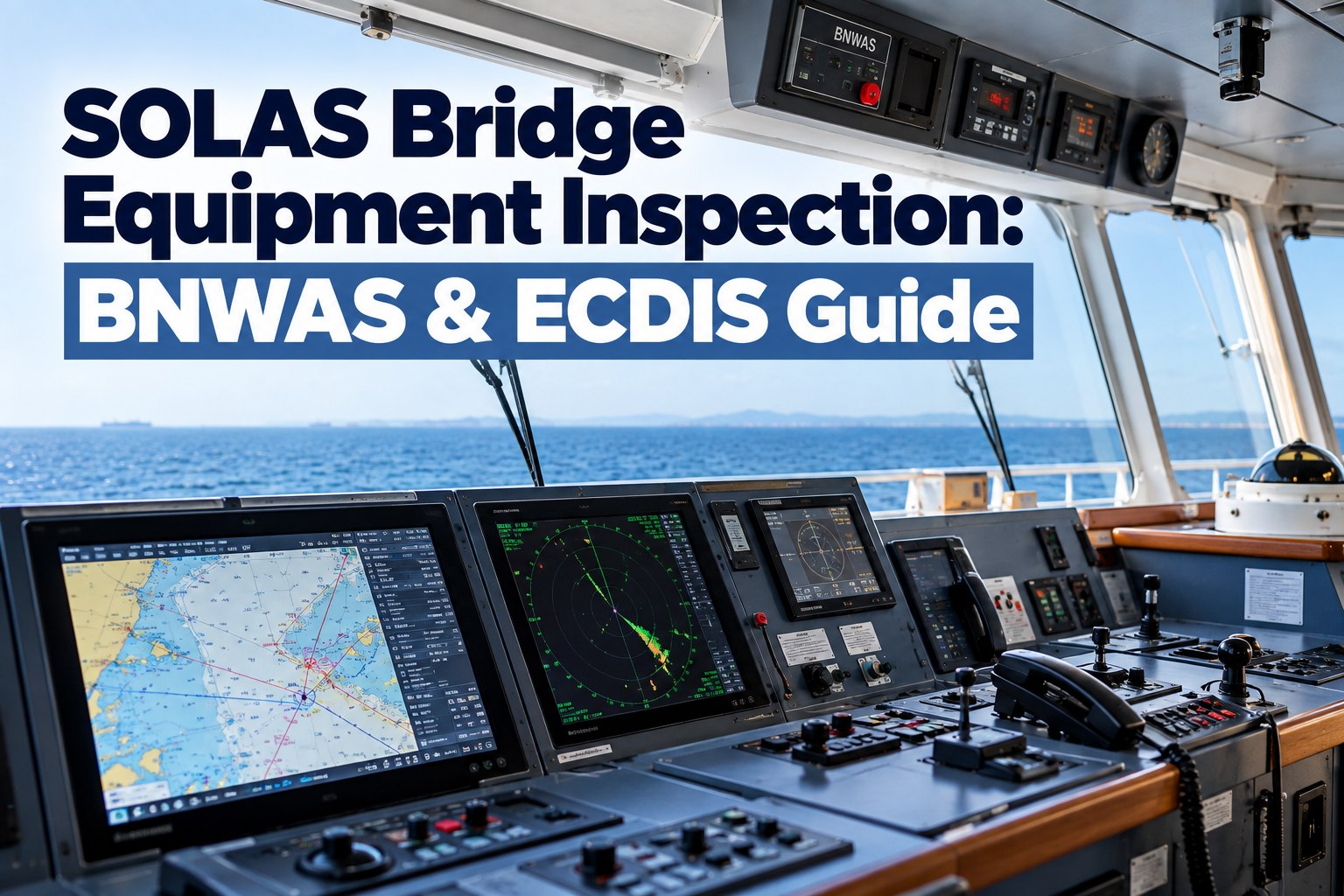
| BNWAS settings and test records | Bridge layout and watch practice | System switched off or set to a dormant period that defeats it |
Passage plan audit: berth-to-berth evidence for each stage
IMO Resolution A.893(21) splits voyage planning into four stages, and SOLAS V/34 makes the plan mandatory. Auditing a plan means asking for the evidence each stage should leave behind. The bridge team behaviours behind it are covered in our navigation assessment and bridge team audit guide; see the stage-by-stage form.
Appraisal
Ask for: charts and publications used, tide and current data, draught, weather routing, warnings in force.
Red flag: plan starts or ends at the pilot station, not berth to berth.
Planning
Ask for: UKC calculation with squat and tide, no-go areas, parallel indexes, abort points, contingency anchorages, reporting points.
Red flag: UKC policy figure used with no squat allowance.
Execution
Ask for: master’s signed approval before departure, briefing record, revisions when the route changed.
Red flag: plan prepared by a junior officer and never checked.
Monitoring
Ask for: position fixing interval by area, cross-checks by a second method, logged deviations.
Red flag: only GNSS positions, never cross-checked.
ECDIS settings audit: what to check on the screen
Settings are where ECDIS turns from a safety system into a moving picture. Check them live on both units and compare them with the passage plan and the company’s procedures. IMO’s good-practice guidance (MSC.1/Circ.1503) is the reference most auditors use. Photograph each settings page into the audit record free.
Safety contour check · illustrative
The auditor asks the officer to explain this chain. If they cannot, the setting was copied, not calculated.
Put every bridge on the same audit standard
One navigation audit form for the fleet, with settings photos, record pairs and findings that close with evidence.
Chart correction and nautical publications audit
Out-of-date charts and corrections remain a classic inspection finding because they are easy to check. Audit the chain, not just the latest week: notices received, corrections applied, and the route checked again afterwards. See correction logs tracked per ship.
ENCs
- Permits valid for the whole voyage
- Weekly corrections applied and logged, with dates
- Route checked again after each correction
Paper charts, where carried
- Chart correction log matches the weekly notices
- T&P notices pencilled in and tracked until cancelled
- Largest scale charts for the route on board
Publications
- Current editions of lights, radio signals and sailing directions
- Tidal predictions for the current year
- Corrections to publications applied
S-100 ECDIS: from 1 January 2026 new ECDIS may meet either the old or the new IMO performance standard; from 1 January 2029 all new installations must meet the S-100 standard. Existing S-57 ECDIS stays in use, with no withdrawal date set.
Watchkeeping audit: standing orders, handovers and lookout
Watchkeeping is where the plan meets the people. The records to read are the master’s standing orders, the night order book and the handover routine, and the best evidence is what you see on watch. Log watch observations against each officer.
In port or under way: what each navigation audit can see
An in-port audit can read every record but sees no navigation. A sailing audit sees the bridge team at work but has less time for the records. Most companies switch between the two, and the best programmes include a pilotage or coastal passage.
In-port audit
- Full records cross-check over several legs
- ECDIS settings, logs and correction history
- Publications, permits and certificates
- Interviews with each officer in turn
Sailing audit
- Plan execution on a real departure or arrival
- Position fixing, cross-checks and alarms in use
- Pilot exchange, communication and lookout
- Handover and calling the master in practice
Navigation audit checklist
Tick through these items on each audit. They follow the records cross-check order, so findings land with their evidence.
Passage planning
ECDIS and charts
Watchkeeping and records
How Marine Inspection turns a voyage into navigation audit evidence
Most of a navigation audit is lining up records that live in different places. Marine Inspection puts the plan, the track and the logbook for one leg on a single strip and marks where they part, so the auditor spends time on the questions rather than the paperwork. The example below is illustrative.
Navigation audit FAQs
What is a navigation audit on a ship?
A structured check of how the ship is navigated, carried out by the company, usually the DPA, a marine superintendent or a navigation assessor. It covers passage planning, ECDIS and charts, watchkeeping and the records behind them, and can be done in port or under way.
How often should navigation audits be carried out?
At least as part of the annual ISM internal audit. Tanker operators following OCIMF’s TMSA also schedule regular navigation audits, including assessments under way. Higher-risk trades often add more.
What does a passage plan audit check?
That the plan covers the whole voyage berth to berth, follows the four IMO stages, includes UKC with squat and tide, no-go areas and abort points, was approved by the master, and matches what the ship actually did.
How is the ECDIS safety contour set?
The safety depth is worked out from draught, squat and the company’s UKC policy. ECDIS then shows the next deeper contour available in the ENC as the safety contour. Officers should be able to explain the figures.
Why compare the logbook with the ECDIS log?
Because each can look complete alone. Comparing them shows copied positions, alarms that were never logged and deviations that were never explained.
Does the S-100 change mean ECDIS must be replaced?
No. Existing S-57 ECDIS remains in use. Only ECDIS newly installed from 1 January 2029 must meet the S-100 standard. Marine Inspection can track ECDIS software and chart status per ship.
Audit the voyage, not just the paperwork
Give every bridge one audit standard, every finding its evidence, and the DPA a fleet view of navigation risk.