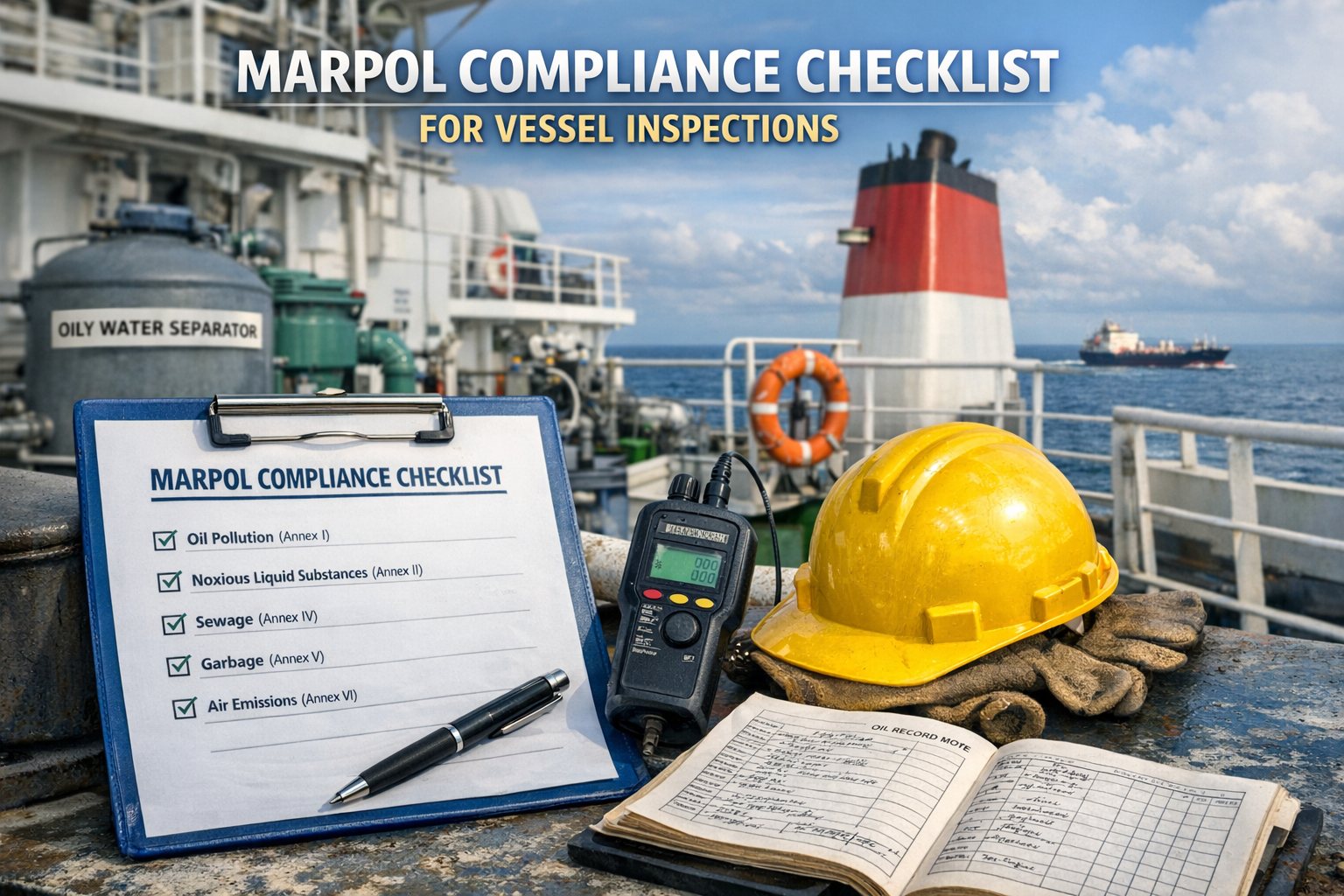
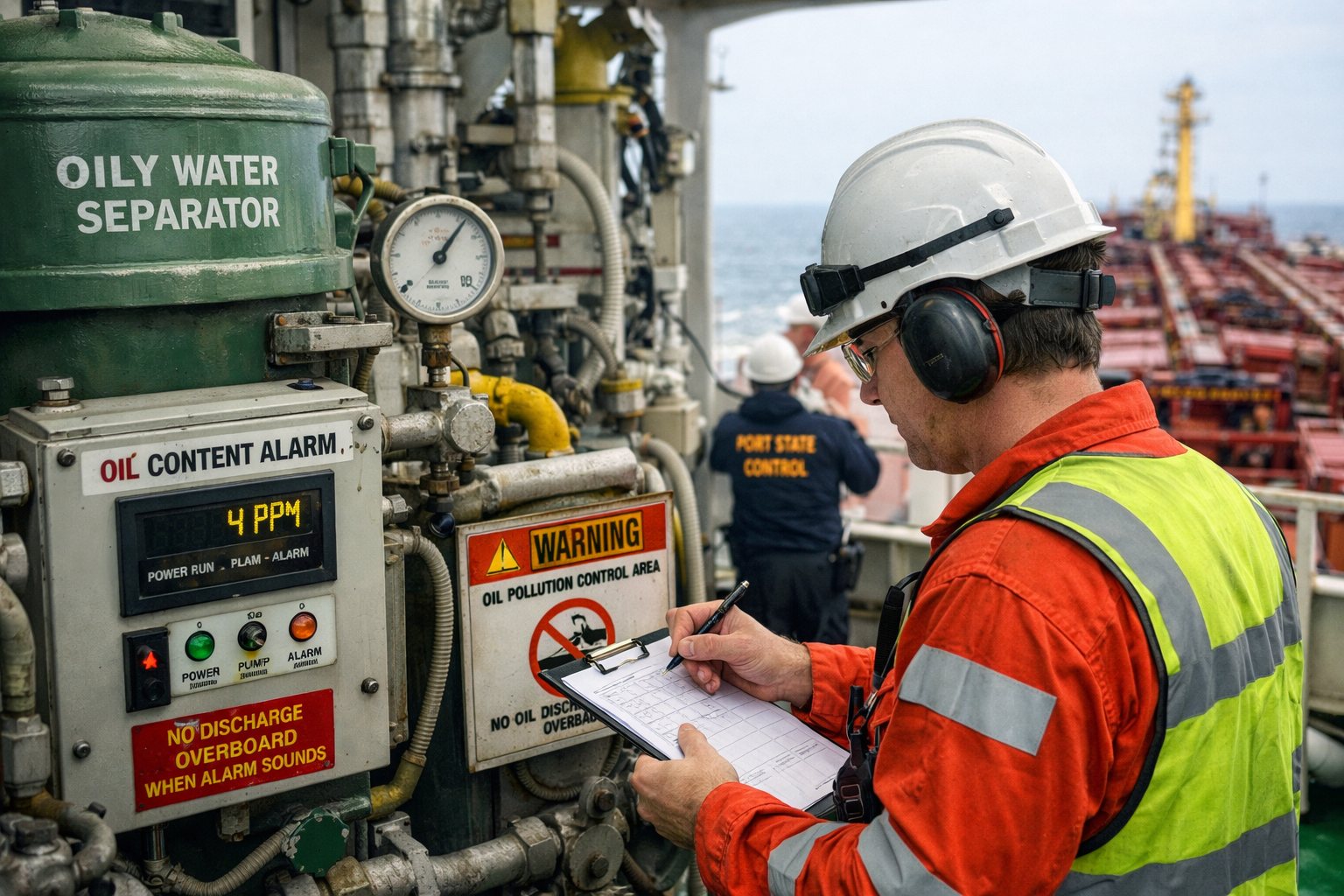
A Marshall Islands-flagged container vessel discovered that MARPOL compliance isn't about passing inspections—it's about avoiding catastrophic penalties. After a port state control inspector found falsified oil record book entries in Hamburg, the vessel faced a $450,000 fine, 5-day detention, and criminal prosecution of the chief engineer. The violation wasn't equipment failure; it was deliberate non-compliance with MARPOL Annex I record-keeping requirements. Three months later, the same company lost a major charter contract when the vetting report revealed the incident. When MARPOL violations can result in criminal charges, six-figure fines, and detention in every port, environmental compliance becomes a commercial imperative, not just a regulatory obligation.
MARPOL Compliance Landscape
Why environmental compliance determines vessel commercial viability
18%
of PSC deficiencies
MARPOL violations account for nearly one-fifth of all port state control findings
$250K
average fine
Typical penalty for deliberate MARPOL violations in major port states
85%
record-keeping issues
Percentage of MARPOL deficiencies involving documentation rather than equipment
6 Annexes
compliance areas
MARPOL regulations covering oil, chemicals, sewage, garbage, air emissions, ballast water
MARPOL (Marine Pollution) is the International Convention for the Prevention of Pollution from Ships, adopted in 1973 and modified by 1978 Protocol. Six annexes regulate different pollution sources: Annex I (Oil), Annex II (Noxious Liquid Substances), Annex III (Harmful Packaged Goods), Annex IV (Sewage), Annex V (Garbage), and Annex VI (Air Pollution). Every vessel must comply with applicable annexes based on ship type, size, and operations. Port state control inspectors prioritize MARPOL during inspections because violations indicate either operational negligence or deliberate environmental harm—both detention-level concerns.
MARPOL Annex I: Oil Pollution Prevention
Annex I regulates oil pollution from cargo operations (tankers) and machinery space operations (all vessels). This is the most frequently inspected MARPOL annex, accounting for 45% of all MARPOL-related deficiencies. Compliance requires both functional equipment and meticulous record-keeping.
MARPOL Annex I Inspection Checklist
Equipment Requirements
☐
Oil Discharge Monitoring Equipment (ODME) operational with current calibration certificate
☐
15 ppm bilge alarm functioning; test annually with logged results
☐
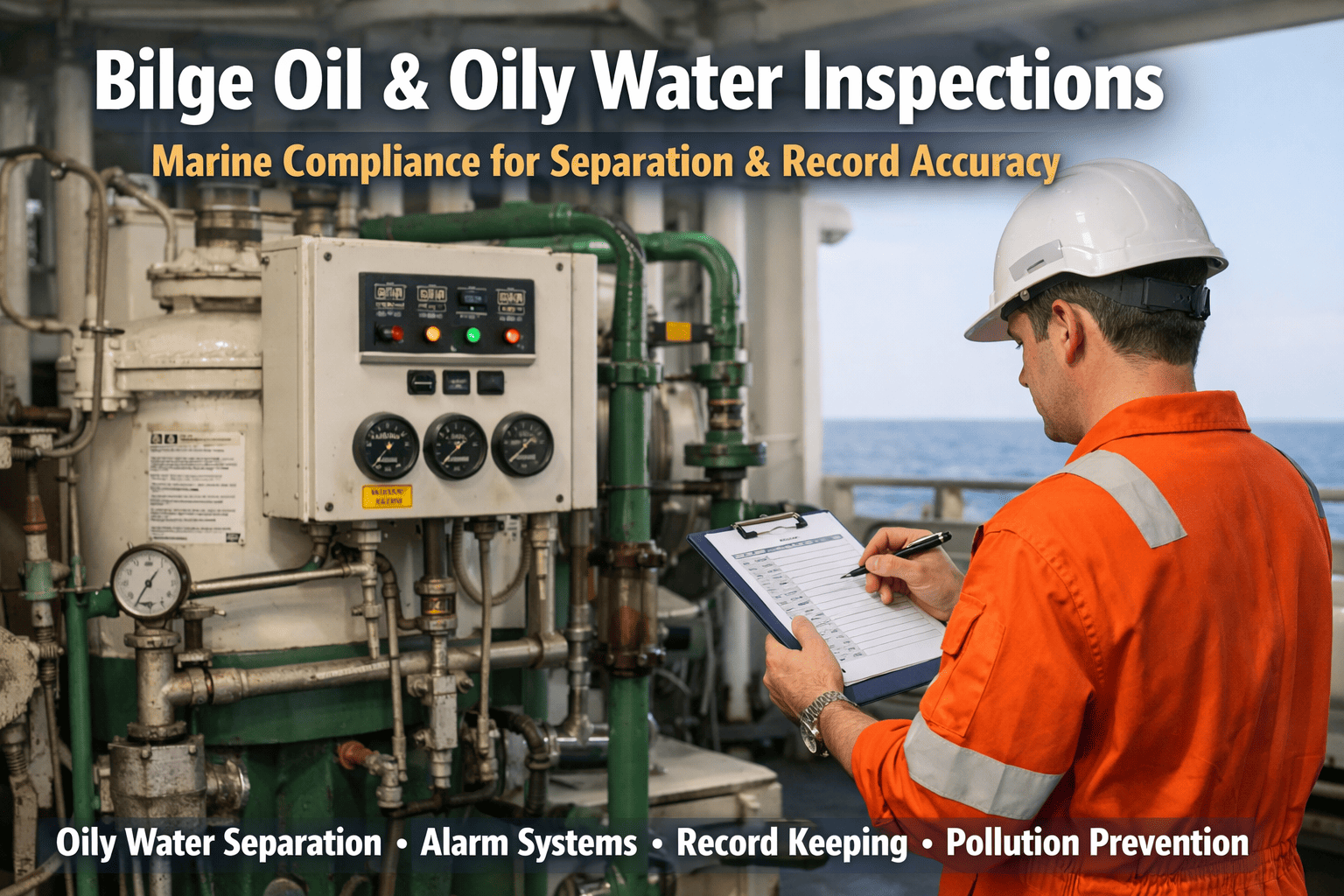
Oily water separator operating correctly; discharge valve sealed when not in use
☐
Oil content meter showing accurate readings; compare against test samples
☐
Sludge tank capacity adequate; transfer arrangements to shore reception facilities working
Record-Keeping Requirements
☐
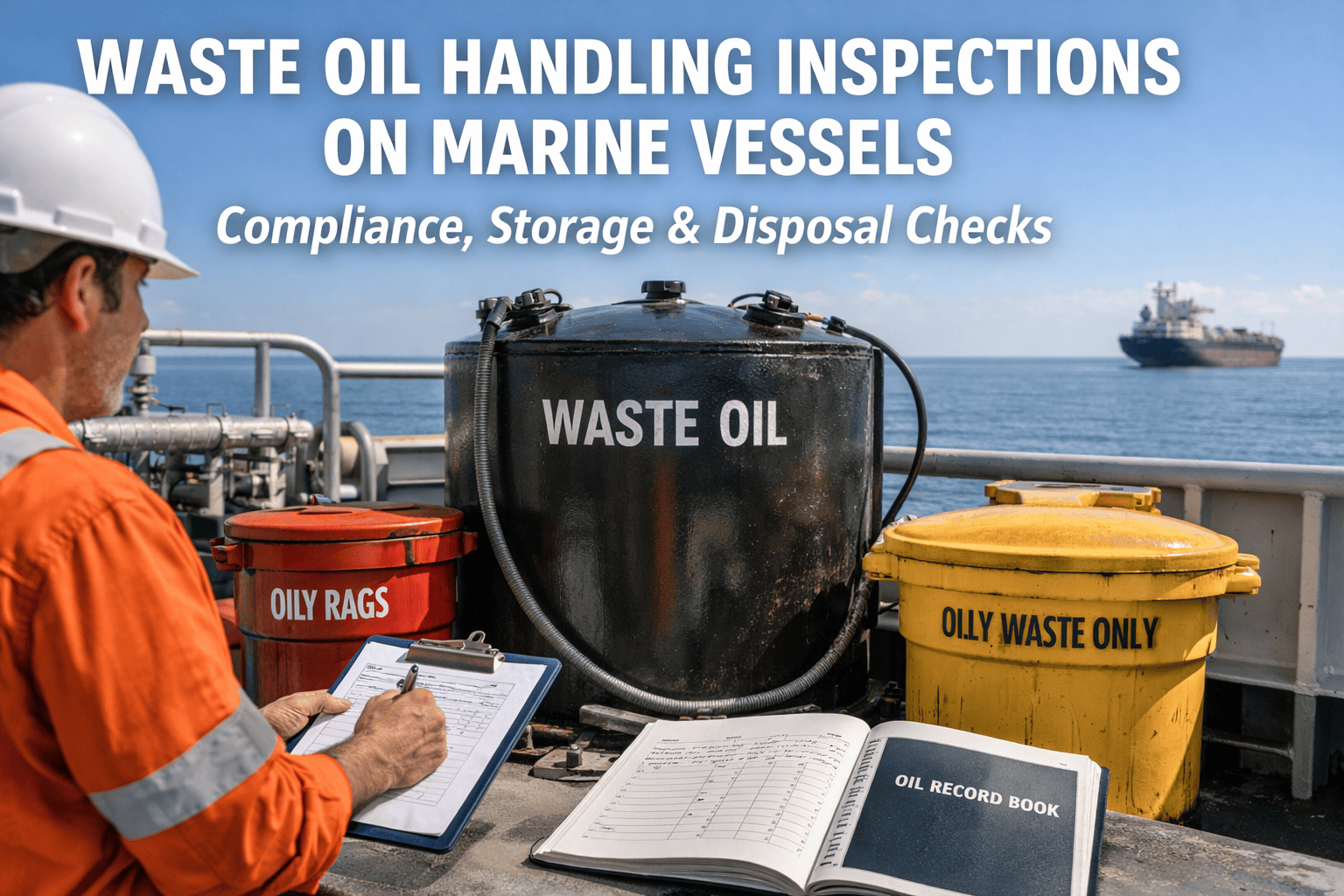
Oil Record Book Part I (machinery space) complete with all required entries
☐
Oil Record Book Part II (cargo/ballast operations) current for tankers
☐
All entries signed by officer in charge and master monthly
☐
No gaps in dates; every operation properly recorded
☐
Sludge disposal receipts attached; quantities match ORB entries
☐
No alterations without proper corrections (single line through, initialed)
Operational Compliance
☐
Bilge discharge only through approved equipment; never direct overboard
☐
Discharge at sea only when vessel underway (>4 knots) and >12nm from shore
☐
Oil content <15ppm during discharge; ODME alarm triggers stops discharge
☐
Sludge tanks not overflowing; regular discharge to shore facilities
The most critical element: Oil Record Book accuracy. Inspectors compare ORB entries against sludge disposal receipts, bunker delivery notes, and operational patterns. Discrepancies trigger detailed investigation and potential detention. Operators experiencing recurring Annex I deficiencies should implement digital MARPOL record-keeping systems that prevent entry gaps, ensure proper signatures, and flag inconsistencies automatically—eliminating 90% of documentation-related violations. Digital platforms timestamp every entry, require electronic signatures before saving, and automatically cross-check sludge quantities against disposal receipts, making falsification virtually impossible.
MARPOL Annex V: Garbage Management
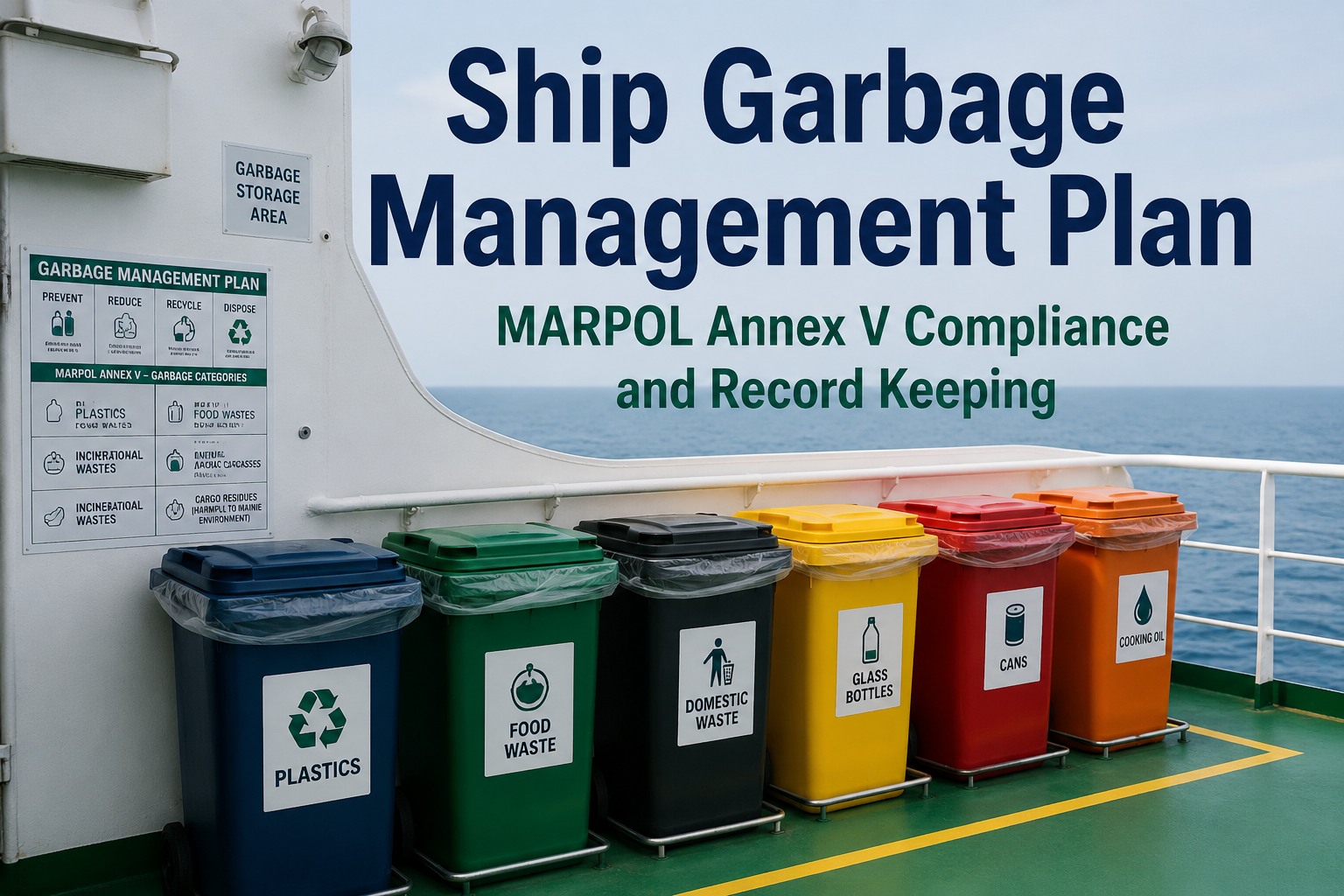
Annex V prohibits discharge of most garbage into the sea. Recent amendments tightened requirements significantly, making garbage management the second-most common MARPOL deficiency category (25% of violations). Compliance requires proper equipment, clear procedures, and consistent crew implementation.
MARPOL Annex V Inspection Checklist
Equipment & Procedures
☐
Garbage Management Plan posted in crew areas in working language
☐
Segregation bins clearly labeled (plastic, food waste, paper, metal, glass)
☐
Incinerator operational (if fitted) with manufacturer approval for garbage burning
☐
Food waste grinder/comminuter operational (if discharge permitted)
☐
Placards displayed showing discharge restrictions in multiple languages
Garbage Record Book
☐
All garbage discharges recorded (to shore facility with receipts attached)
☐
Permitted at-sea discharges documented (food waste >12nm from shore)
☐
Incineration records complete with waste categories and quantities
☐
Accidental loss or discharge incidents documented immediately
☐
Officer signatures on all entries; master review monthly
Operational Evidence
☐
Garbage storage areas clean, organized, properly secured
☐
No evidence of illegal discharge (garbage near discharge points, overboard chutes)
☐
Crew demonstrates understanding of segregation requirements
☐
Shore disposal receipts quantities match accumulated garbage volumes
Garbage management compliance failures often stem from crew training gaps rather than equipment issues. When crew members don't understand why segregation matters or which items are absolutely prohibited from sea discharge, violations become inevitable. Companies managing multiple vessels should schedule a fleet-wide MARPOL training consultation to establish standardized garbage management procedures across all ships, ensuring consistent compliance regardless of crew rotation. A 30-minute discussion can identify systematic gaps and develop targeted training programs that reduce Annex V violations by 70%+ across entire fleets.
MARPOL Annex VI: Air Emissions
Annex VI regulates sulfur oxides (SOx), nitrogen oxides (NOx), ozone-depleting substances, volatile organic compounds, and greenhouse gases. With global sulfur cap at 0.50% and ECA requirements at 0.10%, Annex VI compliance affects every vessel globally. Recent IMO 2020 implementation made this the fastest-growing deficiency category.
MARPOL Annex VI Inspection Checklist
Fuel Compliance
☐
Bunker Delivery Notes (BDN) showing fuel sulfur content for all fuel on board
☐
Fuel oil changeover procedure documented for ECA entry/exit
☐
Fuel changeover logs with time/position when switching between fuel types
☐
Representative fuel samples retained on board (last 3 bunkerings minimum)
☐
Scrubber operation records if using EGCS instead of compliant fuel
Equipment & Certificates
☐
International Air Pollution Prevention (IAPP) Certificate current
☐
Engine International Air Pollution Prevention (EIAPP) certificates for engines
☐
Ozone-depleting substances record (if any systems use controlled refrigerants)
☐
VOC management plan for tankers carrying crude oil/gasoline
☐
Energy Efficiency Certificate (SEEMP Part I and Part II for EU ETS)
Monitoring & Reporting
☐
EU MRV/IMO DCS fuel consumption data collection current
☐
CII (Carbon Intensity Indicator) calculation and rating documented
☐
FuelEU Maritime compliance plan (for EU port calls from 2025)
Eliminate MARPOL Documentation Gaps
Stop manual record-keeping errors. Digital MARPOL compliance systems prevent entry gaps, ensure proper signatures, and flag inconsistencies before inspectors find them.
Common MARPOL Deficiencies & Prevention
Analysis of 15,000+ PSC inspections reveals five recurring MARPOL deficiency patterns. These account for 78% of all MARPOL-related detentions and are entirely preventable through systematic operational discipline.
1
Incomplete or Falsified Record Books
42% of MARPOL deficiencies
Common Issues: Missing entries, unsigned records, altered entries without proper corrections, entry dates/times inconsistent with operational patterns, sludge quantities not matching disposal receipts.
Prevention: Implement daily record book review by chief engineer/chief officer. Use digital systems that timestamp entries, require electronic signatures, and flag inconsistencies automatically. Never alter entries—make corrections with single strikethrough, initials, and date. Photograph all disposal operations for evidence.
2
ODME/15ppm Alarm Defects
18% of MARPOL deficiencies
Common Issues: Oil discharge monitoring equipment not operational, 15ppm alarm not functioning, calibration certificates expired, bypass arrangements not properly sealed, equipment not tested annually.
Prevention: Test ODME/15ppm alarm quarterly; maintain test logs with witnessed results. Ensure calibration performed annually by approved service technicians. Seal all bypass valves with wire seals; verify integrity monthly. Never operate oily water separator without functional monitoring equipment.
3
Garbage Management Plan Not Followed
15% of MARPOL deficiencies
Common Issues: Garbage not segregated per plan, disposal procedures unclear to crew, placards outdated or missing, incinerator used for prohibited materials, shore disposal receipts quantities don't match accumulated garbage.
Prevention: Conduct monthly garbage management training with crew. Assign garbage management officer to monitor compliance. Weigh garbage categories before shore disposal; verify quantities on receipts. Photograph segregated garbage weekly; maintain image log proving consistent practices.
4
Fuel Sulfur Compliance Issues
13% of MARPOL deficiencies
Common Issues: No BDN showing fuel sulfur content, fuel changeover not documented when entering/leaving ECAs, scrubber not operating in ECA waters, fuel samples not retained, high-sulfur fuel found in low-sulfur tanks.
Prevention: Verify BDN sulfur content immediately upon bunkering; reject delivery if documentation incomplete. Document fuel changeover with exact time/position for all ECA transits. Test fuel samples quarterly; verify sulfur content matches BDN claims. Maintain strict tank segregation for different sulfur fuels.
5
Sewage System Non-Compliance
12% of MARPOL deficiencies
Common Issues: Sewage treatment plant not operational, discharge valve not sealed when not in use, no evidence of treatment plant maintenance, sewage holding tank overflowing, crew unfamiliar with discharge restrictions.
Prevention: Test sewage treatment plant monthly; record effluent quality parameters (BOD, COD, suspended solids, coliform). Maintain manufacturer-recommended service schedule. Seal direct discharge valves; only open when >3nm from shore and vessel underway. Train crew on discharge restrictions; post clear guidance in sanitary spaces.
These deficiency patterns show clear theme: MARPOL violations primarily result from operational discipline failures, not equipment inadequacy. Fleet operators experiencing recurring MARPOL issues across multiple vessels face systematic rather than isolated problems. If you're managing 3+ vessels and seeing similar MARPOL deficiencies appearing on different ships, schedule a comprehensive fleet compliance audit to identify root causes and implement company-wide solutions. A structured 30-minute consultation reviews your recent inspection history, identifies patterns you might not see from daily operations, and develops targeted corrective action plans that address systemic gaps rather than treating symptoms vessel-by-vessel.
72-Hour MARPOL Preparation Protocol
When entering ports with high PSC inspection probability, this protocol verifies MARPOL readiness across all applicable annexes. The checklist assumes continuous baseline compliance; it confirms readiness rather than creating it.
MARPOL Pre-Inspection Verification Protocol
72 Hours Before
Review all MARPOL record books for past 12 months: Oil Record Book, Garbage Record Book, Ozone-Depleting Substances Record
Verify no gaps in dates; all entries signed by officer and master monthly; disposal receipts attached and quantities match
Test ODME/15ppm alarm functionality; document test results with date/time/witness signatures
Confirm all MARPOL certificates current: IOPP, IAPP, Garbage Management Plan, Sewage System Certificate
Verify fuel BDNs show compliant sulfur content; fuel changeover logs complete for recent ECA transits
48 Hours Before
Inspect oily water separator, sewage treatment plant, incinerator for operational readiness
Verify garbage segregation bins properly labeled and used correctly; photograph storage areas
Check sludge tank levels; ensure capacity available before arrival (or arrange discharge immediately upon berthing)
Review EU MRV/IMO DCS fuel consumption data; ensure reporting current for vessels >5,000 GT
Brief crew on MARPOL procedures; verify understanding of discharge restrictions and record-keeping requirements
24 Hours Before
Conduct master's MARPOL walkthrough: machinery space bilges dry, no oil sheens, garbage areas clean
Verify all discharge valves properly configured: OWS in use, direct overboard sealed, sewage correctly aligned
Prepare quick-reference folder: certificates, recent record book entries, disposal receipts, test logs
Document any ongoing MARPOL equipment issues with repair plans and estimated completion dates
This preparation protocol works effectively for single-vessel operations but becomes challenging for fleet managers overseeing multiple ships across different regions. If you're responsible for MARPOL compliance across 5+ vessels, manual tracking of record books, certificates, equipment testing, and crew training status becomes overwhelming. Start with a centralized fleet compliance dashboard that monitors MARPOL readiness across all vessels simultaneously, showing real-time red/yellow/green indicators for each compliance area. Shore staff can identify vessels approaching certificate expiry, equipment testing deadlines, or training renewal dates, enabling proactive intervention before deficiencies occur. The free platform includes MARPOL-specific tracking modules designed for multi-vessel operations.
Achieve Continuous MARPOL Readiness
Stop pre-inspection scrambling. Implement systems that maintain MARPOL compliance daily, automatically flagging issues before they become deficiencies.
Frequently Asked Questions
What are the penalties for MARPOL violations?
MARPOL penalties vary by severity and jurisdiction. Minor violations (documentation errors, overdue equipment maintenance) result in deficiency notices requiring correction within 14 days, with typical fines of $2,000-$10,000. Serious violations (equipment deliberately disabled, false record entries, illegal discharges) trigger vessel detention, fines of $50,000-$500,000, and potential criminal prosecution of master and chief engineer. United States, European nations, Australia, and Singapore impose especially severe penalties—US Oil Pollution Act violations can exceed $1 million plus criminal sentences. Deliberate MARPOL violations also blacklist vessels from vetting-dependent charters.
How long must MARPOL record books be retained?
MARPOL record books must be retained on board for 3 years from date of last entry. Oil Record Book Parts I and II, Garbage Record Book, and Ozone-Depleting Substances Record all follow this requirement. When record books are full, they move to shore archive but must remain available for inspection during that 3-year period. PSC inspectors typically review the most recent 12 months in detail but may request access to older records if suspicious patterns emerge. Electronic record-keeping systems must maintain tamper-proof archives meeting the same 3-year retention standard.
What's the difference between ECAs and global sulfur limits?
Global sulfur limit is 0.50% maximum sulfur content in fuel oil used on board (effective January 2020). Emission Control Areas (ECAs)—Baltic Sea, North Sea, North American waters, US Caribbean—require 0.10% maximum sulfur content. Vessels must use compliant fuel or employ approved alternative methods (exhaust gas cleaning systems/scrubbers) achieving equivalent emission reductions. When entering/leaving ECAs, vessels must document fuel changeover time and position. Failure to comply in ECA waters typically results in detention and fines of $25,000-$100,000 per incident.
Can vessels discharge any garbage at sea under MARPOL Annex V?
MARPOL Annex V permits limited at-sea garbage discharge: food waste can be discharged >12 nautical miles from nearest land if comminuted to pass through 25mm screen, or >3nm if not comminuted. Cargo residues (non-harmful to marine environment) can be discharged >12nm if properly documented. All plastics, synthetic ropes, fishing gear, domestic wastes, cooking oil, incinerator ashes, and electronic waste are prohibited from discharge anywhere, anytime. Animal carcasses from livestock can be discharged as far from land as possible with position logged. Everything else must be discharged to shore reception facilities with proper receipts retained.
How can digital systems improve MARPOL compliance?
Digital MARPOL compliance platforms eliminate the most common violation causes: missed entries (automated reminders ensure daily record-keeping), unsigned records (electronic signatures required before entry saves), inconsistent data (system flags when sludge disposal quantities don't match accumulation rates), and lost documentation (all disposal receipts photographed and attached to digital entries). Mobile apps allow engineers to log operations in real-time rather than retrospectively, improving accuracy. Dashboard views show compliance status across all annexes with red/yellow/green indicators. For multi-vessel operators, shore offices monitor fleet-wide MARPOL compliance, identifying systemic issues before they become detention patterns. Industry data shows 85-90% reduction in MARPOL deficiencies after digital implementation.