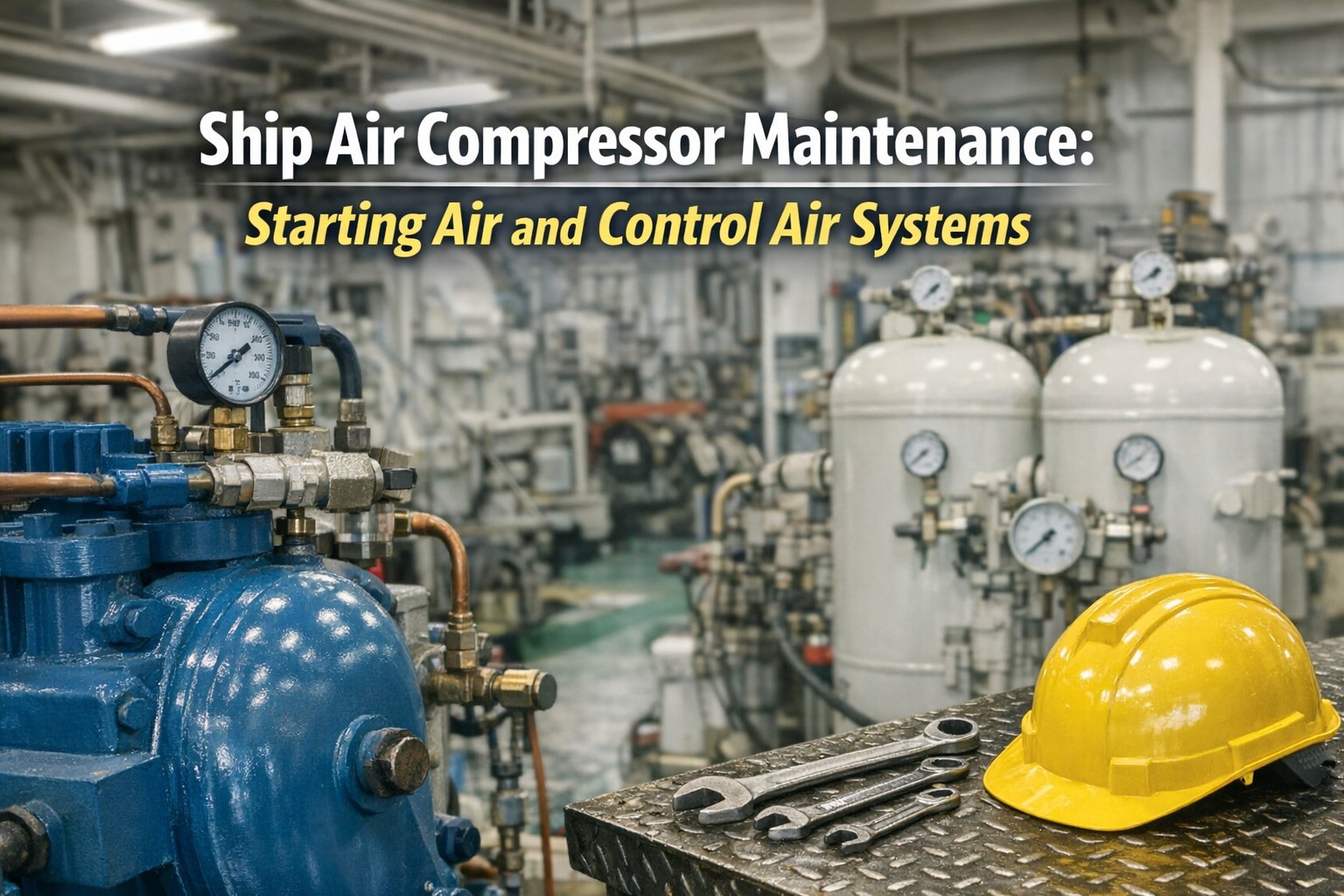
Compressed air is the invisible utility that makes every other engine room system work — you cannot start the main engine without it, you cannot operate pneumatic control valves without it, you cannot sound the whistle, manoeuvre the propeller, or execute blackout recovery without it. A typical commercial vessel carries 2-3 main air compressors delivering 30 bar starting air to receivers that store the energy needed for main engine ignition, with pressure reducing valves feeding 7-8 bar control air and service air to instrumentation, automation, pneumatic tools, and deck equipment. When the compressors fail or air quality degrades, the consequences cascade through every system on the ship: contaminated control air clogs pneumatic valves causing automation failures; low air pressure prevents main engine starting during manoeuvring; oil and moisture carryover creates the conditions for starting air line explosions — one of the most dangerous engine room emergencies, where accumulated oil mist in high-pressure piping ignites from hot gases leaking past a sticking starting air valve. For marine engineers, air compressor maintenance is the daily discipline that prevents these catastrophic scenarios: valve inspection every 250-1,000 hours, filter cleaning at 500-hour intervals, automatic drain verification daily, relief valve testing weekly, and control air dryer membrane replacement per PMS schedule. Neglect any element and the compressor runs longer (increased running hours = first diagnostic), delivers hotter air (explosion risk), produces wet air (corrosion and valve fouling), or loses volumetric efficiency (insufficient air for engine starting during critical manoeuvring). To see how Marine Inspection digitalises air compressor maintenance records, running hour tracking, and air quality monitoring across your fleet, book a Marine Inspection demo.

What Compressed Air Powers on Your Vessel
30 bar
Starting Air
Main engine starting, auxiliary engine starting, emergency generator starting, blackout recovery
7-8 bar
Control & Instrument Air
Pneumatic control valves, throttle controls, automation systems, engine governors, monitoring instruments
5-7 bar
Service Air
Pneumatic tools, cleaning devices, deck equipment, soot blowing, hatch cover operation, whistle/foghorn

The Compressed Air System: From Compressor to Consumer

Understanding the complete air system prevents the most common maintenance mistakes — fixing the compressor when the problem is actually downstream (leaking valves, clogged dryers, corroded piping). Book a Marine Inspection demo to see how the platform tracks maintenance across every system component, not just the compressor.

1
Air Intake & Filter
Clean air drawn through intake filter. Dirty filter = higher temperature, reduced FAD, explosion risk. Clean every 250-500 hours.

2
LP Stage Compression
First-stage compression to ~3-4 bar. LP suction and delivery valves. Relief valve set at 10% over working pressure. LP drain.

3
Intercooler
Cools compressed air between stages. Removes heat, reduces volume, increases density. Drain removes condensed moisture and oil. Clogged intercooler = overheating.

4
HP Stage Compression
Second-stage compression to 30 bar. HP suction and delivery valves. Relief valve. HP drain. Non-return valve on discharge prevents backflow.

5
Aftercooler
Final cooling of compressed air. Maximum discharge temp after aftercooler: 93°C (alarm setpoint). Fusible plug at 121°C protects downstream equipment.

6
Air Receiver (Bottle)
Storage at 30 bar. Safety valve, pressure gauge, low pressure alarm, drain valve. Internal coating resists corrosion. Regular internal inspection required by class.

Safety Devices: What Protects the System and Crew

Air compressor systems carry extensive safety devices because compressed air at 30 bar combined with oil vapour creates genuine explosion risk. Understanding each safety device prevents the most dangerous operational errors.

Air Compressor Safety Devices
Safety Device Location Function Set Point / Action Test Frequency
Relief Valve (LP Stage)LP dischargeLimits LP stage pressureOpens at 10% above LP working pressureWeekly manual test
Relief Valve (HP Stage)HP dischargeLimits HP stage pressureOpens at 10% above HP working pressure (30 bar)Weekly manual test
Fusible PlugAfter aftercooler, before receiverProtects receiver from high-temp airMelts at 121°C (bismuth 50%, tin 30%, lead 20%)Visual inspection; replace if discoloured
High Temp Alarm/TripAftercooler outletCuts off compressor on high discharge tempAlarm at max 93°C delivery temperatureMonthly function test
Low LO Pressure Alarm/TripLubrication systemStops compressor if oil pressure failsNormal ~2.8 bar; trips below minimumMonthly function test
Cooling Water Failure AlarmCooling water systemAlerts on loss of coolingFlow or pressure switch activatedMonthly function test
Unloader ValvesEach cooler drain / suction valveUnloads compressor during start and stopPneumatic or solenoid operated; timer-controlledDaily functional verification
Air Receiver Safety ValveTop of air bottleProtects receiver from overpressureOpens at maximum receiver working pressureAnnual overhaul; class survey
Non-Return ValveCompressor discharge linePrevents backflow from receiverMust seat properly — leaking NRV increases running hours500-hour check
Bursting Disc (some designs)Compressor cylinderTotal release if safety valve failsBursts to release entire contents; stops operationVisual inspection per manufacturer
Starting air line explosion: accumulated oil mist in 30-bar piping can ignite from hot gases leaking past sticking starting air valves. Regular drainage and piping inspection are essential prevention.

Maintenance Schedule: Running Hour-Based Intervals

Air Compressor Preventive Maintenance Schedule
Interval Maintenance Activities What to Watch For
DailyCheck oil level (do not overfill — causes oil carryover). Record running hours. Check automatic drains and unloader function. Listen for abnormal noise. Check stage pressures. Drain moisture from coolers and receiver.Increasing daily running hours = system leak or efficiency loss. Oil level rising = water contamination in sump.
WeeklyManually test LP and HP relief valves using hand lever. Check cooling water temperatures in/out. Verify all pressure gauges reading correctly. Check for leaks in discharge piping and fittings.Relief valve that won't lift = seized valve; immediate overhaul. High CW outlet temp = fouled cooler.
250 HoursClean air intake filter. Clean and inspect LP and HP suction/delivery valves. Check for carbon deposits (indicates excessive oil or overheating). Clean valve seats.Heavy carbon on valves = wrong oil, too much oil, or high temperature operation. Never reverse valve plates — fatigue cracking risk.
500 HoursRenew air filter element. Check non-return valve on discharge. Inspect piston rings for wear. Check crankcase breather — oil blow-by indicates ring wear.Oily breather emission = excessive piston ring wear. NRV leaking = increased running hours and backflow risk.
1,000 HoursMajor valve inspection — remove, disassemble, clean, check for leaks with diesel oil or water immersion. Inspect valve springs. Check bumping clearance.Bumping clearance affects volumetric efficiency (typically 6% of swept volume). Use correct thickness head gasket.
2,000 HoursStrip, clean, and check all automatic drain valves. Overhaul all relief valves — set at correct pressure. Inspect intercooler and aftercooler tubes. Check bearings.Defective auto drains = oil and water reaching air bottle → corrosion + explosion risk. Fouled coolers = overheating.
4,000+ HoursMajor overhaul per manufacturer schedule: piston rings, bearings, connecting rods, cylinder liner measurement, crankshaft inspection, complete reassembly with alignment verification.Bearing clearance, liner wear, crankshaft deflection must be within manufacturer limits.
Class SurveyAir receiver internal inspection. Hydrostatic pressure test if required. Safety valve calibration. Thickness measurement on receiver shell. Piping inspection for corrosion.Internal coating condition critical — corrosion under coating causes pitting and wall thinning.
Log the time taken to fill each air receiver from minimum to maximum pressure — this is the most practical efficiency test. Compare against previous records to detect deterioration.

Control Air Quality: Why Clean, Dry Air Matters

Control air quality is the most neglected aspect of compressed air management — and the one that causes the most automation failures. Pneumatic control valves, governors, positioners, and monitoring instruments require air that is free of oil, moisture, and particulates. Contaminated control air causes valve sticking, false instrument readings, and automation failures that create safety incidents.

Oil/Moisture Collection Filter
First stage of control air treatment. Coalesces oil mist and water droplets from compressed air. Differential pressure gauge indicates filter condition — rising DP = dirty filter. Replace elements per PMS schedule.
Membrane Air Dryer
Removes virtually all traces of oil, moisture, and impurities. Membrane elements require periodic replacement per PMS. Higher DP across membrane = replacement due. Essential for instrument air quality.
Pressure Reducing Valve
Reduces 30 bar main air to 7-8 bar control air pressure. Susceptible to emulsion carryover contamination — requires frequent cleaning. Sticking PRV causes control air pressure fluctuations.
Automatic Drain Traps
Fitted throughout control air system to remove condensate. Many require daily manual draining by engine crew in addition to automatic function. Blocked drains allow water into instrument lines.

How Marine Inspection Transforms Air Compressor Maintenance

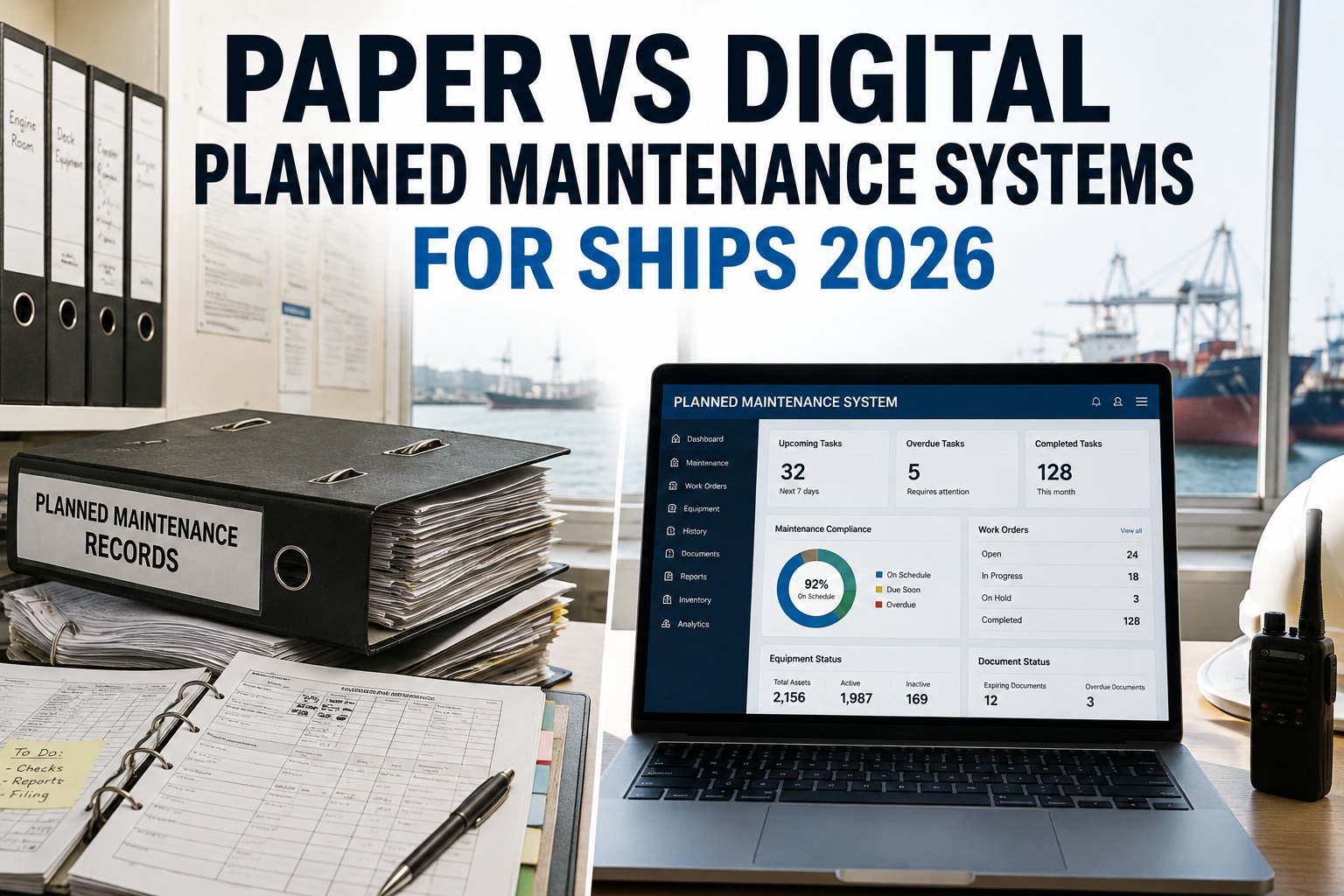
Air compressor maintenance generates ongoing documentation across multiple intervals — daily oil checks, weekly relief valve tests, 250-hour filter cleans, 500-hour element renewals, 1,000-hour valve overhauls, and class survey air receiver inspections. Paper logs lose this data between crew rotations and make running hour trend analysis (the single most valuable compressor diagnostic) practically impossible.


Running Hour Trending: Daily running hours logged and trended automatically. Increasing trend = system leak or efficiency loss — the earliest diagnostic indicator available. Fleet-wide comparison across vessels.

Fill-Time Performance Test: Record time to charge each air receiver from minimum to maximum pressure. Trend against previous records — increasing fill time indicates valve wear, ring wear, or cooler fouling.

Interval-Based Work Orders: 250h, 500h, 1,000h, 2,000h, 4,000h+ work orders generated automatically from running hours. Filter cleaning, valve inspection, drain overhaul — each scheduled to the hour.

Safety Device Test Records: Weekly relief valve tests, monthly alarm function tests, annual safety valve overhauls — all captured with date, result, and engineer signature. PSC and class survey-ready.

Air Quality Monitoring: Control air dryer filter DP readings, membrane replacement dates, drain trap function checks — all documented in one platform. Prevents the automation failures that contaminated air causes.

Air Receiver Survey Tracking: Class survey dates, hydrostatic test records, thickness measurements, internal coating condition — all accessible instantly during surveys.
See It in Action
Book Your Marine Inspection Demo
30 minutes. Your fleet. See running hour trending, fill-time performance tests, valve overhaul scheduling, relief valve test records, and control air quality tracking demonstrated on your vessel configuration.

Common Troubleshooting: The Diagnostic Patterns

Air compressor problems follow recognisable patterns. The single most valuable diagnostic: increasing daily running hours. If the compressor runs longer today than last week to maintain the same pressure, something is wrong — either the compressor is losing efficiency or the system is losing air.

Increased Running Hours
Causes: Leaking suction/delivery valves, worn piston rings, leaking NRV on discharge, system leaks (service air, deck connections left open), defective auto drain valves venting air
Action: Check fill time first. Then systematic leak check from compressor outward. Close service air to deck — if running hours drop, leak is downstream.
High Discharge Temperature
Causes: Dirty air filter, fouled intercooler/aftercooler, insufficient cooling water, worn valves (air leaks back = recompression heat), excessive oil, wrong oil type
Action: Clean filter first. Then check cooler cleanliness. Verify CW flow. Inspect valves if temperatures remain high. Explosion risk above lubricant flash point.
Moisture in Air Bottle
Causes: Defective automatic drain traps, fouled coolers preventing moisture separation, damaged oil/water separator elements, inadequate drainage frequency
Action: Strip and clean auto drains. Clean coolers. Replace separator elements. Increase drainage frequency. Check air bottle internal coating for corrosion.
Oil Carryover to System
Causes: Overfilled sump, worn piston rings allowing blow-by, wrong oil viscosity, worn cylinder liner, high temperature operation vaporising oil
Action: Check oil level (do not overfill). Inspect piston rings. Verify oil type matches manufacturer specification. Address overheating root cause.
Compressor Won't Load
Causes: Unloader valve stuck open (pneumatic or solenoid fault), timer malfunction, blocked pilot air line to unloader, worn valve seats
Action: Check unloader solenoid/pneumatic valve. Verify timer operation. Clean pilot air line. Manual loading as temporary measure. Do not run unloaded for extended period.
Abnormal Noise / Vibration
Causes: Worn main bearings, worn bottom-end bearings, loose foundation bolts, broken valve springs, excessive bumping clearance, liquid carryover (hydraulic shock)
Action: Stop immediately. Do not continue operation. Inspect bearings, measure clearances, check valve condition, verify torque on foundation bolts.

Starting Air Line Explosion: The Most Dangerous Compressed Air Hazard

Starting air line explosions are among the most dangerous engine room emergencies — and they are preventable through systematic maintenance. The mechanism is well-understood: lubricating oil carried over from the compressor accumulates in high-pressure starting air piping and manifolds. Over time, this oil deposits and carbonises. Hot exhaust gases leak past a sticking main engine starting air valve and ignite the oil deposits — causing an explosion in 30-bar piping with potentially fatal consequences.

Prevention Measures
Drain all air bottles regularly — daily minimum. Oil and water accumulation is the fuel source.
Maintain starting air valves — sticking valves allow hot exhaust gas to enter the air manifold. Regular overhaul per PMS.
Inspect starting air piping — regular examination for oil accumulation, corrosion, and wastage. Class survey requirement.
Keep oil carryover to minimum — correct oil level, correct oil type, functioning piston rings, clean cooler drains.
Maintain intercooler and aftercooler drains — defective drains allow oil/water mixture to pass to receiver and piping.
Shut service air when not in use — open deck connections waste air and increase compressor running hours.

Conclusion

Ship air compressor maintenance is the daily engine room discipline that enables every other system on the vessel to function — starting air for main and auxiliary engines, control air for automation and instrumentation, service air for tools and deck equipment. The maintenance programme is running hour-based: air filter cleaning at 250 hours, element renewal at 500 hours, valve inspection at 1,000 hours, drain overhaul at 2,000 hours, major overhaul at 4,000+ hours. Safety device testing (relief valves weekly, alarms monthly, fusible plug inspection) prevents the explosion hazards inherent in 30-bar oil-contaminated air systems. Control air quality management (oil/moisture filters, membrane dryers, pressure reducing valves, drain traps) prevents the automation failures that contaminated air causes. The single most valuable diagnostic — daily running hour logging with trend analysis — reveals compressor efficiency loss and system leaks before they become operational problems. Marine Inspection provides the digital platform that turns running hour tracking, fill-time performance testing, valve overhaul scheduling, and safety device test recording into systematic fleet-wide intelligence — book a live demo today.
Frequently Asked Questions

FAQ 01
Why must air compressors start in unloaded condition?
When a compressor motor starts, the starting current is significantly higher than running current (30 kW running load typical; starting current much higher). If the compressor is loaded during starting — meaning it immediately begins compressing air against system pressure — the motor draws excessive current that can trip overload protection, damage windings, or slip belts. The unloader (pneumatic or solenoid-operated) opens drain valves on each cooler stage during starting, allowing the motor to reach running speed under minimal load (friction and inertia only). Once the motor current drops to normal running value, a timer closes the unloader and the compressor begins compression. Failure to unload = motor overload trip, belt slipping, and potential mechanical damage from excessive starting torque.
FAQ 02
How do I check if the compressor is losing efficiency?
Two practical methods: (1) Daily running hours — log and trend. If the compressor runs increasingly longer to maintain the same air pressure, efficiency is declining. Possible causes: worn valves, worn rings, fouled coolers, or system leaks. (2) Fill-time test — record the time to charge each air receiver from minimum to maximum pressure. Compare against previous records and the initial commissioning value. Increasing fill time confirms compressor efficiency loss rather than system leaks. To distinguish compressor problems from system leaks: close all service air valves to deck, then check if running hours decrease — if they do, the leak is downstream, not in the compressor. First-stage discharge pressure provides a quick health check of LP stage — low pressure indicates LP valve or ring wear.
FAQ 03
What causes starting air line explosions?
Starting air line explosions occur when lubricating oil carried over from the compressor accumulates in high-pressure starting air piping and air manifolds. This oil deposits, carbonises over time, and creates a combustible coating inside 30-bar piping. When a main engine starting air valve sticks or leaks, hot exhaust gas at several hundred degrees enters the starting air manifold and ignites the oil deposits — causing an explosion in high-pressure piping. Prevention: (1) Drain air bottles daily to remove oil and water. (2) Maintain starting air valves to prevent leakage. (3) Inspect starting air piping regularly for oil accumulation. (4) Minimise oil carryover from compressor (correct oil level, functioning rings, clean drains). (5) Maintain intercooler and aftercooler drain effectiveness.
FAQ 04
What is control air and why does air quality matter?
Control air (7-8 bar, reduced from 30 bar main air via pressure reducing valve) powers pneumatic control valves, engine governors, throttle controls, positioners, and monitoring instruments throughout the vessel's automation system. These precision instruments require air that is free of oil, moisture, and particulates — contaminated air causes valve sticking, false instrument readings, and automation failures that create safety incidents. The control air treatment system includes an oil/moisture collection filter (coalesces oil mist and water droplets), a membrane air dryer (removes virtually all remaining traces of oil, moisture, and impurities), and automatic drain traps throughout the system. Filter differential pressure monitoring, membrane element replacement per PMS, and daily drain trap verification are essential maintenance items.
FAQ 05
What is bumping clearance and why does it matter?
Bumping clearance is the space between the piston crown and cylinder head at top dead centre — typically about 6% of the swept volume. This clearance serves three purposes: provides thermal expansion space as the cylinder heats during operation, prevents mechanical contact (piston hitting the head = catastrophic damage), and allows space for valve operation. However, the clearance volume fills with high-pressure air during compression that re-expands on the return stroke before fresh air can enter — this directly reduces volumetric efficiency. Excessive bumping clearance (from worn bearings, wrong gasket thickness) reduces efficiency significantly. Insufficient clearance risks piston-to-head contact. Always use the correct thickness head gasket during reassembly — never stack gaskets. Measure bumping clearance with lead wire during major overhauls.
Book Your Live Demo
Systematise Air Compressor Maintenance Across Your Fleet
30 minutes with our team. See how Marine Inspection delivers running hour trending, fill-time performance tests, valve overhaul scheduling, safety device test records, and control air quality tracking — purpose-built for marine engineers managing compressed air systems on every vessel type.
30 bar
Starting air system pressure
250h
Filter clean interval
1,000h
Major valve inspection
121°C
Fusible plug melt point