Permit to Work System on Ships: Implementation and Best Practices in 2026
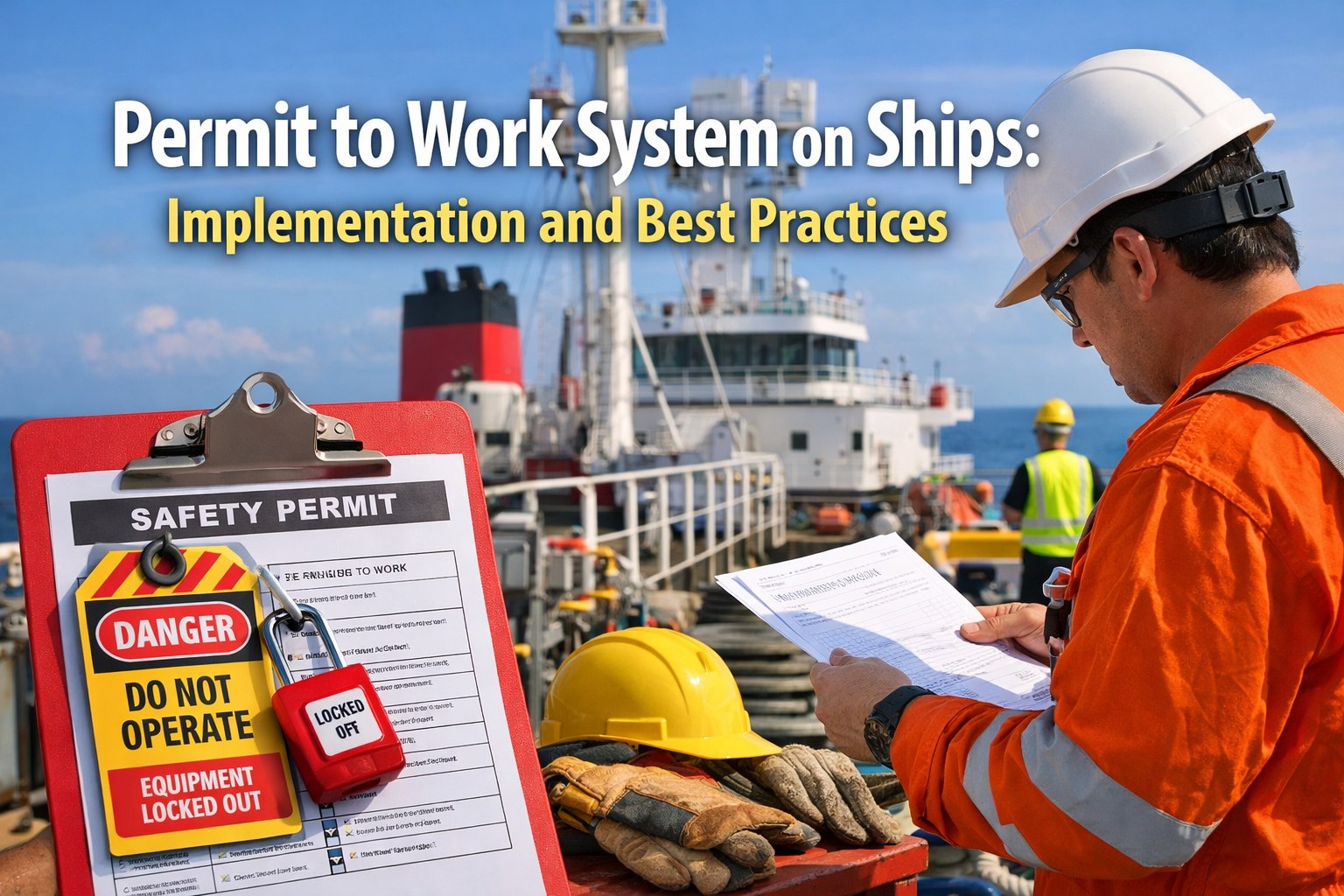
The Permit to Work system is the safety framework that stands between routine maintenance and catastrophic incidents on ships — formalising the assessment, authorisation, and monitoring of every hazardous task from welding and cutting to enclosed space entry, electrical isolation, working at height, and operations on pressurised equipment. The ISM Code mandates Safety Management Systems that control hazardous work activities, and the PTW system is the operational mechanism that delivers this control. Without it, a crew member starts grinding near a fuel line without checking the other side of the bulkhead; an electrician works on a circuit that someone else energises; a deck officer authorises tank entry without atmosphere testing. Each of these scenarios has killed seafarers. The PTW is not a form — it is a documented decision chain that verifies hazards have been identified, risks assessed, controls implemented, personnel briefed, and emergency arrangements confirmed before any tool touches any equipment. DNV describes PTW as a behavioural and cultural mechanism that promotes accountability and risk awareness — when consistently applied, it supports clear communication between teams, encourages proactive hazard identification, and reinforces the principle that safe execution takes precedence over speed or convenience. For safety officers, the challenge is not understanding PTW — it is implementing it consistently across watch changes, crew rotations, concurrent operations, and the operational pressure to complete repairs quickly. Paper-based PTW systems fail because permits get lost, isolation records are incomplete, toolbox talks are undocumented, and there is no visibility into how many active permits exist at any moment. To see how Marine Inspection delivers digital PTW management with real-time permit tracking, integrated risk assessment, and audit-ready documentation across your fleet, book a Marine Inspection demo.
The PTW Lifecycle: From Request to Closure
1
Plan
Identify task. Check if PTW required. Select permit type.
2
Assess
Risk assessment. Hazard identification. Control measures defined.
3
Prepare
Isolations made. Gas testing. Area prepared. PPE readied. LOTO applied.
4
Authorise
Master/CE approves. Permit issued. Toolbox talk conducted. Posted at worksite.
5
Work executed under permit conditions. Monitoring. Fire watch if hot work.
Execute
6
Close
Work complete. Site safe. Isolations removed. Permit closed and signed. Filed for audit.
Permit Types: Which Work Requires Which Permit
Shipboard Permit to Work Types
Permit Type
Applicable Work
Key Hazards
Specific Requirements
Authorising Officer
Hot Work Permit
Welding, cutting, grinding, brazing, soldering, use of blow torches, power tools generating sparks
Fire, explosion, toxic fumes, burns, eye injury
Gas testing (O2, LEL). Fire watch during + 30min after. 10m combustible clearance. Adjacent space checks.
Propulsion locked out. All overboard discharges secured. Diver communication established. Vessel immobilised. Dive plan approved.
Master
Multiple permit types may apply simultaneously — e.g., hot work inside an enclosed space requires BOTH permits. Concurrent operations (SIMOPS) require additional coordination assessment.
Risk Assessment: The Foundation of Every Permit
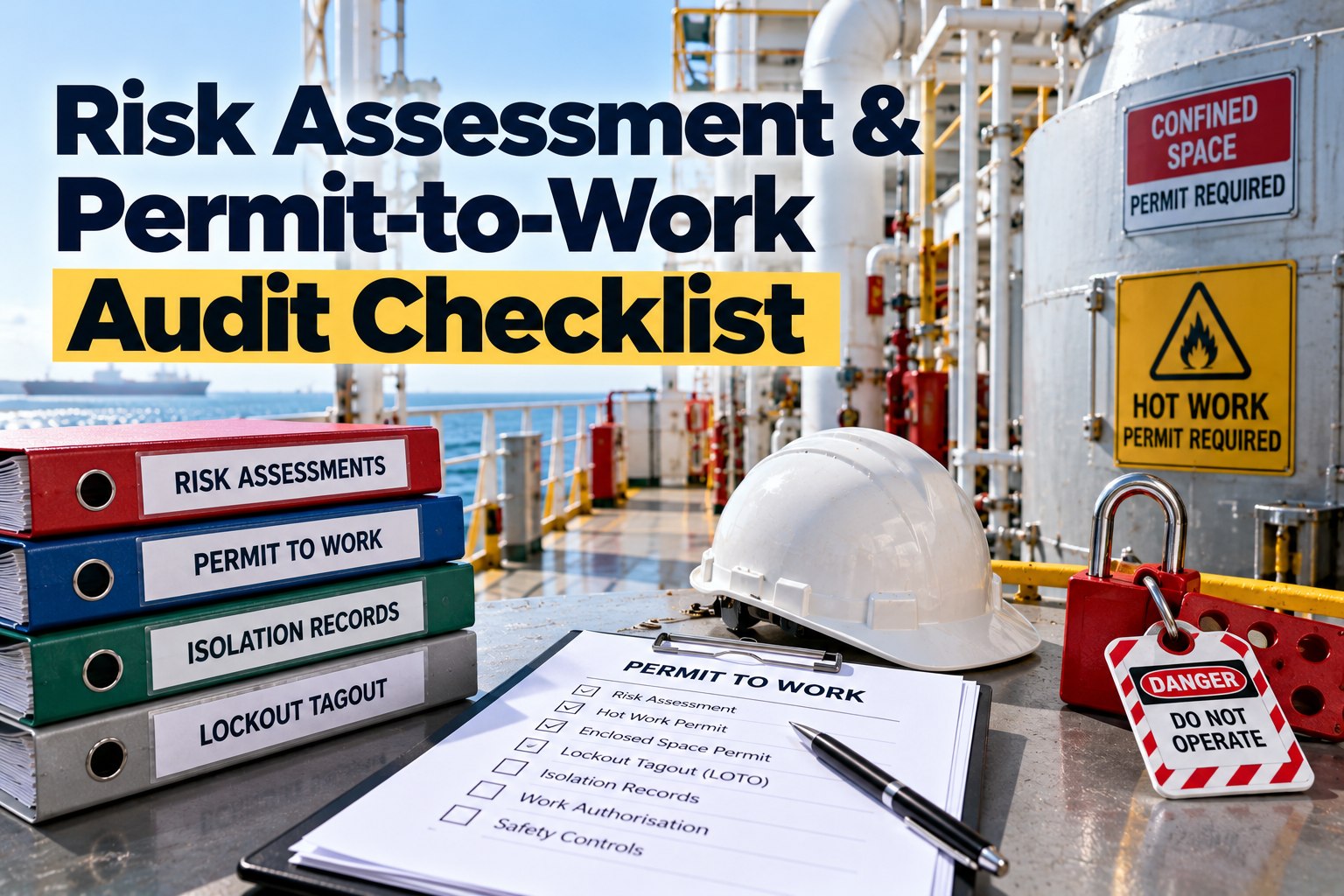
No permit should be issued without a documented risk assessment specific to the task, location, and conditions. A generic risk assessment is not a risk assessment — it is paperwork that gives false confidence.
Identify the Task
What exactly is being done? Where? What equipment, tools, and materials are involved? What is the expected duration? Has this task been done before on this vessel?
Identify the Hazards
What can go wrong? Fire, explosion, falls, electrocution, toxic exposure, crushing, drowning? Consider adjacent spaces, concurrent operations, weather, ship motion, and crew fatigue.
Assess the Risk
Likelihood x severity = risk level. Consider existing controls and additional controls needed. High-risk tasks require Master's direct authorisation and may need company (office) approval.
Define Control Measures
Hierarchy: eliminate, substitute, engineering controls, administrative controls, PPE. Isolation procedures. Gas testing. Fire watch. Communication arrangements. Emergency response plan.
Communicate to All
Toolbox talk with everyone involved — workers, fire watch, standby personnel. Ensure all understand hazards, controls, and emergency procedures. Document attendance.
Review and Close
Post-task review: did controls work? Any near-misses? Equipment issues? Feed lessons back into future risk assessments for similar tasks. Close the risk assessment with findings.
Isolation and LOTO: Controlling Hazardous Energy
Lockout/Tagout (LOTO) is the physical barrier that prevents someone from energising a system while another person is working on it. Isolation without LOTO relies on trust; LOTO relies on physics — a lock that cannot be removed without the key held by the person inside the equipment. Sign up for Marine Inspection to track isolation records and LOTO status across every active permit.
Electrical Isolation: Breaker opened, locked in OFF position, tagged with permit number and name. Voltage tested at point of work to confirm dead. Earth applied where required. Only authorised person holds the key.
Mechanical Isolation: Valves closed and locked. Blanks or blinds inserted in pipelines. Pressure bled down and verified at zero. System drained where applicable. Tags displayed at isolation points.
Pneumatic/Hydraulic: System depressurised. Accumulator pressure released. Isolation valves locked. Residual pressure bled at point of work. Stored energy dissipated before work begins.
Propulsion Lockout: For underwater operations — main engine turning gear engaged, propeller shaft locked, thrusters disabled, all overboard discharges closed and tagged. Bridge informed and signs posted.
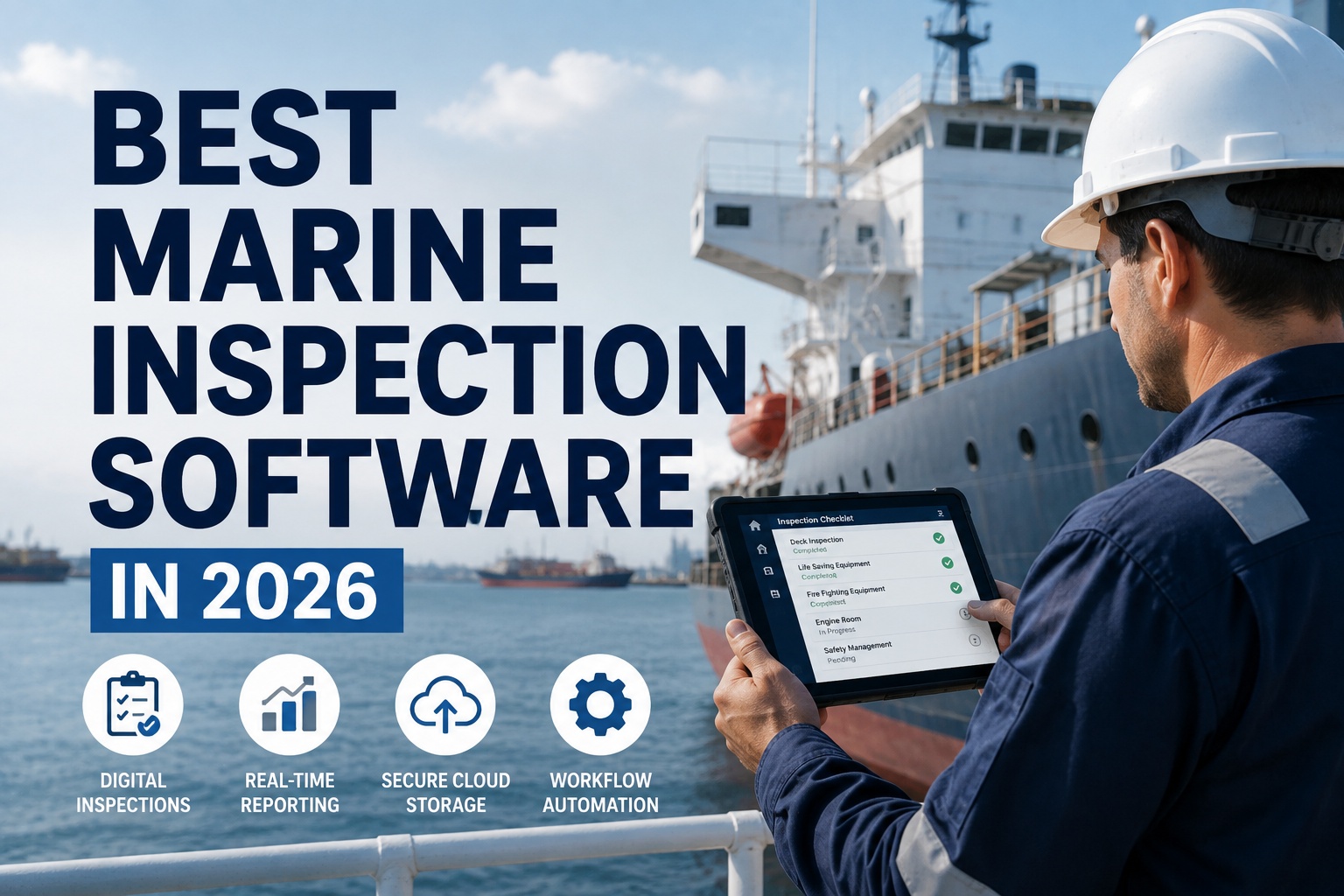
How Marine Inspection Digitalises PTW Management
Digital Permit Creation
Pre-built templates for each permit type (hot work, enclosed space, electrical, height, cold work, pressurised, underwater). Mandatory fields ensure nothing is missed. Auto-expiry at validity end.
Integrated Risk Assessment
Risk assessment linked directly to each permit. Hazard identification, control measures, and residual risk documented. Previous risk assessments for similar tasks accessible for reference.
Isolation & LOTO Tracking
Digital isolation register linked to active permits. LOTO status visible in real-time. Prevents permit closure while isolations remain active. Ensures de-isolation follows controlled sequence.
Active Permit Dashboard
Real-time visibility into all active permits on board. Conflict detection for overlapping work areas. Shift handover view ensures incoming watch knows what's active. Superintendent fleet-wide overview.
Toolbox Talk Records
Toolbox talk documentation linked to each permit. Attendance captured digitally. Hazard briefing content recorded. Demonstrates crew awareness for ISM audit verification.
Audit-Ready Archive
Complete permit history with full audit trail: who requested, who assessed, who authorised, what was done, when it was closed. Tamper-proof records for PSC, ISM, and vetting inspections.
Paper Permits Get Lost. Digital Permits Save Lives.
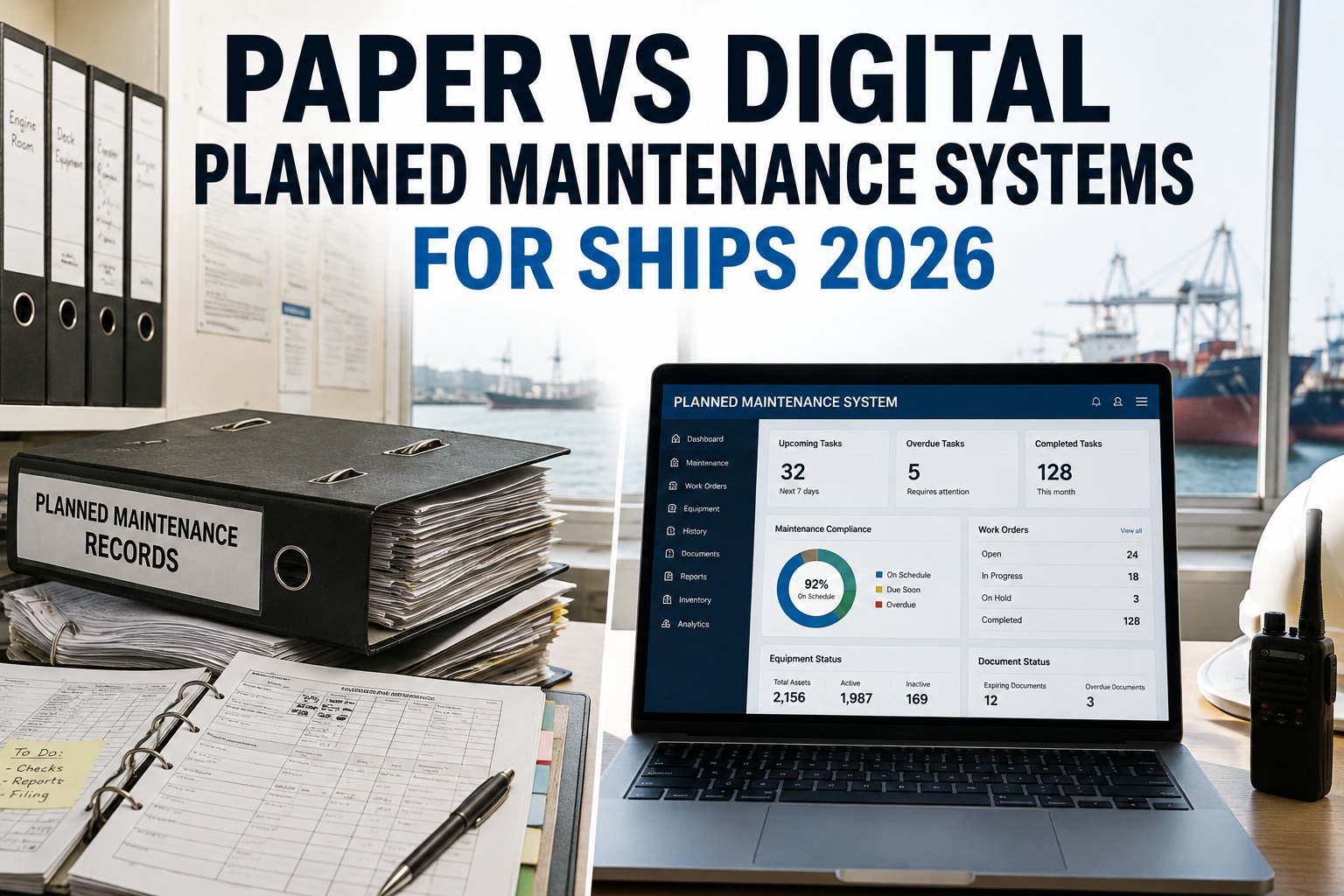
Marine Inspection replaces paper-based PTW with digital permits that auto-expire, track isolations in real-time, capture toolbox talks, detect work conflicts, and provide audit-ready documentation — because the permit system is only as strong as its implementation.
No Permit Issued: Work started without any permit — most common and most dangerous failure. Often occurs under time pressure or when crew believe the task is "routine." Every non-workshop hazardous task requires a permit.
Generic Risk Assessment: Copy-paste risk assessment that doesn't reflect the actual task, location, or conditions. A risk assessment for "hot work" that doesn't specify which bulkhead, which adjacent spaces, or which fuel lines are nearby is worthless.
Permit Not Closed: Work completed but permit remains open. Isolation left in place. Next crew assumes equipment is still being worked on — or worse, removes isolation while work is still in progress.
No Toolbox Talk: Workers assigned tasks without being briefed on hazards and controls. They don't know what gas was tested for, where the fire extinguisher is, or what to do if something goes wrong.
Shift Handover Gap: Permit issued on one watch, work continues on the next, but incoming watch officer doesn't know the permit exists, what isolations are active, or what the risk assessment identified.
Concurrent Operations Uncoordinated: Multiple permits active in overlapping areas — e.g., hot work on deck while painting below, or electrical work while pump maintenance is underway. No conflict detection means no coordination.
Conclusion
The Permit to Work system is the operational mechanism that translates ISM Code safety management requirements into controlled, documented work execution on ships. Seven permit types (hot work, enclosed space entry, working at height, electrical isolation, cold work, pressurised systems, underwater operations) each address specific hazard categories with specific control requirements. The PTW lifecycle (plan → assess → prepare → authorise → execute → close) ensures no step is skipped and every decision is documented. Risk assessment specific to the actual task, location, and conditions is the foundation — generic assessments provide false confidence. LOTO is the physical barrier that prevents hazardous energy reaching workers during maintenance. Toolbox talks communicate hazards and controls to everyone involved. Common failures (no permit, generic assessment, unclosed permits, no toolbox talk, shift handover gaps, uncoordinated concurrent operations) are all preventable with systematic implementation. Digital PTW platforms replace paper vulnerabilities with real-time permit tracking, auto-expiry, isolation management, conflict detection, and audit-ready archives. Marine Inspection provides the maritime-specific PTW platform that makes every permit accountable, every isolation tracked, and every work activity visible — book a live demo today.
Frequently Asked Questions
FAQ 01
What work requires a permit on a ship?
Any task that is sufficiently hazardous to impact the safety of personnel working on it or in the vicinity requires a PTW. Common permit-required activities include: hot work (welding, cutting, grinding) outside the designated workshop, enclosed space entry (ballast tanks, cargo holds, void spaces), working at height or over the side, electrical isolation and work on high-voltage equipment, work on pressurised systems (boilers, hydraulic, pneumatic, refrigeration), underwater operations (hull inspection, propeller work), and cold work in hazardous areas (painting, cleaning near cargo or fuel systems). The ISM Code requires the Safety Management System to include procedures for controlling these hazardous activities. Some high-risk operations (hot work, underwater operations, enclosed space entry) may require additional office/company authorisation beyond the Master's approval.
FAQ 02
What is LOTO and why is it critical on ships?
LOTO (Lockout/Tagout) is the physical isolation and locking of energy sources to prevent accidental energisation while maintenance work is in progress. A lock physically prevents a breaker from being closed, a valve from being opened, or a system from being pressurised — and only the person holding the key (the worker inside the equipment) can remove the lock. Tags provide visual warning but do not physically prevent operation. On ships, LOTO applies to: electrical circuits (breaker locked in OFF position, voltage tested at point of work), mechanical systems (valves locked closed, pipelines blanked), pneumatic/hydraulic systems (pressure bled, accumulators discharged, isolation locked), and propulsion systems (turning gear engaged, shaft locked for underwater operations). Without LOTO, isolation relies on trust and communication — which fails during shift handovers, concurrent operations, and emergencies.
FAQ 03
What is a toolbox talk and when must it be conducted?
A toolbox talk (also called a pre-job safety briefing) is a short, focused safety discussion conducted immediately before hazardous work begins. It covers: what work is being done, what hazards have been identified, what control measures are in place, what PPE is required, what emergency procedures to follow if something goes wrong, and what each person's role is. A toolbox talk must be conducted for every PTW before work starts — not the day before, not at the morning meeting, but at the work site immediately before the task. All workers, fire watch personnel, and standby persons must attend and sign the attendance record. If conditions change or work is interrupted and resumed, a fresh toolbox talk is required. Toolbox talks are verified during ISM audits and PSC inspections as evidence that crew were informed of hazards before commencing work.
FAQ 04
Can multiple permits be active simultaneously?
Yes — multiple permits can and frequently are active simultaneously on a vessel. However, concurrent operations (SIMOPS) require additional coordination to prevent conflicts. For example: hot work on the main deck while enclosed space entry is occurring below requires verification that the hot work does not affect the enclosed space atmosphere. Electrical isolation for motor maintenance must not conflict with a cold work permit for painting in the same space. The Master or responsible officer must maintain awareness of all active permits and their potential interactions. Digital PTW systems provide active permit dashboards that make concurrent operations visible and enable conflict detection. Every permit must be reviewed against other active permits before authorisation. Shift handover must include briefing on all active permits.
FAQ 05
How does the PTW system relate to the ISM Code?
The ISM Code (International Safety Management Code), mandated by SOLAS Chapter IX, requires companies to establish Safety Management Systems that include procedures for the safe operation of ships. The PTW system is the operational tool that implements ISM requirements for controlling hazardous work activities. Specifically, ISM requires: identification of potential shipboard emergency situations (risk assessment is the PTW mechanism for this), procedures to respond to them (the permit documents controls and emergency arrangements), and programmes to audit and improve the SMS (PTW records provide the data for continuous improvement). ISM auditors verify that the PTW system is implemented effectively — not just that permits exist, but that they are specific, current, properly authorised, and include genuine risk assessments with documented toolbox talks and closure records.
Book Your Live Demo
Make Every Permit Accountable. Every Isolation Tracked. Every Worker Safe.
Marine Inspection delivers digital PTW with auto-expiry, integrated risk assessment, LOTO tracking, toolbox talk capture, active permit dashboards, and conflict detection — the platform that turns permit to work from paperwork into operational safety discipline.