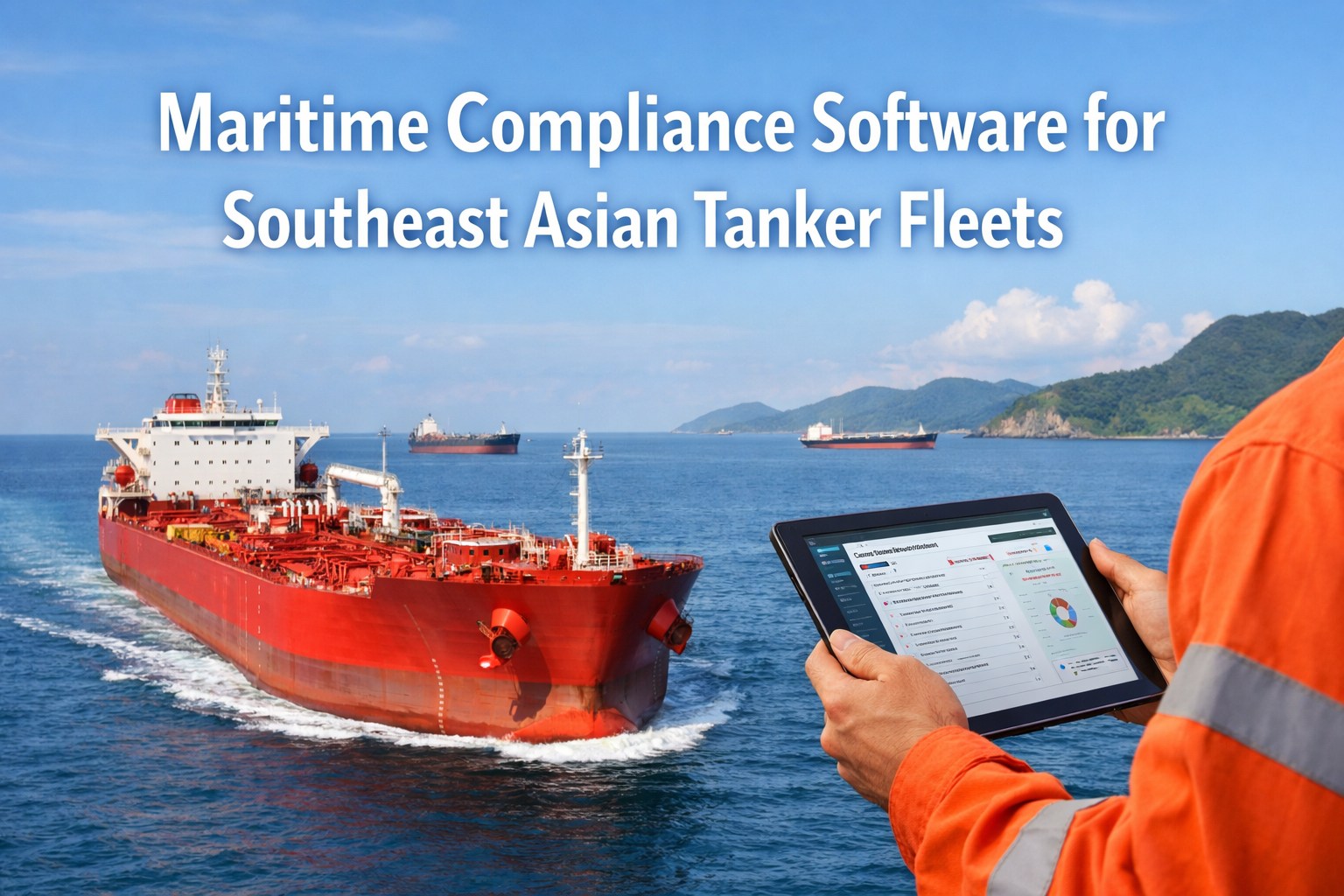
Greek shipowners control approximately 30% of the global oil tanker fleet, with 910 tankers and 507 chemical and product carriers operating across every major trade route. Since September 2, 2024, every one of these vessels faces OCIMF's SIRE 2.0 inspection regime, which replaced the VIQ7 questionnaire with a risk-based, tablet-driven programme that evaluates hardware, procedures, and human factors through graded responses rather than binary yes/no assessments. A single defect under SIRE 2.0 can trigger up to six separate observations across chapters, and the Focused Inspection Campaign on vessel hardening (Question 7.2.1) running through March 2026 means inspectors are applying heightened scrutiny to every tanker regardless of operating area. Greek operators who want to sign up for Marine Inspection's SIRE preparation platform can digitise their pre-inspection workflows, track observation trends, and convert findings into actionable maintenance tasks before the next vetting cycle.
5,800
Greek-Owned Vessels
458M+ dwt, world's largest fleet by tonnage
30%
Global Tanker Share
910 tankers + 507 chemical/product carriers
12
SIRE 2.0 Chapters
Risk-ranked questions from the SIRE Question Library
9
Performance Influencing Factors
Human factors assessed with graded responses
What Changed: VIQ7 vs. SIRE 2.0
SIRE 2.0 is not an update to VIQ7. It is a complete overhaul of how tanker inspections are conducted, reported, and used for vetting decisions. Understanding these differences is essential for Greek operators managing multi-vessel fleets where a single poor SIRE report can affect chartering across the entire pool.
Key Differences: VIQ7 vs. SIRE 2.0
| Dimension | VIQ7 (Legacy) | SIRE 2.0 (Current) |
| Questionnaire |
Standardised, same for all vessels |
Compiled Vessel Inspection Questionnaire (CVIQ) unique to each vessel, generated by algorithm |
| Response Format |
Binary yes/no |
Graded responses with graduated scales for hardware, process, and human factors |
| Human Factors |
Minimal consideration |
9 Performance Influencing Factors (PIFs) assessed for every crew interaction |
| Inspection Medium |
Paper-based questionnaire |
Tablet-based real-time inspection editor with photo comparison tools |
| Pre-Inspection Data |
Limited vessel particulars |
Operator uploads vessel-specific photos, certificates, and open defect lists before inspection |
| Observation Scope |
One observation per finding |
Single defect can trigger up to 6 observations across hardware, process, and human chapters |
| Question Categories |
All questions asked |
Core (mandatory), Rotational (periodic), and Campaign (industry trend) questions |
| Reporting |
Snapshot KPI focus on observation count |
Risk-based reporting with PIFs, cause analysis trees, and TMSA-coded findings |
Key Differences: VIQ7 vs. SIRE 2.0
Questionnaire
VIQ7: Standardised, same for all vessels
SIRE 2.0: Unique CVIQ per vessel, algorithm-generated
Response Format
VIQ7: Binary yes/no
SIRE 2.0: Graded responses for hardware, process, and human factors
Human Factors
VIQ7: Minimal consideration
SIRE 2.0: 9 PIFs assessed for every crew interaction
Inspection Medium
VIQ7: Paper-based questionnaire
SIRE 2.0: Tablet-based real-time editor with photo tools
Observation Scope
VIQ7: One observation per finding
SIRE 2.0: Single defect can trigger up to 6 observations
Question Categories
VIQ7: All questions asked every time
SIRE 2.0: Core, Rotational, and Campaign questions
Reporting
VIQ7: Snapshot KPI on observation count
SIRE 2.0: Risk-based with PIFs, cause analysis, and TMSA coding
The 9 Performance Influencing Factors (PIFs)
SIRE 2.0's most significant shift is the structured assessment of human performance. When an inspector rates crew execution as "not as expected" or "exceeds expectation," they must tag one or more of nine PIFs to explain why. Greek operators preparing for inspections can schedule a demo to see how Marine Inspection tracks PIF trends across fleet-wide SIRE reports and converts patterns into targeted training programmes.
1
Safety Criticality Recognition
Crew awareness of task risk level and associated safety barriers
2
Custom & Practice
Established habits surrounding use of procedures vs. actual written requirements
3
Procedure Quality
Whether procedures are accessible, helpful, understood, and accurate for the task
4
Team Dynamics
Communications, coordination, and teamwork between crew during operations
5
Stress, Workload & Fatigue
Evidence of time pressure, excessive workload, or fatigue affecting performance
6
Morale & Motivation
Factors such as crew morale, motivation, and nervousness during inspection
7
Human-Machine Interface
Equipment design, labelling, and controls that support or hinder safe operation
8
Opportunity to Learn
Training, drills, and familiarisation opportunities for crew to practice tasks
9
Competence & Experience
Knowledge level and practical experience relevant to the task observed
SIRE 2.0 Pre-Inspection Preparation Workflow
Under SIRE 2.0, operators carry significantly more responsibility before the inspector boards. The pre-inspection data quality directly influences the CVIQ generated and the inspector's initial assessment. Operators using Marine Inspection's free trial for SIRE preparation can automate photo documentation, certificate uploads, and defect list management across their fleet.
Pre-Inspection Preparation: 5-Phase Workflow
01
Inspection Request & PIQ Update
Submit inspection request through OCIMF portal. Update Pre-Inspection Questionnaire (PIQ) with current vessel particulars, operational history, and equipment configuration. Ensure all data matches actual onboard conditions.
02
Photo Documentation Upload
Upload vessel-specific photographs to the OCIMF photo database. Photos must be representative of general condition of all similar areas. Non-representative photos trigger negative observations in the Photo Comparison Response Tool.
03
Open Defect List Preparation
Prepare printed list of all open defects for inspector review at boarding. Follow SOLAS Chapter 1, ISM requirements, and OCIMF guidance. Documented defect management process prevents negative observations per OCIMF policy.
04
SMS Review & Crew Familiarisation
Review Safety Management System procedures for accessibility and usability. Ensure crew are familiar with company procedures for all operational areas. Brief new joiners on SMS content and SIRE 2.0 expectations.
05
Campaign Question Readiness
Review active Focused Inspection Campaigns. Current campaign (Oct 2025 - Mar 2026): Question 7.2.1 on vessel hardening and access control. Verify crew can demonstrate company hardening procedures for high-threat areas.
Streamline Your SIRE 2.0 Preparation Fleet-Wide
Marine Inspection digitises every pre-inspection step, from photo documentation to defect list management, ensuring your tanker fleet enters each SIRE 2.0 inspection with consistent, auditable preparation across all vessels.
Expert Review: SIRE 2.0 Readiness for Greek Tanker Fleets
One year into mandatory SIRE 2.0 inspections, the data reveals clear patterns. Non-compliance with SMS procedures and procedural inadequacies are the leading contributors to negative observations, according to Anglo-Eastern's analysis of their fleet-wide SIRE 2.0 results. This means the most impactful preparation investment for Greek operators is not equipment upgrades but SMS review and crew familiarisation, specifically ensuring procedures are written in language that crews actually use and practice.
The cascading observation model is where many operators underestimate SIRE 2.0's impact. Under VIQ7, a corroded pipe clamp was one observation. Under SIRE 2.0, the same defect can generate observations for hardware condition, safety inspection procedures (why wasn't it identified internally), reporting systems (why wasn't it reported to class), and potentially a PIF for the responsible officer's competence. Greek operators managing 10-50 tankers who schedule a platform walkthrough to see observation cascade tracking can identify systemic patterns across the fleet rather than treating each vessel's findings in isolation.
The current Focused Inspection Campaign on vessel hardening (Question 7.2.1) adds another dimension. Every SIRE 2.0 inspection through March 2026 will assess crew familiarity with hardening procedures regardless of operating area. With many Greek tankers transiting the Red Sea and Gulf of Aden, this campaign has particular relevance. Ensure Ship Security Officers have fully trained crews on hardening plans and that equipment is effective and well-maintained.
Digital Inspection Capabilities for SIRE 2.0
SIRE 2.0's digitised framework creates both a challenge and opportunity. The data-rich inspection reports require systematic analysis that spreadsheet-based systems cannot provide at fleet scale. Operators can sign up for Marine Inspection to digitise SIRE workflows and integrate inspection data with maintenance planning, certificate tracking, and crew competency management.
SIRE Question Library Mapping
Maps all 12 SIRE 2.0 chapters to digital inspection checklists. Tracks Core, Rotational, and Campaign question coverage across inspection cycles.
PIF Trend Analysis
Aggregates Performance Influencing Factor data across fleet inspections. Identifies systemic human factors issues for targeted training interventions.
Observation-to-Task Conversion
Converts SIRE findings directly into maintenance work orders, SMS corrective actions, and crew training tasks with automated follow-up tracking.
Photo Evidence Management
Timestamped photo documentation system aligned with SIRE 2.0 photo comparison requirements. Ensures representative documentation before upload.
Achieve Consistent SIRE 2.0 Results Across Your Fleet
Marine Inspection connects SIRE preparation, inspection data analysis, and corrective action tracking into a single platform, helping Greek tanker operators convert vetting compliance from a vessel-by-vessel effort into a systematic fleet advantage.
Frequently Asked Questions
What is the Compiled Vessel Inspection Questionnaire (CVIQ) in SIRE 2.0?
The CVIQ is a unique, vessel-specific inspection questionnaire generated by an algorithm from the SIRE 2.0 Question Library for each inspection. It selects questions based on vessel type, operational history declared through the Pre-Inspection Questionnaire, and current OCIMF campaign priorities. Unlike VIQ7's standardised questionnaire, operators cannot predict which questions will be asked. Questions are categorised as Core (mandatory for every inspection), Rotational (assigned periodically), and Campaign (industry-trend responses applied for a fixed period). There are no "Not Applicable" questions in a CVIQ.
What are Performance Influencing Factors and why do they matter?
PIFs are nine categories of human factors that inspectors use to explain why crew performance was above or below expectations. They include safety criticality recognition, procedure quality, team dynamics, stress and fatigue, and morale. When an inspector rates performance as "not as expected," they must tag the relevant PIF(s), which feeds into the Negative Observation Module with TMSA-coded cause analysis. For Greek operators, PIF data reveals whether negative observations stem from inadequate procedures, insufficient training, or crew fatigue, enabling targeted corrective actions rather than generic responses.
How should operators prepare for the vessel hardening Focused Inspection Campaign?
OCIMF's FIC on vessel hardening (Question 7.2.1) runs from October 2025 through March 2026, with an interim review in February 2026. Every SIRE 2.0 inspection during this period will assess crew familiarity with hardening procedures regardless of operating area. Operators should ensure Ship Security Officers have trained all crew on company hardening plans, that all hardening equipment is operational and well-maintained, and that crew can demonstrate practical application of procedures for areas of increased maritime threat. Document all training records and drills for inspector review.
How does the open defect list requirement work under SIRE 2.0?
SIRE 2.0 requires operators to provide a printed list of open defects to the inspector at the start of every inspection. OCIMF has confirmed that where a documented defect management process has been properly followed (identification, reporting, class notification if required, corrective action planning), the presence of open defects should not result in negative observations. However, undisclosed defects discovered during inspection will generate negative observations across multiple chapters. The key is transparent, systematic defect management rather than attempting to minimise the list.
What is the current SIRE 2.0 inspection frequency for tankers?
Inspection frequency remains a decision for each submitting company based on their internal vetting policies. The average under the previous programme was approximately 2.4 inspections per vessel per year. OCIMF's stated objective for SIRE 2.0 is to reduce this frequency by strengthening confidence in each report through richer data and more detailed assessments. Higher-quality reports should reduce the need for repeat inspections within short periods. However, oil majors maintain their own acceptance windows, and Greek operators typically plan for biannual inspections.