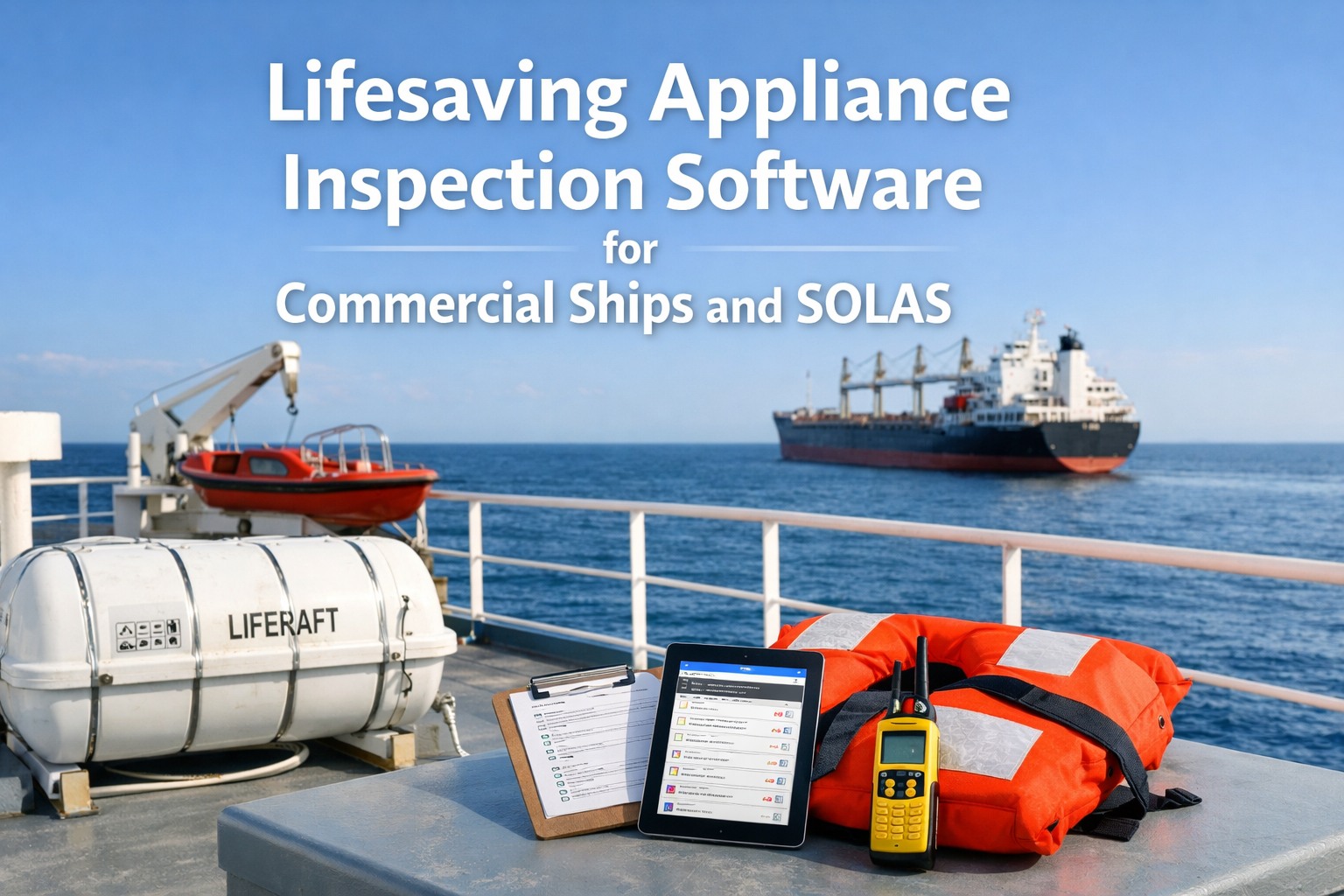
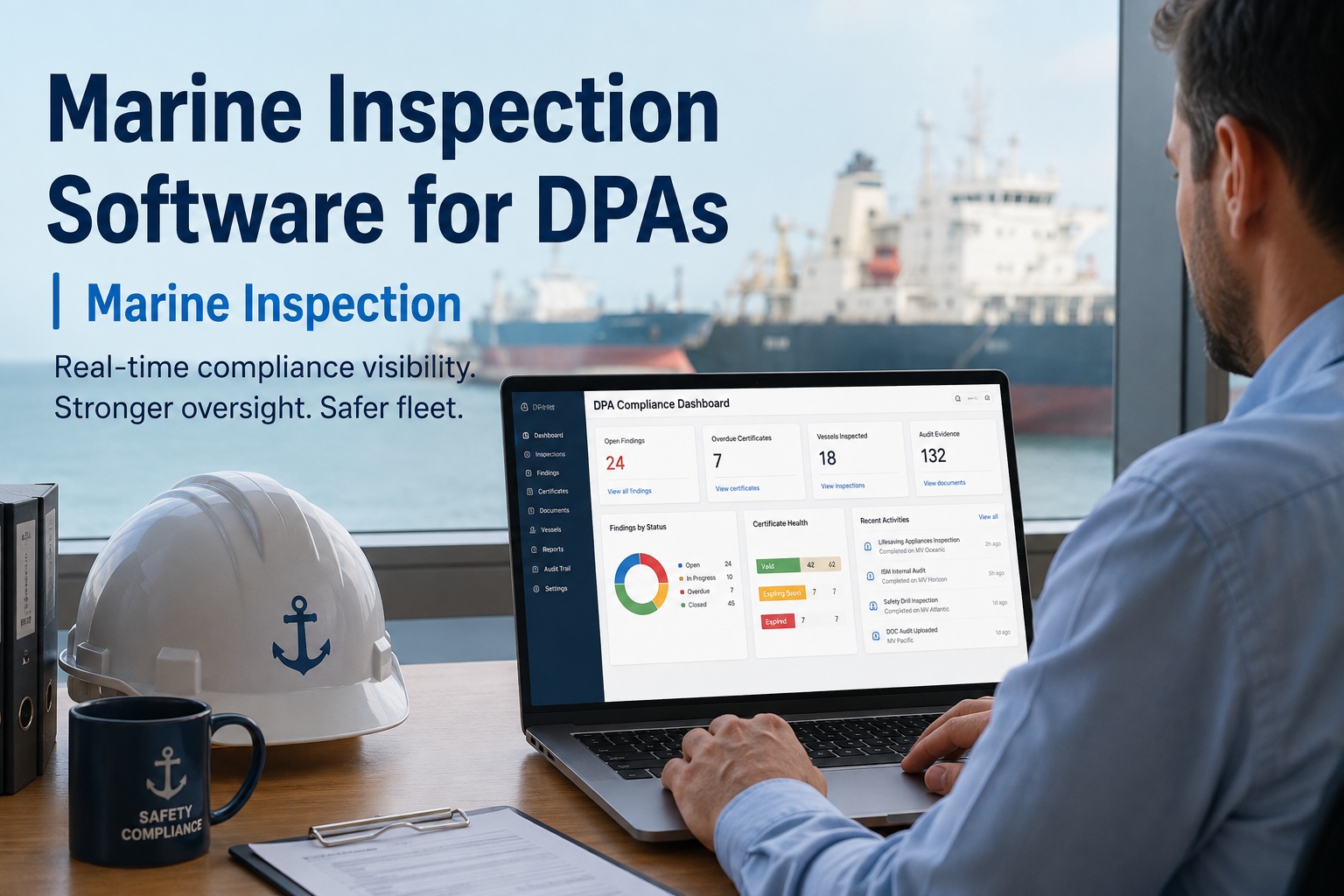
Lifesaving appliances are the equipment your crew depends on when everything else has failed—and port state control officers know it. LSA deficiencies consistently rank among the top three detention categories across Paris MOU, Tokyo MOU, and USCG inspection regimes. The challenge isn't a lack of regulation. SOLAS Chapter III, the LSA Code, and MSC.402(96) spell out exactly what must be inspected, serviced, and recorded. The challenge is managing weekly, monthly, annual, and 5-year inspection cycles across lifeboats, liferafts, lifejackets, immersion suits, rescue boats, launching appliances, and release gear—on every vessel in your fleet—without anything slipping through the cracks. Marine Inspection's software helps vessel teams inspect lifesaving equipment faster using digital checklists, record every finding with timestamps and evidence, and maintain compliance through automated scheduling that tracks every interval. Sign up free to start building your vessel's LSA equipment register and stay PSC-ready at every port.
36
PSC Deficiency Codes
Dedicated to LSA across all PSC regimes
Top 3
Detention Category
LSA alongside fire safety and ISM in every major MOU
4.03%
Paris MOU Detention Rate
2024, up from 3.81% in 2023
What SOLAS Requires: LSA Inspection Intervals from Weekly to 5-Yearly
SOLAS Chapter III Regulation 20 requires all lifesaving appliances to be in working order and ready for immediate use before departure and throughout every voyage. The practical reality is that different equipment types follow different inspection cycles—weekly visual checks, monthly detailed inspections, annual servicing by approved providers, and 5-year overhauls of launching appliances. Miss one interval on one item and you have a detainable deficiency. Marine Inspection automates every interval across your full LSA inventory—schedule a demo to see how every deadline is tracked and alerted before it passes.
Weekly
SOLAS III/20.6
Survival Craft and Rescue Boats
Visual inspection for readiness, hook condition, on-load release gear reset
Lifeboat and Rescue Boat Engines
Run for minimum 3 minutes (ambient temp permitting)
General Emergency Alarm
Test alarm system operation
Monthly
SOLAS III/20.7, III/36.1
All LSA Equipment
Detailed inspection using checklist, report entered in official log-book
Immersion Suits and Anti-Exposure Suits
Fabric integrity, closure function, condition check; crew donning practice
Launching Appliances and Release Gear
Maintain per manufacturer instructions, inspect davit-launched liferaft hooks
Annual
SOLAS III/20.8, III/20.11, MSC.402(96)
Inflatable Liferafts
Service at approved station (or 30-month extended interval per MSC.1/Circ.1328)
Inflatable Lifejackets
Service at approved station per SOLAS III/20.8.1 and Res. A.761(18)
Lifeboats, Rescue Boats, Launching Appliances
Thorough examination and operational test by approved service provider
Hydrostatic Release Units (non-disposable)
Service per SOLAS III/20.9.1
5-Year
SOLAS III/20.4, III/20.11, MSC.402(96)
Launching Appliance Falls (Wire Ropes)
Renew when deteriorated or at intervals not exceeding 5 years
Lifeboats, Rescue Boats, Launching Appliances
5-year thorough examination, overhaul, and overload operational test
Top LSA Deficiencies at PSC: What Inspectors Find and How to Prevent It
PSC data across all major MOUs shows that most LSA deficiencies concentrate in a few predictable areas. The most common findings relate to lifeboats and rescue boats, followed by inventory and equipment condition issues. Marine Inspection helps vessel teams systematically inspect each area, record findings digitally, and maintain equipment before deficiencies become detentions.
What PSC Finds
On-load release gear not properly maintained, engine fails to start, davit wire corroded, hull damage or water ingress, annual thorough examination overdue
How Marine Inspection Helps
Inspect each lifeboat with guided checklists covering release gear, engine run, hull condition, and equipment inventory. Record results with photos. Track annual and 5-year service provider examinations.
What PSC Finds
Annual or 30-month servicing overdue, HRU expired or not replaced, stowage obstructed by deck cargo, painter system not properly secured
How Marine Inspection Helps
Track each liferaft by serial number with service due dates, HRU expiry, and stowage location. Automated alerts ensure servicing is scheduled at the next port before the deadline passes.
What PSC Finds
Inflatable lifejacket servicing overdue, immersion suit seams damaged or pressure test expired, incorrect stowage locations, light or whistle non-functional
How Marine Inspection Helps
Record monthly immersion suit inspections digitally. Track 3-year pressure test intervals (annual after 10 years). Monitor inflatable lifejacket service station visits per unit.
What PSC Finds
Abandon ship drill records incomplete, crew unable to demonstrate competence during witnessed drills, muster list errors, davit-launched liferaft training not conducted every 4 months
How Marine Inspection Helps
Log every drill digitally with date, participants, scenario, and outcome. Automated reminders for abandon ship drill intervals, davit-launched liferaft training (4-month), and free-fall lifeboat launch drills (6-month).
Fleet operators managing LSA compliance across multiple vessels can sign up today to configure vessel-specific LSA inventories—each ship gets its own equipment register, inspection schedule, and service tracking based on the survival craft and safety equipment actually installed.
Inspect Faster. Record Everything. Stay PSC-Ready.
Marine Inspection helps vessel teams inspect every lifesaving appliance with guided digital checklists, record findings with timestamps and photos, and maintain compliance with automated interval tracking across your fleet.
Expert Review: LSA Compliance After MSC.402(96)
Industry Analysis
Resolution MSC.402(96), effective since January 2020, fundamentally changed how lifesaving appliance maintenance is governed. It established clear requirements for annual and 5-year thorough examinations of lifeboats, rescue boats, and launching appliances—and critically, mandated that these examinations be conducted only by service providers authorized by the flag state administration. The Marshall Islands Marine Notice 2-011-37 and Barbados Bulletin 016 both reinforce these requirements, specifying that crew handle routine weekly and monthly inspections while approved service providers conduct annual and periodic servicing.
The operational challenge is clear: vessels carry dozens of LSA items, each with different inspection intervals, different responsible parties (crew vs. shore service), and different regulatory references. PSC data consistently shows that the most common LSA findings relate to operational readiness—equipment that looks compliant on paper but fails when tested. Marine Inspection bridges this gap by helping crews inspect systematically, record results with evidence, and maintain service schedules that keep every item within compliance. Schedule a 15-minute demo to see how the platform manages crew-level inspections alongside shore service tracking for your fleet.
Conclusion
Lifesaving appliance deficiencies remain one of the most common causes of PSC detention worldwide because managing inspection intervals, service records, and drill documentation across a fleet is inherently complex. SOLAS Chapter III mandates weekly through 5-yearly cycles, MSC.402(96) requires authorized service providers for annual examinations, and crew must demonstrate operational competence during inspections. Marine Inspection's software gives vessel teams the tools to inspect LSA equipment faster using guided checklists, record every finding digitally with evidence, and maintain compliance through automated scheduling and alerts. Schedule a demo to walk through the LSA compliance module with our team, or sign up now and start building your fleet's lifesaving equipment register in minutes.
LSA Compliance Across Your Entire Fleet
From lifeboats to immersion suits—inspect, record, and maintain every lifesaving appliance with Marine Inspection. Automated interval tracking, digital evidence, and fleet-wide dashboards keep every vessel PSC-ready.
Frequently Asked Questions
What lifesaving appliance inspections does SOLAS Chapter III require?
SOLAS III Regulation 20 requires weekly visual inspections of survival craft and rescue boats, monthly detailed inspections of all LSA using checklists with results recorded in the official log-book, annual servicing of inflatable liferafts and lifejackets at approved service stations, and annual plus 5-year thorough examinations of lifeboats, rescue boats, and launching appliances by authorized service providers per MSC.402(96).
How often must inflatable liferafts be serviced?
Inflatable liferafts must be serviced annually at an approved service station per SOLAS III/20.8.1. Some flag administrations accept extended service intervals not exceeding 30 months under MSC.1/Circ.1328 for qualifying liferaft types. Marine Inspection tracks each liferaft's service due date by serial number and alerts before the deadline.
What are the most common LSA deficiencies found at PSC inspections?
The most common LSA deficiencies relate to lifeboat and rescue boat operational readiness (release gear, engine start, davit condition), overdue liferaft servicing, expired HRUs, immersion suit condition issues, and incomplete drill records. Marine Inspection addresses each with inspection checklists, service tracking, and automated drill reminders.
Who can perform LSA inspections on board versus shore service?
Crew members perform weekly and monthly inspections under officer supervision. Annual and 5-year thorough examinations of lifeboats, rescue boats, and launching appliances must be conducted by service providers authorized by the flag state per MSC.402(96). Inflatable liferaft and lifejacket servicing requires approved service stations per Resolution A.761(18). Marine Inspection tracks which tasks are crew-assignable and which need shore scheduling.
What are the immersion suit inspection intervals per SOLAS?
Immersion suits require monthly inspection per SOLAS III/20.7.2 covering fabric integrity, zipper function, and overall condition. Pressure testing for leaks is required every 3 years for suits under 10 years old, and annually for suits over 10 years per MSC/Circ.1047. Crew should practice donning during monthly inspections. Marine Inspection logs each inspection and tracks pressure test due dates per suit.