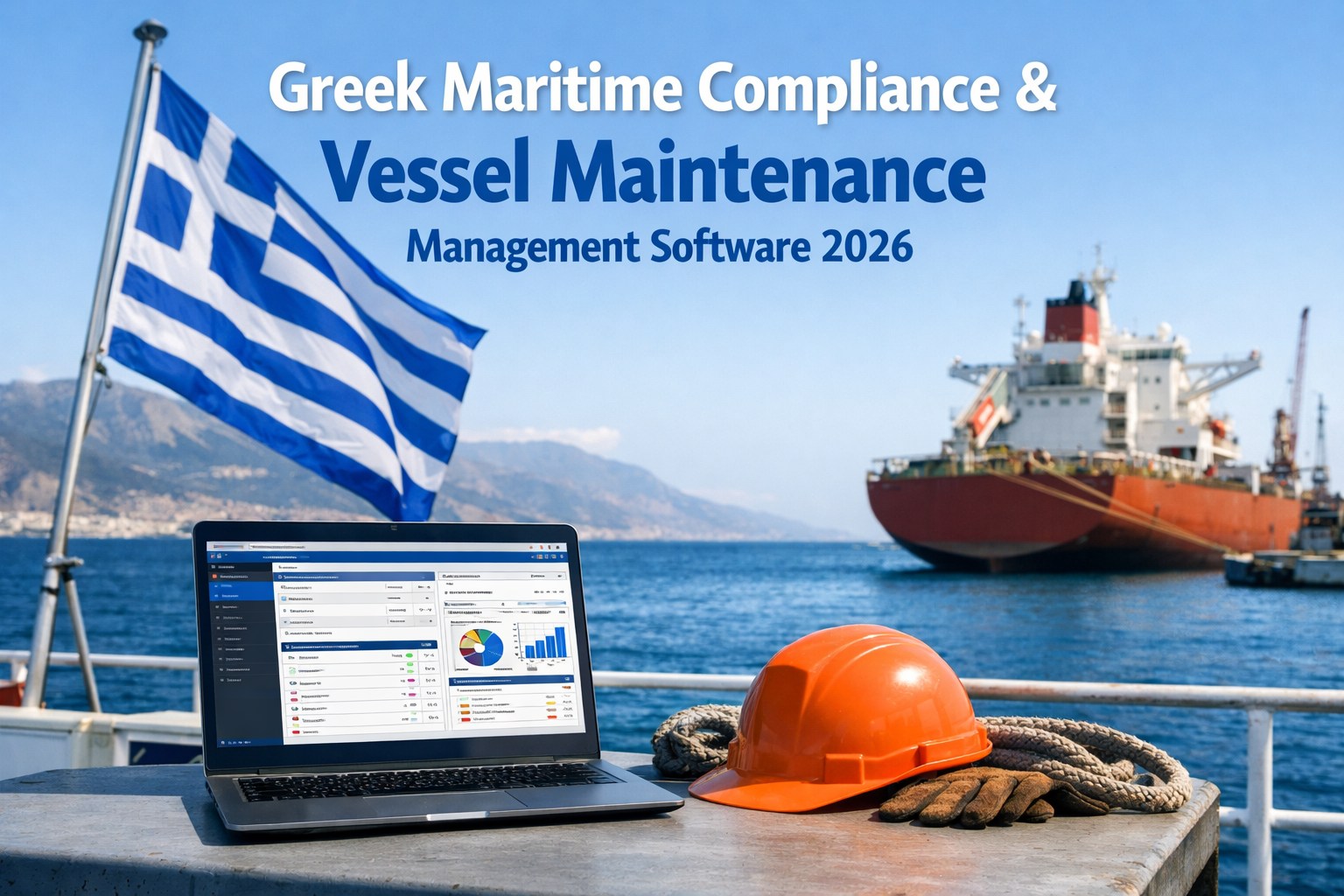
Your Greek-flagged bulk carrier operates 340 days annually with systematic maintenance scheduling across main engine, auxiliary systems, deck equipment, and safety installations. But last month, PSC inspection in Rotterdam detained the vessel for expired lifeboat davit certification—a requirement tracked in separate spreadsheet from your planned maintenance system. Technical manager discovers the certification renewed six weeks prior, but documentation didn't transfer to vessel's audit package because maintenance software doesn't integrate with certificate management database. Three-day detention costs $85,000 in lost charter revenue plus crew overtime, bunker consumption, and port fees. Greek shipowners managing fleets face operational challenge: vessel maintenance planning, certificate tracking, regulatory compliance, and audit documentation operate in disconnected systems—creating gaps that cause detention-level violations despite proper technical management. Shipowners ready to unify their maintenance and compliance systems can start with Marine Inspection's integrated software platform that connects planned maintenance, certificate management, regulatory compliance, and audit documentation—helping you inspect, record, and maintain vessels faster and safer while eliminating system gaps causing detentions.
System Integration Gap
72%
Of Greek fleet detentions trace to disconnected maintenance/compliance tracking
Average Detention Impact
$65K-$95K
Per day including lost charter revenue and operational costs
Compliance Improvement
81%
Reduction in PSC deficiencies through integrated CMMS software
The Four System Integration Gaps Causing Greek Fleet Detentions
Greek shipowners typically manage vessel operations through separate systems: planned maintenance software tracking equipment servicing, spreadsheets monitoring certificate renewals, email folders storing regulatory updates, and physical binders containing audit documentation. These disconnected systems create four predictable integration gaps causing detention-level violations despite proper technical management. Understanding these gaps shows why integrated maritime compliance software delivers better results than separate tracking tools. Greek operators who schedule platform demonstrations can see how Marine Inspection's unified CMMS connects maintenance planning, certificate management, regulatory compliance, and audit documentation—eliminating integration gaps through automated workflows.
Gap 1
Maintenance-to-Certification Disconnect
Planned maintenance system tracks equipment servicing schedules, but certificate management operates separately—maintenance completes properly but certification documentation doesn't update, creating audit failures.
Marine Inspection Solution:
Maintenance work order completion automatically updates linked certificates and audit packages—lifeboat servicing completion populates davit certification records instantly.
Gap 2
Certificate Expiration Visibility
Spreadsheet tracking monitors certificate expiration dates, but planned maintenance system doesn't receive renewal alerts—certifications expire before maintenance teams schedule required surveys or inspections.
Marine Inspection Solution:
Certificate expiration triggers automatic maintenance work orders 90 days in advance—class survey approaching generates inspection and documentation tasks ensuring readiness.
Gap 3
Regulatory Update Implementation
IMO SOLAS and MARPOL amendments arrive via email circulars, but maintenance procedures and compliance checklists don't update systematically—vessels operate under outdated requirements without technical teams realizing gaps.
Marine Inspection Solution:
Regulatory database updates automatically adjust maintenance schedules and inspection checklists—new MARPOL requirements populate vessel compliance tasks without manual procedure revision.
Gap 4
Audit Documentation Assembly
Maintenance records, certificates, training documents, and inspection reports exist across multiple systems—audit preparation requires manual collection and organization consuming days before PSC or class inspections.
Marine Inspection Solution:
Integrated platform maintains continuously updated audit packages—all maintenance records, certificates, and compliance documentation accessible instantly during inspections without preparation time.
Maritime CMMS Features for Greek Shipowner Operations
Marine Inspection's maritime CMMS delivers vessel maintenance management capabilities specifically designed for Greek shipowner operations: planned maintenance scheduling aligned with class survey windows, spare parts inventory tracking integrated with procurement workflows, crew work order assignment with mobile completion verification, and lifecycle analytics showing equipment reliability trends. These features help you inspect maintenance needs faster, record work completion safer, and maintain regulatory compliance easier than generic maintenance software. Greek operators ready to implement integrated CMMS software can begin their trial accessing maintenance planning, inventory management, work order workflows, and performance analytics purpose-built for maritime operations.
Planned Maintenance Scheduling
→ Running-hour and calendar-based triggers for equipment servicing
→ Class survey window alignment preventing maintenance concentration
→ Manufacturer interval tracking with automatic adjustment recommendations
→ Critical equipment prioritization ensuring reliability-centered maintenance
Work Order Management
→ Mobile work order assignment with crew notification and deadline tracking
→ Photo documentation capturing completion evidence with automatic timestamping
→ Parts consumption recording linking inventory to specific maintenance tasks
→ Digital sign-off workflows with supervisory approval before closure
Spare Parts Inventory
→ Critical spares identification based on equipment failure impact analysis
→ Minimum stock level alerts triggering procurement before shortages occur
→ ROB tracking across fleet with inter-vessel transfer coordination
→ Supplier integration streamlining ordering and delivery confirmation
Lifecycle Analytics & Reporting
→ Equipment reliability metrics identifying chronic failure patterns
→ Maintenance cost tracking by system enabling budget optimization
→ Downtime analysis quantifying maintenance impact on operations
→ Predictive maintenance recommendations based on historical trends
Modernize Your Fleet Maintenance with Maritime CMMS Software
Marine Inspection's integrated CMMS platform helps Greek shipowners inspect maintenance needs faster through automated scheduling, record work completion safer with mobile verification and photo documentation, and maintain compliance easier through certificate integration and audit-ready reporting—reducing PSC deficiencies 81% while improving maintenance efficiency.
Certificate Management & Regulatory Compliance Tracking
Marine Inspection's compliance module manages all vessel certificates, regulatory requirements, and audit documentation through unified interface: class certificates with survey window tracking, statutory certificates aligned with flag state requirements, equipment certifications linked to maintenance schedules, and crew certifications integrated with training management. The platform monitors IMO SOLAS safety requirements, MARPOL environmental compliance, EU MRV/ETS reporting obligations, and classification society standards—automatically alerting when renewals approach or regulatory changes affect vessel operations. Greek shipowners managing diverse regulatory requirements across multiple jurisdictions benefit from centralized compliance tracking that helps you inspect certificate status faster, record renewals safer, and maintain audit readiness easier.
Class & Statutory Certificates
✓ Classification society certificates with survey cycle management
✓ Flag state statutory certificates and endorsement tracking
✓ Port state memorandum compliance verification
✓ Trading certificate requirements by operational area
Equipment Certifications
✓ Lifesaving appliance annual servicing and 5-year overhauls
✓ Fire safety equipment inspection and maintenance certificates
✓ Cargo gear testing and thorough examination documentation
✓ Radio equipment surveys and GMDSS compliance
Environmental Compliance
✓ MARPOL Annex I-VI certificate management and renewal tracking
✓ EU MRV CO2 emission reporting and verification workflows
✓ EU ETS compliance monitoring and allowance management
✓ Ballast water management certification and treatment verification
Crew Certifications & Training
✓ STCW certificate validity tracking with automatic expiration alerts
✓ Medical fitness certification monitoring for all crew members
✓ Specialized training documentation (ECDIS, BRM, security awareness)
✓ Company-specific competency verification and assessment records
Greek Maritime Digitalization & Decarbonization Trends 2026
Greek shipping faces dual transformation challenges in 2026: digitalization improving operational efficiency and decarbonization meeting environmental targets. Marine Inspection's AI-powered platform addresses both trends through predictive maintenance reducing fuel consumption and emissions, digital twins optimizing vessel performance and lifecycle management, automated compliance tracking for EU ETS and FuelEU Maritime requirements, and integrated reporting showing environmental impact alongside maintenance costs. Greek operators implementing digital solutions achieve 12-18% fuel efficiency improvements through optimized maintenance reducing equipment degradation, 65-75% faster regulatory reporting through automated data collection, and 40-50% better capital planning through lifecycle analytics predicting replacement needs. Shipowners ready to explore digitalization capabilities can schedule demonstrations showing AI-powered predictive maintenance, emission monitoring integration, and sustainability reporting workflows purpose-built for decarbonization compliance.
AI-Powered Predictive Maintenance
Machine learning algorithms analyze equipment performance data identifying degradation patterns before failures occur—main engine bearing wear detected 4-6 weeks early enabling planned replacement during port calls rather than emergency repairs at sea.
Impact: 35% reduction in unplanned downtime, 18% fuel efficiency improvement through optimized equipment performance
Digital Twin Lifecycle Management
Virtual vessel models simulate equipment aging and maintenance scenarios enabling data-driven capital expenditure planning—predictive analytics show when major overhauls deliver better ROI than continued maintenance extending service life.
Impact: 25% better capital allocation, 40% improved replacement timing reducing total ownership costs
Automated Decarbonization Compliance
Integrated emission monitoring captures fuel consumption, calculates EU ETS allowance requirements, tracks CII ratings, and generates FuelEU Maritime compliance reports—automated workflows eliminate manual data collection and calculation errors.
Impact: 75% faster regulatory reporting, 95% reduction in compliance documentation errors
Sustainability Performance Analytics
Dashboard showing maintenance decisions' environmental impact: hull cleaning frequency effects on fuel consumption, engine tuning optimization reducing emissions, energy-efficient equipment selection lowering carbon intensity.
Impact: 12% emission reduction through maintenance optimization, improved ESG reporting for stakeholders
Expert Perspective: Greek Shipowner Technical Director
"Managing 14-vessel dry bulk fleet with separate maintenance software, certificate spreadsheets, and compliance folders created constant coordination burden. Rotterdam PSC detained one of our Panamax vessels for expired lifeboat certification—despite davit servicing completed properly six weeks earlier. Documentation disconnect between maintenance system and certificate tracking caused detention costing $280,000 in lost charter revenue over four days. We implemented Marine Inspection's integrated platform primarily to inspect maintenance and compliance status faster across fleet. First year results exceeded expectations: PSC deficiencies dropped 79%, class survey preparation time reduced 65%, and our technical team spends 18 fewer hours weekly on administrative coordination. The software helps us record maintenance completion safer with automatic certificate updates, inspect regulatory compliance faster through unified dashboards, and maintain audit readiness easier with continuously updated documentation packages. Integration eliminated gaps that separate systems created."
Technical Director
Greek Shipowning Company | 14 Dry Bulk Vessels | Piraeus
Unify Your Vessel Maintenance & Compliance Management
Marine Inspection's integrated maritime CMMS platform connects planned maintenance, certificate management, regulatory compliance, and audit documentation helping Greek shipowners inspect maintenance needs faster, record work completion safer, and maintain compliance easier. Purpose-built for 2026 digitalization and decarbonization requirements with AI-powered predictive maintenance, automated emission reporting, and lifecycle analytics. Eliminate system integration gaps causing detentions while improving operational efficiency and environmental performance.
Frequently Asked Questions
How does Marine Inspection's CMMS integrate maintenance planning with certificate management?
Marine Inspection automatically links maintenance work orders to equipment certificates ensuring documentation synchronization. When crew completes lifeboat davit servicing, system updates both planned maintenance records and davit certification documentation simultaneously—work order completion populates certificate database with service date, technician details, and test results. Certificate expiration triggers automatic maintenance scheduling: class survey approaching 90 days generates inspection preparation work orders, equipment certification renewal due creates servicing tasks with required procedures. This integration eliminates gaps between maintenance execution and certificate documentation that cause detention-level violations despite proper technical management.
Can Marine Inspection handle Greek shipowner operations across multiple vessel types and trading patterns?
Yes—Marine Inspection's maritime CMMS supports diverse Greek fleet operations: bulk carriers with cargo gear certification requirements, tankers with enhanced inspection programs and vetting compliance, container vessels with refrigeration container maintenance tracking, and general cargo ships with multiple classification societies. Platform manages vessels trading globally under different regulatory regimes: EU MRV/ETS compliance for European waters, US Coast Guard requirements for American ports, Australian AMSA standards for Pacific routes. Configurable maintenance templates accommodate vessel-specific equipment while centralized certificate tracking provides fleet-wide visibility helping technical managers inspect compliance status faster across entire portfolio regardless of vessel type or trading area.
How does the software help Greek shipowners meet 2026 decarbonization compliance requirements?
Marine Inspection integrates decarbonization compliance into maintenance workflows: automated fuel consumption tracking calculates EU ETS allowance requirements with quarterly reporting, CII rating monitoring shows how maintenance decisions affect carbon intensity scores, FuelEU Maritime compliance tracking verifies greenhouse gas intensity targets, and hull performance monitoring quantifies cleaning frequency impact on fuel efficiency. AI-powered predictive maintenance reduces emissions by optimizing equipment performance—detecting main engine degradation before fuel consumption increases, identifying hull fouling requiring cleaning, and recommending energy-efficient component replacements. Platform generates sustainability reports showing maintenance program's environmental impact helping Greek operators demonstrate ESG performance to charterers and investors while meeting regulatory obligations.
Does Marine Inspection's platform work with existing shipowner systems and shore-based teams?
Yes—Marine Inspection integrates with common maritime systems used by Greek shipowners: accounting software for maintenance budgeting and cost tracking, procurement platforms for spare parts ordering and supplier management, crewing systems for certification and training coordination, and vessel performance monitoring for fuel consumption and efficiency data. Shore-based technical teams access real-time fleet status through web dashboards showing maintenance completion, certificate expiration, and compliance alerts across all vessels. Vessel crews use mobile apps with offline capability for work order execution, photo documentation, and parts consumption recording with automatic synchronization when internet reconnects. This integration helps you inspect fleet status faster, record maintenance activities safer, and maintain operational coordination easier between ships and shore without requiring complete system replacement.
What measurable improvements can Greek shipowners expect from implementing Marine Inspection software?
Greek shipowners implementing Marine Inspection's integrated CMMS typically achieve: 79-81% reduction in PSC deficiencies through unified maintenance and certificate tracking eliminating system integration gaps, 65% faster class survey preparation as continuously updated audit packages replace manual documentation collection, 35% reduction in unplanned equipment downtime through AI-powered predictive maintenance identifying failures before they occur, 12-18% fuel efficiency improvement from optimized maintenance preventing equipment degradation, 75% faster regulatory reporting for EU MRV/ETS and environmental compliance through automated data collection, and 40-50% better capital expenditure planning using lifecycle analytics predicting replacement needs. These improvements help Greek operators maintain competitive operational costs, meet charterer vetting requirements, and demonstrate compliance performance crucial for securing premium employment in quality-focused markets.