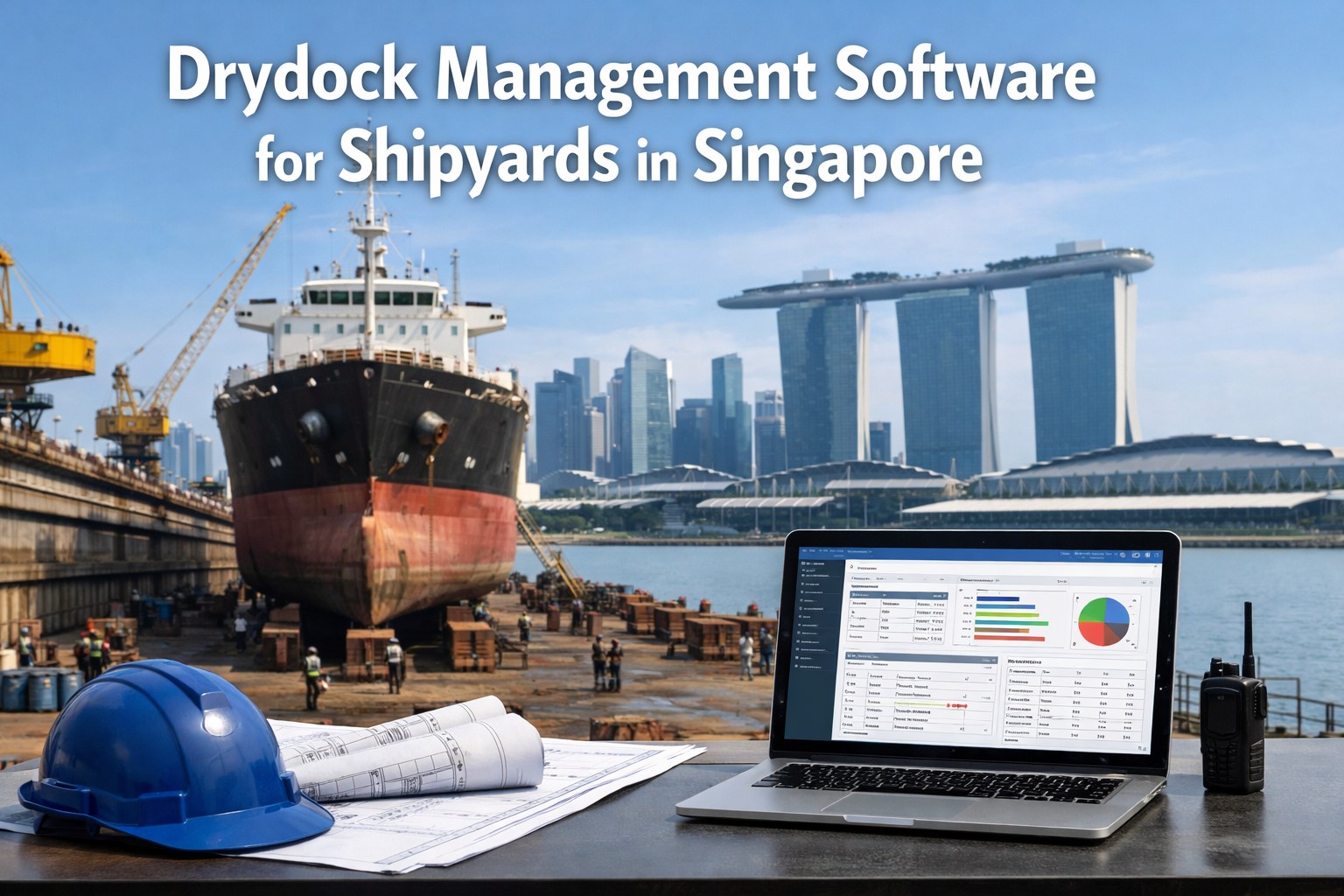
Singapore shipyards handle over 130,000 vessel calls annually, with Keppel, Sembcorp Marine, and a network of specialized repair yards servicing fleets from around the world. Drydock projects here are compressed, high-stakes operations—hull inspections, classification surveys, propulsion overhauls, and safety recertification all running simultaneously under tight deadlines. Industry data shows labor overruns on complex dockings can reach 40%, and scope creep from discovered defects routinely pushes budgets past plan. For shipyards competing on turnaround time and cost predictability, digital drydock management isn't optional—it's what international operators expect. Marine Inspection provides integrated drydock project management connecting planning, execution, cost control, and compliance into a single platform.
130K+
Annual Vessel Calls
Singapore port, busiest ship repair hub in SE Asia
3.11B GT
Record Tonnage (2024)
New record for Singapore port gross tonnage arrivals
Up to 40%
Labor Overrun Risk
Documented man-hour overruns on complex dockings
Drydock Project Lifecycle: Where Digital Management Intervenes
Each drydock phase presents management challenges that spreadsheets and email chains can't handle at the pace Singapore shipyards operate. Shipyards ready to replace manual tracking with real-time project visibility can sign up for Marine Inspection and start building drydock specifications digitally.
Project Phases and Management Requirements
Build repair specs from vessel condition data and outstanding defects
Align classification survey requirements with repair scope
Prepare bid packages and establish budget baseline
Marine Inspection consolidates maintenance history, defects, and survey requirements into structured specifications—eliminating weeks of manual compilation.
Distribute standardized specs to shortlisted yards
Compare bids on price, timeline, capability, and track record
Establish milestone schedule and payment terms
Historical drydock data across your fleet enables bid comparison against actual costs from previous dockings, strengthening negotiations.
Track task completion in real time across all work teams
Manage change orders for discovered defects with budget impact
Coordinate surveyor attendance and monitor spend vs. budget
Real-time job tracking and budget monitoring so superintendents see project status as it happens, not in end-of-day email summaries.
Verify all specification items and survey sign-offs completed
Validate final cost against budget and approve change orders
Update maintenance system with completed work and new baselines
Automatically updates vessel maintenance records, closing tasks from the running plan and establishing new inspection baselines.
Five Drydock Cost Overrun Causes—and Digital Prevention
For Singapore shipyards handling vessels from cost-conscious international operators, every overrun erodes competitive position. Marine Inspection addresses each cause with specific digital controls that keep projects on budget.
Every discovered defect adds work and cost without formal approval. Hull cleaning reveals plate wastage; pump overhauls uncover bearing damage.
Structured change order workflow with cost estimation, approval chain, and contingency tracking.
Incomplete specs lead to inaccurate bids. Omitted items become premium-priced change orders at dock.
Spec builder pulls from maintenance history, outstanding defects, running hours, and upcoming survey requirements.
Multiple teams on the same vessel without schedule coordination create bottlenecks and cascading delays.
Unified project schedule with task dependencies and real-time progress tracking across all teams.
Surveyor attendance not aligned with work completion. Work is done but can't be signed off, or prerequisites aren't ready when the surveyor arrives.
Survey milestones linked to actual work completion status, not estimated dates.
Cost data arrives at settlement, not during execution. By then, leverage to negotiate or adjust is gone.
Daily spend-vs-budget visibility with variance alerts at milestone checkpoints.
Take Control of Your Drydock Projects
Marine Inspection gives Singapore shipyards and ship operators full visibility into drydock planning, execution, and cost control—from specification to undocking.
Expert Review: Why Singapore Shipyards Need Digital Drydock Management
Industry Analysis
Singapore's ship repair dominance rests on strategic location, world-class infrastructure from Keppel and Sembcorp Marine, and MPA's rigorous regulatory environment. The port set a 3.11 billion GT record in 2024, with over 200 international shipping groups based in Singapore. This volume creates pressure—shipyards must deliver fast turnarounds with predictable costs to retain their edge over lower-cost regional alternatives.
MPA's push toward maritime digitalization—Maritime 5G coverage by 2025, AI-driven applications for ship registry, and the Just-In-Time coordination platform—signals a broader expectation that maritime operations in Singapore will be digitally managed. Shipyards running complex projects through spreadsheets and email face a widening gap between what operators expect and what the yard delivers in transparency and cost accountability. Marine Inspection provides the digital infrastructure that reinforces Singapore's premium positioning in ship repair.
Conclusion
Drydock management in Singapore demands digital project control. With compressed timelines, multiple contractor teams, classification coordination, and real-time cost tracking all needing to work together, Marine Inspection delivers integrated capability: pre-dock planning from vessel history, real-time execution tracking, change order management, and automatic maintenance record updates at undocking. Schedule a demo with our team to see how Marine Inspection manages drydock projects end-to-end—or for shipyards ready to get started, sign up and begin planning your next docking digitally.
Drydock Management for Singapore Shipyards
From specification to settlement, Marine Inspection connects every drydock phase—giving shipyard managers, superintendents, and operators full visibility into schedule, cost, and quality.
Frequently Asked Questions
What makes drydock management in Singapore different from other locations?
Singapore shipyards operate under MPA's rigorous regulations, handle vessels from 200+ international shipping groups, and compete on turnaround speed against lower-cost alternatives. Drydock management must deliver documented schedule adherence, transparent cost tracking, and compliance evidence. Marine Inspection supports this operating environment with digital project control.
How does Marine Inspection handle discovered defects during drydock?
Through a structured change order workflow: defects are documented with photos, cost estimates are generated, budget impact is calculated against contingency reserves, and an approval chain routes the decision to the right authority. Every approved change order is tracked against the revised budget.
Can drydock tasks integrate with routine vessel maintenance plans?
Yes. Outstanding maintenance tasks and deferred repairs can be pulled into the drydock specification. When completed, those tasks are automatically closed in the maintenance plan with documentation—eliminating manual reconciliation after undocking.
How does the software help with classification survey coordination?
Survey items are mapped to specific drydock tasks. Surveyor attendance is scheduled based on actual work completion rather than estimated dates. When a linked work item is marked complete, the system flags it as ready for sign-off—reducing idle surveyor time and preventing costly re-visits.
Does Marine Inspection support fleet-wide drydock planning?
Yes. Fleet-level planning shows upcoming docking schedules, survey due dates, and budget forecasts across all vessels. Historical data—actual costs vs. budgets, common discovered defects, yard performance comparisons—informs future planning and strengthens bid negotiations.