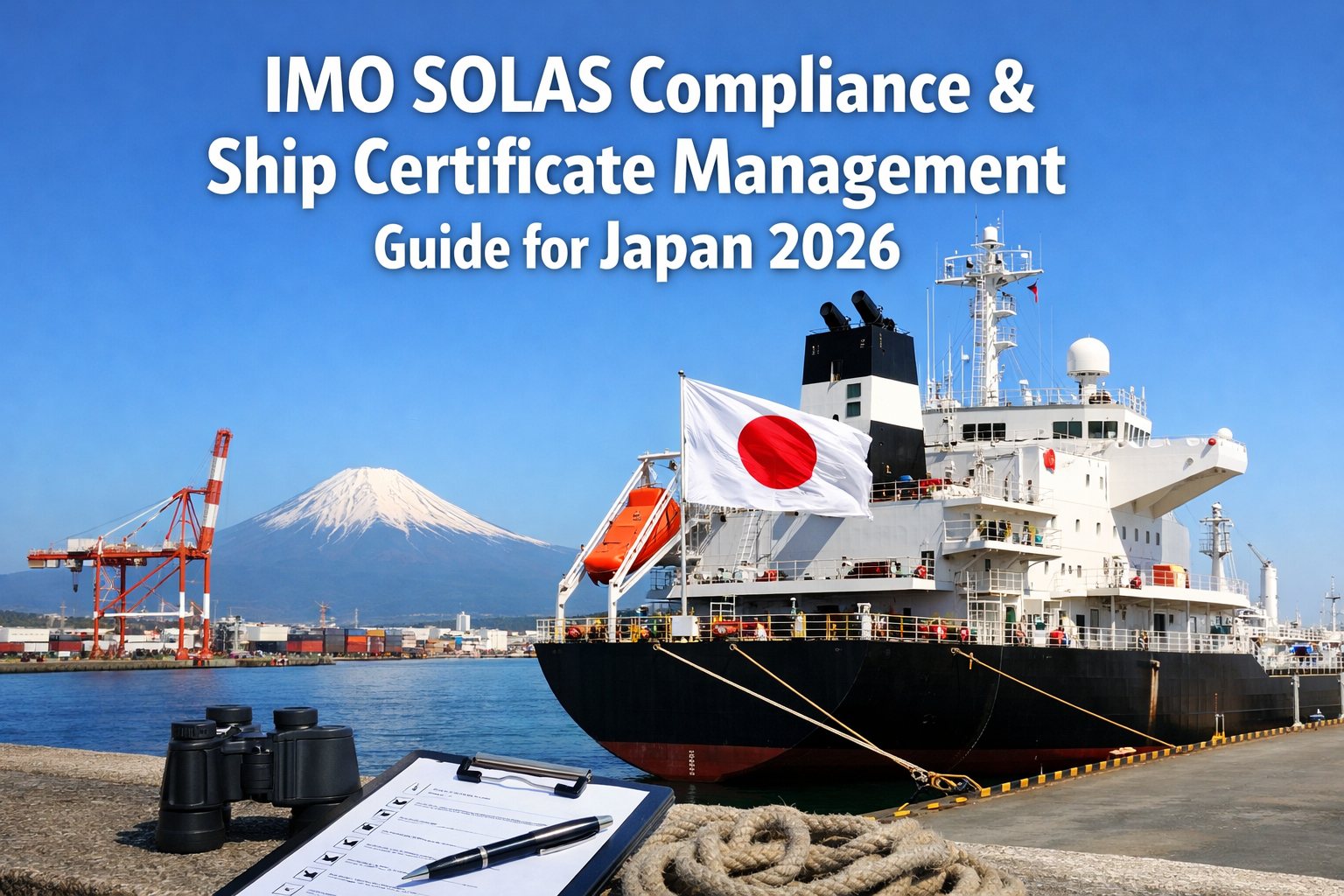
Japanese shipowners managing 4,200+ vessels across commercial shipping, coastal ferry services, and specialized maritime operations face comprehensive maintenance and compliance complexity in 2026. Japan-flagged vessels must simultaneously maintain systematic preventive maintenance programs, SOLAS safety equipment certification, MARPOL environmental compliance, classification society survey schedules, and ISM Code audit documentation—while coordinating operations across domestic routes, international trade lanes, and challenging Pacific Ocean conditions. The operators achieving compliance without operational disruption implement integrated computerized maintenance management systems (CMMS) connecting equipment condition tracking, automated work order generation, certificate expiration monitoring, spare parts inventory management, and regulatory compliance workflows into unified digital platforms. Japanese shipowners ready to modernize vessel maintenance operations—start your free trial can leverage Marine Inspection's AI-powered platform designed specifically for the regulatory complexity Japanese maritime companies face across diverse vessel types, challenging operating environments, and overlapping compliance requirements.
Japan Maritime Compliance Requirements: Overlapping Regulatory Frameworks
Japanese vessels operate under complex regulatory structure combining international conventions (SOLAS, MARPOL, STCW), classification society rules, ISM Code safety management obligations, and flag state requirements. Each framework establishes separate certification, survey, audit, and documentation requirements—SOLAS mandates safety equipment surveys annually, MARPOL requires environmental system certifications, classification societies conduct hull and machinery surveys on 5-year cycles, and ISM Code requires documented safety management systems with annual internal audits. The vessels maintaining continuous compliance implement integrated compliance platforms—schedule demo that automatically monitor certificate expirations, trigger survey preparations 90 days in advance, maintain audit-ready documentation, and connect compliance requirements directly to maintenance scheduling ensuring equipment tests align with planned survey windows.
Computerized Maintenance Management Systems (CMMS): Core Platform Capabilities
Modern vessel maintenance requires systematic approach impossible to manage through paper work orders and spreadsheet tracking. CMMS platforms automate maintenance workflows by generating preventive maintenance tasks based on equipment running hours or calendar intervals, tracking work order completion with photo documentation, managing spare parts inventory with automatic reorder triggers, maintaining equipment history for trend analysis, and connecting maintenance activities to compliance certification requirements. Japanese operators implementing comprehensive CMMS report 28-35% reduction in unplanned downtime through systematic preventive maintenance execution, 15-22% decrease in maintenance costs through parts optimization and labor efficiency, and 65-75% reduction in administrative time previously spent manually tracking work orders and updating maintenance logs.
Predictive Maintenance & AI-Powered Analytics
Traditional calendar-based maintenance performs equipment servicing at fixed intervals regardless of actual condition—causing unnecessary maintenance on well-performing equipment while missing developing failures between scheduled services. Predictive maintenance shifts this approach by monitoring equipment performance data (vibration, temperature, pressure, power consumption) identifying degradation patterns triggering maintenance interventions before failures occur. Japanese operators implementing predictive maintenance report 40-55% reduction in unexpected equipment failures, 25-35% decrease in maintenance costs by eliminating unnecessary preventive maintenance, and 15-22% improvement in equipment reliability through condition-based intervention timing. Marine Inspection's AI-powered analytics platform analyzes equipment performance trends, identifies anomalies indicating developing failures, generates maintenance recommendations with predicted failure timelines, and automatically creates work orders when intervention thresholds reached.
Certificate & Audit Management: Compliance Documentation Systems
Japanese vessels maintain 40-60 certificates, surveys, and audit records across SOLAS equipment, MARPOL systems, classification approvals, and crew certifications—each with different expiration dates and renewal requirements. Manual certificate tracking creates expiration risks costing $40,000-$110,000 daily when vessels detained. Digital compliance platforms centralize all certificates in searchable databases, automatically monitor expirations with 90-day warnings, maintain complete audit trails, generate survey preparation checklists, and connect certificates to equipment maintenance. Japanese operators implementing integrated certificate management—sign up now report zero detention events for documentation deficiencies and 70% reduction in administrative time.
Port State Control Readiness: Deficiency Prevention
Japanese vessels operating international routes face Port State Control inspections examining certificates, equipment condition, crew competency, and operational procedures. Vessels with deficiencies face detention costing $40,000-$110,000 daily plus reputational damage. Vessels consistently passing PSC inspections maintain systematic preparation workflows: automated pre-arrival certificate verification, equipment inspection checklists covering common deficiency categories, accessible crew training records, and compliant operational documentation. Japanese operators using Marine Inspection's PSC module report 65% reduction in deficiencies, zero detentions over 18 months, and 50% faster pre-arrival verification.
Japan Maritime Digitalization 2026: Emission Control Integration
Japanese maritime digitalization increasingly connects maintenance management with emission control compliance as EU ETS, CII ratings, and environmental regulations create direct links between equipment performance and regulatory costs. Poorly maintained equipment increases fuel consumption: fouled heat exchangers increase load 8-12%, worn fuel injectors reduce efficiency 3-7%, hull fouling increases resistance 6-15%, degraded propulsion reduces efficiency 5-10%. Digital platforms connecting maintenance with emission monitoring identify when equipment degradation correlates with fuel increases, triggering interventions before efficiency losses become violations. Operators can see integrated platform—book demo demonstrating how Marine Inspection connects equipment tracking, fuel analytics, and maintenance scheduling.
Conclusion: Japanese Maritime Through Digital Integration
Japanese vessel maintenance and compliance demonstrates that regulatory complexity—simultaneous SOLAS, MARPOL, ISM, classification, and PSC requirements—cannot be managed through fragmented spreadsheets and reactive approaches. Japanese operators achieving compliance while maintaining efficiency implement integrated digital platforms providing automated maintenance scheduling, systematic certificate tracking, predictive equipment monitoring, and compliance documentation workflows. As requirements intensify through 2030 with emission control regulations layering onto existing mandates, competitive advantage belongs to operators with digital infrastructure supporting systematic optimization. Japanese maritime companies ready to implement vessel maintenance platform—see demo can leverage Marine Inspection's system designed for Japanese fleet complexity across commercial shipping, coastal ferry operations, and specialized vessel services.