Ship Oil Spill Response: SOPEP and Emergency Procedures Guide
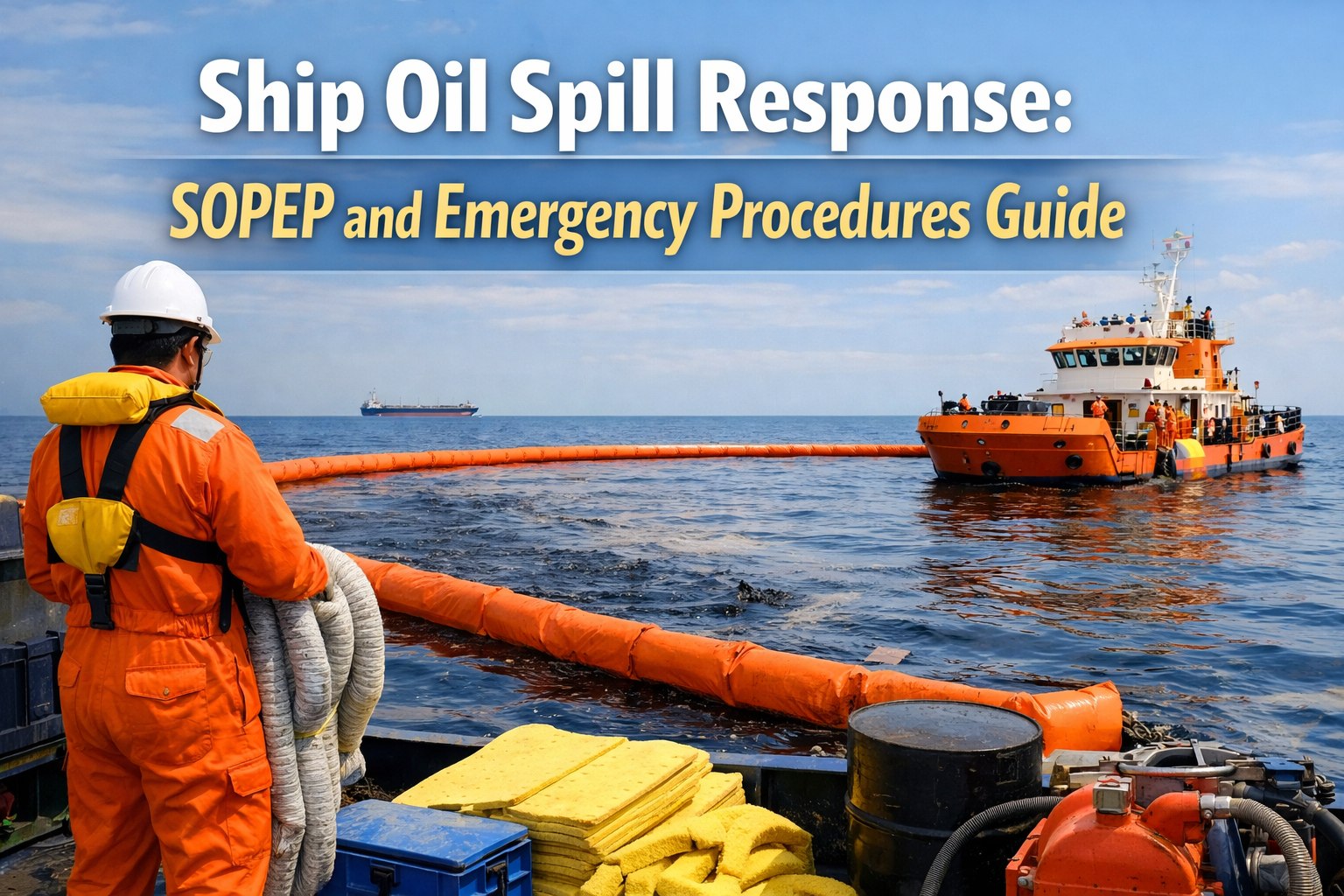
An oil spill at sea triggers a chain reaction of consequences that extends far beyond the engine room or deck — environmental damage that can persist for decades, regulatory penalties that can bankrupt a company, criminal prosecution of the Master and officers, P&I claims that dwarf the vessel's value, and reputational damage that follows an operator for years. MARPOL Annex I Regulation 37 requires every oil tanker of 150 GT and above and every other ship of 400 GT and above to carry an approved Shipboard Oil Pollution Emergency Plan (SOPEP) — the document that transforms an oil discharge from an uncontrolled catastrophe into a managed emergency response. The SOPEP provides the Master and crew with systematic procedures for every oil spill scenario: operational spills on deck during bunkering or cargo transfer, hull breach discharges from collision or grounding, machinery space leaks from failed pipes or gaskets, and accidental discharges from bilge or ballast system failures. For US waters, OPA 90 (Oil Pollution Act of 1990) adds additional Vessel Response Plan (VRP) requirements including pre-positioned response equipment and contracted Oil Spill Response Organizations. The IMO updates the list of national operational contact points quarterly (MEPC-MSC.6/Circular) — and an outdated contact list is one of the most common Port State Control SOPEP deficiencies because many vessels fail to update this mandatory appendix. Marine insurer Gard's claims data confirms that pollution incidents consistently generate the highest-value P&I claims — cleanup costs, third-party damages, fines, and legal costs can total tens of millions for a single incident. To see how Marine Inspection digitalises SOPEP documentation, spill response drill records, equipment inventory tracking, and Oil Record Book compliance across your fleet, book a Marine Inspection demo.
MARPOL Annex I Reg. 37
SOPEP mandatory for tankers 150 GT+ and all ships 400 GT+. Approved by flag state administration. Must be in English and working language of the ship.
OPRC 1990
International Convention on Oil Pollution Preparedness, Response and Co-operation. Requires ships to carry approved emergency plan and report incidents without delay.
OPA 90 (US Waters)
Vessel Response Plan (VRP) required for US waters operations. Pre-positioned equipment, contracted OSRO, worst-case discharge scenario planning. Supplements SOPEP.
MARPOL Annex II Reg. 17
SMPEP required for ships 150 GT+ carrying noxious liquid substances in bulk. Can be combined with SOPEP as a Shipboard Marine Pollution Emergency Plan.
What SOPEP Must Contain: The Seven Sections
SOPEP follows a structured format defined by MARPOL. Each section serves a specific purpose in the emergency response chain — from initial detection through notification, containment, cleanup, and reporting. Book a Marine Inspection demo to see digital SOPEP management.
1
Introduction
Plan purpose, regulatory basis, ship-specific information (vessel name, IMO number, GT, owner, operator), general arrangement showing all oil tank locations with capacities.
2
Preamble
Relationship between SOPEP and other emergency plans (SMS, Fire Safety Plan, damage stability). Authority structure — Master has overall responsibility; Chief Officer implements.
3
Reporting Requirements
Mandatory notification procedures: who to contact, reporting format per MARPOL Protocol I, coastal state contacts, port authority contacts, company contacts. NRC toll-free 800-424-8802 for US waters.
4
Steps to Control Discharge
Procedures for operational spills (bunkering, cargo transfer, machinery leaks) and casualty spills (collision, grounding, hull breach). Containment, transfer, and cleanup procedures for each scenario.
5
National & Local Coordination
Coordination with national and local authorities for spill response. Shore-based support arrangements. Salvage and lightering contacts. Classification society ERS activation.
6
Additional Information
Technical drawings: fuel oil system, cargo oil system (tankers), tank locations, save-all arrangements, vent positions. Ship-to-ship transfer procedures for lightening damaged tanks.
7
Appendices (Mandatory Updates)
List of national operational contact points — updated quarterly by IMO (MEPC-MSC.6/Circular on 31 Jan, 30 Apr, 31 Jul, 31 Oct each year). Must be current on board — outdated list is a common PSC deficiency.
Identify and isolate leaking system. Close isolation valves. Contain spill with absorbent materials. Check bilge well — prevent oil reaching overboard discharge.
Bilge holding tank capacity. Emergency bilge pump. Absorbent pads and pillows. Block bilge overboard valve.
If any oil reached water: immediate reporting per SOPEP. Internal SMS near-miss report regardless.
Hull Breach (Collision/Grounding)
Side shell rupture, double bottom breach, tank rupture from impact
Sound general alarm. Close watertight doors. Assess damage. Sound tanks. Transfer oil from damaged tanks if safe and possible.
Internal transfer to undamaged tanks. Lightering to another vessel (ship-to-ship transfer). Onboard oil spill equipment deployment if oil reaches water.
Flag state, class (ERS), P&I Club, coastal state, port authority, NRC (US waters). Stability assessment before any transfer operations.
Cargo Transfer Spill (Tanker)
Line pressure surge, hose burst, manifold gasket failure, tank overflow, communication failure with terminal
STOP all cargo operations. Close manifold valves and shore stop. Activate save-all system. Deploy cargo deck absorbents.
Stop all bilge discharge immediately. Verify OWS and 15 ppm monitor status. Secure oil content monitor data (VDR equivalent for MARPOL).
Hold contaminated bilge water in bilge holding tank until OWS repaired. Shore disposal if OWS unserviceable.
Flag state. Oil Record Book entry. PSC inspectable — OCM data retention is critical evidence.
Notification must not be delayed during the process of gathering information. Initial report with position, type of oil, and estimated quantity — detailed follow-up report later.
SOPEP Equipment: What Must Be On Board
The SOPEP locker must be clearly marked, easily accessible, and contain a complete inventory of spill response equipment. PSC inspectors routinely check SOPEP equipment against the inventory list — missing or expired items are detainable deficiencies. Sign up for Marine Inspection to track SOPEP inventory with automated restock alerts.
Oil Absorbent Pads: Hydrophobic pads that absorb oil but repel water. Sufficient quantity for deck spill containment. Replace after use — single use only.
Oil Absorbent Booms: Sausage-shaped absorbent booms for containing and absorbing oil around deck spills, manifold areas, and overboard discharge points.
Non-Sparking Portable Pump: For transferring collected oil from save-alls and drip trays to slop tank. Must be non-sparking for use near flammable vapours.
Sawdust / Granular Absorbent: Bulk absorbent for large deck spills. Swept up after absorption for disposal. Oil-contaminated sawdust is hazardous waste.
Scupper Plugs: Pre-fitted to all deck scuppers during bunkering and cargo operations. Prevents oil reaching water via deck drainage. Verified in place before every transfer.
Shovels, Brooms, Buckets: For manual cleanup of deck spills. Non-sparking shovels for tanker deck operations. Dedicated — not shared with general stores.
Plastic Disposal Bags: For containment of oil-contaminated absorbents, rags, and cleanup materials. Labelled as oil-contaminated waste for proper shore disposal.
Protective Equipment: Chemical-resistant gloves, coveralls, goggles, boots for crew handling oil spill cleanup. Skin contact with oil causes dermatitis and chemical burns.
How Marine Inspection Protects Your Fleet From Pollution Liability
Digital SOPEP Management
SOPEP document management with appendix update tracking. Quarterly contact point list updates flagged automatically. Amendment history maintained for PSC verification.
SOPEP Equipment Inventory
Complete equipment inventory with quantity tracking, expiry dates (absorbents, PPE), condition checks, and automated restock alerts. PSC-ready inventory evidence.
Spill Drill Records
Oil spill response drill scheduling, scenario documentation, crew participation, equipment deployment records, and debrief outcomes — demonstrating preparedness during audits.
Oil Record Book Compliance
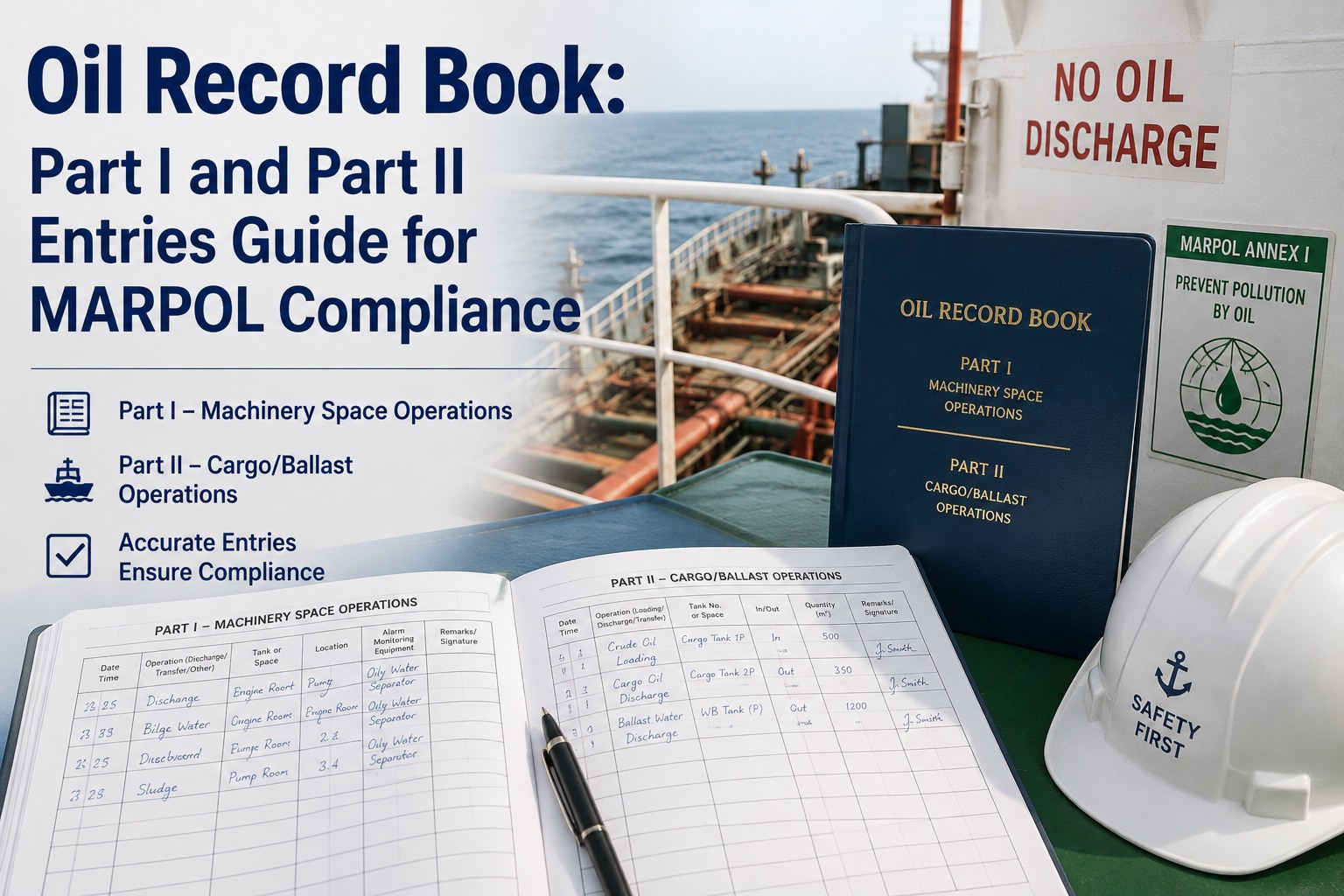
Digital Oil Record Book entries with tamper-proof audit trail. Bilge water operations, OWS discharge records, sludge disposal, and cargo/ballast operations — the documentation PSC inspects most closely.
OWS & 15 ppm Monitor PM
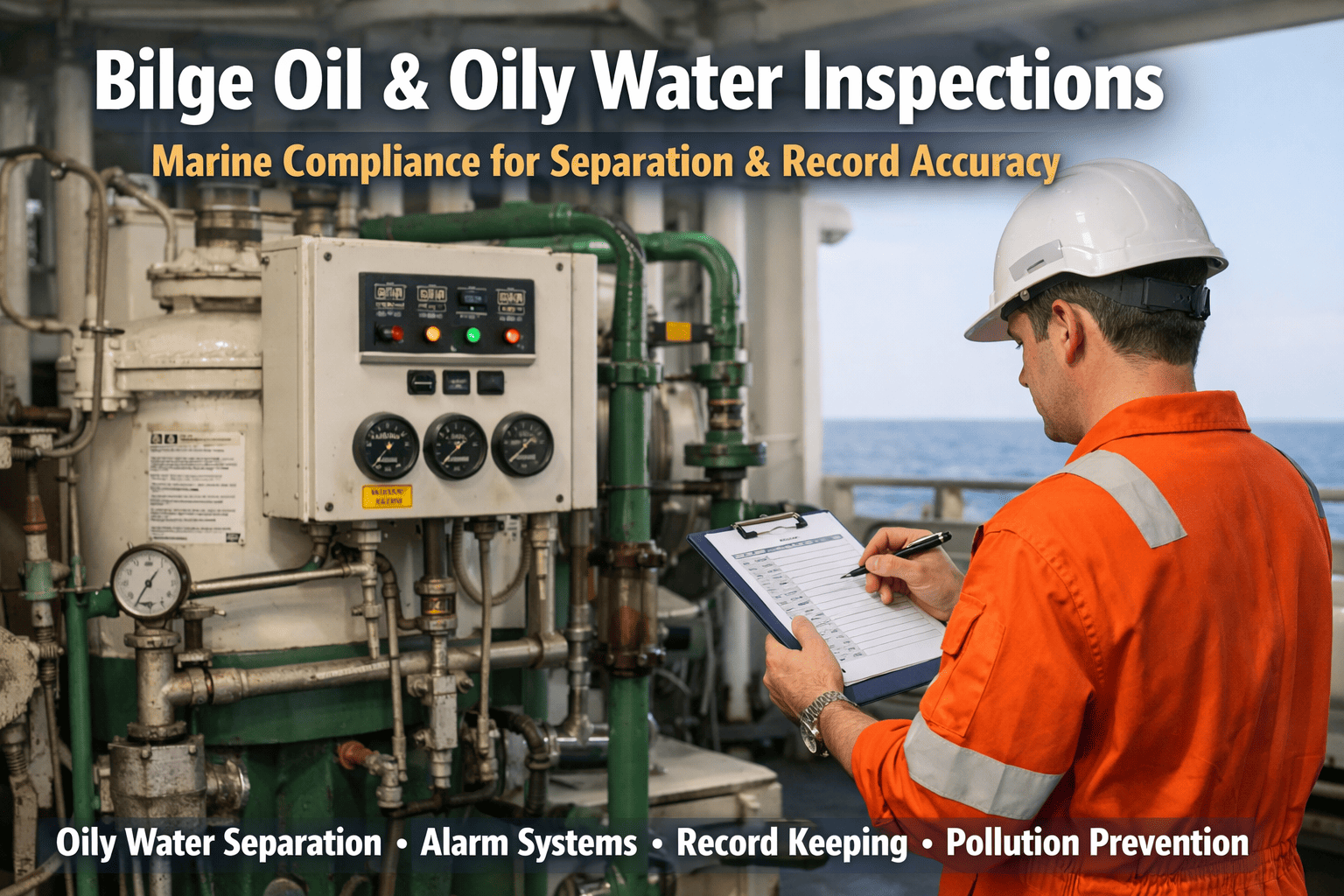
Oily Water Separator maintenance records, 15 ppm monitor calibration, alarm function testing, and OCM data retention — preventing the equipment failures that cause illegal discharges.
Crew Training Records
SOPEP familiarisation, spill response training, OWS operation competency, MARPOL awareness — tracked per crew member with certification management across rotations.
Pollution Claims Are the Highest-Value P&I Exposure
Cleanup costs, fines, third-party damages, and legal proceedings from a single oil spill can total tens of millions. Marine Inspection ensures your SOPEP is current, your equipment is inventoried, your drills are documented, and your Oil Record Book is compliant — because the best spill response is the one that never reaches the water.
Nearest Coastal State: First notification — position, type of oil, estimated quantity, weather/sea conditions. Do not delay initial report while gathering complete information. Follow MARPOL Protocol I format.
Port Authority: If in port or approaching port. Port may activate harbour spill response resources. May restrict vessel movements or require port of refuge.
National Response Center (US): Toll-free 800-424-8802 for any actual or probable discharge in US waters. Required under OPA 90. 24/7 operation.
Flag State Administration: Casualty notification as required by flag state regulations. May trigger formal investigation.
Classification Society: Activate ERS if collision/grounding. Damage survey. Condition of class implications if structural damage caused the spill.
P&I Club: Immediate notification essential for coverage. Club deploys surveyor, legal counsel, and pollution response coordinators. Delay risks coverage complications.
Company DPA: Designated Person Ashore per ISM Code. Coordinates shore-based response. Manages company obligations and interfaces with authorities.
OSRO (if contracted): Oil Spill Response Organisation for US VRP or Panama Canal PCSOPEP compliance. Pre-positioned equipment and trained response teams on standby.
Conclusion
Ship oil spill response is the maritime emergency where the financial and environmental consequences can dwarf every other incident type — cleanup costs, regulatory fines, P&I claims, criminal prosecution, and environmental damage that persists for decades. SOPEP, mandated by MARPOL Annex I Regulation 37 for all ships 400 GT and above, provides the structured response framework: seven mandatory sections covering introduction, reporting, discharge control, coordination, and technical information, supplemented by quarterly-updated national contact point lists. Five spill scenarios (bunkering, machinery space, hull breach, cargo transfer, bilge/OWS discharge) each require different containment and notification procedures. SOPEP equipment (absorbent pads and booms, non-sparking pump, sawdust, scupper plugs, PPE, disposal bags) must be inventoried, accessible, and verified. The notification chain (coastal state, port authority, NRC, flag state, class, P&I Club, DPA, OSRO) must be activated without delay — the initial report saves time while detailed follow-up continues. For US waters, OPA 90 VRP requirements add contracted OSRO and pre-positioned equipment mandates. Marine Inspection provides the digital platform that ensures SOPEP documentation is current, equipment is inventoried, drills are documented, and Oil Record Book entries maintain the compliance that prevents both spills and the enforcement actions that follow — book a live demo today.
Frequently Asked Questions
FAQ 01
What ships must carry a SOPEP?
MARPOL Annex I Regulation 37 requires all oil tankers of 150 GT and above and all other ships of 400 GT and above to carry an approved Shipboard Oil Pollution Emergency Plan. The plan must be approved by the flag state administration and must be available on board in English and in the working language of the Master and officers if different from English. Ships of 150 GT and above carrying noxious liquid substances in bulk must additionally carry an approved SMPEP (Shipboard Marine Pollution Emergency Plan) under MARPOL Annex II Regulation 17, which may be combined with the SOPEP as a single document. The plan must be ship-specific — not a generic template — and must be updated whenever there are changes to the ship's configuration, contact details, or applicable regulations.
FAQ 02
What is the most common SOPEP PSC deficiency?
The most common SOPEP-related PSC deficiency is an outdated list of national operational contact points. The IMO updates this list quarterly (MEPC-MSC.6/Circular) — published on 31 January, 30 April, 31 July, and 31 October each year. Many vessels fail to update this mandatory appendix, which means their SOPEP contains incorrect contact information for pollution reporting. Other frequent deficiencies include: incomplete SOPEP equipment in the locker (missing items vs inventory list), expired absorbent materials, inaccessible SOPEP locker, crew unable to explain SOPEP procedures during PSC questioning, and SOPEP plan not matching current vessel configuration (e.g., after modifications to fuel systems or tank arrangements).
FAQ 03
What equipment must be in the SOPEP locker?
The SOPEP locker must contain at minimum: oil absorbent pads (hydrophobic, sufficient quantity for deck spill), oil absorbent booms (for containment around manifolds and spill areas), non-sparking portable pump (for transferring collected oil), sawdust or granular absorbent (for large deck spills), scupper plugs (for all deck scuppers — fitted before every bunkering/cargo transfer), shovels, brooms, and buckets (non-sparking for tanker operations), plastic disposal bags (labelled for oil-contaminated waste), and protective equipment (chemical-resistant gloves, coveralls, goggles, boots). All items must match the inventory list in the SOPEP. Oil tankers over 400 feet overall length must carry equipment for containment and removal of on-deck cargo spills of at least 12 barrels. PSC inspectors check the locker contents against the SOPEP inventory.
FAQ 04
What is the difference between SOPEP and VRP?
SOPEP (Shipboard Oil Pollution Emergency Plan) is required internationally under MARPOL Annex I for all applicable ships worldwide. It focuses on shipboard procedures for crew response to oil discharge incidents. VRP (Vessel Response Plan) is required under the US Oil Pollution Act of 1990 (OPA 90) for vessels operating in US waters. The VRP goes beyond SOPEP requirements by mandating contracted Oil Spill Response Organizations (OSROs) with pre-positioned equipment, worst-case discharge scenario planning, and specific response timeframes. A vessel operating in US waters needs both: the SOPEP for international compliance and the VRP for US regulatory compliance. The Panama Canal requires an additional PCSOPEP with canal-specific notification procedures and ACP-approved response arrangements.
FAQ 05
Who is responsible for SOPEP on board?
The Master has overall responsibility for SOPEP and the authority to initiate the emergency response. The Chief Officer is subordinate to the Master and responsible for implementing SOPEP procedures on board — this includes ensuring equipment readiness, conducting drills, maintaining the SOPEP locker inventory, and coordinating deck operations during a spill response. The Chief Engineer manages engine room oil spill scenarios and bilge/OWS system operations. All crew must be familiar with their SOPEP duties — the action plan specifies each person's role during a spill. The company (ship owner/manager) through the DPA is responsible for maintaining the approved plan, updating appendices, ensuring adequate training, and providing shore-based support during incidents. Changes to the mandatory content of SOPEP require flag state administration approval.
Book Your Live Demo
The Best Spill Response Is the One That Never Reaches the Water
Marine Inspection tracks SOPEP documentation, equipment inventory, drill records, Oil Record Book compliance, and OWS maintenance — the systematic platform that prevents pollution incidents and proves compliance when regulators inspect.