Enclosed Space Entry Procedures on Ships: Safety and Rescue Guide
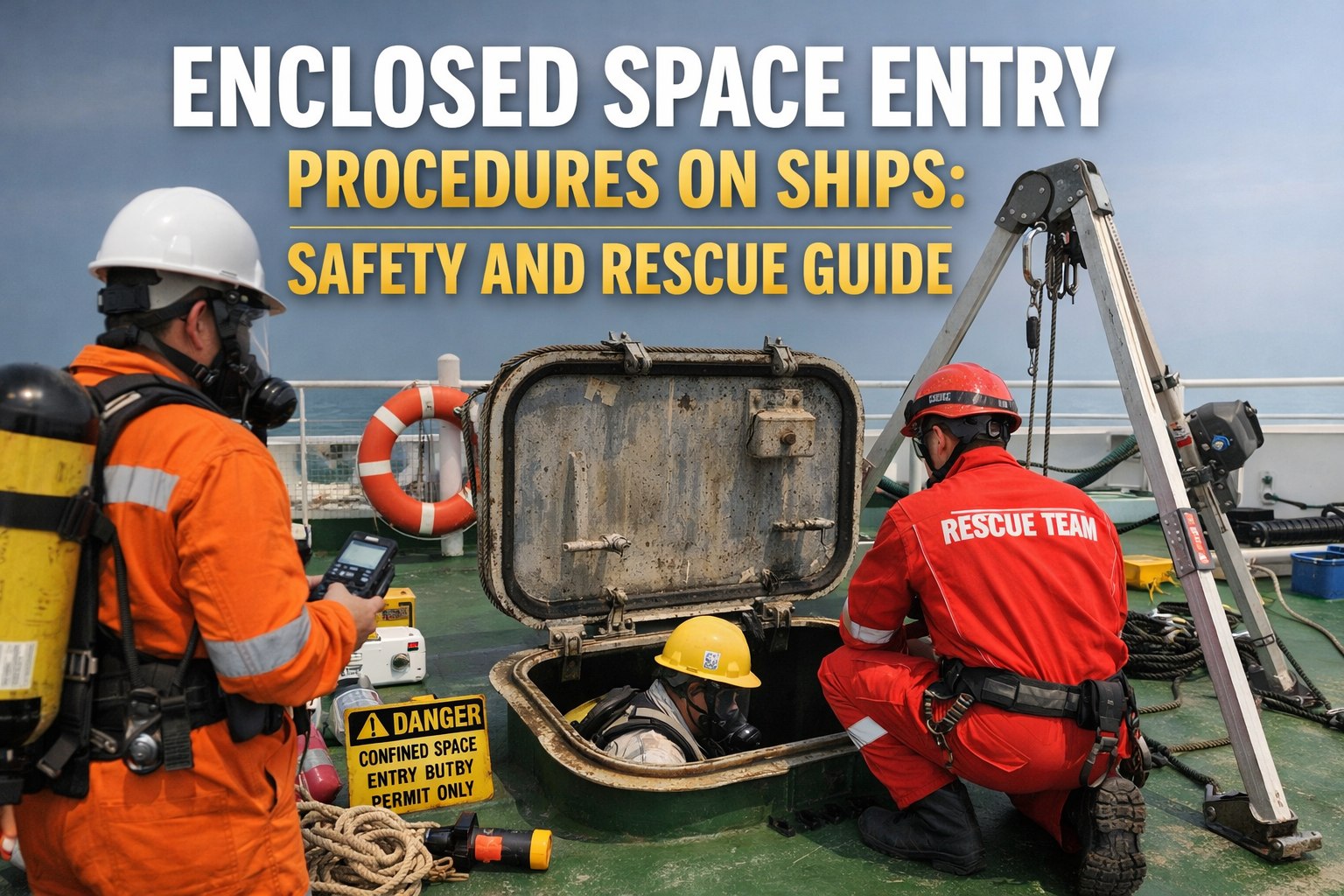
Enclosed space entry kills more seafarers than almost any other routine shipboard activity — and it keeps killing despite decades of regulation, training, and industry awareness campaigns. By January 2025, an estimated 350 people had died from asphyxiation on board ships since 1996, with 70 deaths linked to 43 accidents since 2022 alone. The pattern is devastatingly consistent: a crew member enters a ballast tank, cargo hold, chain locker, or void space without proper atmosphere testing, collapses from oxygen depletion within seconds — and then a second crew member rushes in to rescue them without breathing apparatus and also collapses. In many incidents, a third person enters and dies too. This pattern of cascading fatalities from unplanned rescue attempts is so persistent that IMO Resolution MSC.581(110), adopted on 27 June 2025 and endorsed by the 34th IMO Assembly on 3 December 2025, explicitly addresses it — mandating ship-specific Enclosed Space Emergency Response Plans, prohibiting single-person entry, requiring CO2 testing capability, and introducing new concepts of Connected Spaces and Adjacent Spaces that must be tested before any entry. MSC.581(110) replaces the previous Resolution A.1050(27) and represents the most significant update to enclosed space entry guidance in over a decade. For safety officers and all crew, enclosed space entry is the shipboard activity where the gap between knowing the procedure and following the procedure is most frequently fatal. Oxygen levels can drop from 20.9% (safe) to below 16% (impaired judgement) to below 6% (death within minutes) with no visible warning — no smell, no colour change, no alarm unless you test. Cargoes including coal, wood products, wood chips and pellets, metal sulfide concentrates, ferrous materials, seed cake, scrap metal, and certain grain and timber cargoes have all caused fatalities through oxygen depletion and toxic gas generation. To see how Marine Inspection digitalises enclosed space entry permits, atmosphere testing records, rescue drill documentation, and Enclosed Space Register management across your fleet, book a Marine Inspection demo.
350
Estimated deaths from enclosed space entry since 1996
70
Deaths from 43 accidents since 2022
#1
Cause: unplanned rescue of first casualty without BA
MSC.581
New IMO resolution adopted June 2025, effective Dec 2025
IMO Resolution MSC.581(110): What Changed
MSC.581(110) replaces A.1050(27) and introduces the most comprehensive update to enclosed space entry procedures since the original recommendations were published. Every vessel must review and amend shipboard procedures to align with these changes. Book a Marine Inspection demo to see how the platform integrates MSC.581(110) requirements into your SMS workflow.
NEW
Enclosed Space Register
Every ship must maintain a ship-specific register listing all enclosed spaces, their connected and adjacent spaces, hazards, risk mitigations, and how atmospheres may change depending on cargo carried. Managed as part of the SMS and reviewed periodically.
NEW
Connected Space & Adjacent Space
Connected Space (e.g., separated by manual door): must be treated as containing hazardous atmosphere until testing proves otherwise. Adjacent Space: potential contamination source requiring evaluation. Both must be assessed before entry.
NEW
CO2 Testing Requirement
Gas detection equipment must now include devices for testing CO2, in addition to O2, flammable gases, and toxic gases. Equipment must function correctly even in oxygen-depleted atmospheres.
NEW
Emergency Response Plan
Ship-specific enclosed space emergency response plan required, incorporated into SMS. Details roles, equipment, communications, and procedures. Unplanned or improvised rescue attempts explicitly prohibited.
REVISED
8-Hour Permit Validity
Entry permits now have a maximum validity of 8 hours. Must include clear identification of authorised personnel, specific atmosphere testing results, required safety equipment, and emergency contacts.
REVISED
Single-Person Entry Prohibited
Companies must explicitly prohibit single-person entry into enclosed spaces. Team-based approach mandated — ensuring immediate assistance and rescue capability at all times during entry.
The Enclosed Space Entry Procedure: Step by Step
Every enclosed space entry must follow this sequence without shortcuts. The sequence exists because each step addresses a specific failure mode that has killed people. Skip any step and you create the conditions for the next fatality.
1
Risk Assessment
Consult the Enclosed Space Register for the specific space. Identify hazards: previous contents, cargo in adjacent holds, coatings, corrosion potential, connected spaces, ventilation history. Assess likelihood of dangerous atmosphere being present or subsequently developing. Consider cargo hazard information from shipper's declaration, Safety Data Sheets, IMSBC Code, IMDG Code.
2
Permit to Work
Responsible officer issues enclosed space entry permit (maximum 8-hour validity). Permit specifies: space identification, purpose of entry, authorised personnel, atmosphere test results, safety equipment required, ventilation status, communication method, emergency contacts, and rescue arrangements.
3
Ventilation
Ventilate the space thoroughly before entry. Mechanical ventilation preferred — natural ventilation alone is often insufficient. Continue ventilation throughout the entire period of entry. Ventilate connected and adjacent spaces as identified in risk assessment. Do not assume ventilation has made the space safe — always test after ventilating.
4
Atmosphere Testing
Test atmosphere at multiple levels (top, middle, bottom — gases stratify by density). Test for: oxygen (20.9% normal, minimum 19.5% safe), flammable gases (below 1% LEL), toxic gases (H2S, CO below exposure limits), and CO2. Test connected and adjacent spaces. Gas detection equipment must work in oxygen-depleted atmosphere. Test with calibrated instruments — never rely on senses.
5
Rescue Arrangements
Rescue team briefed and standing by at entrance with SCBA, rescue harness, communication equipment, and stretcher/basket. Rescue plan specific to the space (not generic). Never enter to rescue without breathing apparatus — this is where most secondary fatalities occur.
6
Entry With Continuous Monitoring
Enter with personal gas detector monitoring O2 and cargo-specific gases continuously. Maintain communication with attendant at entrance. Attendant maintains log of persons inside. If alarm sounds on personal detector or if any crew member feels unwell — evacuate immediately, do not investigate.
7
Completion and Permit Closure
All personnel confirmed out of space. Permit closed and signed. Access secured against unauthorised entry. Any atmosphere anomalies or near-misses documented and reported per SMS. Permit records maintained for PSC and audit verification.
Atmosphere Testing: What to Measure and Safe Limits
Atmosphere Testing Requirements & Safe Limits
Gas / Parameter
Why It Matters
Safe Level for Entry
Danger Level
Common Sources on Ships
Oxygen (O2)
Below 19.5%: impaired judgement. Below 16%: rapid incapacitation. Below 6%: death in minutes. No sensory warning.
19.5% - 23.5%
<19.5% or >23.5%
Consumed by rusting steel, biological decomposition, cargo absorption (coal, grain, wood). Displaced by CO2, N2, inert gas.
Carbon Dioxide (CO2)
Toxic at elevated concentrations. Displaces oxygen. Odourless at low levels. Heavier than air — accumulates at bottom.
<0.5% (5,000 ppm)
>3%: breathing difficulty. >10%: unconsciousness in minutes
Cargo decomposition (coal, grain, wood pellets, seed cake). Fermentation. CO2 fire suppression system residual.
Carbon Monoxide (CO)
Binds to haemoglobin 200x more effectively than oxygen. Odourless. Cumulative exposure.
<25 ppm (8-hour TWA)
>200 ppm: headache, dizziness. >800 ppm: death within hours
Increases flammability of clothing, hair, and all combustible materials. Ignition becomes extremely easy.
<23.5%
>23.5%: fire risk escalates dramatically
Oxygen system leaks, welding equipment, medical oxygen storage areas.
Test at multiple levels — gases stratify by density. CO2 and H2S sink to bottom; methane rises to top. A reading at entrance height does not represent bottom-of-tank conditions.
Cargoes That Kill: What MSC.581(110) Warns About
MSC.581(110) specifically identifies cargoes that have caused fatalities through fire, explosion, or asphyxiation in enclosed spaces. These cargoes deplete oxygen, generate CO2 or CO, or emit flammable gases — often with no visible warning. Sign up for Marine Inspection to track cargo-specific enclosed space hazard assessments per voyage.
Coal: Absorbs O2, emits CO and methane. Self-heating risk. Can deplete hold atmosphere within hours of loading.
Wood Products / Chips / Pellets: Biological decomposition consumes O2, generates CO2 and CO. Pellets are particularly dangerous — rapid oxygen depletion.
Metal Sulfide Concentrates: Oxidation consumes O2. Can generate SO2 and H2S. Corrosive to steel structures.
Ferrous Materials (DRI/HBI): Rapid oxidation consumes O2. Direct Reduced Iron reacts with water producing hydrogen — explosion risk.
Seed Cake Cargoes: Biological decomposition. Self-heating. O2 depletion and toxic gas generation.
Scrap Metal: Oxidation consumes O2. Contamination from residual chemicals, oils, paints in scrap.
Grain / Timber: Biological activity consumes O2, generates CO2. Fumigant residuals (phosphine) may be present.
Any Fumigated Cargo: Phosphine, methyl bromide, or other fumigants may persist. Specific gas detection required for fumigant type.
How Marine Inspection Digitalises Enclosed Space Safety
Digital Entry Permits
8-hour validity permits with mandatory fields: atmosphere test results, authorised personnel, rescue arrangements, and emergency contacts. Auto-expire prevents overrun. Full audit trail.
Enclosed Space Register
Ship-specific digital register of all enclosed spaces with connected/adjacent spaces, hazards, ventilation details, testing access points, and cargo-dependent risk changes — as required by MSC.581(110).
Atmosphere Test Records
O2, CO2, CO, H2S, LEL readings captured at multiple levels per space. Calibration records for gas detectors. Test history preserved for audit and incident investigation.
Rescue Drill Records
Enclosed space entry and rescue drill scheduling, participation tracking, scenario documentation, and corrective action follow-up — verifiable during SOLAS III/19.3.6 compliance checks.
Gas Detector Calibration
Calibration dates, certificates, spare sensor inventory, and next-due alerts for every portable gas detector on board. Ensures testing equipment is always reliable.
Crew Training Tracking
Enclosed space awareness training, gas detector use certification, rescue equipment familiarisation, and STCW competency records — tracked per crew member across rotations.
350 Deaths Since 1996. Zero Is the Only Acceptable Number.
See How Marine Inspection Prevents Enclosed Space Fatalities
Digital entry permits, Enclosed Space Register, atmosphere test records, rescue drill documentation, and gas detector calibration tracking — the systematic platform that turns MSC.581(110) compliance into operational discipline.
The revised recommendations substantially revise Section 11 (Action in Event of Emergency) because unplanned rescue attempts have historically caused more deaths than the original incidents. The emergency response plan must be ship-specific, incorporated into the SMS, and drilled regularly.
Enclosed Space Emergency Response
Do NOT enter without breathing apparatus. This is the single most important rule. The overwhelming majority of secondary fatalities occur because rescuers enter without SCBA. A person who has collapsed from oxygen depletion cannot be saved by another person breathing the same atmosphere.
Raise the alarm immediately. Sound the general alarm or designated enclosed space emergency signal. Do not delay the alarm to attempt solo rescue — this creates the cascading casualty pattern.
Activate the Emergency Response Plan. Follow the ship-specific enclosed space emergency response plan. Designated rescue team dons SCBA and rescue equipment before entering.
Ventilate the space. Begin or increase mechanical ventilation immediately. Do not wait for rescue team to enter before starting ventilation.
Rescue team enters with SCBA and lifeline. At least one additional person remains at the entrance monitoring communication with rescue team and prepared to summon additional help.
Extract casualty and provide first aid. Remove casualty to fresh air. Administer oxygen if available. Begin CPR if not breathing. Seek immediate medical advice.
Report and investigate. Report incident per SMS procedures. Preserve evidence. Investigate root cause — specifically: why was atmosphere not tested, why did entry occur without permit, why was rescue plan not followed.
SOLAS Requirements for Enclosed Spaces
SOLAS XI-1/7
Ships must carry appropriate portable atmosphere testing instruments. Minimum 2 sets of portable gas detectors. Ships carrying hazardous vapour cargo requiring regular entry: 2 additional sets. Detectors with sufficient spares and calibration means.
SOLAS III/19.3.6
Enclosed space entry and rescue drills must be planned and conducted in a safe manner, taking into account guidance from IMO recommendations (now MSC.581(110)). Regular training and drill records maintained.
ISM Code (SOLAS IX)
Safety Management Systems must include procedures for enclosed space entry. Risk assessment, permit to work, emergency response — all documented within SMS. Company responsibilities for training and empowering personnel to stop unsafe operations.
MSC.1/Circ.1477
Guidelines for selection of portable atmosphere testing instruments for enclosed spaces as required by SOLAS XI-1/7. Defines minimum detection capabilities: O2, flammable gases, toxic gases, and now CO2 per MSC.581(110).
Conclusion
Enclosed space entry remains the most lethal routine activity on ships — 350 estimated deaths since 1996 and 70 deaths from 43 accidents since 2022 demonstrate that awareness alone does not prevent fatalities. IMO Resolution MSC.581(110), adopted June 2025 and effective December 2025, introduces the strongest regulatory response yet: ship-specific Enclosed Space Registers, Connected Space and Adjacent Space assessment requirements, CO2 testing mandates, 8-hour permit validity, explicit prohibition of single-person entry, and mandatory Enclosed Space Emergency Response Plans. The entry procedure sequence — risk assessment, permit to work, ventilation, multi-level atmosphere testing (O2, CO2, CO, H2S, LEL), rescue arrangements, continuous monitoring during entry, and permit closure — exists because each step addresses a specific failure mode that has killed crew members. The deadliest failure is not the initial oxygen depletion that incapacitates the first person — it is the unplanned rescue attempt where a second and third person enters without breathing apparatus and also dies. MSC.581(110) explicitly prohibits improvised rescue and requires planned, equipped, trained response teams. Marine Inspection provides the digital platform that turns enclosed space safety from paper-based compliance into systematic operational discipline — book a live demo today.
Frequently Asked Questions
FAQ 01
What is IMO Resolution MSC.581(110)?
MSC.581(110), adopted by the Maritime Safety Committee on 27 June 2025 and endorsed by the 34th IMO Assembly on 3 December 2025, provides Revised Recommendations for Entering Enclosed Spaces Aboard Ships. It replaces and revokes the previous Resolution A.1050(27). Key changes include: mandatory ship-specific Enclosed Space Register; new definitions for Connected Space, Adjacent Space, and Trapped Hazardous Atmosphere; CO2 testing requirement for gas detection equipment; 8-hour maximum permit validity; explicit prohibition of single-person entry; mandatory Enclosed Space Emergency Response Plan; enhanced cargo hazard identification requirements; and updated emergency rescue procedures that explicitly prohibit unplanned or improvised rescue attempts.
FAQ 02
What atmosphere levels are safe for enclosed space entry?
Safe levels for entry: Oxygen 19.5-23.5% (normal atmosphere is 20.9%); CO2 below 0.5% (5,000 ppm); CO below 25 ppm (8-hour TWA); H2S below 10 ppm (8-hour TWA); flammable gases below 1% of LEL (Lower Explosive Limit). Test at multiple levels within the space — gases stratify by density (CO2 and H2S sink to bottom; methane rises to top). A reading taken at the entrance does not represent conditions at the bottom of a ballast tank or cargo hold. Gas detection equipment must be calibrated, tested, and capable of functioning correctly even in oxygen-depleted atmospheres. Personal gas detectors must monitor O2 plus any cargo-specific gases continuously during entry.
FAQ 03
What is an Enclosed Space Register?
The Enclosed Space Register is a new requirement under MSC.581(110). Every ship must maintain a ship-specific register listing all enclosed spaces on board with: physical and specific hazards within each space; ventilation system details and capacity; atmospheric testing access points and procedures; connections to adjacent and connected spaces; locking mechanisms and safety signage; time estimates for achieving safe air changes; emergency rescue equipment specifications. The register must document how the atmosphere in each space may change depending on the nature of cargo carried or the content of the space — making it a living document that changes with each voyage. It is managed as part of the SMS and reviewed periodically.
FAQ 04
Why do so many enclosed space rescue attempts result in additional deaths?
The cascading fatality pattern is the defining characteristic of enclosed space incidents: a crew member collapses from oxygen depletion or toxic gas exposure (often with no visible warning — the atmosphere looks normal), and a colleague instinctively rushes in to help without breathing apparatus. That colleague breathes the same oxygen-depleted atmosphere and also collapses within seconds. In many documented cases, a third person enters and also dies. The human impulse to rescue a fallen colleague is powerful — but in an oxygen-depleted atmosphere, that impulse kills. MSC.581(110) addresses this by requiring ship-specific Emergency Response Plans, mandating SCBA use before any rescue entry, prohibiting improvised rescue, and requiring regular rescue drills that train crew to override the instinct to rush in unprotected.
FAQ 05
How many gas detectors must ships carry?
Per SOLAS Regulation XI-1/7 (reinforced by MSC.581(110) paragraph 7.3): all ships must carry at least 2 sets of portable gas detection equipment. Ships carrying cargoes capable of generating hazardous vapour and requiring regular entry must carry 2 additional sets (total 4). Detectors must be supplied with sufficient spares and calibration means. Flexible hoses or fixed sampling lines may be used to test remote areas safely. Personal detectors should measure O2 plus any other gases identified in the risk assessment specific to the cargo carried. MSC.1/Circ.1477 provides guidelines for selecting appropriate instruments. Gas detection equipment must now include CO2 measurement capability and must function correctly in oxygen-depleted atmospheres.
Book Your Live Demo
Zero Enclosed Space Fatalities Starts With Systematic Safety
30 minutes with our team. See how Marine Inspection delivers digital entry permits, Enclosed Space Register management, atmosphere test records, rescue drill documentation, and gas detector calibration tracking — the complete MSC.581(110) compliance platform for safety officers and fleet managers.