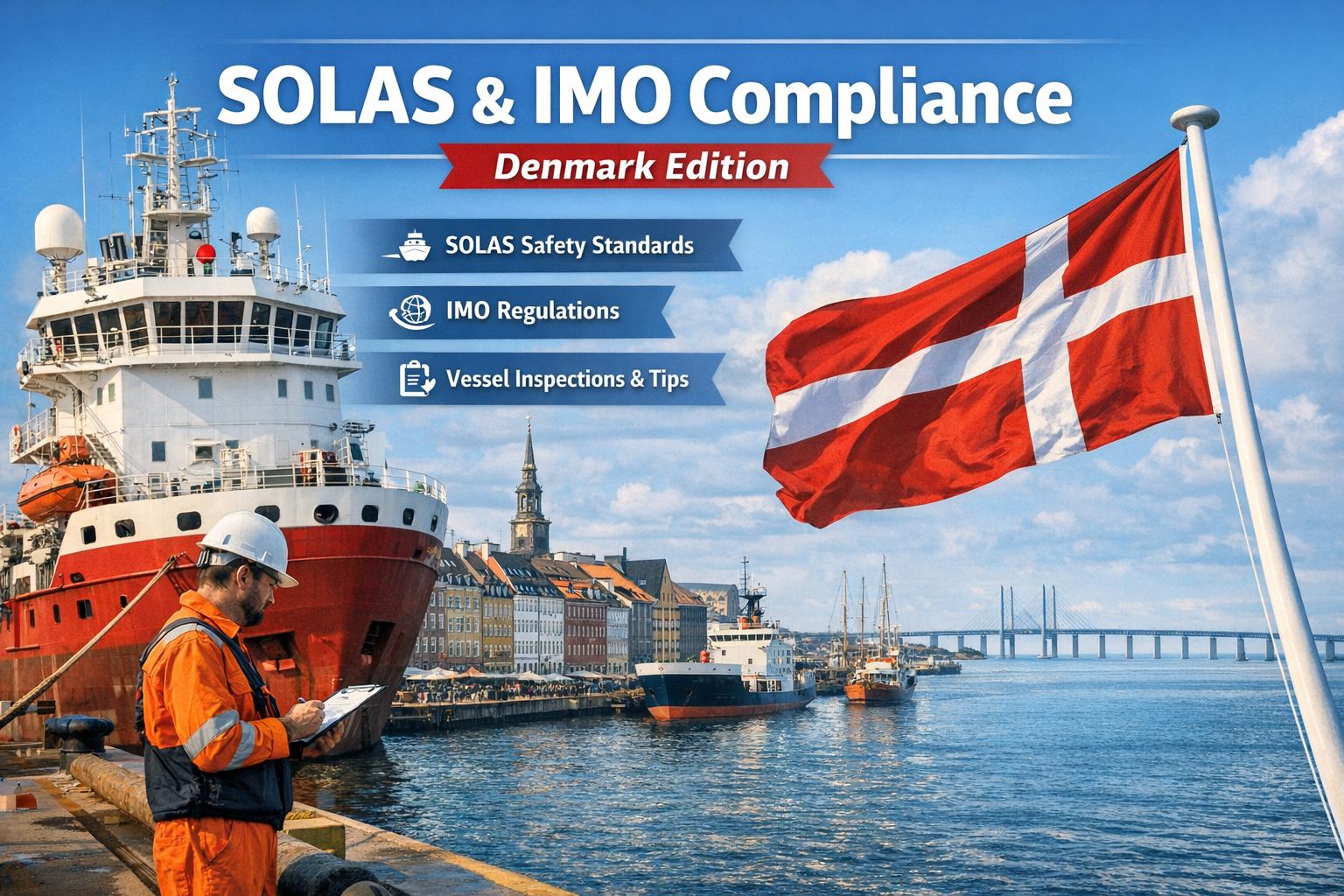
If you're operating vessels in Danish waters or considering Danish port calls, understanding SOLAS and IMO compliance isn't optional—it's essential for smooth operations. Denmark enforces maritime safety standards with characteristic Nordic precision, conducting over 2,500 port state control inspections annually. With fines reaching $200,000 and detention rates around 3-4% for non-compliant vessels, getting it right matters. This guide breaks down everything you need to know about achieving SOLAS and IMO compliance in Denmark, from the 14 core chapters to practical implementation strategies that actually work.
SOLAS & IMO Compliance – Denmark Edition
Understanding SOLAS Compliance in Denmark
SOLAS (Safety of Life at Sea) is the international maritime safety treaty that every commercial vessel must follow. Think of it as the maritime equivalent of building codes—comprehensive rules ensuring vessels are safe for crew, passengers, and the environment.
Denmark's approach to SOLAS compliance stands out for three reasons: digital-first enforcement, practical demonstrations over paperwork, and zero tolerance for systematic negligence. The Danish Maritime Authority expects vessels to prove operational readiness, not just show certificates. See how leading operators manage this through centralized compliance platforms that Danish inspectors recognize and appreciate.
Why Denmark Is Different
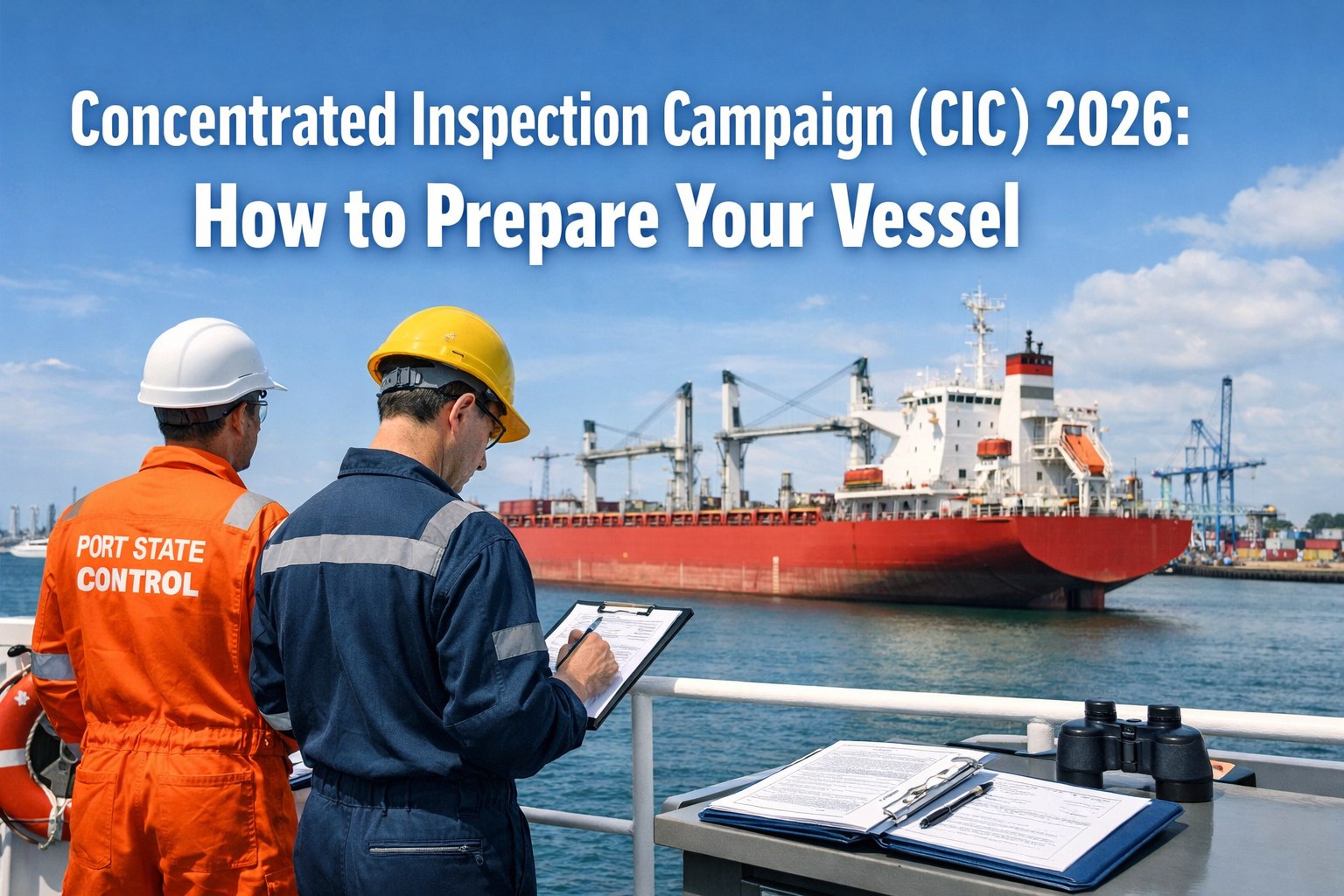
Danish PSC inspections last 5-7 hours on average versus 3-4 hours in other European ports. Inspectors are typically former mariners who understand operations but expect crew to actually demonstrate equipment operation—not just point to manuals. They arrive with tablets containing your vessel's complete inspection history.
The 14 SOLAS Chapters: Your Compliance Framework
Each SOLAS chapter covers specific aspects of vessel safety. Here's what matters most for Danish operations:
Surveys, certificates, definitions
Stability, watertight integrity
Detection, suppression, escape
Lifeboats, rafts, drills
GMDSS, VHF, EPIRB
ECDIS, AIS, voyage planning
Securing, stability, grain
IMDG Code, segregation
Special safety standards
Safety management systems
Ship ID, enhanced surveys
ISPS Code, security plans
Fast ferry requirements
Structural integrity
Key IMO Conventions for Danish Waters
Beyond SOLAS, several IMO conventions directly impact Danish operations. Here are the ones you'll encounter most:
MARPOL Convention
What it covers: Marine pollution prevention across six annexes covering oil, chemicals, sewage, garbage, air emissions, and ballast water.
Denmark focus: The Baltic Sea is a Special Area with stricter discharge standards. Fuel sulfur content must not exceed 0.10%, and Denmark conducts fuel sampling during inspections.
STCW Convention
What it covers: Minimum training and certification standards for seafarers, from basic safety to specialized vessel operations.
Denmark focus: Certificate validation is thorough. Danish inspectors interview crew members to verify they actually understand their duties—not just that they hold certificates.
MLC 2006
What it covers: Maritime labor standards including working hours, accommodation quality, food, medical care, and crew welfare.
Denmark focus: Denmark's strong labor tradition means crew living conditions receive the same scrutiny as safety equipment. Expect surprise accommodation inspections.
COLREG
What it covers: Navigation rules, lights, shapes, and sound signals to prevent collisions at sea.
Denmark focus: The Danish straits have some of the world's highest vessel density. COLREG violations are treated extremely seriously.
BWM Convention
What it covers: Ballast water management to prevent invasive species transfer between ecosystems.
Denmark focus: Treatment systems must be operational and properly maintained. Inspectors review operation logs and may request water samples.
Best Practices and Digital Tools for SOLAS
Achieving compliance is one thing—maintaining it is another. Here's how successful operators handle SOLAS compliance in Denmark:
Go Digital Early
Denmark leads Europe in maritime digitalization. Register with the Danish Maritime Portal before your first call. Upload certificates and documentation in advance—inspectors appreciate organized digital records and it speeds up inspections significantly.
Practice Realistic Drills
Danish inspectors ask crew to demonstrate equipment operation, not just show procedures. Run monthly drills where crew actually starts fire pumps, launches lifeboats (with engine start), and explains GMDSS distress procedures. Document everything with photos and timestamps.
Set 90-Day Alerts
Certificate expiry is a top detention cause. Set calendar reminders 90 days before any certificate expires—this gives you time to schedule surveys without rushing. Digital platforms automate this entirely.
Know Your Equipment
Every crew member should be able to explain their emergency duties in English. Officers must demonstrate confident operation of fire systems, lifeboats, and GMDSS equipment. Language barriers aren't acceptable excuses for lack of understanding.
Document Everything
Keep detailed logs of all maintenance, drills, and inspections. Danish PSC inspectors cross-reference deck logs with hours of rest records, drill records, and maintenance logs. Inconsistencies raise red flags and extend inspection times.
Stay Current on Amendments
IMO regulations change regularly. Subscribe to Danish Maritime Authority updates and industry newsletters. Missing a new requirement—even unknowingly—doesn't excuse non-compliance during inspections.
Pro Tip: The 72-Hour Rule
Conduct a comprehensive self-inspection 72 hours before entering Danish ports. Check all safety equipment, verify certificate validity, review crew readiness, and test critical systems. This catches 90% of potential deficiencies before inspectors come aboard.
Common Compliance Challenges in Denmark
Let's address the issues that catch most operators off-guard when operating in Danish waters:
Challenge: Digital Documentation Gaps
The problem: You arrive with paper-only records, extending inspection time as officials manually review documents.
The solution: Pre-register with Denmark's Maritime Portal. Upload statutory certificates, crew lists, and safety documentation digitally. Danish inspectors can review much of this before boarding, making the physical inspection faster and more focused. Complement this with a centralized fleet management system that maintains audit-ready documentation 24/7. Book a 15-minute walkthrough to see how documentation automation works.
Challenge: Expired Life Raft Servicing
The problem: Life rafts require servicing every 12-18 months. Miss this deadline and you face immediate detention.
The solution: Create a centralized calendar tracking all equipment servicing dates. Schedule servicing 2 months before expiry to account for service station availability. Keep the service report certificate readily accessible for inspectors.
Challenge: Crew Can't Demonstrate Equipment
The problem: Crew members know where equipment is located but can't actually operate it when asked.
The solution: Monthly drills must include hands-on operation, not just muster point attendance. Designate specific crew members as "experts" for fire systems, lifeboats, and GMDSS equipment. Rotate responsibilities so multiple crew members maintain proficiency.
Challenge: Hours of Rest Discrepancies
The problem: Hours of rest records don't match deck logs or cargo operations, suggesting falsified documentation.
The solution: Use electronic hours of rest systems that sync with vessel operations automatically. If using paper logs, have the Master verify entries weekly for accuracy and consistency.
Challenge: ECDIS Charts Not Updated
The problem: Electronic chart systems show outdated chart versions or insufficient chart coverage for planned routes.
The solution: Assign responsibility for weekly chart updates. Maintain both ECDIS and backup navigation systems current. Keep update logs showing systematic chart management, not ad-hoc updates before inspections.
Challenge: SMS Is Just Paperwork
The problem: Your Safety Management System exists as a manual on the shelf but doesn't reflect actual shipboard practices.
The solution: Make SMS a living system. Hold monthly safety meetings with documented minutes. Investigate and close non-conformities promptly. Danish inspectors interview crew about recent safety meetings and expect detailed, specific answers.
Quick Compliance Checklist
Use this checklist before entering Danish waters to verify readiness:
Certificates & Documentation
- All statutory certificates valid (Safety Equipment, Radio, Load Line, etc.)
- Safety Management Certificate (SMC) current
- Crew certificates verified and within validity
- ISPS Ship Security Certificate valid
- Classification society certificates current
- Certificate of Registry valid
- Minimum Safe Manning Document matches actual crew
Safety Equipment
- Life raft servicing within 12-18 month cycle
- Lifeboat and davit annual servicing current
- Fire extinguishers within validity dates
- EPIRB registered and battery current
- SART tested monthly with battery in date
- GMDSS equipment operational and tested
- Navigation lights all functional
Operations & Records
- Fire and abandon ship drills conducted monthly
- Oil Record Book entries complete and accurate
- Garbage Record Book properly maintained
- Hours of rest records match operations
- ECDIS charts updated within last week
- Voyage plan prepared for Danish waters
- SMS procedures reflect actual practices
Priority tip: Of all items, expired life raft servicing and invalid crew certificates cause the most detentions. Double-check these before departure.
Recent SOLAS & IMO Changes (2024-2025)
Regulations evolve constantly. Here are the most recent changes affecting Danish operations:
IGF Code Amendment
New requirements for vessels using alternative fuels (methanol, ammonia). Relevant as Denmark develops alternative fuel infrastructure at Copenhagen and Frederikshavn ports.
EEXI & CII Requirements
Energy efficiency and carbon intensity reporting now mandatory. Denmark strictly enforces environmental regulations, making CII compliance critical for port access.
Electronic BWM Record Books
Ballast Water Management Convention now permits electronic record books, aligning with Denmark's digital-first approach.
Enhanced Fire Safety
Updated SOLAS Chapter II-2 requirements for ro-ro spaces. Particularly relevant for Baltic Sea ferry services.
Stay current by subscribing to Danish Maritime Authority updates at dma.dk and monitoring IMO MEPC/MSC meeting outcomes.
Frequently Asked Questions
How long does a Danish PSC inspection typically take?
Danish PSC inspections average 5-7 hours, longer than most European ports. The duration depends on your vessel's risk profile, previous deficiencies, and how readily you can produce documentation. Well-prepared vessels with digital records often complete inspections faster.
What happens if a certificate expires while in transit to Denmark?
Contact your flag state immediately to request a three-month extension under SOLAS regulation I/14(c). Simultaneously arrange an emergency survey with a recognized classification society and notify the Danish Maritime Authority before arrival. Do not arrive with expired certificates without prior arrangements—this guarantees detention.
Are small vessels exempt from SOLAS requirements?
SOLAS primarily applies to vessels 500 GT or more on international voyages. However, Denmark's domestic regulations often extend SOLAS-like standards to smaller vessels operating in Danish waters, particularly passenger vessels, fishing vessels, and offshore support vessels. Check with the Danish Maritime Authority for your specific vessel type.
Can I use electronic certificates in Denmark?
Yes, Denmark actively encourages digital documentation. Electronic certificates are accepted when properly authenticated through flag state systems. Denmark's Maritime Portal supports electronic submission of all required documentation, making digital compliance the preferred approach.
What's the most common reason for detention in Danish ports?
The top detention causes are: expired life raft servicing, invalid crew certificates, inoperable fire detection systems, and expired statutory certificates. Setting 90-day advance alerts for all time-sensitive items prevents most detentions.
How often will my vessel be inspected in Denmark?
Inspection frequency depends on your vessel's risk profile under Paris MOU targeting. High-risk ships (poor flag performance, old vessels, previous deficiencies) may be inspected on every call. Standard-risk vessels typically every 12-18 months. Low-risk vessels may go 24-36 months between inspections.
Do I need special equipment for Baltic Sea winter operations?
Yes. Winter operations require proper freeboard observation, potential ice class certification, enhanced thermal protection equipment, anti-freezing measures for fire and ballast systems, and crew training for cold weather operations. The winter load line period (typically October 16 - April 15) is strictly enforced.
What's the financial impact of non-compliance?
Direct fines range from $6,000-20,000 for minor issues to $60,000-200,000 for serious violations. Detentions cost $30,000-50,000 daily in lost revenue plus repair costs. Add insurance implications, reputation damage, and commercial relationship impacts—prevention through systematic compliance management costs a fraction of these penalties.
Ready to Simplify Your SOLAS Compliance?
Join 500+ vessels using our platform to maintain continuous SOLAS and IMO compliance. Get 90-day advance alerts, digital checklists, and audit-ready documentation that Danish inspectors appreciate.
14-day free trial • No credit card required • Setup in 10 minutes