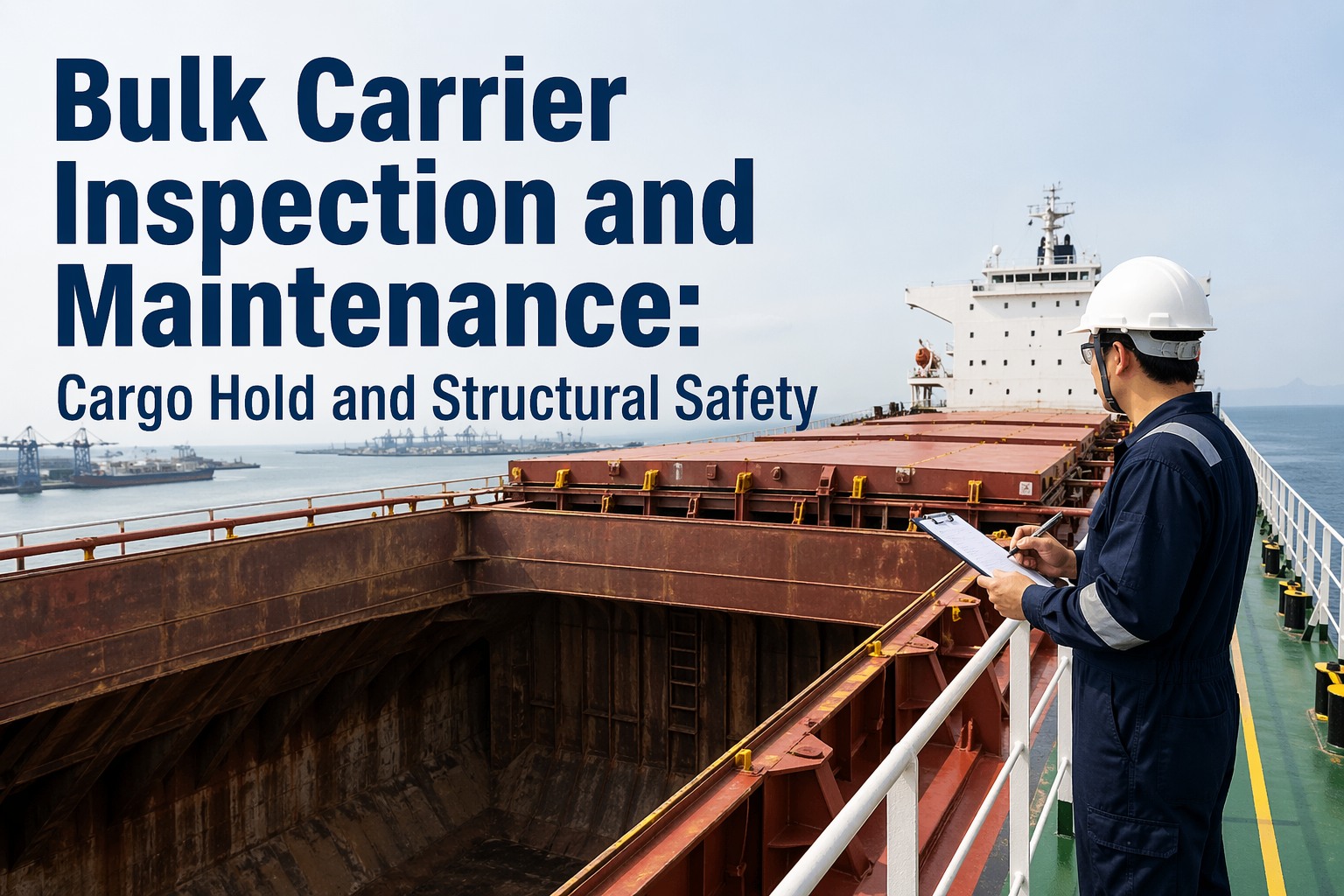
RightShip is the dry bulk shipping industry's dominant vetting platform — and from April 1, 2026, any dry bulk or general cargo vessel aged 12 years or older without a valid RightShip inspection will have its Safety Score downgraded to 2 out of 5, effectively blocking it from chartering nominations by major commodity traders including BHP, Vale, Cargill, and Rio Tinto. With nearly 5,000 inspections conducted across 100+ countries in 2025, a new severity-weighted PSC deficiency model launching August 2025, and the inspection age trigger reducing to 10 years by January 2027, RightShip is reshaping what it means to operate a commercially viable bulk carrier. The Safety Score is not optional — it is the gatekeeper that determines whether your vessel receives a chartering nomination or sits idle. Bulk carrier operators who start a free trial of Marine Inspection can begin tracking the six sub-score factors that determine their Safety Score before the next phase takes effect.
Understanding the RightShip Safety Score
The Safety Score is RightShip's flagship assessment tool — a transparent rating from 0 to 5 that combines industry-standard rules and statistical modelling to evaluate every vessel's operational safety performance. Launched in 2021 as the successor to the Qi Predictive Risk Rating, the Safety Score is visible to all RightShip members and functions as the first filter in the chartering due diligence process. A score of 3 or above is typically the minimum threshold charterers require before proceeding to a full vet. Operators who book a Marine Inspection demo can see how the platform tracks the operational factors that drive Safety Score improvement.
The Six Sub-Scores: What Drives Your Safety Score
The Safety Score is not a single calculation — it is composed of six sub-scores that each evaluate a different dimension of operational safety performance. The platform shows the breakdown for every vessel, enabling operators to see exactly which areas are pulling their score down and what action to take. Accident history affects the score for 60 months; PSC inspection history affects it for 24 months.
RightShip Inspections: RISQ v3.2 and the Age Trigger
RightShip's physical inspection programme uses the RISQ (RightShip Inspection Ship Questionnaire) v3.2 — a comprehensive inspection standard that goes beyond regulatory compliance to evaluate safety management systems, maintenance standards, safety culture, crew welfare, and environmental management. With the inspection age trigger now active, a valid RightShip inspection is mandatory for commercial viability. Sign up for Marine Inspection to track your fleet's inspection readiness against RISQ requirements.
GHG Rating: The Environmental Dimension
Beyond safety, RightShip assigns every vessel a GHG Rating from A (most efficient) to G (least efficient), based on the vessel's CO2 emissions performance relative to its peer group. The GHG Rating is increasingly used by charterers with ESG commitments and forms part of the overall vetting assessment. As the EU ETS extends to maritime and FuelEU Maritime requirements take effect, the GHG Rating is becoming a commercial differentiator — not just an environmental badge. Schedule a demo to see how Marine Inspection connects operational efficiency with environmental compliance.
Expert Review: RightShip's Growing Commercial Power
RightShip's trajectory from a vetting service into a comprehensive maritime ESG platform reflects a fundamental shift in how dry bulk commercial viability is defined. The August 2025 introduction of severity-weighted PSC deficiency scoring — classifying over 2,000 deficiency types as high, medium, or low severity using AI-assisted consistency — means the Safety Score now differentiates between a critical lifesaving equipment fault and a minor documentation oversight. This is a significant improvement in fairness, but it also means operators can no longer rely on simply minimising deficiency counts; the nature of each deficiency now matters.
The inspection age trigger's acceleration — from 14 years in 2024 to 10 years by January 2027 — is perhaps the most commercially impactful change. With BHP, Vale, Cargill, and Rio Tinto among RightShip's vetting customers, a Safety Score of 2 effectively removes a vessel from the major commodity trading routes. For bulk carrier operators managing ageing fleets, the calculation is stark: invest in the maintenance, documentation, and crew competency standards that a RightShip inspection evaluates, or accept restricted commercial access to the world's largest dry bulk charterers.
The operators who thrive under RightShip's evolving framework are those whose daily operational systems produce the evidence a RISQ inspector and the Safety Score algorithm both evaluate — maintained equipment with documented evidence, competent crews with training records, and corrective actions that are tracked and closed. This is not a separate compliance exercise; it is the same operational excellence that prevents PSC detentions, satisfies classification requirements, and now determines commercial access to the dry bulk market. Schedule a walkthrough to see how Marine Inspection connects these requirements into one system.
Conclusion
RightShip's Safety Score is the dry bulk industry's commercial gatekeeper. With the inspection age trigger now requiring valid RightShip inspections for vessels as young as 12 years (reducing to 10 years by 2027), severity-weighted PSC deficiency scoring changing how each finding impacts your score, and the GHG Rating adding an environmental dimension to vetting decisions, bulk carrier operators face a vetting landscape where every operational decision — from maintenance completion to crew training to corrective action closure — directly affects commercial access to the world's largest charterers. Marine Inspection provides the digital platform that tracks the six sub-score factors, supports RISQ inspection readiness, and builds the operational evidence that separates a Safety Score of 3+ from commercial irrelevance — sign up today to take control of your fleet's RightShip performance.