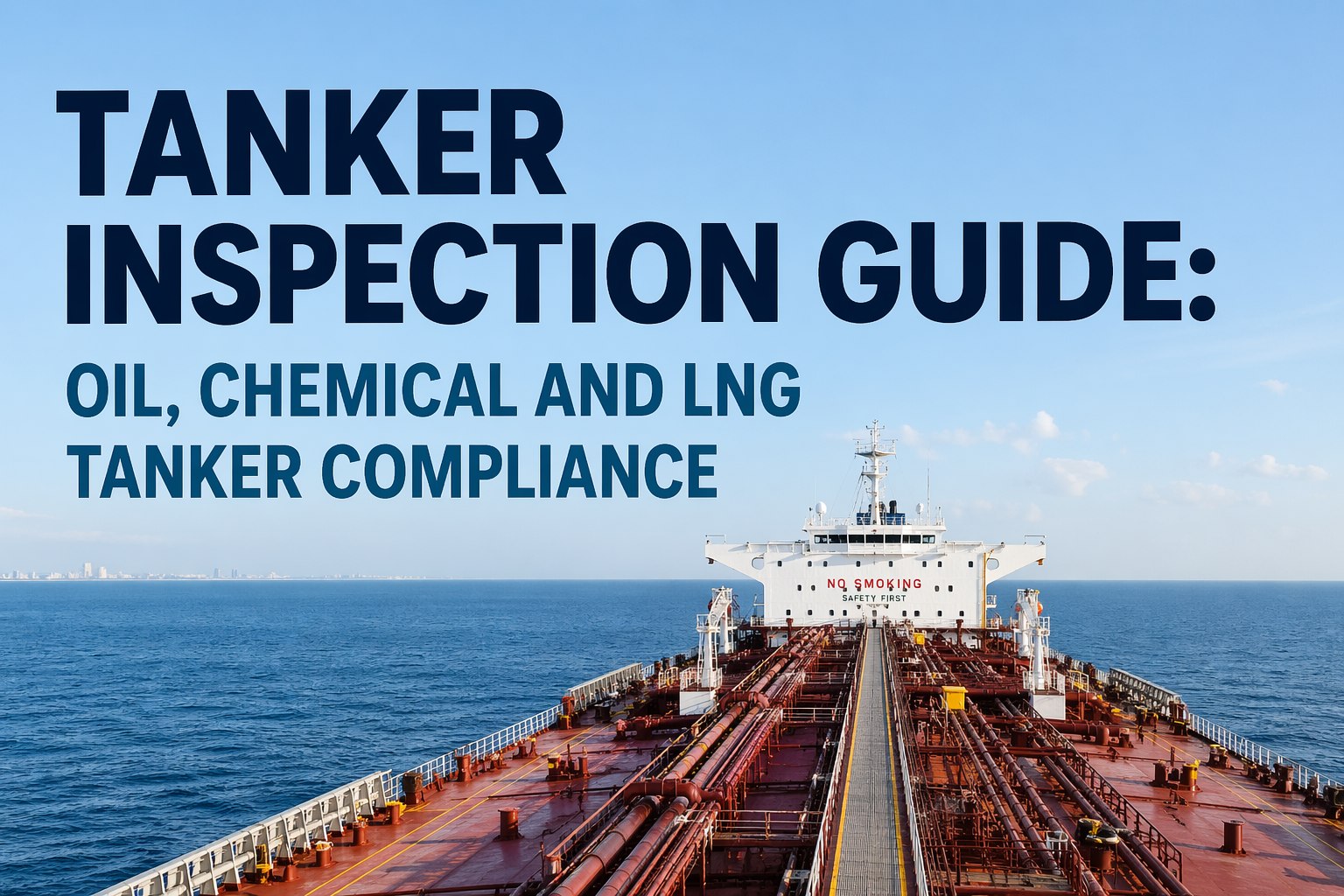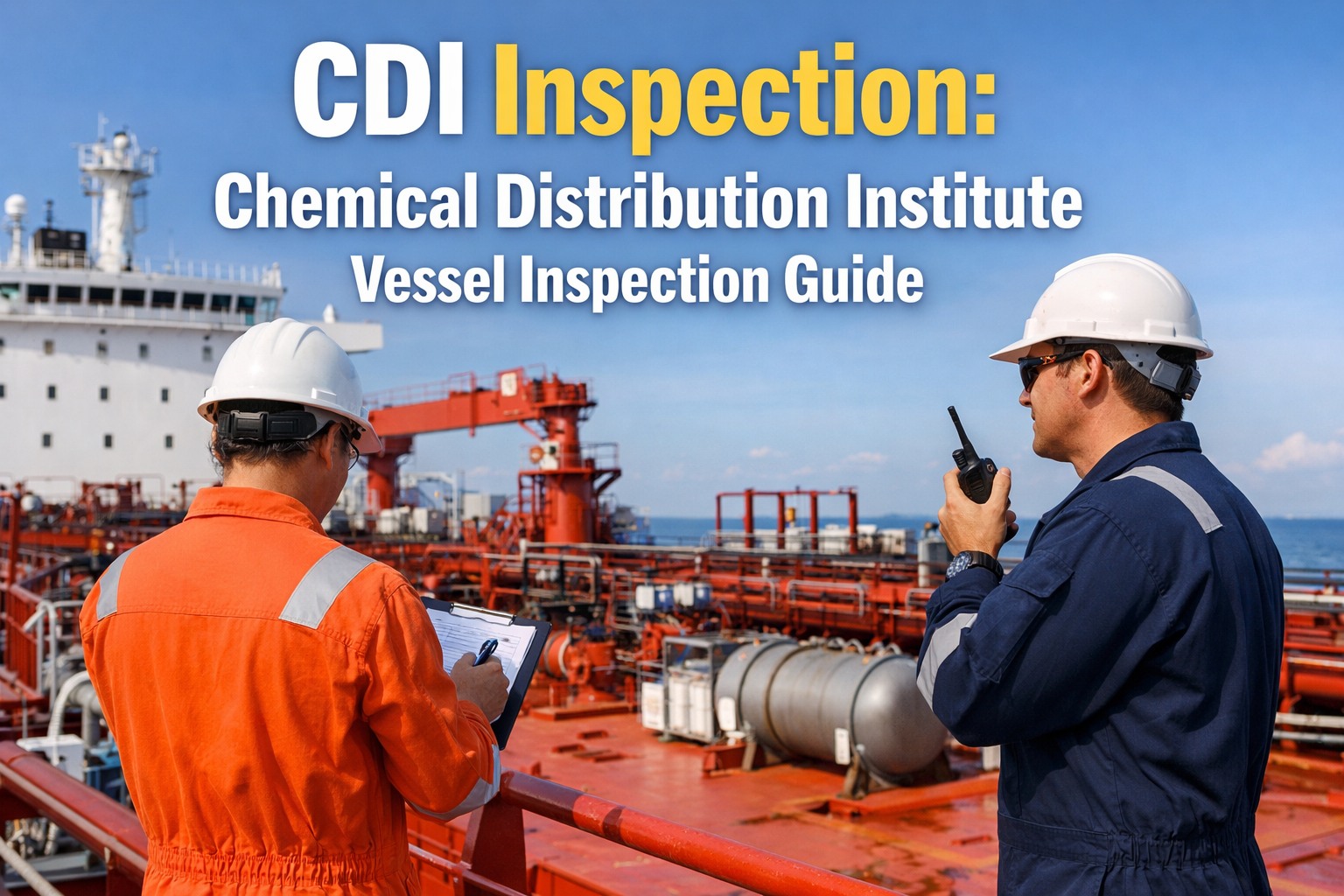
The Chemical Distribution Institute operates the global chemical industry's dedicated vessel inspection programme — a parallel vetting system to OCIMF's SIRE that focuses exclusively on chemical tankers, LPG carriers, and, since the 10th Edition SIR launch in February 2024, also covers LNG, product, and dry bulk tankers. CDI inspections produce a scored quality assessment used by chemical companies worldwide to make chartering and terminal access decisions. Unlike SIRE 2.0's graded observation model, CDI retains a structured questionnaire where every question is categorised as Statutory, Recommended, or Desirable — and negative answers to statutory questions can directly impact a vessel's commercial viability. With over 600 ship operators registered as CDI participants and chemical companies relying on CDI reports for risk assessment across the entire bulk liquid supply chain, operators who cannot produce clean CDI inspection outcomes face restricted market access in the chemical trades. Chemical tanker operators ready to strengthen their CDI performance can start a free trial of Marine Inspection to centralise inspection preparation, maintenance records, and crew competency tracking.

Founded
1994
Dutch non-profit foundation under Stichting law
Current Edition
10th (v10.5)
Live since February 2024, amended July 2024
Report Validity
13 Months
From inspection date; archived if management transfers
Participants
600+
Ship operators registered in CDI-Marine system
Vessel Types
5
Chemical, LPG, LNG, Product, Dry Bulk tankers

CDI vs SIRE: Understanding the Two Vetting Systems

Chemical tanker operators often face both CDI and SIRE inspections — sometimes on the same vessel. Understanding the differences between these two vetting regimes helps operators allocate preparation resources effectively. While there is significant overlap in what they assess, the inspection structure, scoring methodology, and report usage differ fundamentally. Operators who book a Marine Inspection demo can see how the platform supports both CDI and SIRE preparation simultaneously.

CDI vs SIRE 2.0: Key Differences
Feature CDI (10th Edition SIR) SIRE 2.0 (OCIMF)
Governing BodyChemical Distribution Institute (Netherlands)Oil Companies International Marine Forum (OCIMF)
Primary ScopeChemical tankers, LPG, LNG, Product, Dry BulkOil, Chemical, Gas, LPG tankers
QuestionnaireFixed SIR with core chapters + vessel-specific Chapter 5Bespoke CVIQ generated by algorithm — no two identical
Response FormatYes/No with Statutory (S), Recommended (R), Desirable (D) gradingFour-tier: Exceeds Expectations to Not as Expected
ScoringProduces a numerical score — higher is betterNo numerical score — qualitative graded observations
Human ElementCrew competency assessed within questionnaire chaptersDedicated 9 Performance Influencing Factors (PIFs)
Inspector AppointmentMechanical rotation system within geographical zonesOCIMF assigns from accredited inspector pool
Report Validity13 months from inspection date12 months from publication date
Pre-InspectionShip Information Database (SID) + Vessel Particulars Questionnaire (VPQ)HVPQ + PIQ + Photo Repository (6-month updates)
Used ByChemical companies for chartering and terminal accessOil majors, charterers, terminal operators
Chemical tankers frequently face both CDI and SIRE inspections. Preparation that satisfies both regimes simultaneously is operationally efficient.

The CDI Ship Inspection Report: Structure & Chapters

The 10th Edition SIR uses a single core questionnaire applicable to all vessel types, with a separate vessel-specific Chapter 5 for each of the five vessel categories. Every question is categorised as Statutory (referenced to international regulations), Recommended (referenced to industry codes of practice), or Desirable (required by CDI participants). Understanding this categorisation is critical — a "No" answer to a Statutory question carries significantly more weight in chemical company risk assessments than a "No" to a Desirable question.

CDI 10th Edition SIR — Chapter Structure
1
Certification, Manning & Documentation
Ship certificates, crew qualifications, STCW compliance, ISM documentation, flag state endorsements, EEXI/CII ratings
2
Crew Management & Safety
Safety management system, emergency procedures, drills, personal protective equipment, crew familiarisation, bridge and engine room operations
3
Navigation & Communications
Bridge equipment, ECDIS, voyage planning, pilot arrangements, GMDSS, navigation lights, signalling
4
Hull, Deck & Engine
Hull condition, deck equipment, mooring, fire safety systems, life-saving appliances, engine room, steering gear, pollution prevention equipment
5
Vessel-Specific Operations
Five separate Chapter 5 versions: Chemical tanker, LPG carrier, LNG carrier, Product tanker, Dry bulk. Covers cargo systems, tank coatings, heating, venting, IG systems, cargo handling procedures
CDI Question Categories
SStatutory
Referenced to international regulations. Highest impact on vessel score.
RRecommended
Referenced to industry codes of practice. Moderate impact.
DDesirable
Required by CDI participants. Lower weight but still assessed.
Prepare for Every CDI Chapter Systematically
Marine Inspection provides digital checklists mapped to CDI SIR chapters, with maintenance tracking, crew documentation, and corrective action workflows that build your inspection score before the CDI inspector arrives.

The CDI Inspection Process: From Request to Report

1
Inspection Request
Ship operator submits request to CDI-Marine Inspection Department (CDI-mid). Defines vessel type and inspection type required from the system dropdown.

2
Inspector Appointment
CDI-mid assigns inspector via mechanical rotation system within geographical zones. Fees are set directly between inspector and customer. Inspectors hold Class I marine certificates or equivalent.

3
Pre-Inspection Preparation
Operator completes and provides Ship Information Database (SID) electronically to the inspector in advance. Inspector imports SID data and plans the inspection scope.

4
Physical Inspection
Inspector works through the SIR questionnaire on board. All questions answered Yes, No, or N/A. Negative answers generate observations listed in Section B (Inspection Summary). Inspector documents positive items and best practices alongside deficiencies.

5
Closing Meeting & Report Upload
Inspector provides Master with Record of Negative Answers and Summary of Observations. Master has opportunity to produce objective evidence. Report uploaded to CDI-Marine database. Hard copies retained 13 months by inspector.

6
13-Month Active Period
Report available on CDI-Marine database for chemical company participants to access for chartering decisions. Score and observations visible to all registered members. Report archived after 13 months or if technical management transfers.

CDI Preparation: What Chemical Tanker Operators Must Get Right

CDI inspections produce a numerical score that chemical companies use for direct comparison between vessels. Every "No" answer reduces the score, with Statutory items carrying the greatest weight. The preparation strategy for CDI is therefore different from SIRE 2.0 — it is about eliminating negative answers across the questionnaire, particularly in Statutory categories. Sign up for Marine Inspection to track your CDI readiness across every SIR chapter.

Certificates & Documentation
Verify all statutory certificates are valid and endorsed. EEXI/CII ratings current (new 10.5 amendment). ISM DOC and SMC on board. Continuous synopsis record updated. Class certificates without conditions.
Safety Systems & Equipment
Fire safety systems tested and maintained. LSA serviced with current certificates. Emergency generator tested under load. Fixed fire-fighting systems weighed and inspected. All safety equipment within service dates.
Crew Competency
All crew certificated per STCW with valid endorsements. Familiarisation records complete. Crew can demonstrate cargo handling procedures specific to chemicals/gas carried. Drill records current with participation logs.
Cargo Operations (Chapter 5)
Cargo system compliance with IBC Code/IGC Code. Tank coatings inspected and documented. Cargo heating systems operational. P/V valves tested. IG system maintained. Cargo hoses within test dates. Manifold arrangements compliant.

Expert Review: CDI's Role in the Chemical Supply Chain

Industry Analysis

CDI occupies a unique position in the maritime vetting landscape. While SIRE 2.0 has modernised tanker vetting with digital tools and risk-based algorithms, CDI retains its structured questionnaire approach with numerical scoring — and this distinction matters commercially. Chemical companies use CDI scores for direct vessel comparison in ways that SIRE 2.0's qualitative observations do not easily support. A vessel with a CDI score of 92% is immediately and objectively comparable to one scoring 85%, and chemical companies set minimum score thresholds for chartering approval.

The 10th Edition SIR's expansion to cover LNG, product, and dry bulk tankers signals CDI's ambition to become the comprehensive supply chain inspection standard for all bulk liquid and chemical trades. The July 2024 amendments adding EEXI/CII compliance verification demonstrate CDI's responsiveness to the decarbonisation agenda. For operators managing mixed fleets that cross CDI and SIRE inspection territories, the preparation challenge is managing two parallel vetting systems — but the compliance fundamentals are identical: maintained equipment, competent crews, current documentation, and systematic corrective action management. Schedule a walkthrough to see how Marine Inspection unifies CDI and SIRE preparation.

Conclusion

CDI inspections are the chemical industry's primary risk assessment tool for vessel chartering and terminal access decisions. With the 10th Edition SIR now covering five vessel types, over 600 registered ship operators, and chemical companies using CDI scores as direct gatekeepers for commercial approval, a poor CDI outcome restricts your market access in ways that no amount of commercial negotiation can overcome. The preparation strategy is clear: eliminate negative answers in Statutory categories, maintain all equipment to documented standard, ensure crew can demonstrate cargo-specific competence, and convert every inspection finding into a tracked corrective action before the next inspection. Marine Inspection provides the digital platform that connects these daily operations into one CDI-ready system — sign up today to start building CDI inspection readiness across your chemical tanker fleet.
Frequently Asked Questions

What is CDI and how is it different from SIRE?
CDI (Chemical Distribution Institute) is a Dutch non-profit foundation that operates the chemical industry's dedicated vessel inspection programme. While SIRE is run by OCIMF primarily for oil company members, CDI serves the chemical industry. CDI inspections use a fixed structured questionnaire (the Ship Inspection Report) that produces a numerical score, whereas SIRE 2.0 uses an algorithm-generated bespoke questionnaire with graded qualitative observations. CDI reports are valid for 13 months; SIRE 2.0 reports for 12 months. Chemical tankers frequently face both inspection regimes.
What vessel types are covered by CDI inspections?
Since the launch of the 10th Edition SIR in February 2024, CDI covers five vessel types: Chemical tankers, LPG carriers, LNG carriers, Product tankers, and Dry bulk tankers. The SIR uses a single core questionnaire for all vessel types (Chapters 1-4) with a separate vessel-specific Chapter 5 for each vessel type. This expansion ensures CDI's inspection scope covers the entire chemical global supply chain.
How does CDI scoring work and what is a good score?
CDI produces a numerical score based on the ratio of positive to negative answers, weighted by question category. Statutory (S) questions carry the highest weight, followed by Recommended (R) and Desirable (D). A higher score indicates better compliance. Chemical companies typically set minimum score thresholds for chartering approval — these thresholds vary by company but generally require scores above 80-85% for consideration. Negative answers to Statutory questions have the greatest impact on the overall score.
How are CDI inspectors appointed?
CDI uses a mechanical rotation system within geographical zones to appoint inspectors. The CDI-Marine Inspection Department (CDI-mid) responds to inspection requests and assigns inspectors from the rotation pool. All CDI inspectors hold Class I marine certificates or equivalent academic qualifications, are independently accredited by CDI, and undergo rigorous training including written and oral examinations. Fees are negotiated directly between the inspector and the customer.
How long is a CDI report valid?
CDI reports are valid for 13 months from the inspection date. After 13 months the report is archived. If technical management of the vessel is transferred during the validity period, the operator must notify CDI and the report may be prematurely archived, subject to ISM certification verification. This differs from SIRE 2.0, where reports are valid for 12 months from the publication date rather than the inspection date.
Maximise Your CDI Score Across Every Vessel
From Chapter 1 certification tracking to Chapter 5 cargo operations compliance — Marine Inspection connects every CDI requirement into one platform built for chemical tanker operators who need consistent high scores to maintain market access.