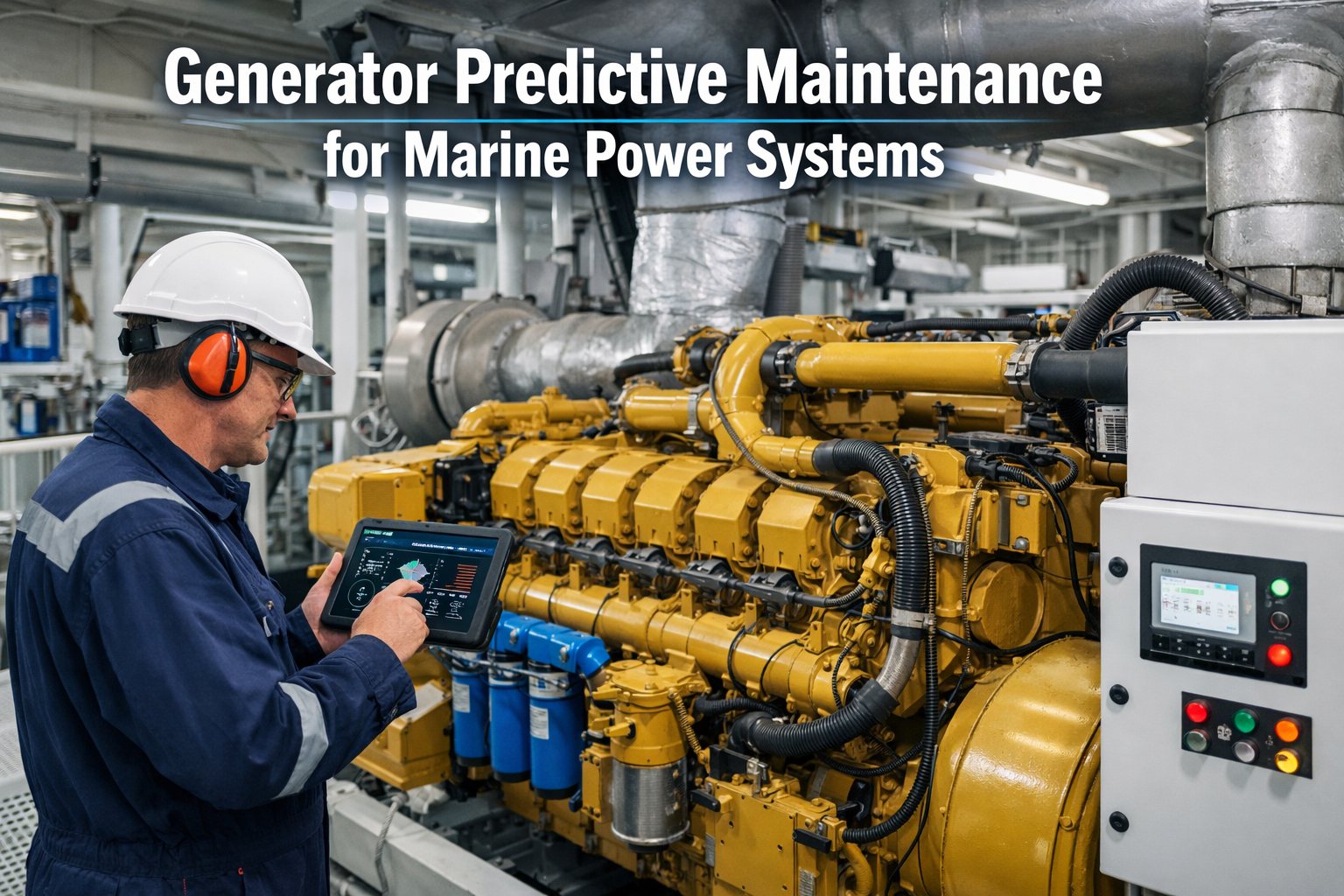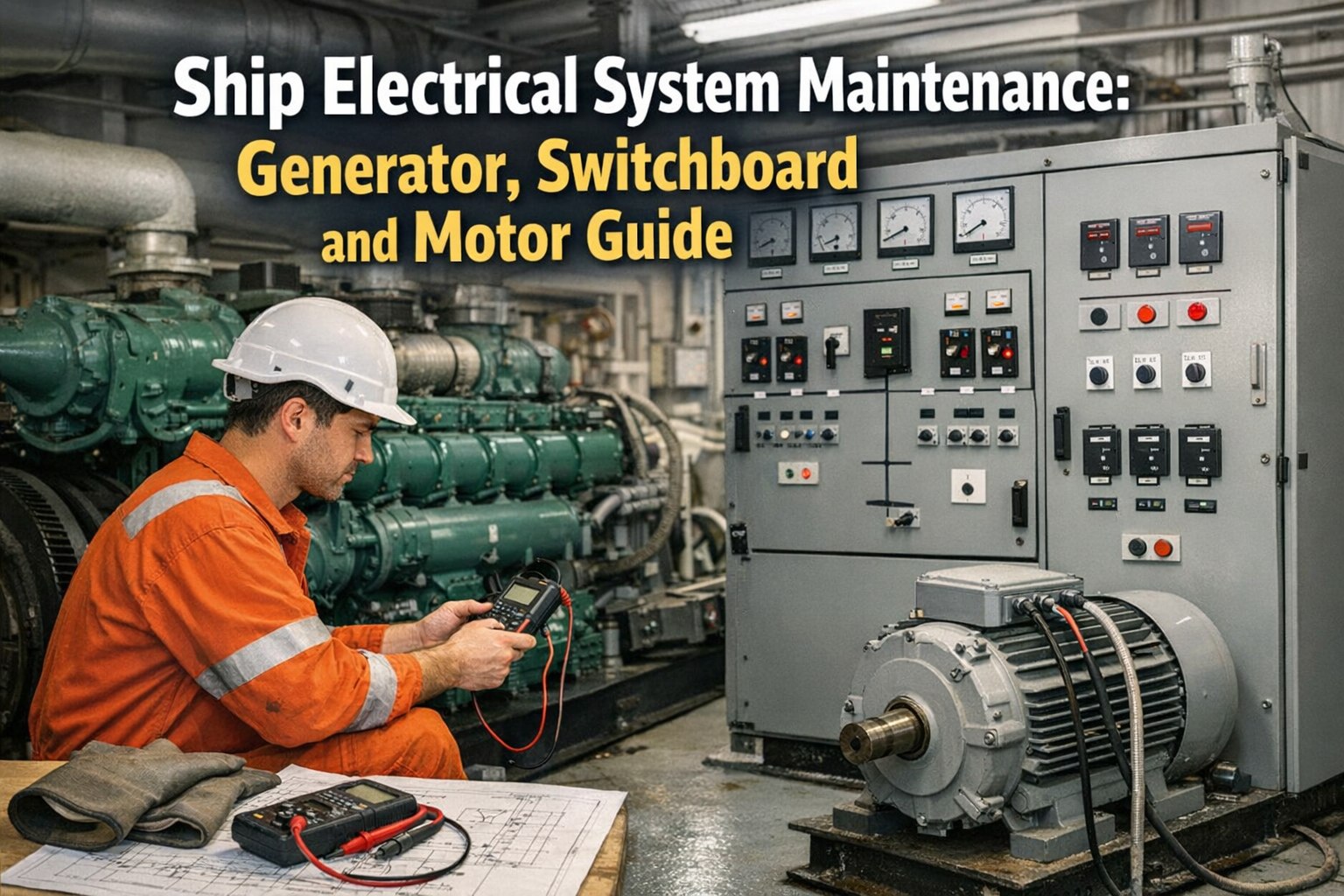
A ship's electrical system is the operational nervous system that powers propulsion (on diesel-electric vessels), navigation, communications, cargo handling, safety systems, hotel services, and the hundreds of motors driving pumps, fans, compressors, and auxiliaries throughout the vessel. Unlike shore-based systems, marine electrical architecture uses an insulated neutral design — the neutral is not connected to the hull — allowing a single earth fault to be detected and rectified without tripping protective devices and losing essential machinery, steering gear, fire pumps, and navigation. Most commercial vessels operate at 440V three-phase 60Hz (ships adopt 60Hz as standard so motors run faster at smaller physical size), stepped down via transformers to 220V or 110V for lighting and low-power signal equipment. Large vessels like RoPax, passenger ships, and diesel-electric container vessels use high-voltage gensets in the 3kV to 11kV range. For electrical officers and engineers, the discipline spans generator maintenance, main switchboard integrity, motor care, insulation resistance testing, protection coordination, and the safety procedures that prevent the arc flash events and electrical fires that remain among the most serious engine room hazards. Electrical officers and engineers building systematic compliance records can start a free trial of Marine Inspection to digitalise insulation resistance trending, maintenance schedules, and test records.

Ship Electrical Architecture at a Glance
1. Generation
Diesel generators (0.74-10.4 MW typical; 9-15 MW on cruise ships). 5-6 gensets on large vessels. Insulated neutral. 440V/60Hz standard. High-voltage 3-11kV on large installations.
2. Distribution
Main switchboard receives all generator output via busbars. Emergency switchboard separately fed. Transformers step down 440V→220V/110V for lighting and signal circuits.
3. Consumption
Motor control centres, distribution boxes, motor starter boxes serve propulsion aux, cargo handling, HVAC, galley, navigation, lighting, and hundreds of ship motors.

The Four Core Electrical Systems to Maintain

Marine electrical maintenance spans four interdependent systems. Each serves a distinct function and has specific maintenance priorities — but all four must be reliable for the vessel to operate safely. Operators who book a Marine Inspection demo can see how the platform structures maintenance across all four systems.

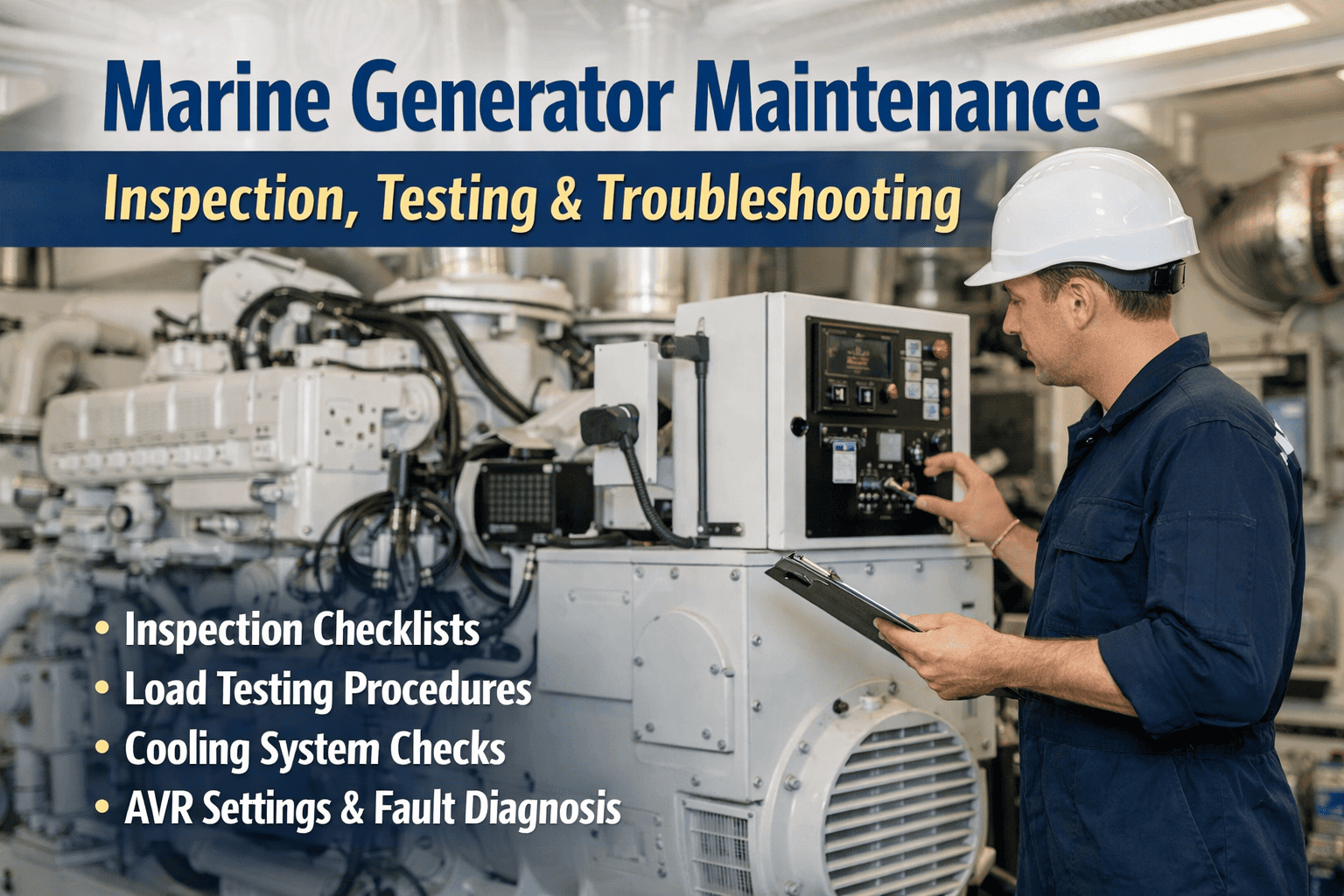
1. Diesel Generators & Alternators
FunctionPrimary power generation; 5-6 gensets typical on large vessels. Individual ratings 9-15 MW on cruise ships.
Key MaintenanceRunning hour-based overhauls (see Engine Room Maintenance guide), AVR checks, voltage regulation verification, insulation resistance (decreases with temperature — test hot for realistic IR), bearing inspection, cooling system management.
Critical TestsLoad sharing between parallel generators, reverse power protection, under/overvoltage alarms, excitation system, frequency stability.
2. Main & Emergency Switchboards
FunctionDistribution hub. Main switchboard receives generator output via busbars. Emergency switchboard separately fed from emergency generator, supplies essential services when main fails.
Key MaintenanceBusbar torque checks, breaker mechanism lubrication, protection relay calibration, insulation resistance of busbars, infrared thermography of connections, cleaning, dehumidifier function.
Critical TestsSynchronisation equipment operation, bus-tie breaker function, earth fault detection and indication, protection coordination and selectivity, arc flash protection.
3. Motors & Motor Control Centres
FunctionDrive pumps, fans, compressors, winches, cranes, steering gear hydraulic pumps. Hundreds of motors per vessel; MCCs distribute and protect motor circuits.
Key MaintenanceInsulation resistance trending (phase-to-phase and phase-to-earth), bearing lubrication and replacement, cooling air passage cleaning, terminal box tightness, motor mount integrity, vibration monitoring.
Critical TestsStarter contactor condition, thermal overload settings, motor winding resistance balance, current draw under full load, rotation direction after any maintenance.
4. Emergency Power & Critical Systems
FunctionEmergency generator (separate fuel and starting systems), UPS/batteries for navigation and communications, fire pump, emergency lighting, bilge pumps. Must auto-start on main power loss.
Key MaintenanceWeekly emergency generator test (starting and load test), battery capacity and discharge testing, UPS battery health, emergency lighting function, automatic changeover verification.
Critical TestsDead-ship recovery drill, blackout test, emergency switchboard bus-tie segregation, emergency lighting 3-hour battery duration, fire-resistant cable integrity.

Insulation Resistance Testing: The Foundation of Electrical Maintenance

Insulation resistance (IR) testing is the single most important routine electrical maintenance activity on any vessel. Conducted with a megger, IR testing detects insulation deterioration caused by humidity, temperature, electrical and mechanical stress, vibration, chemicals, oil, dirt, and age — before the deterioration causes earth faults, short circuits, or motor failures. A single reading tells you little; systematic IR trending across testing cycles reveals the downward trends that indicate impending failure and enable preventive intervention. Sign up for Marine Inspection to track IR readings over time and surface developing trends across your electrical inventory.

Insulation Resistance Testing: Schedule & Standards
System Test Frequency Minimum IR Value Megger Voltage Key Practice
440V systemsEvery 6 months (1/6 monthly)Above 5 MΩ500VTest phase-to-phase (U-V, V-W, W-U) and phase-to-earth (U-E, V-E, W-E)
220V systemsEvery 6 monthsAbove 2 MΩ250V or 500VDisconnect sensitive electronics before testing
High Voltage (3-11kV)Annually (1/12 monthly)Per manufacturer specification2.5kV+ megger requiredPolarization Index (PI) test: ratio 10-min to 1-min reading
Motor windingsPer PMS schedule or before start-up after shutdownAbove 1 MΩ per kV rating500V-1000V depending on motorTest hot if possible — insulation is "leakier" at temperature
Emergency generatorMonthly with test runAbove 5 MΩ500VPart of emergency system readiness verification
Cables (power)During class survey; suspect conditionsSystem-dependentAppropriate to cable ratingIsolate both ends; discharge before handling
After testing, always earth terminals to discharge stored energy. Log all readings — a single reading gives little information; trend analysis reveals developing faults.

Polarization Index (PI): Advanced Insulation Assessment

For high-voltage systems and large motors, the Polarization Index extends simple IR testing into a diagnostic that reveals insulation condition more accurately. PI is the ratio of the 10-minute IR reading to the 1-minute reading. Healthy insulation shows increasing resistance over time (charging and absorption currents diminish); compromised insulation (particularly moisture-affected) shows dominant leakage current and little resistance increase.

PI < 1
Dangerous
Immediate action required. Insulation likely contaminated with moisture or severely degraded.
1.0 - 1.1
Poor
Serious insulation degradation. Schedule remedial action; do not defer.
1.1 - 1.25
Questionable
Marginal condition. Investigate cause; increase monitoring frequency.
~ 2.0
Fair
Acceptable insulation. Continue monitoring at standard intervals.
> 2.0
Good
Desirable insulation condition. Equipment fit for continued service.
Turn Electrical Testing Into Predictive Intelligence
Marine Inspection captures every insulation resistance reading, torque check, and protection relay test — building the trend data that reveals developing faults weeks before they cause failures. Replace paper logbooks with the digital evidence trail that class surveyors, flag states, and PSC inspectors verify.

Preventive Maintenance Schedule: What To Do and When

Electrical maintenance follows a layered schedule that combines daily monitoring, weekly checks, monthly tests, and deeper overhauls aligned with classification society intervals. The goal is to catch deterioration in its earliest stage — when preventive intervention is straightforward.

Preventive Electrical Maintenance Schedule
Interval Activities
DailyMonitor generator parameters (load, frequency, voltage, temperature). Check switchboard indicating lights. Verify insulation monitoring device reading. Observe for abnormal smells (ozone, burning), unusual sounds, or visible damage.
WeeklyLoad sharing verification between parallel generators. Exercise emergency generator (no-load and on-load). Inspect switchboard ventilation and drip trays. Test emergency lighting and exit signs. Check battery charger operation.
MonthlyTest 1/6 of low-voltage equipment (IR testing cycle). Full emergency generator test including load transfer. Test protective relay functional operation. Clean and torque-check selected cable lugs and busbar connections. Battery electrolyte checks.
QuarterlyInfrared thermography of switchboards and connections (identifies hot joints indicating loose connections). Test earth-fault protection and alarm systems. Inspect motor starter contactors. Verify shore power connection integrity.
AnnuallyFull protective relay calibration and secondary injection tests. Transformer oil analysis (BDV, Furan, moisture). Battery capacity test. Overhaul of critical switchgear per manufacturer intervals. High-voltage system full IR testing.
Class SurveyFull insulation testing programme. Emergency system run-down tests. System fault simulations. Verification of segregation and fire integrity. Electrical equipment in hazardous areas certification renewal.
46 CFR Part 111 defines US regulatory requirements; class society rules apply additional requirements. Follow manufacturer intervals and classification society guidance.

Electrical Safety: The Non-Negotiable Disciplines

Electrical work on energised systems is among the most hazardous activities on a vessel. Arc flash incidents can be fatal or cause life-altering burns. Electric shock at 440V is frequently lethal. The safety disciplines below are non-negotiable — they protect crew from the injuries that cannot be undone.

1
Lock-Out / Tag-Out (LOTO)
Before any work on electrical equipment, isolate the supply, lock the isolator in the OFF position, tag with the worker's name, and retain the key. Never work on equipment that another person could energise.
2
Test-Before-Touch
Three-step verification: (1) Test the live-line tester on a known live source. (2) Test the equipment you're about to touch. (3) Retest the tester on the known source. If any step fails, do not proceed.
3
Arc Flash Protection
Wear PPE rated to the incident energy of the system being worked on. Respect arc flash boundaries marked on switchboards. Use remote racking for breakers where available. Arc-resistant switchgear should be specified for HV installations.
4
Insulated PPE
Insulated gloves rated for the voltage class, regularly tested. Insulated mats in front of switchboards. No jewelry or conductive accessories. Long-sleeve cotton or FR-rated clothing (synthetics melt onto skin during arc flash).
5
Earth Fault Response
When insulation monitor indicates earth fault, systematic localisation by isolation. Do not continue operation indefinitely with earth fault — a second fault on a different phase creates a direct short. Locate and rectify promptly.
6
Discharge Before Handling
Capacitors and cables retain stored energy after isolation. Always earth terminals with earthing rod before handling. This especially applies after insulation resistance testing.

Expert Review: Electrical Compliance as Commercial Risk

Industry Analysis

Electrical system failures produce disproportionate commercial consequences. A blackout at sea — main switchboard fault, generator governor failure, or protection coordination issue — immediately activates dead-ship recovery procedures, potentially leaving the vessel without propulsion or steering in heavy traffic or challenging weather. A shore connection fault in port can damage vessel equipment, trigger port authority investigation, and delay departure. An electrical fire starting from a loose terminal or failed breaker cascades rapidly through cable trays carrying multiple systems.

The shift toward electrification in shipping — hybrid propulsion, battery energy storage systems, shore power connections, electric deck machinery — makes electrical maintenance discipline more important, not less. Hybrid vessels carry MWh-scale battery installations that require sophisticated management systems, thermal monitoring, and fire suppression considerations that legacy vessel electrical crews were not trained for. Shore power connections at 6.6kV and 11kV introduce HV safety requirements that previously applied only to cruise ships and large passenger vessels. The electrical officer's role is expanding, and the maintenance systems supporting that role need to expand with it.

The operators who avoid electrical commercial risk are those whose systems produce trend data — not just individual readings. An IR measurement of 8 MΩ is acceptable; an IR trend showing four consecutive readings of 12, 10, 8, 6 MΩ over six months indicates developing insulation failure that will cause an earth fault within weeks. Spreadsheet-based electrical logs rarely surface these trends in time. Digital platforms with automated trend analysis do. Schedule a walkthrough to see how Marine Inspection connects electrical testing with fleet-wide compliance intelligence.

Conclusion

Ship electrical system maintenance spans four interdependent domains — generators, switchboards, motors and MCCs, and emergency power systems — each with specific testing disciplines, maintenance intervals, and safety protocols. Insulation resistance testing remains the foundation: 440V systems tested every 6 months with IR above 5 MΩ, 220V systems above 2 MΩ, and HV systems annually with PI analysis for more sensitive diagnosis. Preventive maintenance follows layered schedules from daily parameter monitoring through quarterly thermography to annual protective relay calibration and class society survey intervals. Electrical safety — lock-out/tag-out, test-before-touch, arc flash protection, insulated PPE, earth fault response, discharge before handling — is non-negotiable. The electrical officers and engineers who keep vessels running reliably and safely are those whose maintenance systems produce documented evidence for both operational decision-making and regulatory verification. Marine Inspection provides the digital platform that connects every electrical maintenance activity into one system — sign up today to systematise electrical maintenance across your fleet.
Frequently Asked Questions

What is the standard voltage and frequency on ships?
Most commercial vessels operate at 440V three-phase 60Hz, stepped down via transformers to 220V or 110V for lighting and low-power signal equipment. Ships use 60Hz as standard (regardless of shore supply frequency in the country of operation) because motors run at higher speeds at the same physical size, saving weight and space. Large vessels like RoPax, passenger ships, and diesel-electric container vessels use high-voltage gensets in the 3kV to 11kV range. Ship electrical systems use an insulated neutral (not connected to the hull) so a single earth fault can be detected and rectified without tripping protection.
What is insulation resistance testing and how often is it performed?
Insulation resistance (IR) testing uses a megger (high-voltage DC test instrument) to measure the resistance between conductors and between conductors and earth. It detects insulation deterioration caused by humidity, temperature, vibration, chemicals, and age before it causes faults. For 440V systems: test every 6 months (1/6 of equipment monthly), minimum IR above 5 MΩ, using 500V megger. For 220V systems: every 6 months, minimum 2 MΩ. For HV systems (3-11kV): annually (1/12 monthly), using 2.5kV+ meggers, per manufacturer specification. Test phase-to-phase (U-V, V-W, W-U) and phase-to-earth (U-E, V-E, W-E). Single readings give little information — trend analysis reveals developing faults.
What is the Polarization Index and how is it interpreted?
The Polarization Index (PI) is the ratio of 10-minute to 1-minute IR readings. Healthy insulation shows increasing resistance as charging and absorption currents diminish; compromised insulation (particularly moisture-affected) shows dominant leakage current. Interpretation: PI less than 1 indicates dangerous condition requiring immediate action; PI 1.0-1.1 is poor insulation; 1.1-1.25 is questionable; around 2.0 is fair; above 2.0 is good and desirable. PI is particularly valuable for high-voltage systems and large motors where simple IR testing alone may not reveal moisture ingress or bonding layer degradation.
Why do ships use insulated neutral electrical systems?
Marine electrical systems use an insulated neutral design — the neutral is not connected to the hull or any reference point. This serves a critical safety purpose: if the neutral were grounded and an earth fault developed, fault current would immediately trip protective devices, potentially disabling essential machinery, steering gear, fire pumps, and navigation equipment. The insulated neutral system allows the vessel to continue operating critical systems while crew locate and repair the fault. A single earth fault does not trip protection; but if a second fault develops on a different phase, it creates a direct short requiring immediate rectification. Insulation monitoring devices continuously monitor and alarm on earth faults.
What are the critical electrical safety procedures?
Six non-negotiable disciplines: (1) Lock-Out/Tag-Out (LOTO) — isolate supply, lock in OFF position, tag with worker's name, retain key. (2) Test-Before-Touch — test the live-line tester on a known live source, test the target equipment, retest the tester. (3) Arc Flash Protection — PPE rated for incident energy, respect arc flash boundaries, use remote racking. (4) Insulated PPE — rated gloves regularly tested, insulated mats, no conductive jewelry, FR-rated clothing. (5) Earth Fault Response — systematic localisation by isolation; don't continue operation indefinitely with earth fault. (6) Discharge Before Handling — capacitors and cables retain energy; earth terminals with earthing rod before handling. These procedures prevent the injuries that cannot be undone.
Systematise Electrical Maintenance Across Your Fleet
From insulation resistance trending to emergency generator test records, protection relay calibration to arc flash safety evidence — Marine Inspection delivers the digital compliance infrastructure built for electrical officers and engineers who understand that electrical discipline determines vessel reliability, crew safety, and commercial continuity.