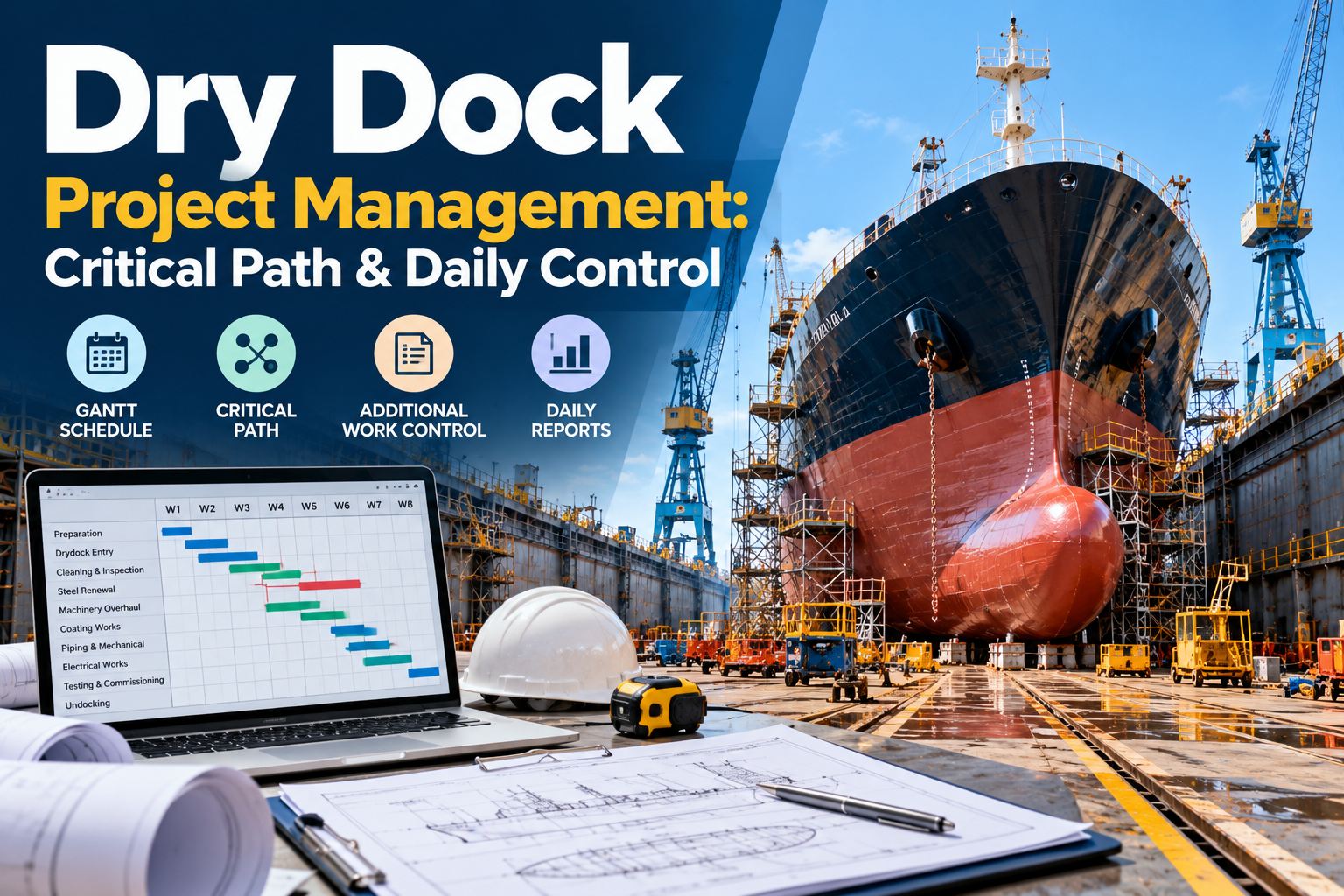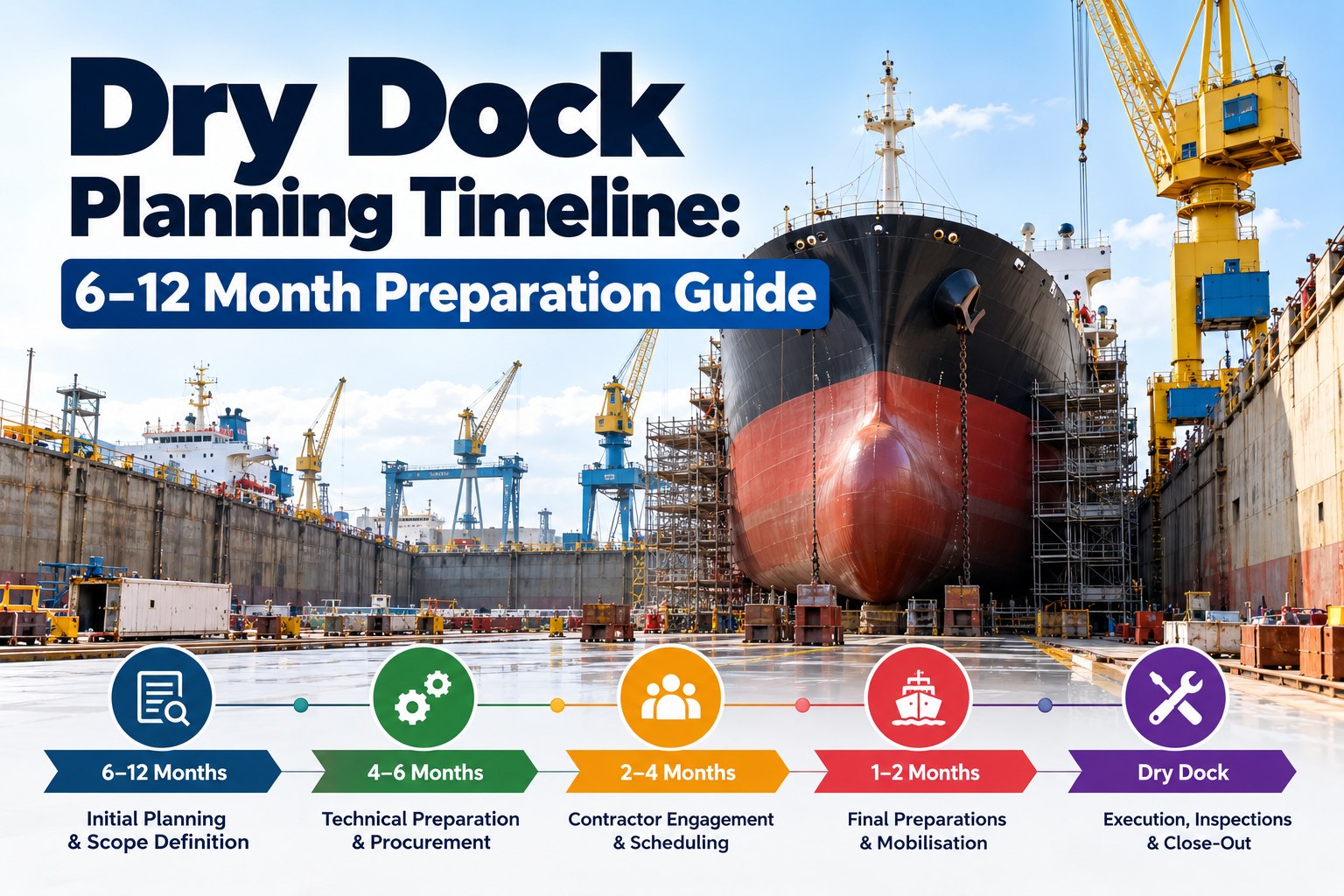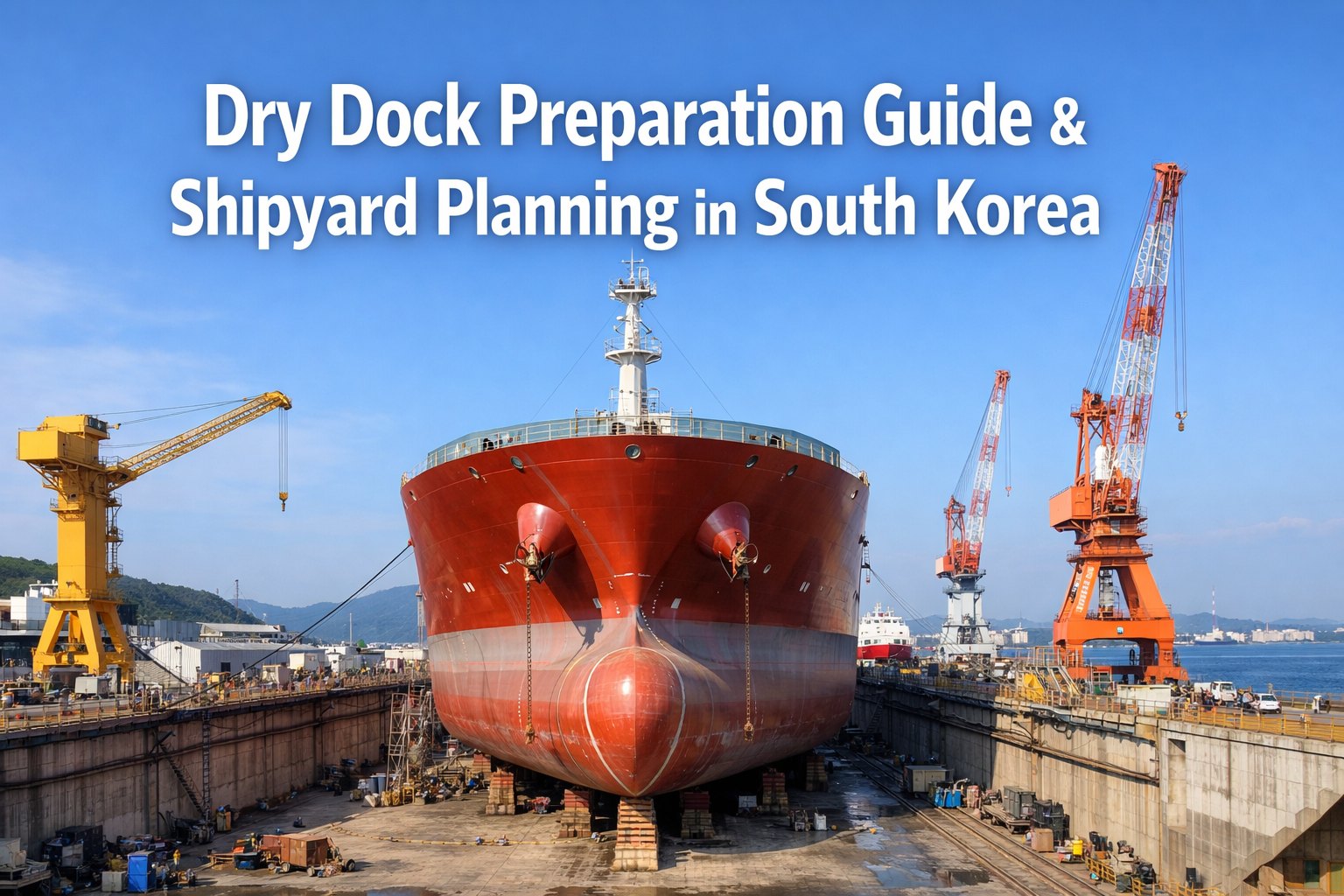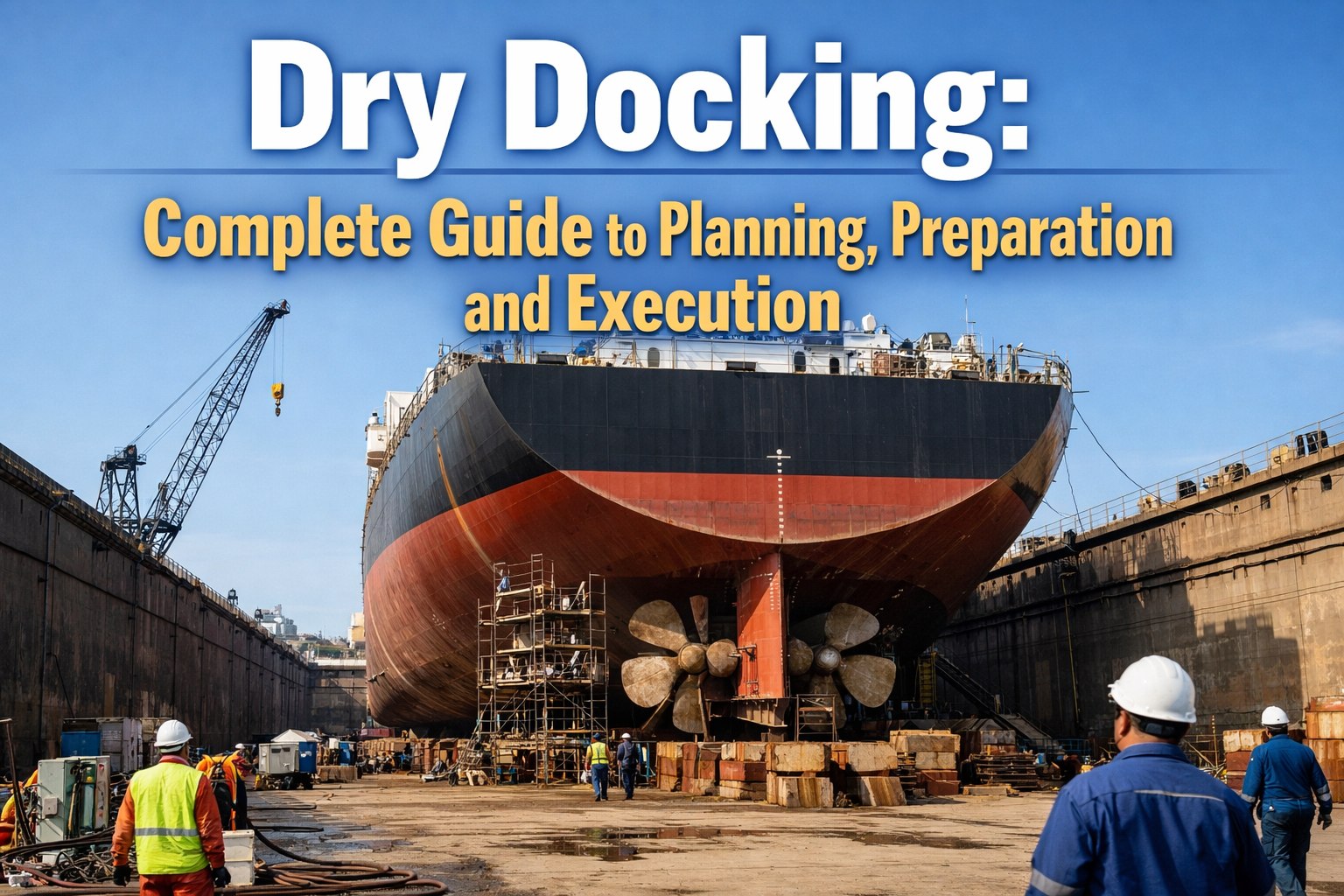
Dry docking is the most commercially consequential project a superintendent or fleet manager will execute — a single event that locks up vessel capital for 5 to 21 days, consumes $500,000 to $3,000,000+ in direct costs, carries off-hire exposure of $20,000 to $50,000 per day beyond planned duration, and typically runs 15-25% over budget without disciplined project management. Beyond the financial stakes, dry docking is where every hidden defect, deferred maintenance item, and classification requirement converges in a compressed timeline under the simultaneous scrutiny of class surveyors, flag state inspectors, shipyard quality personnel, and owners' representatives. The difference between a dry dock that finishes on time and on budget and one that does neither is not luck — it is systematic planning that begins 6 to 12 months before the vessel arrives at the yard. Korean shipyards, among the most sought-after globally (Busan, Ulsan, Geoje), require comprehensive documentation 30-60 days before docking for berth allocation and work planning. This guide maps the complete dry dock lifecycle from initial planning through post-dock performance monitoring — giving superintendents and fleet managers the framework to execute dry dockings that protect commercial performance rather than destroy it. Operators building digital dry dock management can start a free trial of Marine Inspection to centralise specification development, yard communication, and project tracking.
The Six Phases of Dry Dock Project Lifecycle
A well-executed dry dock is not a single event — it is a six-phase project that begins 6-12 months before yard arrival and continues through post-dock performance monitoring. Each phase has specific deliverables that determine the success of subsequent phases. Missing a planning milestone cascades into execution delays, budget overruns, and quality compromises. Operators who book a Marine Inspection demo can see how the platform structures each phase with defined deliverables and accountability.
Dry Dock Scope: What Gets Done in the Yard
The work scope at a dry dock is organised into five major work streams that run in parallel, coordinated by the project superintendent. Understanding each scope area helps fleet managers estimate duration, sequence contractors, and identify critical path items that determine total dock duration.
| Work Stream | Typical Scope | Duration Driver | Cost Range | Critical Path Risk |
|---|---|---|---|---|
| Hull & Structure | External/internal inspection, thickness measurements, steel renewals, corrosion treatment, coating renewal (blast and paint) | Steel renewal quantity; coating system specification | $100K-800K+ | High — weather-dependent coating schedule |
| Underwater Components | Sea chest/valve overhauls, propeller inspection and polishing, stern tube bearings, rudder inspection, sacrificial anode replacement, through-hull fitting verification | Propeller removal; stern tube access | $50K-300K | Medium — parallel to hull work |
| Machinery Systems | Main engine inspection, auxiliary engine overhauls, pump overhauls, piping pressure tests, boiler certification, steering gear testing, tailshaft survey (if due) | Tailshaft withdrawal; major component overhauls | $80K-500K+ | Medium — can extend beyond dock period |
| Tank Inspections | Ballast tank thorough examination, fuel tank cleaning and inspection, cargo tank inspection (tankers), void space surveys, coating assessment in tanks | Tank cleaning preparation; gas-free certification | $40K-200K | High — confined space entry delays |
| Safety Equipment & Statutory | Anchor chain calibration, mooring equipment certification, cargo gear load testing, life-saving appliance servicing, fire-fighting system testing, navigation equipment surveys | Statutory testing schedules | $30K-150K | Low — typically completes within dock |
Documentation Requirements: What the Yard Needs
Korean and other major shipyards require comprehensive documentation 30-60 days before docking to enable berth allocation, work planning, and resource mobilisation. Incomplete documentation is the single most common cause of pre-arrival delays. Sign up for Marine Inspection to manage dry dock documentation packages with version control and yard distribution.
| Document Category | Required Documents | Timing |
|---|---|---|
| Vessel Particulars | General Arrangement plan, Docking plan with block positioning, Capacity plan with DWT/displacement scale, Shell Expansion drawing | Before arrival |
| Structural | Mid-ship section, Detailed location plans for repair areas, Structural drawings for renewal zones | Before arrival (structural scope) |
| Propulsion | Propeller shaft, propeller, and stern tube assembly drawings (if tailshaft work scheduled) | Before arrival (if in scope) |
| Work Specifications | Detailed work list per item, Steel renewal specifications with plans, Coating specifications, Machinery work scope, Spare parts list with delivery schedule | 30-60 days before |
| Regulatory | Current class certificates, Flag state certificates, Previous survey reports, Thickness measurement records, Outstanding class recommendations list | 30-60 days before |
| Prior Dock Records | Previous dry dock report, Previous two underwater survey reports, Recent PSC inspection records | 30-60 days before |
| Safety & Risk | Risk assessment for dock period, Emergency response plan, Confined space entry procedures, Hot work permits framework | On arrival |
Shipyard Selection: Regional Options & Trade-Offs
Yard selection balances cost, quality, capacity, location relative to trading pattern, regulatory acceptance, and turnaround speed. Each major shipyard region offers a different combination of these factors — and the right choice depends on vessel type, scope complexity, and commercial priorities.
Expert Review: Dry Dock as Commercial Strategy
Dry docking is often framed as a maintenance event — but the superintendents and fleet managers who consistently deliver on-time, on-budget drydockings treat it as a commercial strategy. Every day beyond the planned dock duration costs $20,000-$50,000 in off-hire exposure. Every specification item added mid-dock typically costs 2-3x the pre-tender rate. Every scope gap discovered after the vessel is floated out requires a return visit that doubles the total cost. The project management discipline that prevents these outcomes is not complex — it is systematic: comprehensive specification development, competitive tendering with line-item analysis, daily progress tracking against the Gantt chart, and rigorous change order control.
The 2025-2026 trend toward digital dry dock management reflects this shift. Platforms that centralise specification development, yard communication, documentation packages, progress tracking, and cost monitoring are replacing email chains, spreadsheets, and paper-based systems that fragmented the project across stakeholders. The operators who adopt these systems report measurable improvements: reduced pre-arrival delays through complete documentation packages, tighter cost control through real-time progress and expenditure visibility, and faster post-dock close-out through digital defect lists and performance verification. For fleet managers running multi-vessel drydock programmes, this is the infrastructure that turns drydocking from a recurring commercial risk into a managed operational event. Schedule a walkthrough to see how Marine Inspection transforms dry dock project execution.
Conclusion
Dry docking is a commercial event disguised as a maintenance project — with costs of $500,000-$3,000,000+, durations of 5-21 days, and budget overruns of 15-25% when project management discipline is absent. The six-phase lifecycle — planning, specification development, tendering, pre-arrival preparation, execution, and close-out — runs over 6-12 months from initial strategy to post-dock performance verification. Success depends on systematic documentation (GA plan, docking plan, shell expansion, work specifications delivered 30-60 days before arrival), competitive yard tendering with line-item analysis, daily progress tracking with Gantt chart updates, rigorous change order control, and post-dock performance monitoring that verifies the investment delivered the expected operational return. Marine Inspection provides the digital platform that connects every phase of the dry dock lifecycle into one project infrastructure — sign up today to take control of your next dry dock.