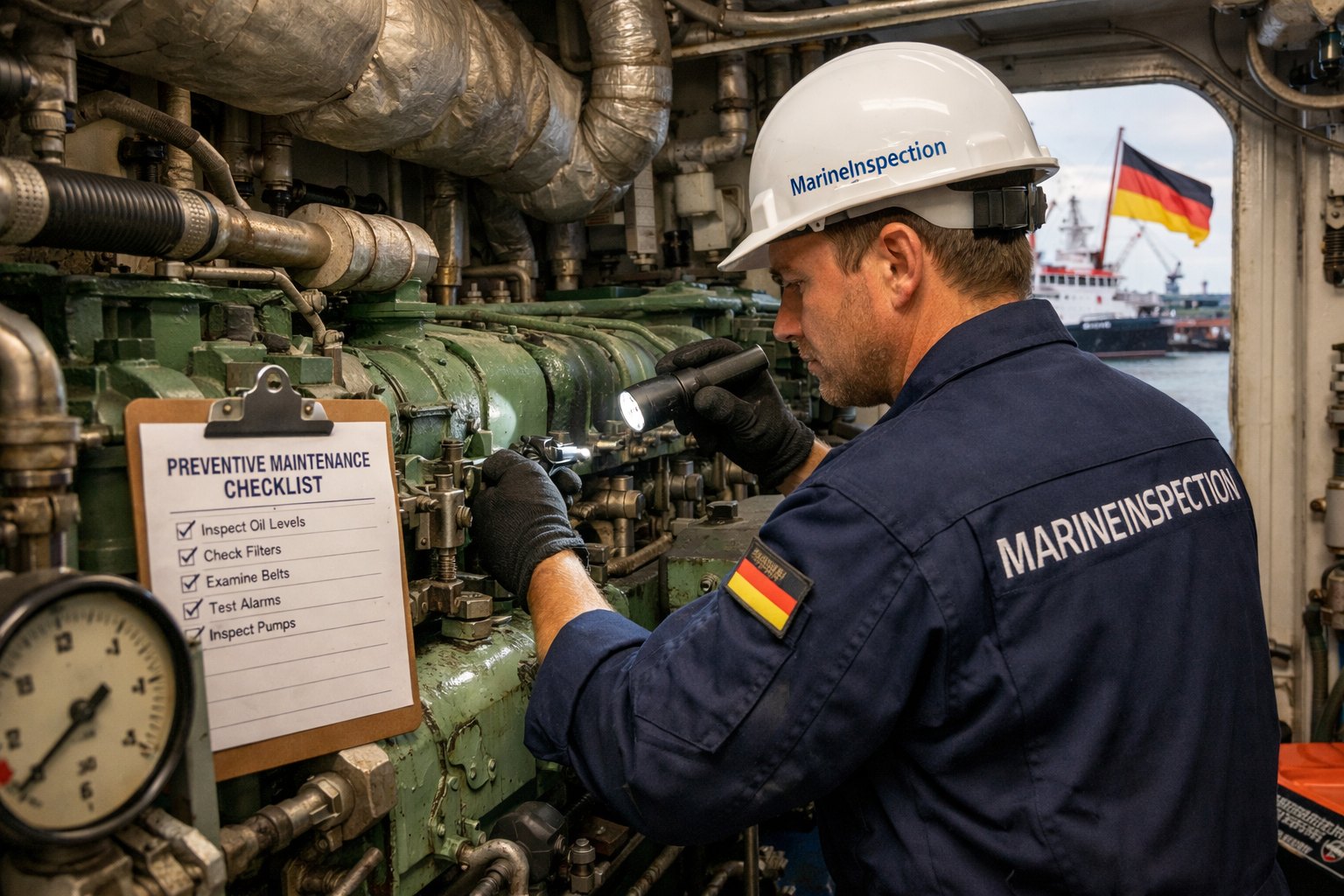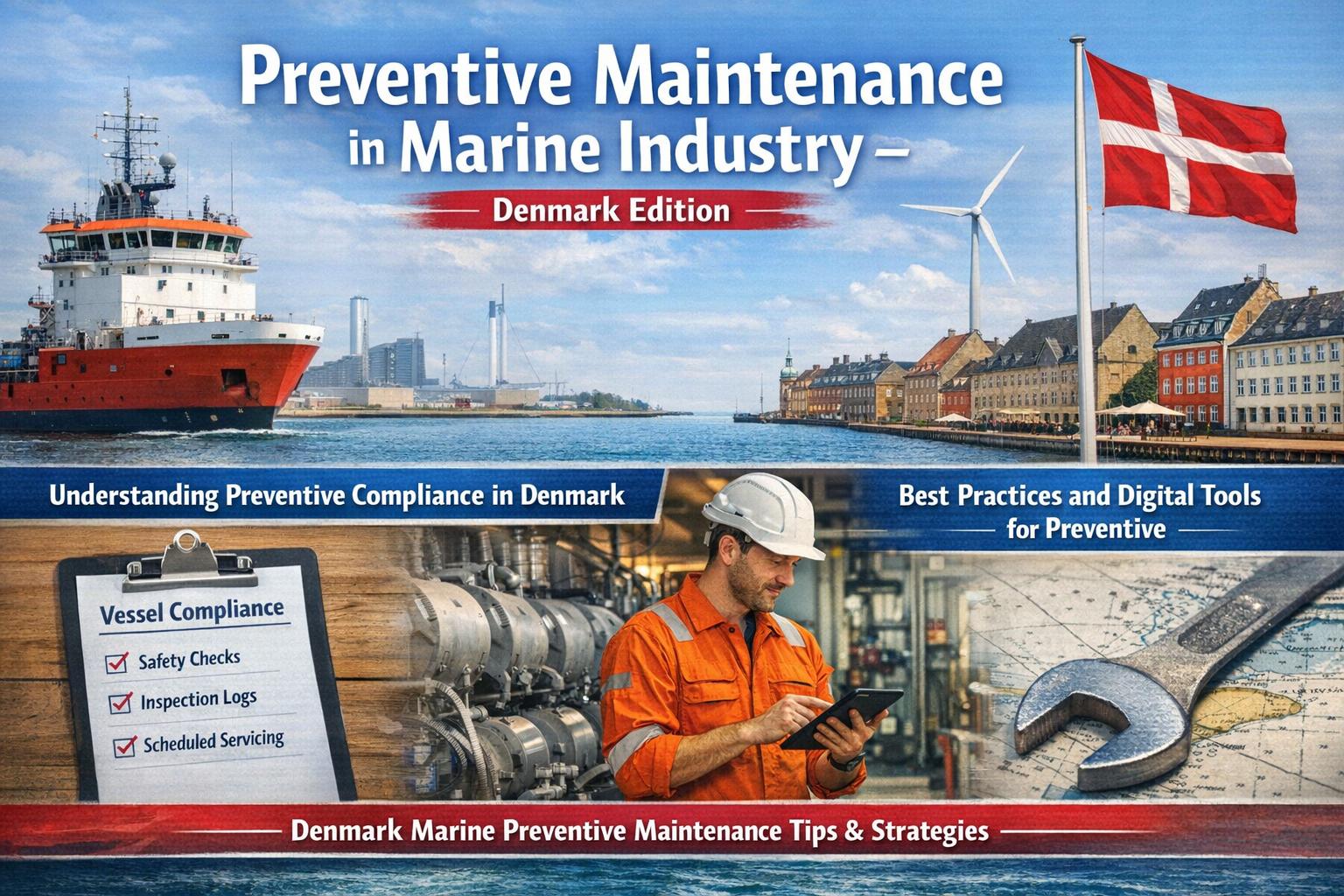
Preventive maintenance in Denmark's maritime industry determines the difference between profitable operations and costly breakdowns across the Baltic and North Sea. As Danish Maritime Authority enforcement intensifies and winter conditions test every system, vessel operators face mounting pressure to demonstrate systematic maintenance programs. Understanding maintenance intervals, documentation requirements, and winter preparedness protocols is no longer optional—it's essential for avoiding detention, reducing emergency repair costs up to $150,000, and maintaining operational efficiency in Nordic waters.
This guide delivers practical preventive maintenance strategies for Denmark, from systematic scheduling to condition monitoring systems. Whether you're managing Danish-flagged vessels or international ships calling at Copenhagen, Aarhus, or Fredericia, mastering these maintenance practices protects your operations and extends asset life across challenging maritime environments.
Understanding Preventive Compliance in Denmark
Denmark enforces comprehensive maritime maintenance standards through the Danish Maritime Authority (DMA) under EU Directive 2009/16/EC. Compliance verification occurs during Port State Control inspections at major ports, with inspectors examining maintenance records, equipment condition, and crew competency documentation. Our platform streamlines preventive maintenance documentation—providing planned maintenance systems, audit trails, and automated reporting that Danish regulators expect.
ISM Code Requirements
Denmark strictly enforces ISM Code maintenance procedures including documented planned maintenance systems, spare parts inventory management, and crew training records. DMA expects systematic approaches with clear intervals, completion verification, and corrective action tracking. Non-compliance triggers detention and enhanced fleet scrutiny.
Classification Society Standards
Class surveys verify adherence to manufacturer maintenance intervals and classification requirements. Denmark recognizes DNV, Lloyd's Register, Bureau Veritas, and other IACS members. Missing survey deadlines invalidates insurance coverage and port clearance. Annual, intermediate, and special surveys must maintain continuity.
Safety Equipment Maintenance
Life-saving appliances, fire-fighting equipment, and navigation systems require monthly inspections with documented completion. SOLAS compliance demands servicing intervals for lifeboats, liferafts, EPIRBs, and fire extinguishers. DMA inspectors verify certificates, inspection records, and equipment operability during PSC examinations.
Winter Operation Protocols
Baltic and North Sea operations demand enhanced maintenance during winter months. Danish authorities expect pre-winter system verification including heating equipment, emergency generators, de-icing systems, and cold-weather fuel management. Documentation must demonstrate September-October preparations before harsh weather arrival.
Best Practices and Digital Tools for Preventive Maintenance
Systematic preventive maintenance separates compliant operators from those facing costly breakdowns and detention delays. Digital maintenance platforms provide automated scheduling, mobile documentation, and comprehensive audit trails essential for Danish PSC inspections. Access professional maintenance management tools designed for maritime operations in challenging Nordic environments.
Maintenance System Essentials
- Running-hour based scheduling for main engines and generators
- Calendar-based intervals for safety equipment inspections
- Condition monitoring integration for predictive maintenance
- Automated alerts 30 days before maintenance due dates
- Mobile work order completion with photo documentation
- Spare parts consumption tracking linked to maintenance tasks
Documentation Standards
- Completed maintenance records with crew signatures and dates
- Class survey certificates current with 90-day advance reminders
- Safety equipment service reports from approved service stations
- Crew training records linked to equipment maintenance tasks
- Spare parts inventory with minimum stock level alerts
- Pre-winter inspection checklists completed by October 31
Implementation Phases
Assessment Phase 2-3 Weeks
Audit current maintenance practices, identify documentation gaps, review past PSC findings, and analyze breakdown patterns. Evaluate equipment criticality, verify class survey schedules, assess crew competency records, and establish baseline metrics for improvement tracking.
System Configuration 3-4 Weeks
Configure digital maintenance platform with equipment inventories, manufacturer intervals, and class requirements. Load historical maintenance data, establish spare parts minimums, create mobile inspection checklists, and integrate with existing vessel management systems where applicable.
Training & Rollout 4-6 Weeks
Train shore management on system administration and reporting. Conduct onboard crew training for mobile work order completion and inspection documentation. Start with pilot vessel, validate workflows, gather feedback, then expand fleet-wide. Document training for ISM compliance.
Continuous Improvement Ongoing
Monitor completion rates, analyze breakdown trends, adjust intervals based on condition data. Review DMA enforcement updates, track class society requirement changes, optimize spare parts inventory. Conduct quarterly system audits and annual management reviews per ISM requirements.
Denmark-Specific Considerations
Winter Preparedness
September-October critical preparation period. Test heating systems, verify emergency generators, inspect de-icing equipment. Baltic ice operations require hull strengthening inspections and propeller condition monitoring.
PSC Inspection Focus
Copenhagen, Aarhus, Fredericia enforce strict maintenance verification. Expect thorough PMS review, random equipment testing, crew competency questioning. Organized documentation reduces inspection duration 60%.
Class Survey Scheduling
Build 90-day advance reminders for all class surveys. Schedule 30 days early to accommodate weather delays. Maintain continuous communication with classification societies regarding dry-dock availability and surveyor schedules.
Environmental Equipment
Baltic SECA demands emission system maintenance. Sewage treatment plants, oily water separators, incinerators require documented servicing. Equipment failures trigger environmental violations and significant DMA penalties.
Top Maintenance Compliance Failures in Danish Waters
- Incomplete PMS records — Missing completion signatures or maintenance task gaps
- Expired class certificates — Overdue annual or intermediate surveys invalidating insurance
- Undocumented equipment modifications — Changes without classification approval and updated documentation
- Inadequate winter preparations — No documented pre-winter system verification procedures
- Missing crew training records — Insufficient documentation linking training to maintenance responsibilities
- Poor spare parts management — Critical spares unavailable or consumption not tracked in PMS