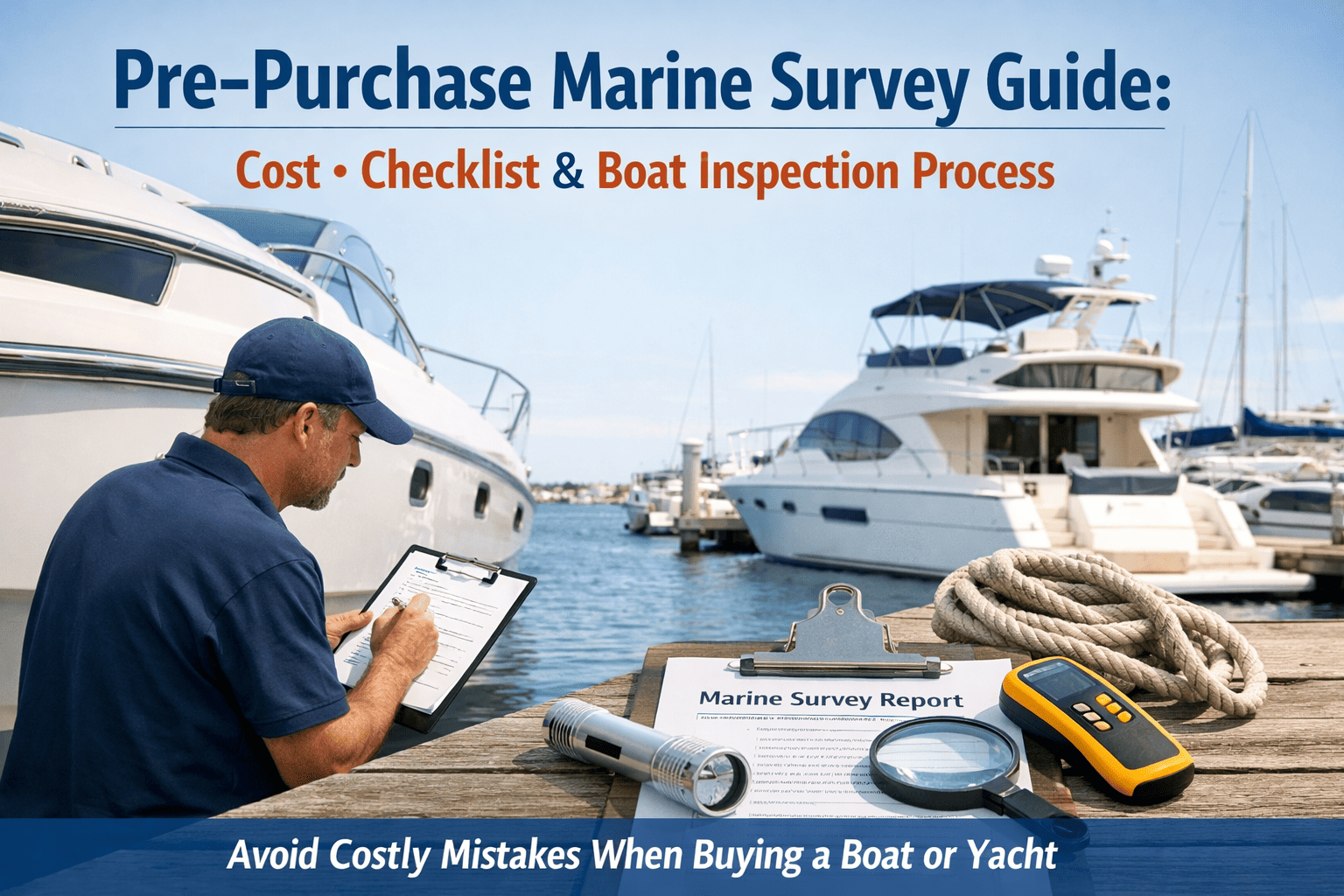
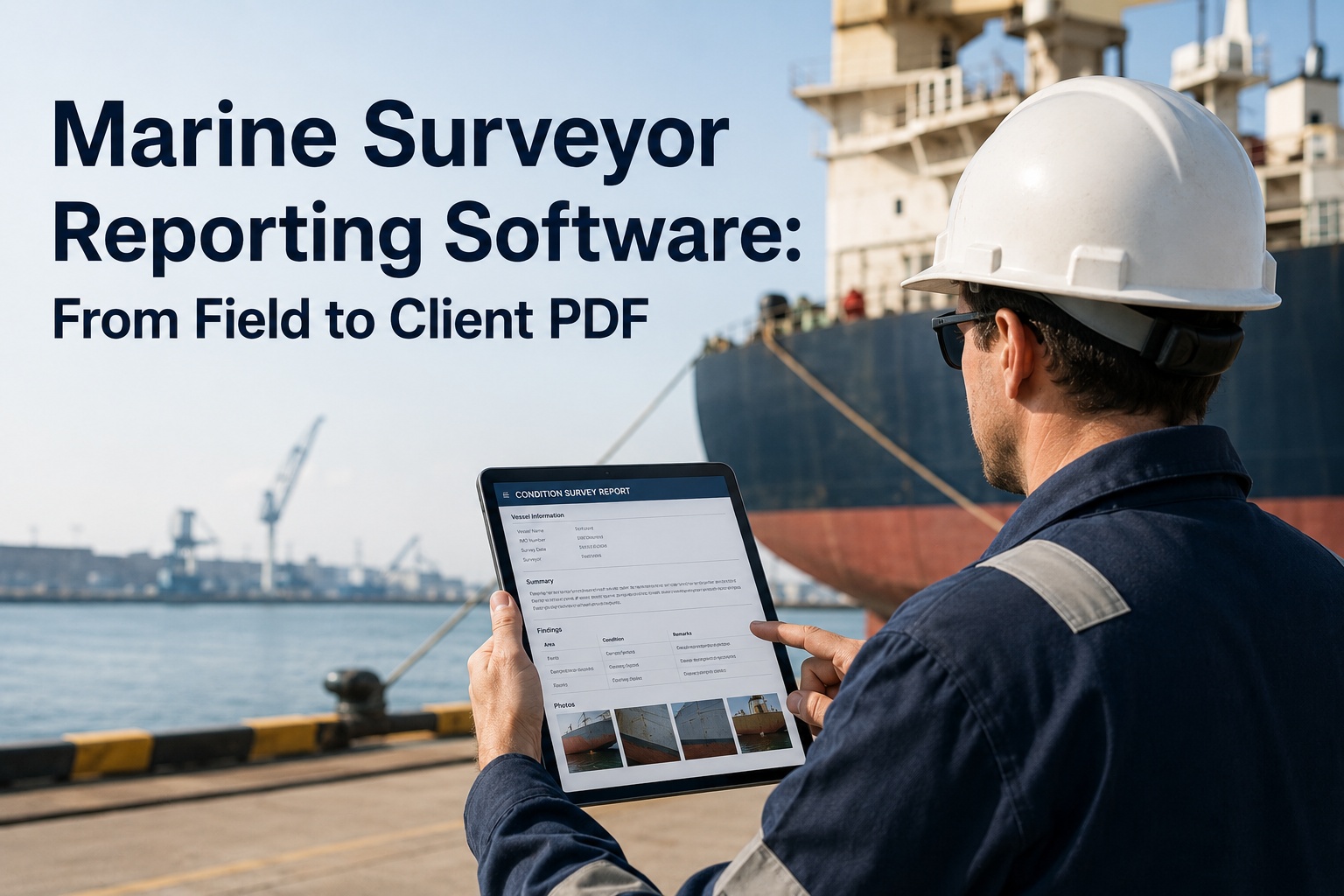
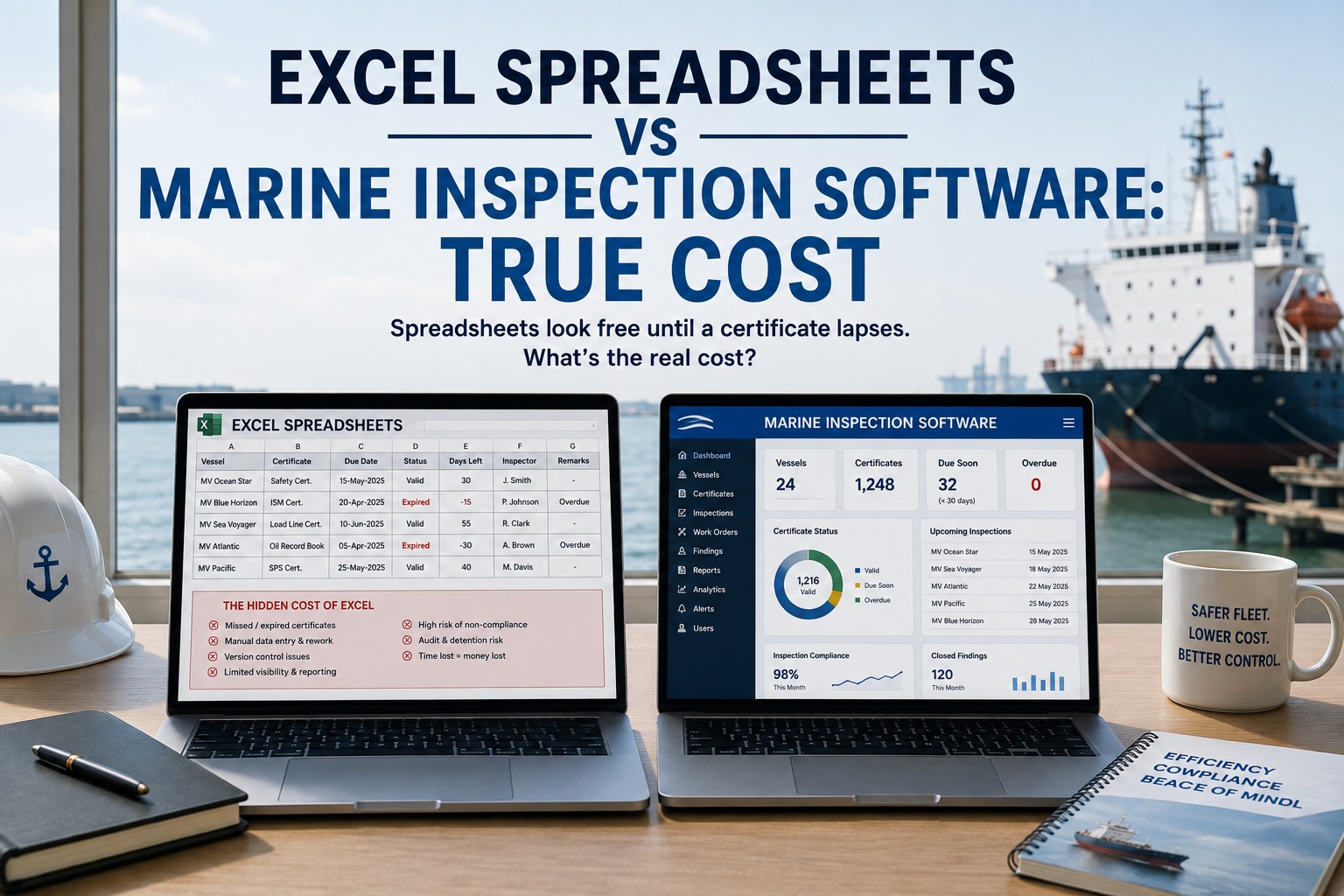
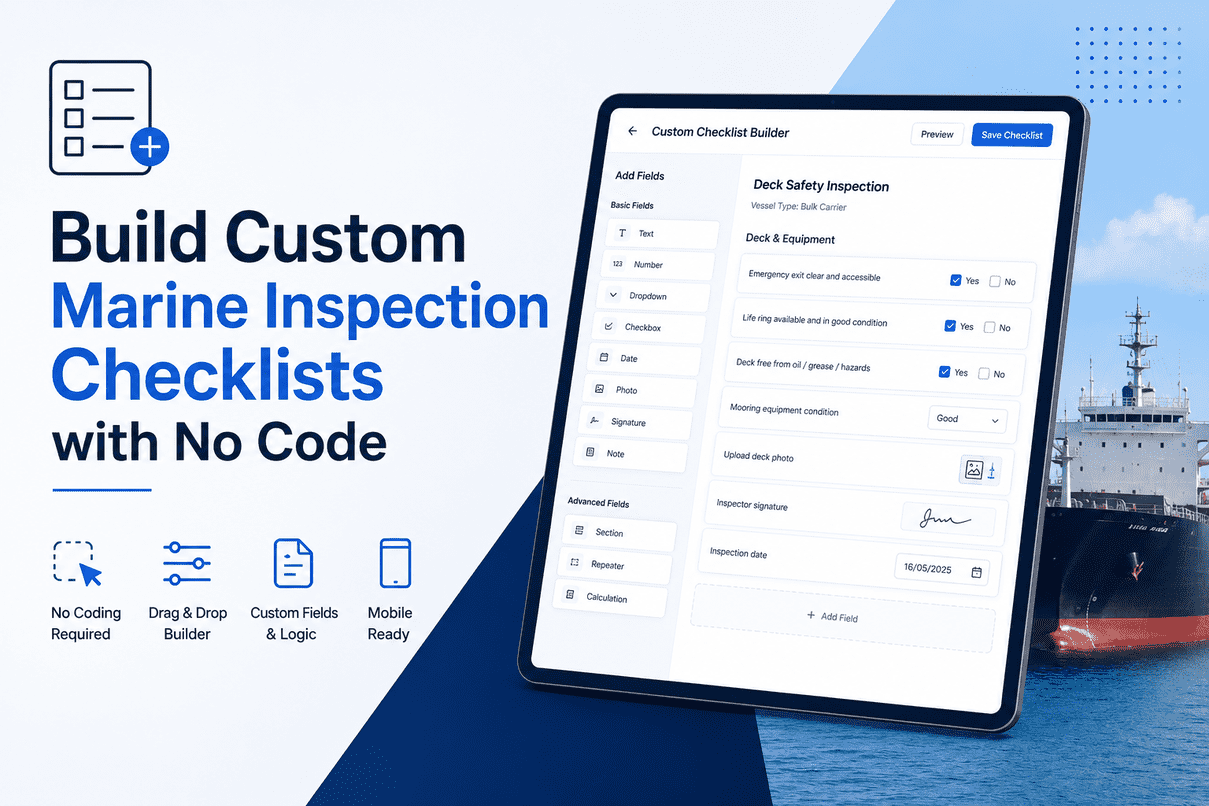
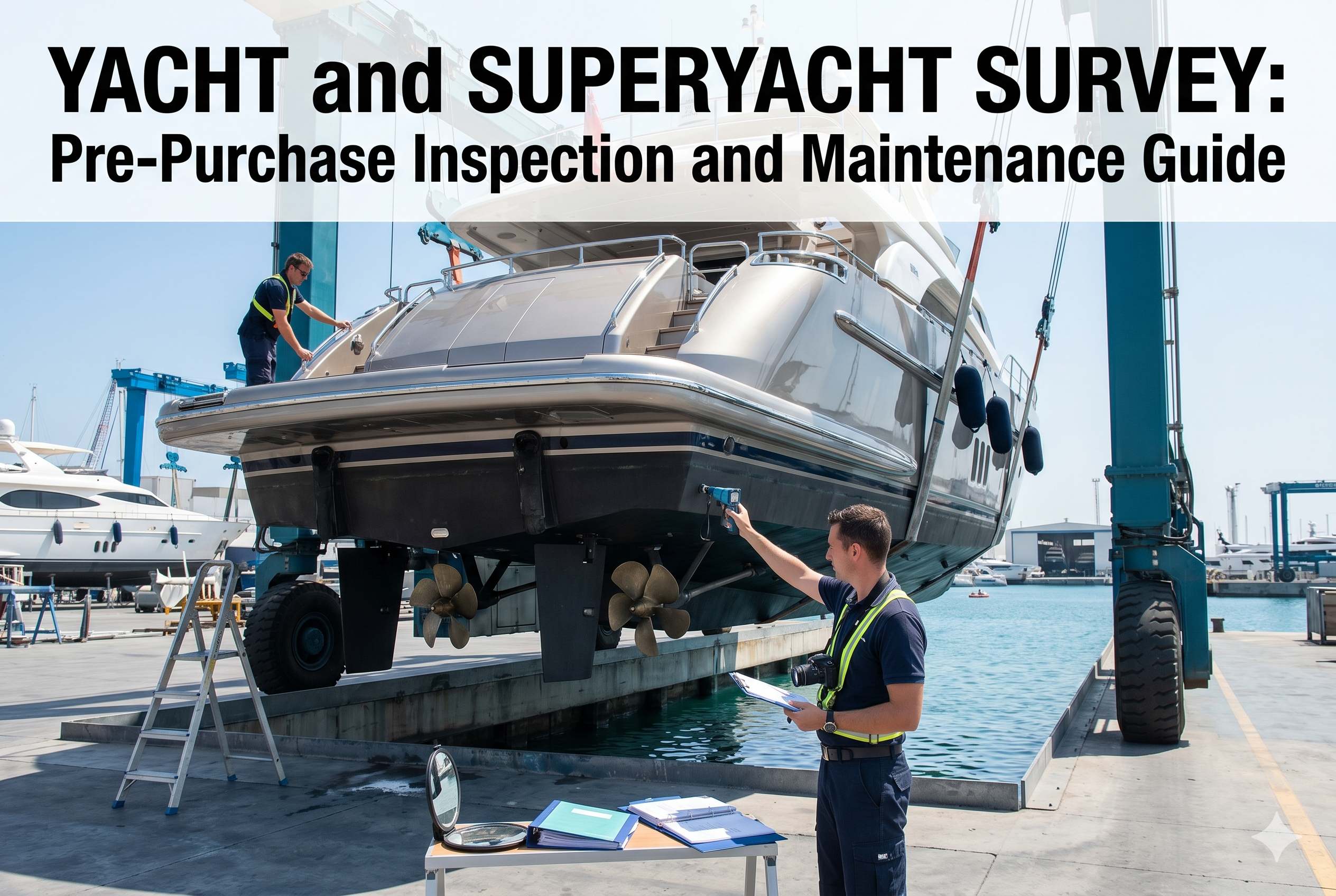
A pre-purchase marine survey is the single smartest investment you can make before buying a used boat or yacht. Think of it like a home inspection — except the "home" floats, has electrical systems corroding in saltwater, and can sink if a hidden hull defect goes undetected. A qualified marine surveyor will spend hours examining every system on board, then deliver a detailed report that tells you exactly what you're buying — and what it will cost to fix. Whether you're eyeing a 25-foot center console or a 60-foot trawler, this guide covers what a survey includes, what it costs, and how to use the results to make a confident buying decision. Boat buyers looking for a structured way to track inspection findings and maintenance needs can sign up for Marine Inspection's vessel management platform to keep everything organized from day one.
Pre-Purchase Marine Survey: Key Numbers
$25–$40
Cost per Foot
Typical range for a pre-purchase survey
4–8 hrs
Inspection Duration
Dock, haul-out, and sea trial combined
1–3 days
Report Delivery
Detailed written report with photos
SAMS / NAMS
Surveyor Credentials
Look for accredited professionals
What Is a Pre-Purchase Marine Survey?
A pre-purchase marine survey is a comprehensive, professional inspection of a vessel's condition, safety, and value — conducted before you finalize the purchase. It's the most thorough type of marine survey available, going well beyond the simpler insurance or appraisal surveys. The surveyor examines the hull, deck, structural integrity, engine and propulsion systems, electrical wiring, plumbing, safety equipment, and navigation electronics — both on land and in the water.
The end product is a detailed written report (typically 15–30+ pages with photos) that documents every finding, flags safety concerns, estimates the vessel's fair market value, and lists recommended repairs. This report becomes your negotiating tool, your maintenance roadmap, and often a requirement for insurance and financing.
A marine surveyor observes, tests, and reports — they are not mechanics. If the surveyor identifies a concern that requires a component to be disassembled (e.g., an engine compression test), they'll recommend you bring in a qualified marine mechanic for a separate engine survey. Budget for this as an additional cost. The surveyor also cannot tell you whether to buy the boat — their job is to give you the information to make that decision yourself.
What Does the Surveyor Actually Inspect?
A pre-purchase survey covers the vessel from bow to stern across three phases: dock inspection, haul-out (out-of-water), and sea trial. Here's what's examined in each major area.
Pre-Purchase Survey: Areas of Inspection
1
Hull & Structure — Cracks, blisters, osmosis, delamination, moisture readings, tap testing, keel condition, hull-to-deck joint integrity.
2
Below Waterline — Propeller, shaft, rudder, through-hulls, seacocks, cathodic protection (zincs), antifouling paint condition.
3
Deck & Topsides — Deck condition, hatches, ports, windows, railings, cleats, windlass, helm station, steering system.
4
Engine & Propulsion — Visual engine check, belts, hoses, exhaust, fuel system, oil condition, cooling system, controls, and gauges.
5
Electrical Systems — Battery condition, AC/DC wiring, breaker panels, GFCI outlets, shore power, corrosion, marine-grade wire verification.
6
Plumbing & Tanks — Fresh water, fuel tanks, holding tank, bilge pumps, heads, hoses, through-hull fittings, washdowns.
7
Safety Equipment — Fire extinguishers, flares, life jackets, navigation lights, sound signals, first aid, compliance with USCG standards.
8
Navigation & Electronics — GPS/chartplotter, VHF radio, depth sounder, radar, AIS, autopilot functionality testing.
9
Sea Trial — Engine performance under load, handling, stability, speed, shifting, steering response, vibration, noise, water ingress checks.
How Much Does a Pre-Purchase Survey Cost?
Survey costs vary by region, vessel size, and scope — but here's what to expect based on current market rates.
Marine Survey Cost Breakdown
Item
Typical Cost
Who Pays
Pre-Purchase Survey
$25–$40 per foot (most comprehensive)
Buyer
Insurance Survey
$14–$18 per foot (less detailed)
Owner
Haul-Out Fee
$10–$15 per foot (short haul for inspection)
Buyer (usually)
Engine Survey
$100–$180/hour (separate marine mechanic)
Buyer
Oil Analysis
$30–$75 per sample (sent to lab)
Buyer
Travel Fee
Varies — $50–$150+ for out-of-area
Buyer
Real-World Cost Examples
To put the per-foot pricing in perspective, here's what typical pre-purchase surveys cost for common boat sizes — survey fee only, before haul-out or engine inspection.
25-foot Center Console
$550–$1,000
Most surveyors have a minimum fee of $500–$550 regardless of boat size. For a simple 25-footer, you'll typically hit the minimum. Add ~$250–$375 for haul-out.
35-foot Sailboat
$875–$1,400
Sailboats may require a separate rigging survey ($300–$500) for standing and running rigging, mast, and hardware. Add haul-out and mast-step inspection costs.
45-foot Motor Yacht
$1,125–$1,800
Twin-engine vessels, flybridge boats, and gensets increase complexity and time. Some surveyors add $2/ft for flybridge boats. Budget extra for dual engine inspections.
60-foot+ Yacht
$1,500–$2,400+
Larger yachts with complex systems (hydraulics, stabilizers, generators, watermakers) take a full day or more. Specialized system inspections may be recommended separately.
The 3 Phases of a Pre-Purchase Survey
A complete pre-purchase survey happens in three distinct phases. Being present for all three is strongly recommended — it's your chance to ask questions and see the surveyor's findings firsthand.
Phase 1 — Dock Inspection (In-Water)
Cold test all systems — Engines, electronics, pumps, and electrical systems are tested before running the engine. This reveals starting issues, electrical faults, and bilge water levels at rest.
Inspect topsides, deck, and interior — Hull Identification Number (HIN) verification, deck condition, hatches, ports, helm station, accommodation, galley, heads, and storage areas.
Review documentation — Registration, title, maintenance records, previous survey reports. Gaps in maintenance history are a red flag worth noting.
Phase 2 — Haul-Out (Out-of-Water)
Hull bottom inspection — Blisters, osmosis, moisture readings, tap testing for delamination, gelcoat condition, antifouling paint, and structural integrity below the waterline.
Running gear and appendages — Propeller, shaft, strut, rudder, keel/centerboard, through-hulls, seacocks, and zincs (cathodic protection) all inspected with the hull exposed.
Phase 3 — Sea Trial (On-Water)
Engine performance under load — RPM at various throttle positions, oil pressure, water temperature, shifting smoothness, vibration, exhaust color, and unusual noises.
Handling and systems at sea — Steering response, stability, speed, compass accuracy, electronics under power, bilge pump operation, and overall comfort and ride quality.
How to Choose a Marine Surveyor
Not all surveyors are equal — and there is no license required to call yourself a marine surveyor. Protect yourself by following these guidelines.
Hire a surveyor accredited by SAMS (Society of Accredited Marine Surveyors) or NAMS (National Association of Marine Surveyors). These organizations enforce technical and ethical standards that protect you.
Non-negotiable for serious purchases
A surveyor experienced with sailboats may miss things on a sportfish — and vice versa. Ask about their experience with your specific vessel type, size range, and construction material (fiberglass, aluminum, wood).
Match expertise to your vessel
A good surveyor will share a redacted sample report. Look for clear organization, photographs, specific findings (not vague statements), fair market value assessment, and prioritized repair recommendations.
Quality of report = quality of surveyor
Your surveyor should have no financial relationship with the seller, broker, or boatyard. Never use a surveyor recommended solely by the seller. Ask your marina, insurance broker, or boating community for referrals.
Independence = objectivity
How to Use the Survey Report
The report arrives and it lists 30 items. Don't panic — even well-maintained boats have findings. Here's how to interpret and act on the results.
Deal Breakers
Major Safety or Structural Issues
Severe hull damage, active water intrusion, compromised stringers or bulkheads, major engine problems, or fire hazards from electrical faults. These are items the seller should address before closing — or walk away.
Negotiation Points
Significant Repairs Needed
Outdated electronics, worn rigging, aging canvas, corroded through-hulls, or deferred maintenance items. Get repair estimates and negotiate the purchase price down accordingly — or have the seller complete repairs before closing.
Normal Wear
Minor Items & Cosmetic Issues
Expired flares, worn cushions, minor gelcoat scratches, small cosmetic repairs. These are typically buyer responsibility and part of normal boat ownership. Don't use these to hammer the seller on price.
Your Maintenance Roadmap
Plan Forward from Day One
The survey report becomes your maintenance baseline. Every finding that isn't addressed before closing goes on your ownership to-do list. A digital tracking system helps you prioritize, schedule, and document each repair over time.
Turn Your Survey Report into a Maintenance Plan
Marine Inspection helps boat owners convert survey findings into tracked maintenance tasks — with schedules, reminders, photo documentation, and a complete service history for your vessel.
Frequently Asked Questions
How much does a pre-purchase marine survey cost?
Most pre-purchase surveys cost $25–$40 per foot, with minimums of $500–$550. A 35-foot boat typically runs $875–$1,400 for the survey alone. Add haul-out fees ($10–$15/ft), engine survey ($100–$180/hr by a separate mechanic), and travel fees if applicable. Total all-in cost for a 35-footer is usually $1,200–$2,000.
Who pays for the marine survey — buyer or seller?
The buyer pays for a pre-purchase survey and haul-out. This is standard practice — the survey protects the buyer's interests. Insurance and appraisal surveys are typically paid by the current owner. The seller normally permits a sea trial only after a signed purchase contract and deposit are in place.
Should I attend the survey in person?
Yes — strongly recommended. Being present lets you see findings firsthand, ask questions in real time, and understand the severity of each issue. The surveyor can point out things that are difficult to convey in a written report alone. Plan to be available for the full 4–8 hours.
What's the difference between a pre-purchase and insurance survey?
A pre-purchase survey is the most comprehensive inspection — covering condition, safety, systems, and fair market value. An insurance survey is less detailed, focused on determining whether the vessel is an acceptable risk for the insurer. Pre-purchase surveys typically cost 50–100% more per foot than insurance surveys because of the additional depth and time required.
Can I skip the haul-out to save money?
You can, but it's not recommended. The haul-out lets the surveyor inspect the hull bottom, propeller, rudder, through-hulls, and running gear — all areas where hidden problems live. Blisters, osmosis, shaft wear, and corroded seacocks are invisible while the boat is in the water. The $250–$500 haul-out fee is minor compared to the cost of missing a serious underwater defect.