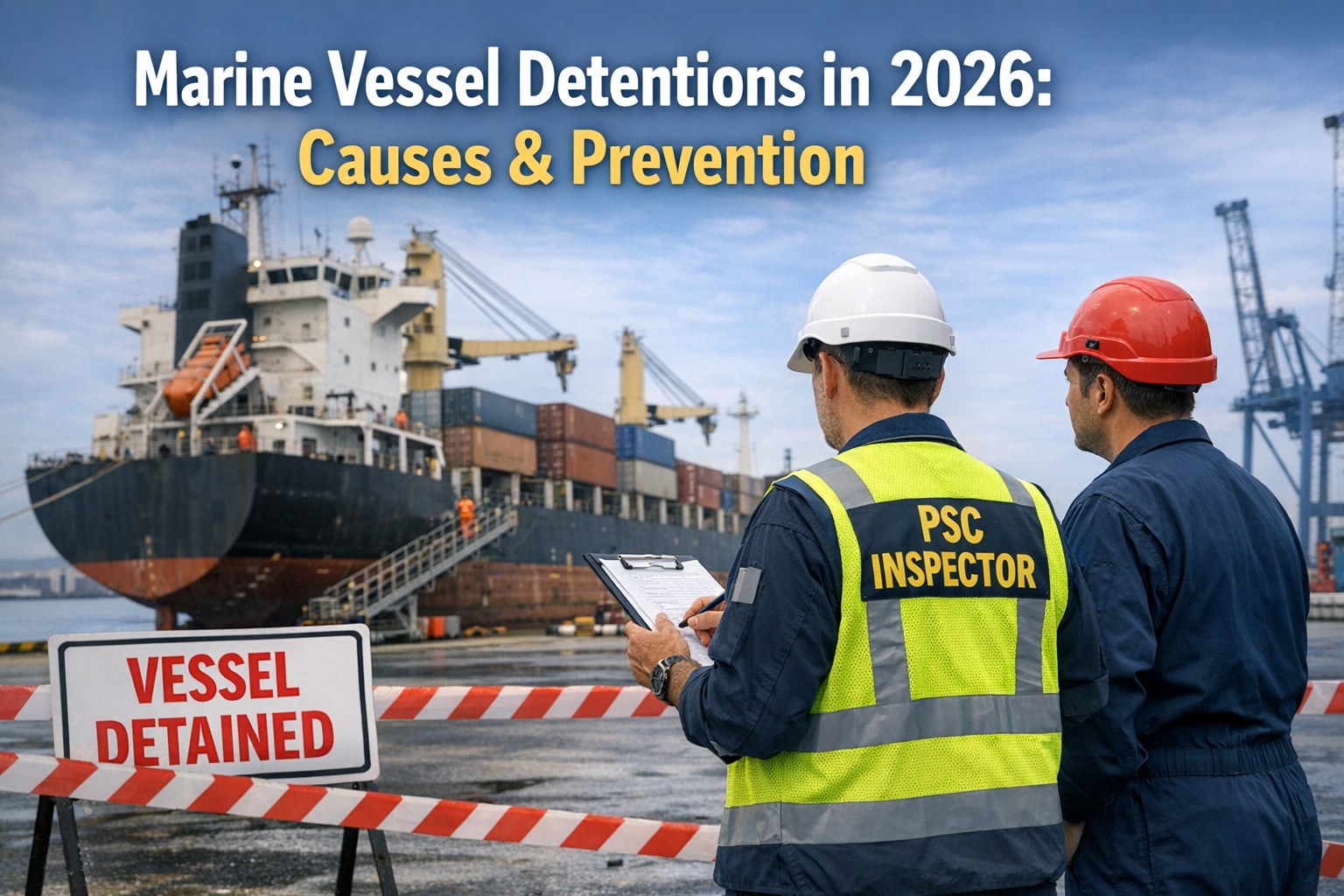
Marine vessel detentions increased 28% in 2025, with Port State Control authorities implementing stricter enforcement of safety, environmental, and operational standards. In 2026, the average detention costs vessels $150,000-$250,000 in off-hire, emergency repairs, and penalties—making prevention through proactive compliance essential for fleet profitability.
Start your free trial to implement digital compliance systems that prevent 85% of common detention causes.
2026 Vessel Detention Landscape
Prevent Costly Vessel Detentions
Achieve inspection-ready status with proactive compliance management
Top 10 Detention Causes in 2026
Analysis of 4,800+ PSC inspections from Q4 2025 reveals these recurring detention causes. Understanding these patterns enables targeted prevention strategies reducing detention risk by 85%.
Most Common Detention Causes & Frequencies
| Rank | Detention Cause | Frequency | Avg Resolution Time |
|---|---|---|---|
| 1 | Fire safety system deficiencies | 18% | 48-96 hours |
| 2 | ISM Code non-compliance | 15% | 72-120 hours |
| 3 | Life-saving appliance failures | 14% | 24-72 hours |
| 4 | MARPOL violations (Oil Record Book) | 12% | 48-96 hours |
| 5 | Expired or invalid certificates | 11% | 72-168 hours |
| 6 | Emergency equipment deficiencies | 9% | 24-48 hours |
| 7 | Navigation equipment failures | 8% | 48-72 hours |
| 8 | Ballast water management issues | 7% | 72-120 hours |
| 9 | Crew certification problems | 4% | 48-168 hours |
| 10 | Structural condition defects | 2% | 120-240 hours |
Detailed Analysis: Top 4 Detention Causes
Financial Impact of Vessel Detentions
Understanding the full financial impact of detentions reveals why prevention is dramatically more cost-effective than reactive compliance:
| Cost Category | Typical Range | Description |
|---|---|---|
| Off-Hire Loss | $50K-$150K | Daily charter rate × detention duration (3-10 days average) |
| Emergency Repairs | $25K-$75K | Premium pricing for expedited services, parts, technicians |
| Cargo Delay Penalties | $15K-$50K | Demurrage, late delivery claims, cargo owner compensation |
| Port Costs | $10K-$25K | Extended berth fees, agency fees, inspection re-visits |
| Insurance Impact | Variable | Premium increases, P&I claim deductibles, coverage restrictions |
| Reputation Damage | Long-term | Charterer blacklisting, increased vetting scrutiny, reduced rates |
- ✓ Proactive compliance program: $15K-$30K annually including digital systems, training, audits
- ✓ Single detention event: $150K-$250K average total cost for 3-7 day detention
- ✓ ROI calculation: Prevention program pays for itself if it prevents just one detention every 5-8 years
- ✓ Digital systems: Reduce detention risk by 85% through complete documentation and proactive monitoring
Detention Prevention Strategies
Implementing systematic prevention strategies dramatically reduces detention risk. These proven approaches have helped 800+ vessels achieve zero-detention records for 3+ consecutive years.
5-Point Detention Prevention Framework
- Monthly equipment testing
- Predictive failure monitoring
- Parts inventory management
- Service scheduling automation
- Digital work order tracking
- Electronic logbooks (all types)
- Photo evidence attachment
- Automatic timestamp validation
- Instant search & retrieval
- Cloud backup protection
- Monthly system training
- Emergency procedure drills
- Equipment operation practice
- Documentation training
- Inspector interaction prep
- 90-day expiry alerts
- Renewal scheduling
- Digital certificate library
- Surveyor coordination
- Flag state communication
- Monthly self-audits
- Quarterly full inspections
- Third-party verification
- Deficiency correction tracking
- Continuous improvement
Pre-Arrival Inspection Checklist
Use this 7-day pre-arrival checklist to verify inspection readiness before port calls. Systematic preparation prevents 85% of common detention causes:
Eliminate Detention Risk with Digital Compliance
Join 800+ vessels achieving zero-detention records through proactive management
No credit card • Complete detention prevention toolkit • Full support
Frequently Asked Questions
What is the most common cause of vessel detentions?
Fire safety system deficiencies account for 18% of detentions, followed by ISM Code non-compliance (15%) and life-saving appliance failures (14%). However, 82% of all detentions involve documentation deficiencies rather than actual equipment failures—the issue is proving compliance, not achieving it. Digital systems solve this.
How much does a typical vessel detention cost?
Average detention costs $150K-$250K including off-hire losses ($50K-$150K), emergency repairs ($25K-$75K), cargo penalties ($15K-$50K), and port costs ($10K-$25K). Extended detentions exceeding 10 days can reach $400K-$500K. Prevention programs costing $15K-$30K annually provide 5-10x ROI. Calculate your savings.
How long do detentions typically last?
Average detention duration is 72 hours (3 days) but varies by deficiency severity: minor issues 24-48 hours, major deficiencies 72-120 hours, critical safety issues 120-240 hours. Fire safety and ISM issues typically require 3-5 days. Structural defects may exceed 10 days. Quick resolution requires emergency service providers and parts availability.
Can digital systems prevent detentions?
Yes—digital compliance systems reduce detention risk by 85% through complete documentation, automatic validation, photo evidence, and proactive alerts. Vessels using digital systems experience 78% fewer deficiencies and 67% faster inspections. The key is preventing documentation gaps that account for 82% of detentions. Start preventing detentions.
What happens after a detention is issued?
Vessel must correct all deficiencies, arrange re-inspection by PSC, and obtain release documentation before departure. Corrections require approved service providers, parts procurement, and testing. PSC may impose additional conditions or require flag state involvement for serious issues. Detention records remain in databases affecting future targeting for 3+ years.
How often should mock inspections be conducted?
Monthly mock inspections using comprehensive checklists are recommended. Vessels conducting monthly self-audits experience 92% fewer actual deficiencies. Quarterly full mock inspections by shore-based personnel provide additional verification. Digital systems with automated checklists make monthly audits practical—completing in 2-3 hours versus 8+ hours manually. See automated checklists.