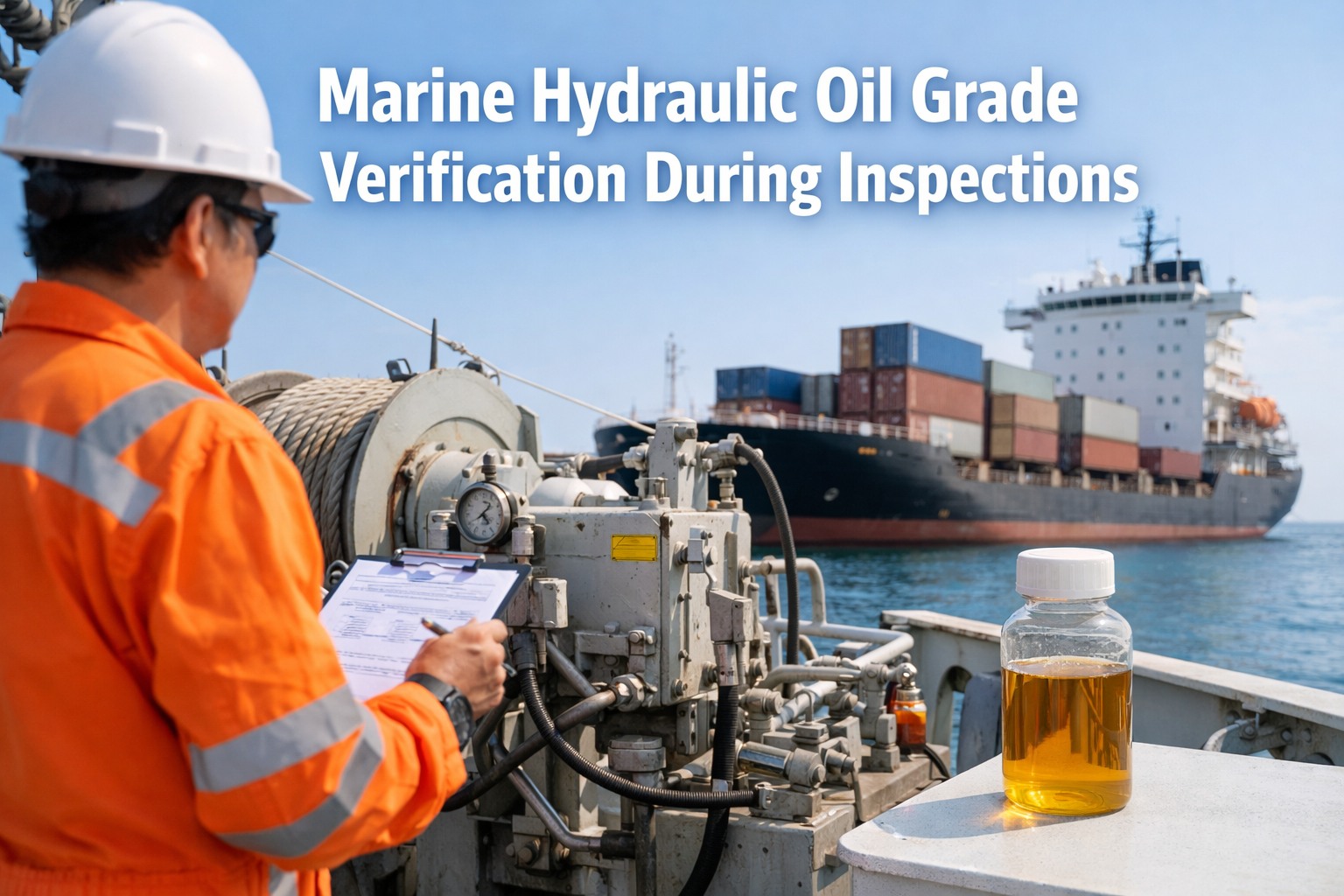
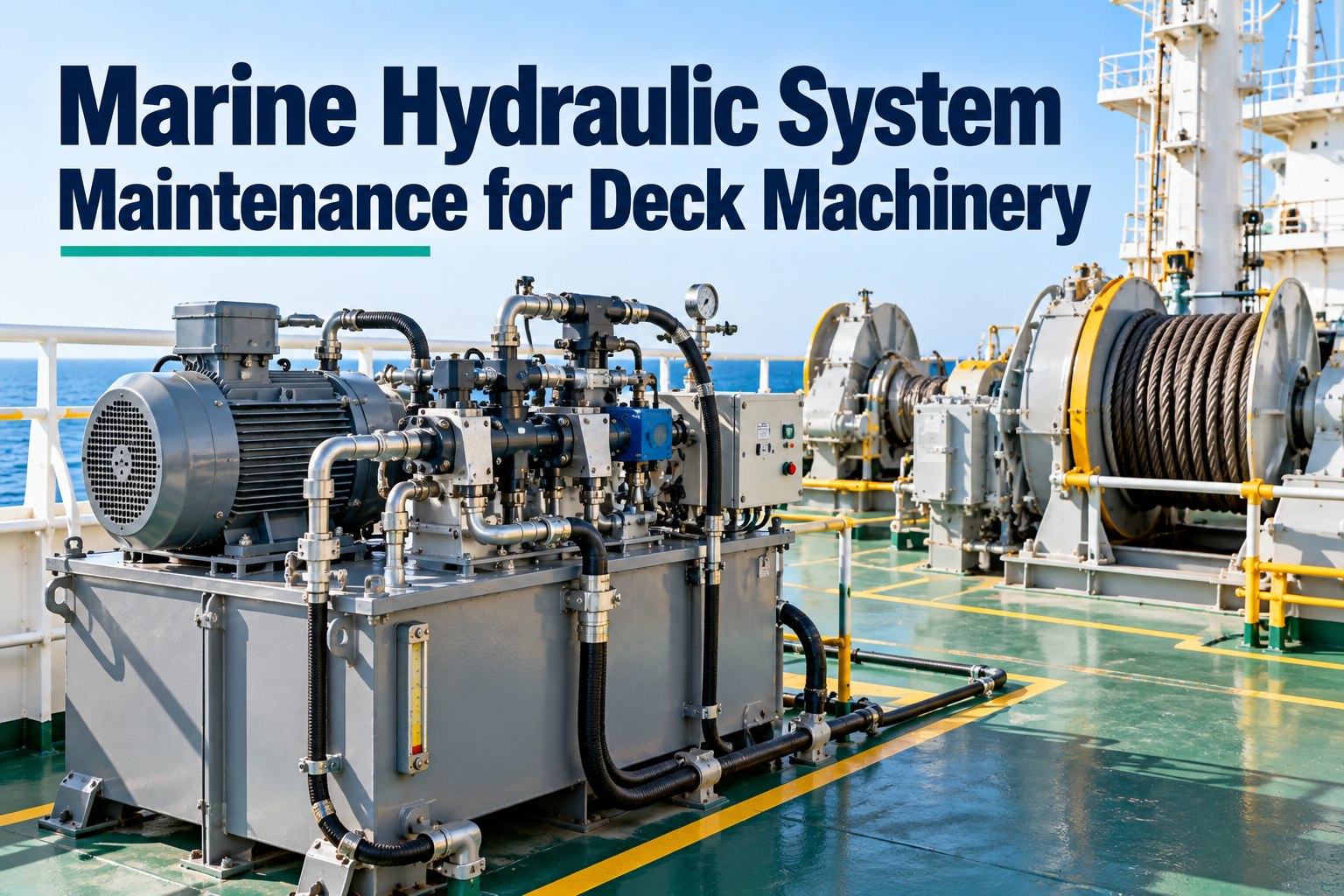
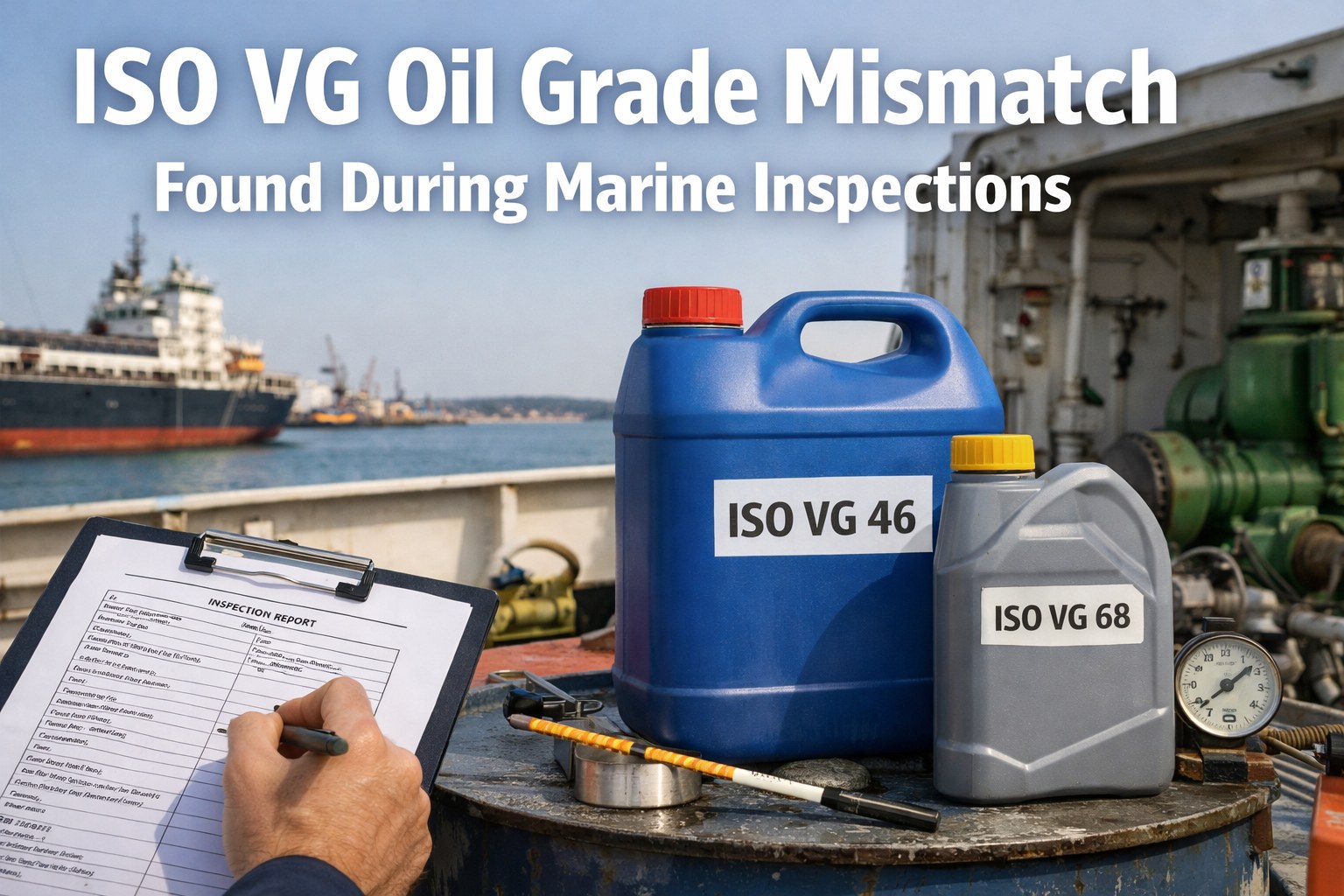
Port State Control inspectors enter steering gear compartment requesting system documentation. They examine hydraulic oil reservoir showing ISO VG 32 label—manufacturer manual specifies ISO VG 46. Deck crane hydraulic system runs unlabeled oil—no specification verification available. Hatch cover hydraulics show oil leaks indicating contamination risks. Three findings trigger "inadequate hydraulic system maintenance" deficiencies requiring immediate correction before departure. These violations stem from wrong oil grades, missing documentation, and contamination issues that signup to digital hydraulic oil tracking prevents through Marine Inspection's maintenance software automatically matching installed hydraulic oils against manufacturer specifications across steering gear, deck machinery, and auxiliary systems.
4
Primary Systems Inspected
Steering gear, deck machinery, hatch covers, cargo cranes
ISO VG 32-68
Common Grades
Temperature and load determine correct specification
5
Verification Points
Grade, leaks, contamination, level, documentation
Four Critical Hydraulic Systems Inspectors Verify
PSC officers focus on safety-critical hydraulic systems where wrong oil grades create operational failures. Each system requires specific ISO VG grades based on operating pressure, temperature, and ambient conditions.
1
Steering Gear Hydraulic System
Typical Grade:
ISO VG 46, ISO VG 32
Inspection Focus: Oil reservoir level sensors, low-level alarms operational, hydraulic oil grade matches manual specification, no leaks on pumps/actuators/piping, oil cleanliness appropriate for system design, emergency steering supply tank filled with correct grade.
Common Findings: Using ISO VG 32 in systems requiring VG 46 (insufficient load capacity), mixing different grades during top-ups, low oil levels triggering alarms, visible leaks at actuator seals, contaminated oil causing sluggish response.
2
Deck Machinery (Windlass/Capstan)
Typical Grade:
ISO VG 46, ISO VG 68
Inspection Focus: Hydraulic power unit oil grade verification, pressure relief valve settings appropriate for oil viscosity, cold-start capability in ambient conditions, oil filtration systems operational, accumulator pre-charge pressure correct for installed oil.
Common Findings: Using VG 68 year-round when winter operations require VG 46 (cold-start failures), clogged filters indicating contamination, no documentation showing oil specification selection, accumulator pressure mismatched to oil viscosity.
3
Cargo Crane Hydraulics
Typical Grade:
ISO VG 46, ISO VG 68
Inspection Focus: Oil grade suitable for load ratings and duty cycle, hydraulic hoses free from leaks/deterioration, boom/slew cylinders show no external leakage, overload protection systems functioning with correct oil viscosity, reservoir breathers preventing contamination.
Common Findings: Incorrect VG grade for crane load capacity (VG 46 in systems requiring VG 68 for heavy lifts), external leaks at cylinder rod seals, contaminated oil from missing breather filters, no oil analysis confirming specification compliance.
4
Hatch Cover Hydraulics
Typical Grade:
ISO VG 32, ISO VG 46
Inspection Focus: Hydraulic jack cylinders operating smoothly without binding, no oil weeping from cylinder seals, oil grade appropriate for ambient temperature operations, accumulator systems (if fitted) maintaining pressure with installed oil grade.
Common Findings: Visible oil leaks from jack cylinders, using thicker oil than specified causing slow operation in cold weather, contaminated oil from seawater ingress, missing documentation linking oil grade to hatch cover manufacturer specs.
Track Hydraulic Oil Specifications Automatically
Marine Inspection's software maintains hydraulic oil grade specifications for all systems, alerts when oil changes require correct ISO VG verification, and generates PSC-ready documentation showing compliance across steering gear, deck machinery, and cargo handling equipment.
Five-Point Hydraulic Oil Verification Process
Inspectors execute systematic checks covering grade compliance, system condition,
contamination risks, and documentation completeness.
1️⃣
Grade Specification Match
Inspectors cross-reference reservoir oil labels against manufacturer manuals.
Steering gear requiring ISO VG 46 must show VG 46 containers.
Any mismatch (VG 32 actual vs. VG 46 required) indicates improper maintenance.
Schedule a demo
to see automated grade matching.
2️⃣
Leak Detection & System Integrity
Officers visually inspect all hydraulic components for external leaks.
Steering gear actuators, deck crane cylinders, and hatch cover jacks must
show no oil weeping. Leaks indicate seal failures from wrong viscosity or contamination.
Temporary repairs using hose clamps fail inspection immediately.
3️⃣
Contamination Assessment
Inspectors check oil cleanliness through visual inspection
(milky appearance indicates water) or request analysis reports.
Hydraulic systems require clean oil per ISO 4406 cleanliness codes.
Contaminated oil causes valve sticking, pump wear, and system failures.
4️⃣
Oil Level & Alarm Verification
Steering gear low-level alarms must activate properly.
Officers test alarm functionality and verify reservoir levels above minimum marks.
Systems showing low levels without crew awareness indicate alarm failures or
inadequate monitoring—both detainable deficiencies under SOLAS requirements.
5️⃣
Documentation Trail Review
Inspectors verify planned maintenance records show hydraulic oil specification tracking.
Documentation must demonstrate:
oil grade selection based on manufacturer requirements,
analysis results confirming proper viscosity,
changeover records showing correct grades installed,
and filtration maintenance preventing contamination.
Why Wrong Hydraulic Oil Grades Fail Inspections
Too Thin (Lower VG Than Required)
Using ISO VG 32 when system requires VG 46 creates insufficient film thickness. Pumps experience internal leakage reducing pressure. Actuators lose holding force under load.
Sign up to prevent specification mismatches.
Inspection Consequence: Officers cite "inadequate hydraulic system performance" when steering response is sluggish or deck machinery cannot lift rated loads—traceable to wrong oil viscosity.
Too Thick (Higher VG Than Required)
Using ISO VG 68 when system designed for VG 46 restricts cold-weather operation. Pumps cavitate during startup. Filters clog faster. Power consumption increases unnecessarily. Emergency steering response degrades in low temperatures.
Inspection Consequence: Steering gear tests in cold conditions reveal slow response. Officers identify thicker oil than specified causing operational deficiency—requires oil change to correct grade before sailing.
Mixed Grades or Unknown Specification
Topping up ISO VG 46 system with VG 68 oil creates intermediate viscosity not matching any specification. Using unlabeled containers means crews don't know installed grade. Either situation indicates systematic management failure.
Inspection Consequence: Unable to demonstrate proper oil grade compliance. Officers cite ISM Code deficiencies for inadequate hydraulic system management requiring comprehensive corrective action before detention release.
"Steering gear hydraulic oil verification has become standard PSC practice after several incidents where wrong viscosity contributed to steering failures. Inspectors now routinely check reservoir labels against manual specifications and test steering response to identify performance degradation from incorrect grades. The most common violation: vessels using ISO VG 32 hydraulic oil year-round including cold-weather operations when manufacturers specify VG 46 for proper viscosity at low temperatures. Vessels maintaining digital hydraulic oil tracking showing specification compliance, regular oil analysis confirming proper grades, and documented decision-making for seasonal oil selection consistently avoid these findings."
Senior Marine Surveyor
PSC Inspection Coordinator | 18 Years Maritime Safety
Implementing Hydraulic Oil Compliance
Systematic hydraulic oil management requires integrated tracking connecting manufacturer specifications, system assignments, seasonal requirements, and verification documentation. Schedule a platform demo to see how Marine Inspection's maintenance software maintains hydraulic system specifications, tracks oil inventory by ISO VG grade, alerts crews when seasonal changeovers require different viscosity, and generates inspection-ready documentation showing all systems match manufacturer requirements across steering gear, deck machinery, cargo handling, and auxiliary hydraulic applications.
Maintain PSC-Ready Hydraulic Oil Documentation
Marine Inspection's digital platform eliminates hydraulic oil specification confusion through automated grade verification, contamination monitoring, and leak tracking across all vessel hydraulic systems. Fleet operators reduce inspection findings while preventing system failures through systematic hydraulic maintenance guided by marine software.
Frequently Asked Questions
What ISO VG grade should steering gear hydraulic systems use?
Most steering gear systems use ISO VG 46 hydraulic oil as standard specification, though some use VG 32 for warmer climates or VG 68 for heavy-duty applications. Manufacturer manual specifies exact grade based on system design pressure, ambient temperature range, and pump type. ISO VG 46 provides balanced performance across typical marine temperature ranges (-10°C to +50°C). Using wrong grade creates operational issues: VG 32 lacks load capacity for full rudder torque, VG 68 causes sluggish cold-weather response. Always verify manufacturer specification rather than assuming standard VG 46 applies.
Can we use same hydraulic oil in steering gear and deck machinery?
Only if both systems specify identical ISO VG grade and operating conditions match. Steering gear typically requires ISO VG 46 for precise control and emergency operation capability. Deck machinery (windlass, cranes) may require VG 68 for heavy intermittent loads. Using VG 46 in system designed for VG 68 reduces load capacity. Using VG 68 in VG 46 system degrades response. If manufacturer specifications match, same oil is acceptable—simplifies inventory and reduces mixing risks. Document this decision showing both systems verified compatible. Most vessels maintain separate grades optimized for each system's specific requirements.
How do inspectors detect contaminated hydraulic oil?
Inspectors use visual inspection and system performance testing. Visual signs: milky appearance indicates water contamination, dark/burnt color suggests oxidation/overheating, metallic particles visible indicate wear/component failure. Performance indicators: sluggish actuator movement, pump noise/cavitation, valve sticking, elevated operating temperatures all suggest contamination. Officers may request oil analysis reports showing: water content (should be <0.1%), particle count per ISO 4406 cleanliness code, viscosity degradation. Systems showing contamination evidence require immediate oil replacement and root cause investigation—missing breather filters, failed seals, or inadequate maintenance intervals.
What happens if hydraulic oil level falls below minimum during inspection?
Low hydraulic oil level in steering gear is detainable deficiency under SOLAS Chapter V Regulation 26. Inspectors test low-level alarm functionality—if alarm doesn't activate or crew wasn't aware of low level, this indicates alarm system failure or inadequate monitoring. Either creates detention until corrected. For deck machinery, low levels indicate leaks or inadequate maintenance but may not detain vessel unless system is safety-critical. Correct response: maintain oil levels above minimum marks, test alarms monthly per manufacturer schedule, investigate any oil consumption indicating leaks, document all level checks and top-ups showing proactive monitoring rather than reactive response to alarms.
Do we need separate documentation for each hydraulic system's oil grade?
Yes. Planned maintenance system must show individual hydraulic system specifications: steering gear (system ID, manufacturer, model, required ISO VG grade, oil capacity, analysis schedule), deck machinery (windlass, cranes, each with specification), hatch covers (if hydraulic), cargo handling equipment. Documentation demonstrates crew understands each system requires proper grade—not generic "hydraulic oil" approach. Include: manufacturer lubrication chart showing required VG grade, oil purchase records confirming correct grade ordered, change records documenting VG grade installed, analysis results verifying installed oil matches specification. This comprehensive documentation proves systematic management versus arbitrary oil selection—key difference between passing and failing PSC hydraulic inspections.