Marine Fuel Oil Quality Issues Found During Inspections & Compliance Risks
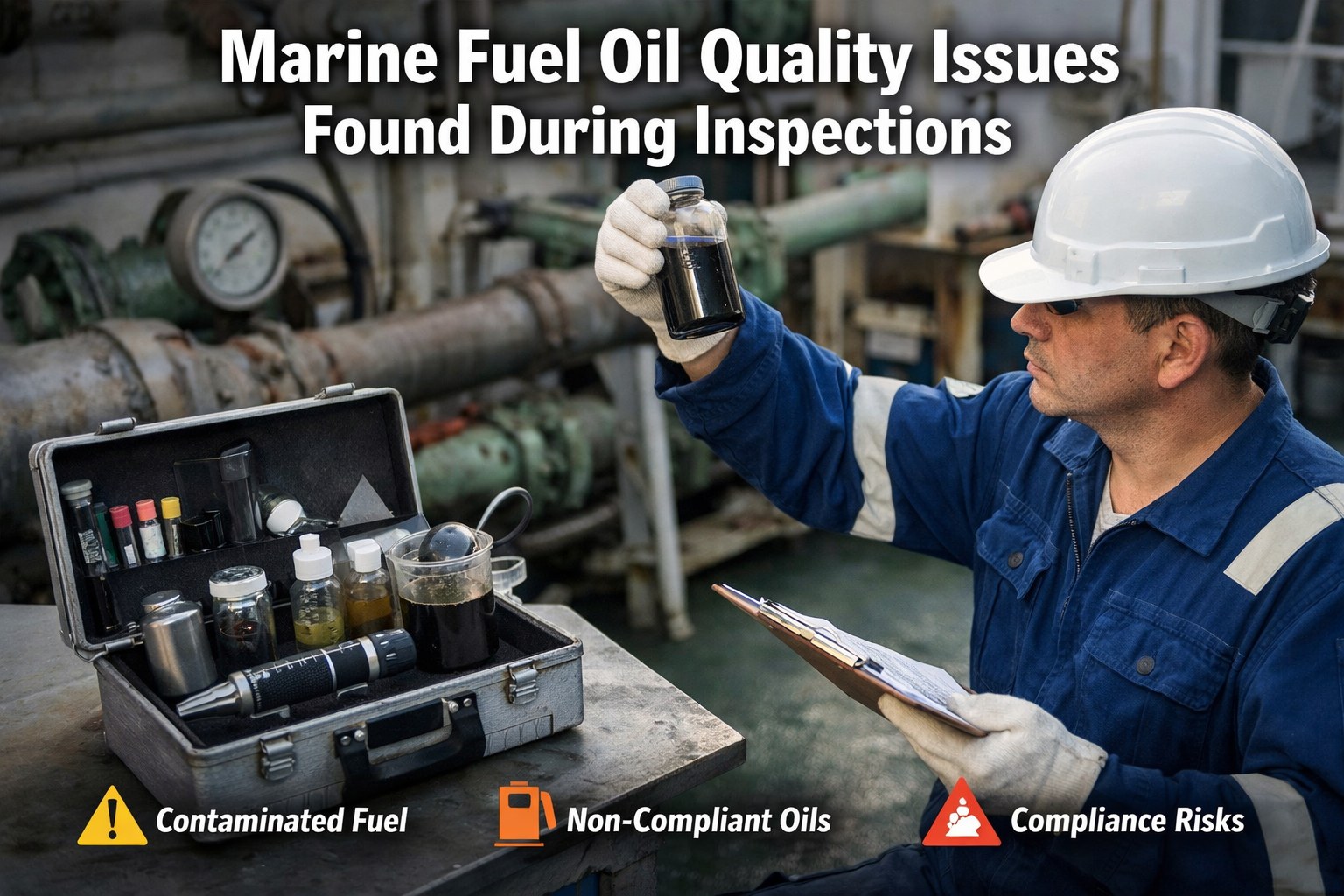
Port state control inspections reveal a disturbing pattern: 40% of fuel-related deficiencies stem from quality issues that vessel operators could have prevented through proper testing and handling procedures. When inspectors discover off-specification fuel, contaminated samples, or inadequate quality documentation, the consequences escalate rapidly—detention notices, operational restrictions, and fines averaging $75,000-$150,000 per violation. Marine fuel oil quality issues found during inspections fall into distinct categories: contamination from water and sediment, non-compliant sulfur content violating MARPOL Annex VI, incompatible fuel blending causing system failures, and poor handling practices that degrade fuel quality during storage. Maritime operators ready to eliminate fuel quality deficiencies through systematic testing can leverage Marine Inspection's digital platform that automates pre-bunkering analysis, tracks fuel quality parameters, and maintains inspection-ready documentation across every vessel in your fleet.
Marine Fuel Oil Quality Deficiency Landscape
Fuel Quality Deficiencies
40%
Of all fuel-related PSC findings involve quality issues
Average Fine Per Violation
$125K
For sulfur non-compliance or contaminated fuel use
Engine Damage Cost
$200K+
Typical repair cost from contaminated fuel injection
Critical Fuel Oil Quality Issues Discovered During Inspections
Port state control and flag state inspections systematically examine fuel quality documentation, bunker delivery notes, and actual fuel samples. The most frequent quality deficiencies fall into five categories that trigger immediate regulatory action and potential vessel detention.
Sulfur Content Non-Compliance
Fuel sulfur content exceeding MARPOL Annex VI limits (0.50% global, 0.10% in ECAs) represents the single most common fuel quality violation. Inspectors compare bunker delivery note (BDN) claims against representative samples tested onboard or sent to shore laboratories.
Common Inspection Findings:
• BDN claims 0.08% sulfur, actual sample tests at 0.15% (ECA violation)
• No representative fuel samples retained from recent bunkering
• Fuel changeover procedures inadequate when entering/exiting ECAs
• Missing laboratory certificates for fuel in use
Consequence: Immediate detention, fines $100,000-$500,000, criminal prosecution in US waters
Water and Sediment Contamination
Excessive water content (>0.5% v/v) and total sediment (>0.10% m/m) indicate poor fuel quality or inadequate handling. Inspectors examine settling tanks, purifier operation, and fuel system maintenance records to identify contamination sources.
Common Inspection Findings:
• Visible water separation in fuel tank sight glasses
• Fuel purifiers bypassed or operating ineffectively
Mixing incompatible fuels causes asphaltene precipitation, creating sludge that clogs filters and damages fuel injection equipment. Inspectors investigate fuel system problems traced to recent bunkering or fuel transfers between tanks.
Common Inspection Findings:
• No compatibility testing before blending different fuel grades
• Excessive sludge accumulation in settling tanks after bunkering
• Filter differential pressure spiking after fuel transfers
• Missing spot test documentation for fuel mixing
Consequence: Fuel system cleaning required, operational delays, tank cleaning costs $20,000-$40,000
Catalyst Fines Exceeding Limits
Aluminum and silicon catalyst fines (Al+Si >60 mg/kg) cause abrasive wear on fuel injection equipment, cylinder liners, and piston rings. Inspectors examine fuel analysis reports and engine condition for evidence of catalyst fine damage.
Common Inspection Findings:
• Laboratory reports showing Al+Si at 80-120 mg/kg
Documentation Deficiencies That Trigger Inspection Findings
Beyond actual fuel quality problems, inadequate documentation accounts for 30% of fuel-related inspection deficiencies. Sign up to digitize fuel quality records and eliminate documentation gaps that inspectors flag during vessel examinations.
No documentation of quality disputes or corrective measures
Inspection Procedures That Reveal Fuel Quality Problems
Port state control officers employ systematic inspection techniques to uncover fuel quality issues. Understanding these procedures helps operators identify and correct deficiencies before external inspections occur. Book a demo to see how our platform prepares vessels for fuel quality inspections with automated compliance checklists.
Documentation Review Process
1
Bunker Delivery Note Examination
Inspectors verify BDNs match fuel currently in use, check sulfur content declarations, confirm supplier details, and cross-reference quantities against Oil Record Book entries. Missing or incomplete BDNs trigger immediate deficiency citations.
2
Representative Sample Verification
Officers confirm sealed fuel samples retained from each bunkering operation, verify proper labeling with date and supplier, and may request samples for independent testing. Absence of representative samples constitutes documentation deficiency.
3
Laboratory Report Comparison
Inspectors compare laboratory test results against BDN claims and ISO 8217 specifications. Discrepancies between declared and tested sulfur content, water content, or sediment levels trigger detailed investigation and potential sampling for authority testing.
Physical Fuel System Inspection
1
Settling Tank Examination
Visual inspection of settling tanks through sight glasses reveals water separation, sediment accumulation, or sludge formation indicating contamination or incompatibility. Inspectors check tank heating operation, drainage records, and transfer procedures.
2
Purifier Operation Assessment
Officers verify fuel purifier operation, examine discharge for proper water/sludge separation, review maintenance logs, and check operating parameters match fuel type. Bypassed or ineffective purifiers indicate fuel handling deficiencies.
3
Filter Differential Pressure Check
Abnormally high filter pressure differentials suggest excessive sediment, incompatible fuel blending, or catalyst fines. Inspectors examine filter change frequency, condition of removed filters, and correlation with recent bunkering operations.
Preventing Fuel Quality Issues Through Systematic Testing
Preventing inspection deficiencies requires comprehensive fuel quality testing at multiple stages—pre-bunkering verification, post-delivery confirmation, and periodic in-tank monitoring. Operators who implement systematic testing programs reduce fuel quality deficiencies by 85% compared to reactive approaches.
Comprehensive Fuel Quality Testing Workflow
Pre-Bunkering
Supplier Fuel Verification
✓ Request advance sample from bunker supplier 24-48 hours before delivery
✓ Conduct onboard visual inspection and flash point test
✓ Ship sample to accredited laboratory for full ISO 8217 analysis
✓ Verify sulfur content matches MARPOL requirements for intended route
✓ Perform compatibility testing if blending with existing fuel aboard
Decision Point: Reject delivery if pre-tests reveal non-compliance or contamination
During Bunkering
Delivery Quality Control
✓ Collect representative samples from bunker barge/truck continuously
✓ Seal and label samples immediately with date, time, supplier, quantity
✓ Quarterly stability testing (TSP) for long-stored fuel inventories
Maintenance: Drain tank bottoms weekly, adjust purifier operation based on fuel characteristics
Automate Your Fuel Quality Testing Program
Marine Inspection's software schedules fuel testing at every stage, imports laboratory results automatically, compares outcomes against specifications, and generates inspection-ready documentation—ensuring your vessels maintain fuel quality compliance while preventing deficiencies that cause PSC detentions.
Tank cleaning certificate, disposal receipt, compatibility procedures
Frequently Asked Questions
What are the most common fuel oil quality issues found during PSC inspections?
The most frequent fuel quality deficiencies include sulfur content exceeding MARPOL limits (0.50% global, 0.10% in ECAs), excessive water content above 0.5% volume, total sediment exceeding 0.10% mass, catalyst fines (aluminum and silicon) above 60 mg/kg, and incompatible fuel blending causing system sludge. Documentation deficiencies—missing bunker delivery notes, no representative samples retained, or absent laboratory test reports—account for 30% of fuel-related inspection findings. Inspectors also cite inadequate fuel handling procedures, bypassed purification equipment, and insufficient settling time before use.
How long must vessels retain fuel samples and bunker delivery notes?
MARPOL Annex VI requires vessels to retain sealed representative fuel samples for minimum 12 months or until the fuel is substantially consumed, whichever occurs first. Bunker delivery notes must be kept aboard for 3 years from the date of delivery. Laboratory test reports should be retained for the duration the fuel remains aboard plus 12 months. For fuel quality disputes, maintain all documentation until resolution plus 3 years. Port state control inspectors specifically verify sample retention and may request samples for independent testing to confirm sulfur compliance.
What happens if inspection reveals fuel sulfur content exceeds limits?
Sulfur non-compliance triggers immediate enforcement action. In US waters, vessels face criminal prosecution with fines starting at $100,000 and potential imprisonment for responsible officers. Other jurisdictions issue detention notices preventing departure until compliant fuel is bunkered and non-compliant fuel removed or segregated. Vessels must provide laboratory certificates proving current fuel meets sulfur limits before clearance. Repeated violations result in increased penalties, company compliance programs mandated, and vessel targeting for enhanced future inspections. The vessel's flag state receives notification affecting company safety records.
How does Marine Inspection software prevent fuel quality inspection deficiencies?
Marine Inspection's platform automates fuel quality compliance workflows from bunkering through consumption. The software schedules pre-bunkering testing reminders, tracks representative sample retention with expiration alerts, imports laboratory results directly from testing facilities, and automatically compares outcomes against ISO 8217 specifications and MARPOL sulfur limits. Digital bunker delivery note storage ensures 3-year retention compliance. The system generates inspection-ready documentation packages including BDN history, laboratory certificates, sample retention logs, and fuel changeover records. Automated alerts notify crews when fuel parameters exceed thresholds, enabling corrective action before inspections reveal deficiencies.
What documentation must be immediately available during fuel quality inspections?
Inspectors require immediate access to bunker delivery notes for all fuel currently aboard, sealed representative samples from each bunkering with proper labels, laboratory test reports confirming ISO 8217 compliance and sulfur content, fuel changeover logs showing ECA entry/exit procedures, and Oil Record Book entries documenting fuel transfers and operations. Additionally, provide fuel management procedures, purifier operation logs, settling tank drainage records, and any fuel quality complaint correspondence. Missing or incomplete documentation constitutes separate deficiencies beyond actual fuel quality issues. Marine Inspection software maintains all required documents in digital format accessible within seconds during inspections.
Eliminate Fuel Quality Inspection Deficiencies
Marine Inspection's comprehensive software prevents fuel quality issues through automated testing schedules, specification comparison, laboratory result tracking, and complete documentation management—ensuring your fleet maintains fuel quality compliance while avoiding the detentions, fines, and operational restrictions that result from inspection deficiencies.