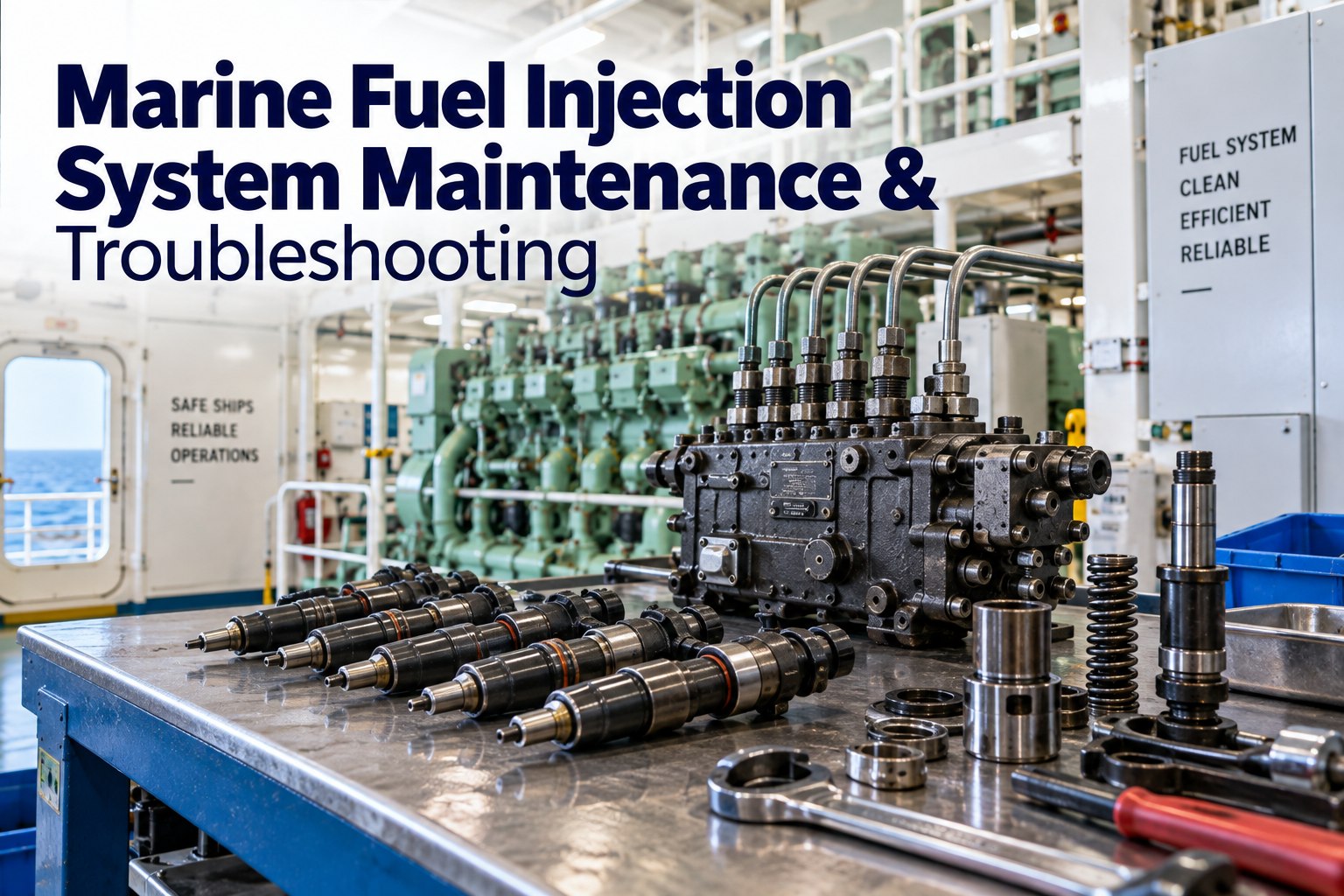
Fuel injection sits between fuel quality and combustion, which means it takes the blame for problems that start somewhere else. A worn nozzle, a late-timed pump or a rail pressure that will not hold shows up as high exhaust temperatures, smoke, rising consumption and eventually burnt valves or scuffed liners. Yet most injection faults trace back to the fuel before the injector: cat fines that were never separated out, viscosity drifting at the engine inlet, water carried over from a settling tank, or filters changed late. This guide works through the chain in that order. It covers the fuel treatment targets that protect the injection equipment, injector testing and what a good spray looks like, jerk pump timing and wear, common rail diagnostics, and a troubleshooting matrix linking symptoms to causes. Follow the engine maker's manual for every figure specific to your engine, and remember that injection components are tied to the NOx Technical File. To keep test results and photos with the component record, try Marine Inspection free.
Cat fines, viscosity and water do more damage to injection equipment than running hours do. Fix the fuel treatment first, then test the injectors properly and record what you find.
The chain that protects the injection equipment
By the time fuel reaches the injector, it should be clean, dry and at the right viscosity. Each stage below has a control point and something to record.
Fuel quality targets to work to
The delivered fuel can be fully compliant and still damage the engine. The figures that matter are the ones at the engine inlet, which is what the onboard treatment plant exists to achieve.
| Parameter | As delivered | Target at the engine inlet | Why |
|---|---|---|---|
| Cat fines (Al+Si) | ISO 8217 allows up to 60 mg/kg for the higher-viscosity residual grades | Engine makers commonly ask for 15 mg/kg or lower, some as low as 7 | Abrasive particles score pumps, nozzles and liners |
| Viscosity | By fuel grade | The maker's figure, commonly around 10–15 cSt for residual fuel at the injectors | Too thin and the pump leaks internally, too thick and atomisation suffers |
| Water | Within the grade limit | As low as the plant can achieve | Carries cat fines through, causes corrosion and microbial growth |
| Temperature | Per fuel type | Controlled by the viscosity controller, not set and forgotten | Rapid changes cause pump seizure and leakage |
| Sulphur | 0.50% globally, 0.10% inside emission control areas | Changeover completed and logged before entering an ECA | Compliance, and cylinder oil base number matching |
Injector testing: what good looks like
Test on the bench with the correct test fluid and safety screen. Never put a hand near the spray, which can penetrate skin. Work to the opening pressure in the manual for your engine, and record the pressure found before adjusting anything.
Jerk pumps: timing, wear and the fuel index
On conventional systems the pump sets the timing, and wear shows up as a rising fuel index for the same load. Compare index positions across units rather than judging a single pump in isolation.
- Timing marks against the manual and the flywheel
- Plunger and barrel wear, scoring from cat fines
- Delivery valve condition and seat
- Leak-off quantity and sludge in the drain
- Fuel index at a steady load, unit by unit
- VIT or similar system position and linkage
- High-pressure pipe clamps, shielding and leak alarms
- Late timing raises exhaust temperature and smoke
- Early timing raises peak pressure and NOx
- A pump needing more index than its neighbours is worn
- Rising leak-off means internal clearance has opened up
- Scored plungers point back to fuel treatment, not the pump
- Shielded pipes and alarms are a fire safety item that PSC checks
Common rail: different failure modes
Common rail removes the cam-driven timing but adds pressure control, electronics and a much lower tolerance for contamination. The maintenance shifts from mechanical adjustment to cleanliness and diagnostics.
Troubleshooting matrix
Work from the symptom to the checks, and confirm the fuel side before condemning injection components.
Keep the engine inside its NOx certification
Injection components are not free items to change at will. Under MARPOL Annex VI, a certified engine's components, settings and operating values are recorded in its NOx Technical File, and surveyors check that what is fitted matches what is approved. Keep injector and pump part numbers, settings and any adjustments recorded, and use approved spares. Our MARPOL guide covers the wider Annex VI picture.
Frequently asked questions
On the maker's running-hour interval, brought forward when exhaust temperatures, smoke or index positions say otherwise. Fuel quality and load profile change the real interval more than the calendar does.
Engine makers commonly ask for 15 mg/kg or lower, with some recommending as little as 7 mg/kg, even though ISO 8217 permits up to 60 mg/kg in the higher-viscosity residual grades as delivered.
Atomisation depends on it. Too thick and the spray is coarse, too thin and the pump loses internal sealing and can seize. The viscosity controller should hold the maker's figure, and the value should be logged.
Not freely. Injection timing and components affect NOx emissions and are recorded in the engine's NOx Technical File. Any change must stay within the approved arrangement.
Injector and pump overhaul records with measurements, bunker analyses and fuel changeover logs, and evidence that fitted components match the NOx Technical File. See our main engine overhaul guide.
Marine Inspection records injector and pump results at the workbench, offline, links them to the unit and running hours, and builds the trend and the survey pack from the same data.