MARPOL — the International Convention for the Prevention of Pollution from Ships — is the single most comprehensive environmental treaty governing maritime operations. With six technical annexes covering oil, noxious liquids, harmful packaged substances, sewage, garbage, and air emissions, it touches every operational aspect of every vessel at sea. For environmental officers and fleet managers, MARPOL compliance means managing Oil Record Books, Garbage Record Books, Ballast Water Management Plans, SEEMP documentation, fuel switching procedures, oily water separator logs, and sewage treatment records — across multiple special areas with different discharge restrictions that change based on your vessel's position. The 2026 regulatory year has added two new Emission Control Areas (Canadian Arctic and Norwegian Sea), expanded Garbage Record Book requirements to ships of 100 GT and above, and introduced updated SEEMP data collection requirements. Non-compliance triggers PSC deficiencies, vessel detention, criminal penalties, and — in pollution cases — unlimited civil liability. This guide covers all six MARPOL annexes in practical terms, with the discharge rules, record-keeping requirements, special areas, and 2026 updates every ship operator needs to know. Start a free trial of Marine Inspection to digitize your MARPOL record-keeping and environmental compliance tracking.
All Six MARPOL Annexes Explained
Each annex addresses a specific category of marine pollution. Understanding what each annex covers, which ships it applies to, and what documentation it requires is the foundation of environmental compliance. Book a Marine Inspection demo to see how one platform manages compliance across all six annexes.
The foundational annex — covers prevention of oil pollution from both operational discharges and accidental spills. Applies to all ships. Regulates oily water separator (OWS) operation, oil discharge monitoring equipment (ODME), crude oil washing (COW) on tankers, segregated ballast tanks, and double hull requirements for oil tankers.
Governs discharge of approximately 250 noxious liquid substances carried in bulk on chemical tankers. Substances classified into Categories X, Y, Z, and Other Substances based on hazard level. Prewash procedures mandatory for Category X and high-viscosity/solidifying Category Y cargoes.
Covers marine pollutants transported in packaged form — identified in the IMDG Code. Requires proper marking, labelling, packaging, stowage, documentation, and quantity limitations. Substances identified as "marine pollutant" must be marked with the marine pollutant mark.
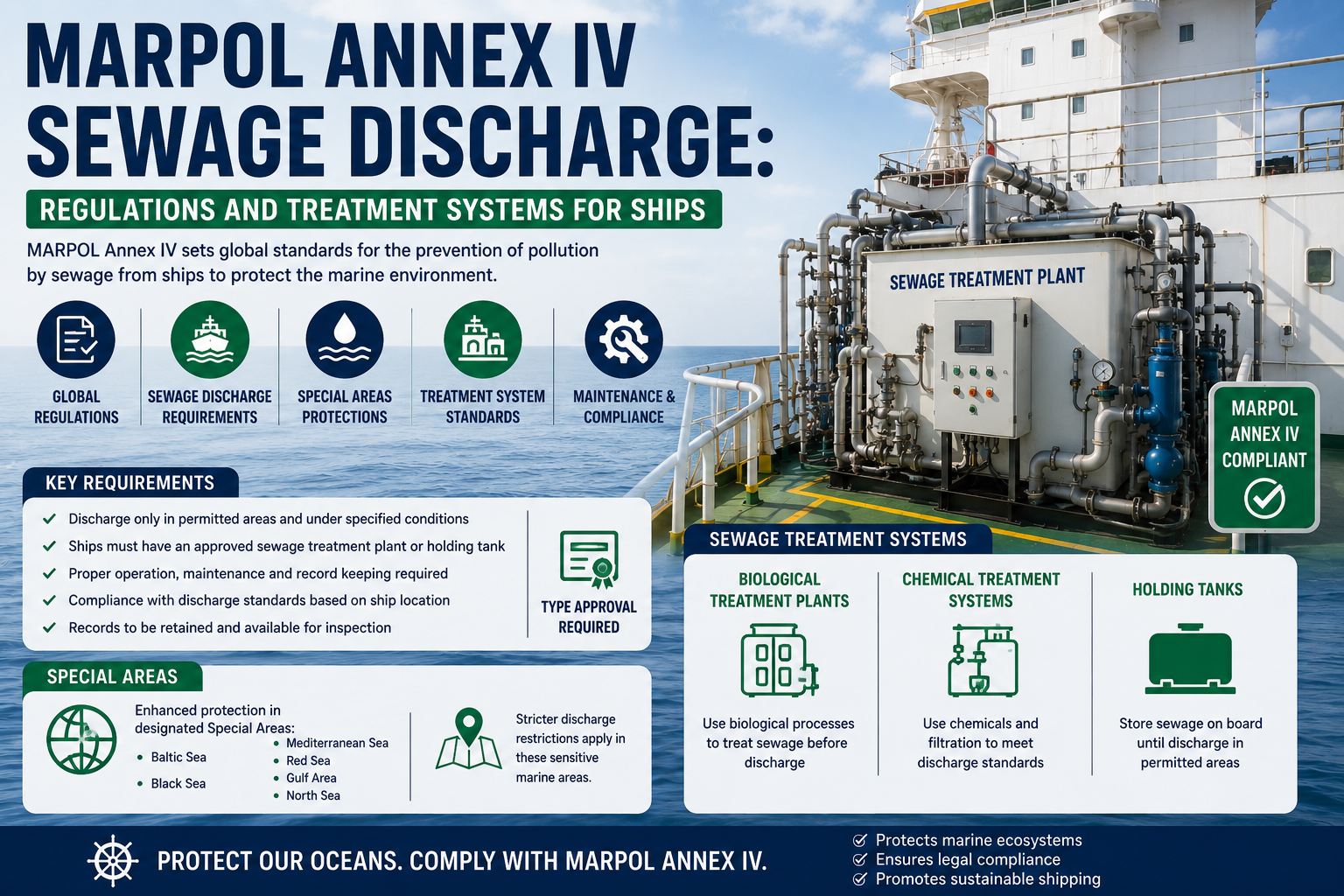
Applies to ships of 400 GT+ or carrying more than 15 persons on international voyages. Requires ships to carry an approved sewage treatment plant, comminuting/disinfecting system, or holding tank. Discharge of untreated sewage prohibited within 12 NM of nearest land.
Complete ban on discharge of plastics. Regulates disposal of food waste, domestic waste, cooking oil, operational waste, cargo residues, incinerator ashes, and fishing gear. Different rules inside and outside Special Areas. Garbage must be segregated into categories (A through K) using colour-coded bins.
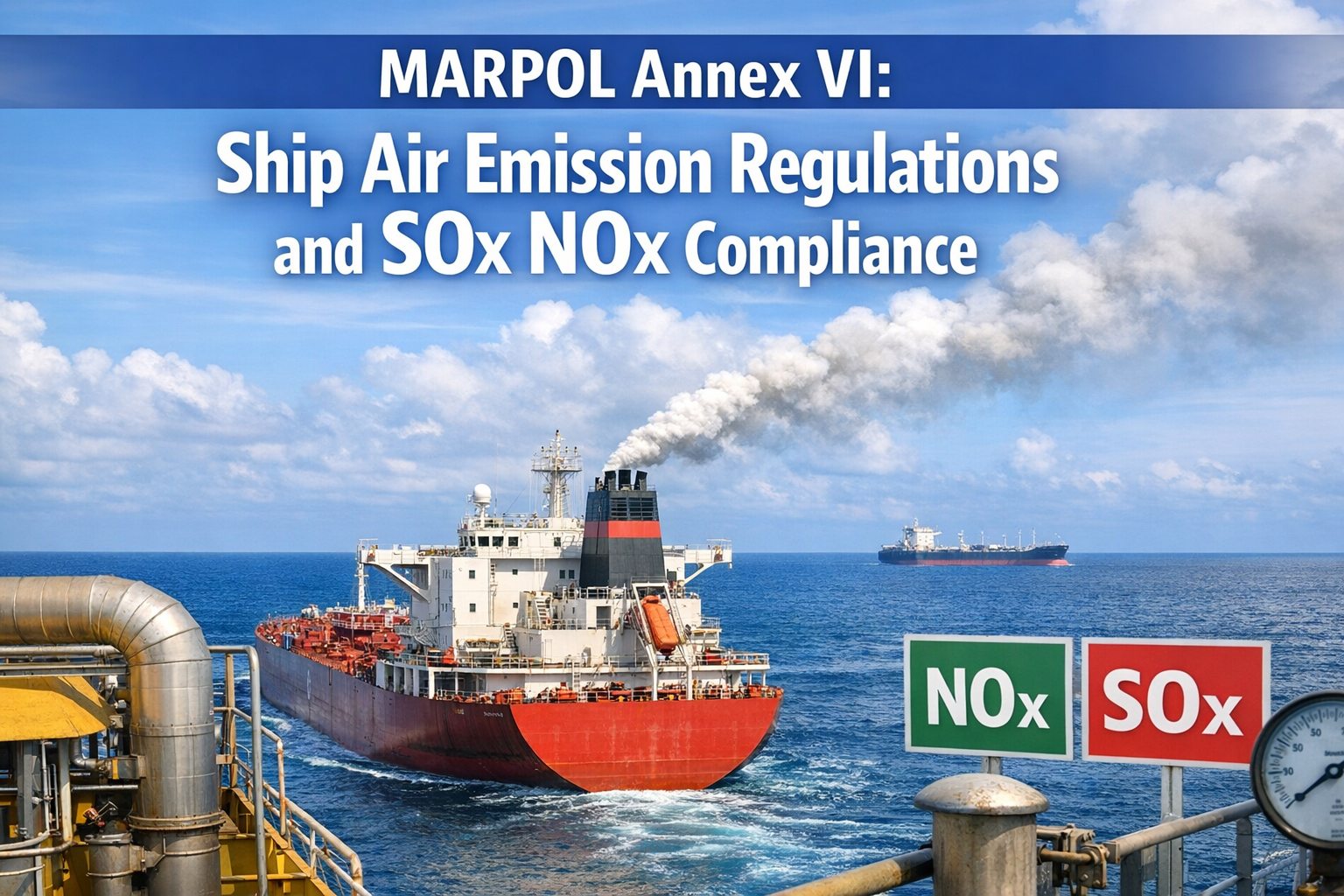
The most actively amended annex. Sets limits on SOx, NOx, and particulate matter emissions. Global sulphur cap 0.50% (0.10% inside ECAs). Prohibits deliberate ODS emissions. Mandates EEDI for new ships, EEXI for existing ships, CII operational rating, and SEEMP. Ships 5,000 GT+ must collect and report fuel consumption data.
Discharge Rules: What Can Go Overboard and Where
This is the table every officer needs on the bridge. Discharge rules change based on substance type, distance from land, whether you're in a Special Area, and vessel type. Getting this wrong triggers immediate PSC deficiencies and potential criminal prosecution.
| Annex | Substance | Outside Special Areas | Inside Special Areas | Key Conditions |
|---|---|---|---|---|
| I | Oily bilge water (ships 400 GT+) | Permitted if oil content <15 ppm, OWS in operation, ODME running | Same conditions — 15 ppm max via OWS | Not mixed with cargo residues. Ship en route. Antarctic: zero discharge. |
| I | Oil tanker cargo residues | >50 NM from land, <30L/NM instantaneous rate, ship en route | Prohibited (except clean ballast) | ODME in operation. Total discharge max 1/30,000 of cargo. |
| II | NLS Category X | Prohibited | Prohibited | Must be discharged to reception facility. Prewash mandatory. |
| II | NLS Category Y/Z | >12 NM, ship speed 7+ knots, below waterline, max concentration limits | Stricter limits apply | Prewash required for high-viscosity/solidifying Cat Y cargoes. |
| IV | Untreated sewage | >12 NM from land, ship en route 4+ knots, moderate discharge rate | Same rules (no separate special areas) | Treated sewage via approved plant: >3 NM. Comminuted/disinfected: >3 NM. |
| V | Food waste (comminuted <25mm) | >3 NM from land, ship en route | >12 NM from land, ship en route | Not comminuted: >12 NM outside SA. Plastics: NEVER permitted. |
| V | Cargo residues (non-HME) | >12 NM, in wash water, ship en route | Varies — some permitted >12 NM if conditions met | HME cargo residues: discharge to reception facility only. |
| VI | SOx emissions | Fuel sulphur max 0.50% | Fuel sulphur max 0.10% in ECAs | Or equivalent EGCS (scrubber) achieving same emission levels. |
MARPOL Special Areas
Special Areas have stricter discharge requirements due to ecological sensitivity. Knowing which Special Areas your routes transit is essential for operational planning. Sign up for Marine Inspection to track route-based compliance requirements automatically.
Record-Keeping Requirements
MARPOL compliance lives or dies in the records. PSC officers check record books as one of their first actions onboard — incomplete entries, gaps in dates, or missing signatures are immediate deficiency findings.
| Annex | Record Book / Document | Applies To | Retention Period | PSC Focus Areas |
|---|---|---|---|---|
| I | Oil Record Book Part I | Ships 400 GT+ | 3 years from last entry | OWS operation entries, sludge disposal receipts, bilge tank transfers |
| I | Oil Record Book Part II | Oil tankers 150 GT+ | 3 years from last entry | Cargo loading/unloading, tank cleaning, ballast operations |
| II | Cargo Record Book | All NLS carriers | 3 years from last entry | Prewash entries, discharge records, tank cleaning procedures |
| V | Garbage Record Book Part I | Ships 100 GT+ (since 2024) | 2 years from last entry | Categories recorded per discharge, reception facility receipts, accidental losses |
| V | Garbage Record Book Part II | Ships carrying solid bulk cargo | 2 years from last entry | Cargo residue discharge records, HME declarations |
| VI | Bunker Delivery Notes + fuel samples | All ships | 3 years (BDNs), samples until fuel consumed | Sulphur content, fuel switching records for ECA transit |
| VI | ODS Record Book | Ships with ODS-containing equipment | Duration of certificate validity | Refrigerant recharging records, ODS equipment inventory |
| VI | SEEMP Part I, II, III | All ships (Part II: 5,000 GT+) | Onboard at all times | CII rating, fuel data collection, energy efficiency measures |
MARPOL Compliance Checklist
Use before PSC arrivals and environmental audits. These items cover the most common deficiency findings across all six annexes. Schedule a demo to see how Marine Inspection automates MARPOL record-keeping and environmental compliance tracking.