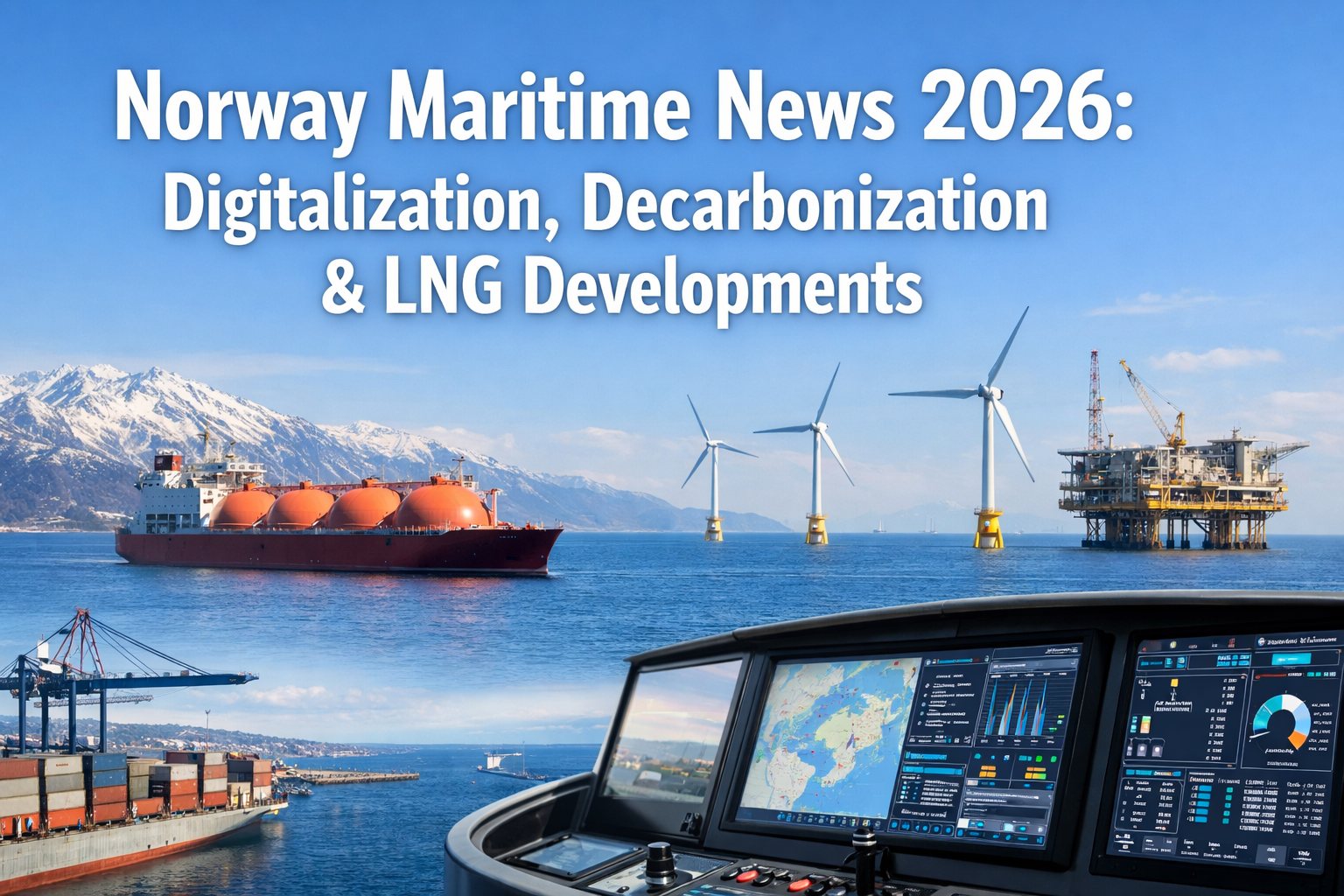
Japan's maritime sector is entering 2026 at a pivotal intersection of digital transformation and decarbonization pressure. The country's three shipping giants — NYK, MOL, and K Line — are collectively investing in ammonia-fueled vessel development, autonomous navigation systems, and standardized carbon-neutral ship designs through the newly established MILES consortium. Meanwhile, Japan's mandatory GX Emissions Trading Scheme launches in FY2026, directly impacting shipping companies emitting over 100,000 tons of CO2 annually. SEA JAPAN 2026, opening April 22-24 at Tokyo Big Sight, introduces its first-ever "Digital Solution Square" — a clear signal that maritime digitalization has moved from conference-room concept to operational priority. For fleet operators navigating this transformation, digital ship management platforms like Marine Inspection provide the compliance tracking and maintenance automation that connects regulatory readiness to daily vessel operations.
Japan Maritime 2026: Key Indicators
$331B
Japan Freight Logistics Market (2025)
150T+
Yen in GX Public-Private Investment (10-Year)
500+
Exhibitors Expected at SEA JAPAN 2026
50%
Coastal Fleet Autonomous Target by 2040
Decarbonization: Japan's Three-Front Maritime Strategy
Japan's approach to maritime decarbonization in 2026 operates across three simultaneous fronts: alternative fuel development, carbon market regulation, and international corridor partnerships. While the IMO delayed its net-zero shipping framework decision to October 2026, Japanese operators aren't waiting — they're building the infrastructure, vessels, and compliance systems now.
NYK's world-first ammonia-fueled medium gas carrier (AFMGC), equipped with Japan-made engines, targets completion in November 2026. The consortium includes Japan Engine Corporation, IHI Power Systems, and Nihon Shipyard. Separately, JERA signed heads of agreement with both MOL and NYK for ammonia carrier charters — establishing Japan's first large-scale low-carbon ammonia transport chain from Louisiana to Hekinan Thermal Power Station.
In December 2025, K Line, MOL, NYK, Mitsubishi Shipbuilding, Imabari Shipbuilding, JMU, and NSY signed a landmark MoU to establish standardized ship designs for liquefied CO2 carriers and ammonia-fueled vessels. MILES Co., Ltd. leads the initial design platform, enabling any Japanese shipyard to carry out functional and production design from common specifications — a move to restore global competitiveness to Japanese shipbuilding.
Six Japanese ports — Tokyo, Yokohama, Kawasaki, Osaka, Kobe, and Nagoya — partnered with Singapore's MPA for the first Green and Digital Shipping Corridor. In 2025, NYK and MPA expanded the partnership into port-to-port autonomous ship (MASS) trials, testing interoperability with Singapore's Vessel Traffic Information System. Yokohama is simultaneously advancing carbon-neutral port infrastructure for clean fuel bunkering.
Digitalization: From Concept to Competitive Advantage
Japan's maritime digital transformation in 2026 spans autonomous navigation, big-data fleet optimization, and port community systems. The launch of SEA JAPAN 2026's dedicated Digital Solution Square signals the industry's acknowledgment that digital tools are no longer optional — they're essential for lifecycle optimization, regulatory compliance, and crew workload reduction. Operators ready to digitize their inspection and maintenance workflows can schedule a Marine Inspection demo to see how digital checklists and automated scheduling translate to measurable compliance improvements.
Autonomous Navigation
NYK ordered a next-generation car carrier with advanced DX systems for delivery March 2026 — featuring autonomous navigation, reduced crew workload, and enhanced operational efficiency. The MEGURI2040 project targets 50% autonomous coastal fleet by 2040, with K Line retrofitting RORO vessels using AI-based piloting replication.
Big Data & Predictive Maintenance
Simulation models now allow Japanese operators to evaluate maintenance investments before execution. AI-powered predictive analytics minimize unplanned downtime by identifying equipment degradation patterns across operational data. Marine Inspection delivers this same capability for inspection and maintenance scheduling — automated, condition-based, and accessible from any device.
Port Community Systems
Japan's major ports (Tokyo, Yokohama, Kobe, Nagoya) use CTMS terminal operation systems, but a February 2026 analysis showed digital integration between shippers, truckers, and terminals significantly reduces container round-trip times. The push toward unified port data platforms is accelerating as Japan competes with Singapore's advanced digital infrastructure.
Digital Compliance & Reporting
With Japan's GX-ETS becoming mandatory in FY2026 and FuelEU Maritime applying to vessels calling European ports, emissions reporting complexity is surging. Digital platforms that automate compliance documentation, track regulatory deadlines across jurisdictions, and generate audit-ready records are becoming operational necessities rather than efficiency upgrades.
Digitalize Your Fleet's Inspection & Maintenance Workflows
Marine Inspection connects digital checklists, automated maintenance scheduling, and compliance tracking into one platform — built for the regulatory complexity Japanese operators face in 2026 and beyond.
Regulatory Timeline: What Japanese Operators Must Track in 2026
Multiple regulatory shifts converge in 2026, creating a compliance environment where automated tracking through platforms like Marine Inspection becomes essential to avoid penalties and maintain operational continuity.
2026 Japan Maritime Regulatory Calendar
GX-ETS Becomes Mandatory
Japan's Emissions Trading Scheme transitions from voluntary to mandatory. Companies emitting 100,000+ tons CO2 annually face binding caps. Price corridor: 4,300-yen ceiling, 1,700-yen floor per ton, rising at inflation plus 3% annually.
SEA JAPAN 2026 at Tokyo Big Sight
Japan's largest maritime exhibition. First-ever Digital Solution Square dedicated to maritime IT, productivity, and digital transformation. Over 500 exhibitors. 20+ thematic forums covering green shipbuilding, autonomous operations, and future shipping.
China's Revised Maritime Code Takes Effect
Directly impacts Japanese cargo fleets calling Chinese ports. Electronic transport records gain legal standing. Expanded environmental liability and higher damage limits. Digital documentation must be complete, accurate, and retrievable for inspection.
IMO Net-Zero Framework Decision
After delaying in October 2025, the IMO resumes net-zero shipping rule adoption. Outcome will determine global emissions pricing, fuel standards, and compliance obligations for the decade ahead. Japanese operators preparing with alternative fuel investments and carbon credit procurement.
NYK Ammonia-Fueled Gas Carrier Completion
World's first AFMGC with Japan-made engines. Marks a major milestone for ammonia as a marine fuel. Success will accelerate ammonia-fuel adoption across Japan's commercial fleet and validate the MILES standard design framework.
Expert Review: Japan's Digital-Decarbonization Convergence
Industry Analysis
The defining characteristic of Japan's 2026 maritime landscape is the convergence of digitalization and decarbonization into a single operational challenge. The GX-ETS mandate, FuelEU Maritime requirements for European trade lanes, and China's new Maritime Code all demand the same thing: accurate, real-time, auditable digital records of vessel operations, emissions, and maintenance. Operators still running paper-based or fragmented compliance systems will face compounding inefficiencies as each new regulation adds another reporting layer.
Japan's major shipping lines are responding with fleet-level digital transformation — NYK's DX-equipped newbuilds, MOL's Maritime DX Co-Creation Unit, and the cross-industry MILES platform. But mid-sized fleet operators and ship managers face the same regulatory pressures without billion-yen R&D budgets. This is where purpose-built digital ship management platforms deliver the highest ROI: connecting inspection records, maintenance scheduling, and compliance documentation into a single workflow that scales with regulatory complexity. Marine Inspection was designed precisely for this — schedule a walkthrough to see how it handles multi-jurisdiction compliance for fleets operating across Japan, China, and international waters.
Conclusion
Japan's maritime industry in 2026 isn't choosing between digitalization and decarbonization — it's pursuing both simultaneously because regulatory frameworks now demand it. From mandatory emissions trading to autonomous vessel trials, from ammonia-fueled newbuilds to digital port community systems, the direction is clear: operators who invest in digital infrastructure today gain the compliance agility and operational visibility needed for whatever regulations emerge tomorrow. Marine Inspection's digital inspection and maintenance platform gives fleet operators of every size the tools Japan's maritime transformation requires — sign up today to build your fleet's digital compliance foundation.
Ready for Japan's Maritime Digital Shift?
From GX-ETS compliance to multi-port inspection readiness, Marine Inspection gives your fleet the digital backbone for 2026's regulatory demands. Digital checklists. Automated scheduling. Real-time fleet dashboards.
Frequently Asked Questions
What are the biggest Japan maritime trends in 2026?
The three dominant trends are mandatory carbon market compliance (GX-ETS launching FY2026), accelerated alternative fuel development (NYK's ammonia-fueled vessel completing November 2026, MILES standard design consortium), and maritime digitalization becoming operational infrastructure rather than optional technology (SEA JAPAN 2026's first Digital Solution Square, NYK's DX-equipped newbuilds, Japan-Singapore autonomous ship trials). Digital ship management platforms tie all three together by providing the compliance tracking, maintenance automation, and operational data these trends demand.
How does Japan's GX-ETS affect shipping companies?
Starting FY2026, Japan's Green Transformation Emissions Trading Scheme becomes mandatory for companies emitting over 100,000 tons of CO2 annually. The price corridor sets a 4,300-yen ceiling and 1,700-yen floor per ton, rising at inflation plus 3% annually. Shipping companies must track, report, and either reduce emissions or purchase allowances. Auction mechanisms begin in FY2033. Marine Inspection helps operators maintain the documentation and operational records needed for accurate emissions reporting.
What is the MILES consortium and why does it matter?
MILES Co., Ltd. is a platform company where Japan's Big Three shipping lines (K Line, MOL, NYK) and major shipbuilders (Mitsubishi Shipbuilding, Imabari, JMU, NSY) collaborate on standardized designs for liquefied CO2 carriers and ammonia-fueled vessels. It matters because standardization makes carbon-neutral vessel construction scalable and economically viable across multiple Japanese shipyards — essential for meeting decarbonization targets at commercial scale.
How is Japan advancing autonomous shipping technology?
The Nippon Foundation's MEGURI2040 project targets 50% autonomous coastal fleet by 2040. K Line, MOL, and NYK are all participating in retrofitting existing vessels and building new autonomous-capable ships. NYK's March 2026 car carrier delivery features advanced DX systems for autonomous navigation. Japan and Singapore are conducting joint port-to-port MASS trials testing AI-based decision-making, navigation safety, and cybersecurity interoperability.
What digital tools do Japanese maritime operators need in 2026?
Operators need digital platforms covering four areas: compliance management (tracking GX-ETS, FuelEU Maritime, and regional PSC requirements across jurisdictions), predictive maintenance (AI-driven equipment monitoring and condition-based scheduling), inspection automation (digital checklists with photo evidence and audit trails), and fleet visibility (real-time dashboards connecting vessel condition to shore-side management). Marine Inspection integrates all four into a single platform built specifically for maritime operations.