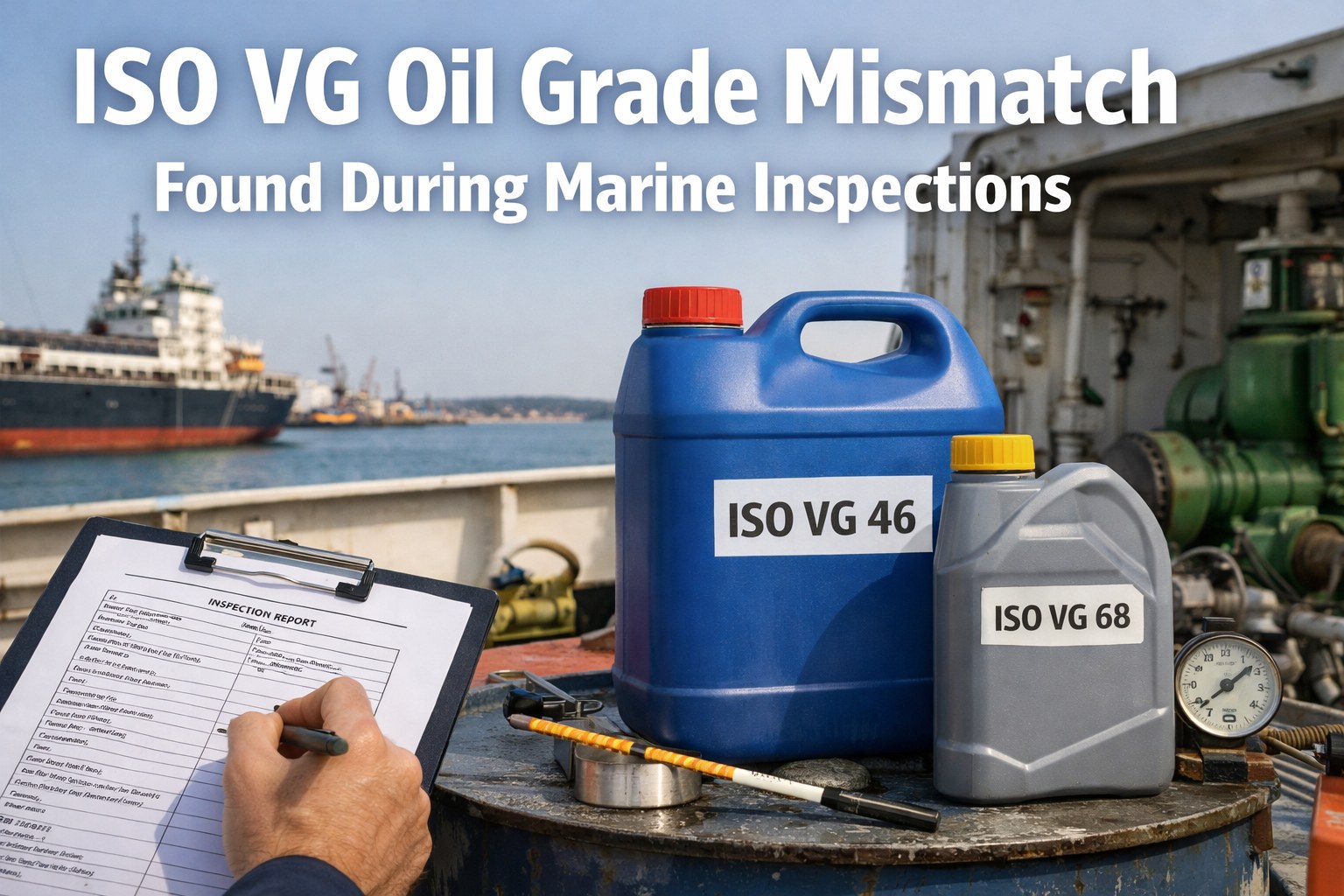
ISO VG oil grade mismatches—using incorrect viscosity grades in hydraulic systems, gear boxes, or auxiliary equipment—represent 22% of lubrication-related inspection deficiencies as port state control officers verify oils match manufacturer specifications and application requirements. Inspectors discovering ISO VG 32 oil in systems requiring VG 68, or VG 150 in applications specified for VG 46, recognize these mismatches indicate either procurement errors, inadequate technical knowledge, or casual topping-up practices mixing incompatible grades. The consequences extend beyond inspection citations—wrong viscosity grades cause accelerated wear from insufficient lubrication film thickness, increased power consumption and heat generation, seal damage from improper fluid characteristics, and premature equipment failures costing $15,000-$75,000 in repairs plus operational disruptions. Understanding how inspectors detect ISO VG grade mismatches and why correct grade selection matters determines whether your lubrication systems demonstrate proper technical management or reveal systematic specification compliance failures. Maritime operators ready to implement ISO VG grade mismatch risks can leverage Marine Inspection's platform tracking oil specifications, matching grades to equipment requirements, and maintaining verification documentation proving systematic lubrication management.
Grade Mismatch Findings
22%
Of lubrication deficiencies involve incorrect viscosity grades
Equipment Failure Cost
$45K
Average repair cost from wrong-grade oil damage
Detection Rate
85%
Of mismatches detected through viscosity testing
How Inspectors Detect ISO VG Grade Mismatches
Port state control officers use multiple methods identifying incorrect oil grades during equipment inspections. Schedule a consultation to see how our platform prevents grade mismatches through automated specification tracking and verification workflows.
Oil Analysis Viscosity Testing
Most definitive detection method. Oil samples analyzed for kinematic viscosity at 40°C compared against ISO VG grade specifications. ISO VG 68 should measure 61.2-74.8 cSt @ 40°C. Finding 41.4-50.6 cSt indicates VG 46 oil used instead. Inspectors request recent oil analysis reports and specifically examine viscosity results versus equipment specifications.
Product Data Sheet Verification
Inspectors examine oil containers and product data sheets confirming grade. Finding ISO VG 32 containers near equipment requiring VG 68 suggests wrong oil used during topping up or oil changes. Missing product specifications prevents verification that correct grades aboard and properly allocated to appropriate systems.
Maintenance Record Cross-Reference
Review maintenance logs documenting oil changes and grades used. Compare against manufacturer specifications in equipment manuals. Inconsistencies between specified grades and documented grades used reveal either procurement errors or inadequate technical oversight during maintenance activities.
Equipment Performance Indicators
Operational symptoms suggesting grade mismatches: hydraulic systems operating hotter than normal (oil too thin/thick), increased noise from pumps or gearboxes (inadequate lubrication film), excessive power consumption (high viscosity creating resistance), or seal leakage (incompatible viscosity affecting seal function). These symptoms trigger investigation including oil sampling and specification verification.
Common ISO VG Grade Mismatch Scenarios
Understanding typical mismatch situations helps vessels prevent these specification errors. Sign up to access grade verification tools that match oils to equipment requirements automatically.
Scenario 1: Topping Up With Wrong Grade
Crew tops up steering gear hydraulic system (requires ISO VG 68) with deck machinery oil (ISO VG 46) because it's readily available. Over time, system operates with blended oil averaging VG 55-60, outside specification. Repeated topping up with wrong grade progressively degrades viscosity further from requirement.
Consequence: Reduced lubrication film thickness accelerating wear on steering gear pumps and actuators, potential steering response degradation, inspection citation when oil analysis reveals viscosity mismatch.
Prevention: Label all oil storage clearly with grade and intended equipment, never top up with different grades, maintain adequate stocks of correct specifications for each system.
Scenario 2: Procurement Error
Purchase order requests ISO VG 68 hydraulic oil but supplier delivers VG 46 or VG 100 due to order error, availability issues, or miscommunication. Crew performs oil change without verifying delivered grade matches specification, assuming supplier provided correct product.
Consequence: Entire system filled with wrong-grade oil causing immediate operational issues if viscosity significantly different, equipment damage over time, inspection deficiency when discovered, potential warranty voidance for equipment failures.
Prevention: Verify product data sheets match purchase order specifications before accepting delivery, check container labels during oil changes, compare viscosity against specification through analysis or visual comparison.
Scenario 3: Mixing Similar Grades
Vessel operates multiple systems using different ISO VG grades (VG 46, VG 68, VG 100). During maintenance, crew inadvertently mixes grades by using same filling equipment without proper cleaning, transferring residual oil between containers, or simple confusion about which oil goes where.
Consequence: Multiple systems operating with blended grades, none meeting specifications exactly. Difficult to troubleshoot because viscosity gradually changes over time rather than sudden mismatch. Requires complete system flushes and oil changes to correct.
Prevention: Dedicated filling equipment for each grade, clear color-coding or labeling systems, systematic oil transfer procedures documented, regular oil analysis verifying grade consistency maintained.
Scenario 4: Specification Misunderstanding
Technical staff misinterprets manufacturer specifications or believes similar grades interchangeable. Uses ISO VG 46 in system specifying "viscosity 40-60 cSt @ 40°C" not recognizing this refers to VG 68 midpoint (68 cSt nominal) with ±10% tolerance, not VG 46 (46 cSt nominal).
Consequence: Equipment operates with inadequate viscosity for design clearances and operating conditions. Accelerated wear particularly under high loads or temperatures. Demonstrates inadequate technical knowledge requiring enhanced training and oversight.
Prevention: Maintain equipment specification databases matching ISO VG grades to each system, technical training on viscosity grade selection principles, verification procedures before implementing oil changes.
Prevent ISO VG Grade Mismatches
Marine Inspection's platform tracks ISO VG grade specifications for every equipment system, verifies delivered oil grades match requirements, alerts when incorrect grades detected, and maintains complete documentation proving systematic lubrication specification management across your fleet.
ISO VG Grade Selection by Equipment Type
Proper grade selection depends on equipment design, operating conditions, and manufacturer specifications. Using incorrect grades causes specific problems based on viscosity deviation from requirements.
| Steering Gear Hydraulics |
VG 46 or VG 68 |
Provides adequate film at operating temperatures while maintaining flow characteristics for fast response |
Too low: inadequate lubrication, seal leakage; Too high: sluggish response, cavitation risk |
| Deck Machinery Hydraulics |
VG 46 or VG 68 |
Balances load-carrying capacity with outdoor temperature operation ranging -10°C to +40°C |
Too low: wear under heavy loads; Too high: cold weather startup issues, power loss |
| Reduction Gearboxes |
VG 150-320 |
Higher viscosity provides thick films for gear tooth contact pressures and shock loads |
Too low: gear pitting, accelerated wear; Too high: excessive heat generation, churning losses |
| Stern Tube Systems |
VG 220-460 |
High viscosity maintains film under shaft weight loads and prevents seawater contamination ingress |
Too low: bearing failure, water ingress; Too high: excessive temperature, seal damage |
Expert Insights: Preventing ISO VG Grade Mismatches
The most dangerous assumption about ISO VG grades: "close enough is good enough." I've encountered vessels using VG 46 in systems specifying VG 68 because someone decided 20% viscosity difference wasn't significant. But equipment designers specify viscosity grades based on precise clearance calculations, operating temperatures, and load requirements. Using VG 46 instead of VG 68 reduces lubricating film thickness approximately 30%—directly impacting wear rates and equipment life. The cost difference between grades is negligible ($5-10 per drum), but the equipment damage from wrong grades costs $20,000-$50,000 in premature failures.
My prevention system: every oil storage area has clearly labeled specifications matching equipment requirements, purchase orders specify exact ISO VG grades with verification requirements, and oil changes require crew to physically compare product data sheet against equipment manual before proceeding. Digital systems tracking grades by equipment eliminate the "which oil goes where" confusion that causes most mismatches. When inspectors find grade mismatches, they immediately question overall technical competence—if basic specifications aren't followed, what other maintenance shortcuts exist?
Maintain Correct ISO VG Grade Compliance
Marine Inspection's platform manages ISO VG grade specifications for all equipment, verifies oil deliveries match requirements, tracks grade-specific inventory, prevents cross-contamination during topping up, and maintains complete documentation proving systematic lubrication specification compliance.
Frequently Asked Questions
How do inspectors detect ISO VG oil grade mismatches during marine inspections?
Inspectors use oil analysis viscosity testing (most definitive—measures actual viscosity at 40°C comparing against ISO VG specifications), product data sheet verification (checks container labels and specifications versus equipment requirements), maintenance record review (compares documented grades used against manufacturer specifications), and equipment performance observation (symptoms like overheating, excessive noise, or seal leakage suggesting grade issues). For critical systems like steering gear, inspectors specifically request recent oil analysis proving viscosity matches specification. Finding ISO VG 46 (41.4-50.6 cSt) when VG 68 (61.2-74.8 cSt) specified constitutes deficiency requiring correction before departure.
What problems does using wrong ISO VG grade cause in hydraulic systems?
Wrong viscosity grades cause multiple problems: Too low viscosity (using VG 46 instead of VG 68) reduces lubricating film thickness causing accelerated wear, increases internal leakage past seals and clearances reducing efficiency, and may cause seal damage from improper fluid characteristics. Too high viscosity (using VG 100 instead of VG 68) increases power consumption and heat generation, causes sluggish system response affecting operation, creates cold weather startup difficulties, and may cause cavitation at pump inlets. Equipment damage costs $15,000-$75,000 in repairs plus operational disruptions. Manufacturers specify exact grades based on clearance calculations and operating conditions—deviations compromise design performance and reliability.
Can different ISO VG grades be mixed during topping up?
No—mixing ISO VG grades should be avoided because resulting blend viscosity falls between the two grades, likely not meeting equipment specification. Mixing VG 46 and VG 68 produces approximately VG 55-60 blend depending on proportions—outside both specifications. Repeated mixing with wrong grades progressively degrades viscosity further from requirements. Exception: emergency topping up with adjacent grade (VG 46 in VG 68 system) acceptable temporarily if <10% system volume, with complete oil change scheduled within 500 hours. Best practice: never mix grades—maintain adequate stocks of correct specifications for each system, label storage clearly, use dedicated filling equipment preventing cross-contamination.
How does Marine Inspection software prevent ISO VG grade mismatches?
Marine Inspection's platform prevents grade mismatches through: equipment specification database storing correct ISO VG grades for every system, oil inventory tracking by grade with low-level alerts ensuring adequate stocks, delivery verification workflows comparing received products against specifications before acceptance, maintenance procedures requiring grade confirmation before oil changes or topping up, oil analysis result monitoring flagging viscosity deviations from specifications, and alerts when incorrect grades detected preventing usage before equipment damage occurs. The system eliminates confusion about which grade goes where through clear equipment-to-specification matching and verification workflows.
What documentation proves correct ISO VG grades used during inspections?
Essential grade compliance documentation includes: equipment manufacturer specifications listing required ISO VG grades for each system, product data sheets for all oils aboard proving specifications and grades, purchase orders showing correct grades ordered and delivery verification, maintenance logs documenting grades used during oil changes with equipment identification, oil analysis reports showing viscosity results matching ISO VG specifications, and inventory records tracking grade-specific stock levels. Inspectors cross-reference these documents verifying consistency between specified grades, purchased grades, and actual grades used in equipment. Missing documentation or inconsistencies suggest grade management inadequate even when correct oils currently in systems.
Eliminate ISO VG Grade Mismatch Risks
Marine Inspection's comprehensive platform manages complete ISO VG grade compliance—specification tracking for every equipment system, delivery verification preventing procurement errors, inventory management by grade, usage verification during maintenance, and inspection-ready documentation proving systematic lubrication specification management across your entire fleet.