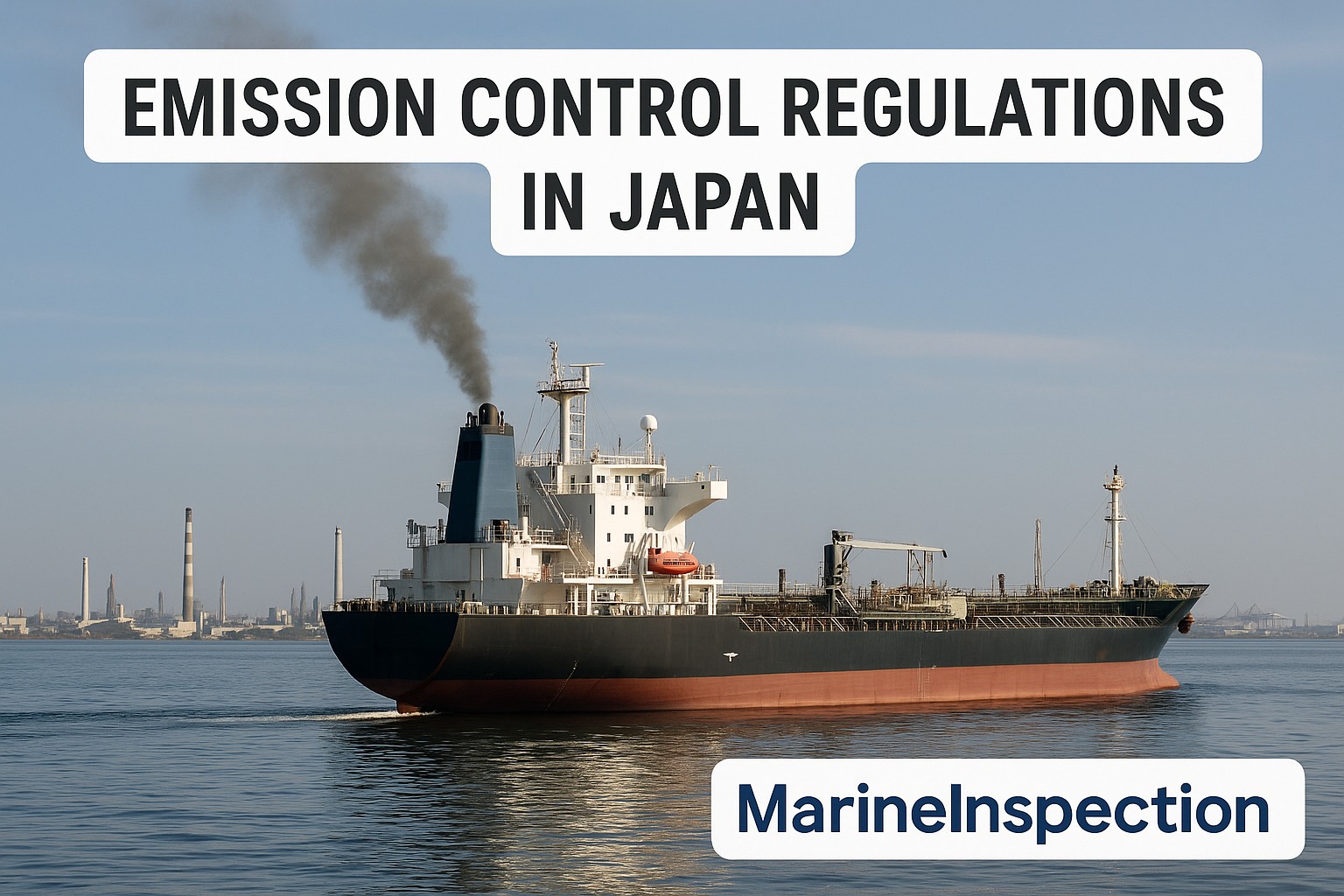
Emission control regulations in Japan demand strict compliance with MARPOL Annex VI sulfur limits, NOx standards, and greenhouse gas reporting. Ship operators face 0.5% global sulfur caps, 0.1% port limits, and penalties up to $10 million for violations. Japanese authorities conduct rigorous fuel sampling, documentation checks, and emission monitoring during port state control inspections. This comprehensive guide provides practical compliance strategies, fuel management solutions, and digital tools helping operators navigate Japan's stringent emission requirements while avoiding costly penalties and operational delays. Start managing compliance digitally with automated monitoring and documentation systems.
Emission Control Regulations – Japan Edition
Navigate MARPOL Annex VI sulfur caps, NOx limits, and Japanese port requirements with compliant fuel management
Emission Compliance at a Glance
Understanding Emission Compliance in Japan: Regulation Timeline
IMO 2020 Global Sulfur Cap
Global marine fuel sulfur limit reduced from 3.5% to 0.5% m/m worldwide. Vessels must use compliant fuel, install scrubbers, or switch to alternative fuels like LNG. This marked the most significant change in maritime fuel standards in decades.
Japan Port Emission Standards
Japanese ports enforce 0.1% sulfur limit at berth and anchorage. Vessels must complete fuel changeover before entering port zones. Port State Control begins rigorous fuel sampling and testing programs for all visiting vessels.
EEXI & CII Requirements
Energy Efficiency Existing Ship Index (EEXI) and Carbon Intensity Indicator (CII) become mandatory. Vessels must measure and report CO2 emissions, achieving required efficiency ratings or face operational restrictions.
Future Decarbonization Path
Japan aligns with IMO 2030/2050 greenhouse gas reduction targets. Increasing focus on shore power connections, alternative fuels, and zero-emission vessel technologies in major Japanese port facilities.
Compliance Checklist for Japanese Operations
Required Documentation
- Valid IAPP Certificate (International Air Pollution Prevention)
- Bunker Delivery Notes for all fuel grades onboard
- Representative fuel samples properly sealed and labeled
- Fuel Oil Changeover Procedures documented and approved
- Oil Record Book Part I with all entries complete
- Fuel consumption and CO2 emission reports current
Technical Requirements
- Fuel system configured for compliant fuel operation
- Scrubber system operational with valid discharge permits
- NOx Technical Code certification for installed engines
- Fuel oil tank segregation preventing contamination
- Monitoring equipment calibrated and functional
- Emergency fuel changeover procedures tested
Crew Competency
- Officers trained on MARPOL Annex VI requirements
- Fuel handling procedures understood by engine crew
- Changeover timing procedures clearly documented
- Sample retention and labeling protocols followed
- Emergency response procedures for fuel issues
- PSC inspection preparation and cooperation training
Pre-Arrival Preparation
- Fuel changeover completed before entering Japanese waters
- Bunker delivery notes readily accessible
- Representative fuel samples available for testing
- Oil Record Book entries verified and signed
- Scrubber discharge records complete if applicable
- Shore-based compliance support contact confirmed
Best Practices and Digital Tools for Emission Control: Compliance Solution Comparison
Sulfur Emission Zones in Japanese Waters
Japanese maritime zones enforce different sulfur limits depending on location. Understanding these zones is critical for fuel changeover planning and compliance verification.
All international waters outside Japanese territorial limits. MARPOL Annex VI global cap applies. Fuel changeover required before entering Japanese zones.
All waters within 12 nautical miles of Japanese coastline. Stricter limit applies to protect coastal air quality. Mandatory compliance zone.
Tokyo, Yokohama, Kawasaki ports and surrounding waters. Enhanced monitoring with frequent PSC inspections. Shore power available at select terminals.
Osaka, Kobe, Sakai port facilities and adjacent waters. Industrial zone with strict air quality standards. Cold ironing infrastructure expanding.
Emission Compliance Cost Calculator
Annual Compliance Costs Per Vessel
Based on typical cargo vessel consuming 3,000 tons fuel annually
Non-Compliance Risk
$10M+ Penalties
Plus vessel detention, criminal prosecution, and reputation damage
Quick Reference Guide
Essential Emission Control Information at a Glance
Frequently Asked Questions
Simplify Emission Compliance Management
Join operators using digital tools for automated fuel monitoring, changeover documentation, and compliance reporting