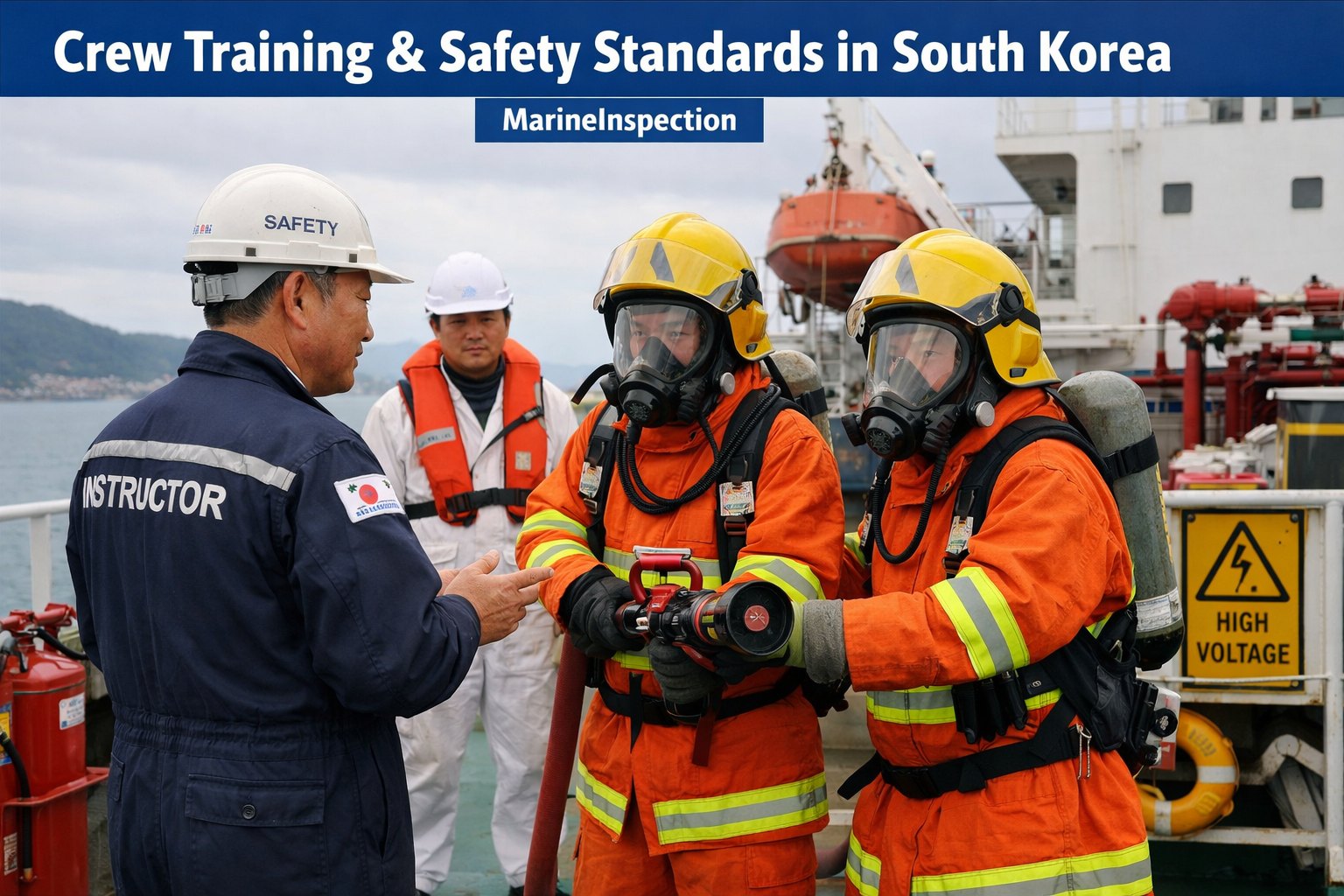
A Philippine-flagged vessel faced immediate detention at Busan Port when Korean inspectors discovered 40% of crew members lacked valid STCW certificates—resulting in $95,000 in fines, 6-day detention costs exceeding $120,000, and permanent flagging for enhanced inspections. South Korea's Maritime Safety Tribunal has intensified crew certification enforcement by 73% since 2022, with zero tolerance for expired qualifications or inadequate safety training records. For vessel operators in Korean waters, crew compliance isn't just regulatory—it's operational survival.
73%
enforcement increase
Crew certification inspections since 2022
$95K
average penalties
For crew certification violations
100%
STCW compliance
Required for all crew members
6 months
pre-expiry alert
Recommended certificate tracking window
South Korea implements STCW 2010 Manila Amendments with additional domestic requirements through the Ship Safety Act and Seafarers Act. Korea's Port State Control detained 127 vessels in 2023 for crew-related deficiencies—certificates expired, insufficient drill records, or missing safety training documentation. Digital crew management systems reduce violation risk by 84% through automated certificate tracking and drill scheduling.
Understanding Crew Compliance in South Korea
Korean authorities enforce a three-layer compliance framework: international STCW standards, regional MOU requirements (Tokyo MOU targeting), and domestic regulations specific to Korean-flagged vessels and those in Korean ports. The Korea Coast Guard and Korean Register inspect crew qualifications during both routine port calls and targeted inspections for high-risk vessels.
STCW 2010 Manila Amendments
Certificate of Competency
Valid for all deck/engine officers
Basic Safety Training
PST, FPFF, EFA, PSSR required
Security Awareness
ISPS training for all crew
Korean Domestic Requirements
Medical Certificates
Valid within 2 years, Korean-approved doctors
Seafarer's Book
Valid discharge book with sea service records
Korean Language Proficiency
Officers on Korea-flagged vessels
Safety Drill Requirements
Abandon Ship Drills
Weekly for passenger ships, monthly for cargo
Fire Drills
Monthly with full documentation
Drill Records
Logbook entries with crew signatures required
Certificate Management & Tracking
The most common violation: expired certificates discovered during inspection. Korean PSC officers verify every crew member's documentation—Certificate of Competency, STCW endorsements, medical certificates, passport validity, and specialized training (tanker, ro-ro, security). Manual tracking fails when crew rotations occur frequently or certificates renew at different intervals. Automated certificate management systems prevent 92% of documentation violations through 180-day advance alerts and digital verification workflows.
| Certificate Type |
Validity Period |
Renewal Lead Time |
| Certificate of Competency (CoC) |
5 years |
6 months before expiry |
| Medical Fitness Certificate |
2 years (under 50) / 1 year (over 50) |
3 months before expiry |
| STCW Basic Safety Training |
5 years (refresher required) |
6 months before expiry |
| Security Awareness Training |
Valid indefinitely once completed |
N/A |
| Tanker Familiarization |
5 years (for tanker operations) |
6 months before expiry |
Critical - Immediate Detention if Missing
✓ Valid Certificate of Competency for all officers
✓ Current Medical Fitness Certificates (within validity)
✓ STCW Basic Safety Training (all crew)
✓ Valid Seafarer's Book/Discharge Book
Important - Subject to Deficiency Notice
✓ Drill records (abandon ship, fire, security)
✓ Training records for specialized operations
✓ Crew list with passport details
✓ Manning certificate showing minimum safe manning
Automate Crew Certificate Tracking
Digital systems send alerts 6 months before expiry, track crew rotations, and maintain inspection-ready documentation.
Best Practices and Digital Tools for Crew Management
Top-performing operators maintain zero crew-related deficiencies through systematic practices: centralized certificate databases with automated expiry tracking, digital drill scheduling with photo evidence, integrated crew rotation planning that prevents qualification gaps, and mobile access for vessel masters to verify compliance before port arrival. Modern crew management platforms consolidate these functions into unified systems accessible both onboard and ashore.
Digital Crew Management Strategies
Centralized Certificate Database
Single source for all crew certificates with automated expiry tracking, renewal reminders, and document version control preventing expired credentials onboard.
Digital Drill Management
Scheduled drills with mobile photo documentation, crew sign-off verification, and automated logbook entries meeting Korean PSC requirements.
Rotation Planning Integration
Crew change scheduling that prevents qualification gaps—system blocks rotations if replacement crew lacks required certificates for vessel type.
Mobile Verification Access
Masters verify crew compliance via mobile app before port arrival—identifies issues with time to correct rather than discovering during inspection.
Training Record Management
Beyond certificates, Korean inspectors examine training records: onboard safety orientation for new crew, job-specific training (e.g., enclosed space entry, hot work), bridge team management, and crisis response drills. Digital platforms transform paper logbooks into searchable databases where inspectors access complete training histories in minutes versus hours of manual review. See how digital training records reduce inspection time by 67%.
Mandatory STCW Training
Personal Survival Techniques (PST)
Refresher: 5 years
Fire Prevention & Fire Fighting (FPFF)
Refresher: 5 years
Elementary First Aid (EFA)
Refresher: 5 years
Personal Safety & Social Responsibilities (PSSR)
Initial only
Specialized Operations
Tanker Familiarization & Advanced Training
Required for tanker operations
Enclosed Space Entry Training
Recommended annually
Bridge Resource Management (BRM)
Required for deck officers
Cost Impact: Manual vs. Digital Management
Manual Tracking
$147,000
Labor: $42,000 (admin staff)
Violations: $65,000 (expired certs)
Detention costs: $40,000 (2 incidents)
Digital Platform
$32,000
Platform: $18,000/year
Violations: $12,000 (92% reduction)
Detention: $2,000 (rare incidents)
Annual Savings: $115,000 | ROI: 2-3 months | Zero detention incidents after implementation
Common Compliance Challenges
Certificate Expiry During Voyage
Solution: 6-month advance alerts with crew rotation scheduling that prevents certificates expiring while at sea
Missing Drill Documentation
Solution: Digital drill scheduler with mandatory photo uploads and crew signature capture
Crew Change Qualification Gaps
Solution: Automated verification that replacement crew holds identical or superior qualifications before rotation approval
Medical Certificate Validity Confusion
Solution: System tracks age-based validity (2yr under 50, 1yr over 50) with automatic adjustment of renewal schedules
Multi-Vessel Crew Coordination
Solution: Fleet-wide crew database showing certificate status across all vessels, enabling strategic crew redeployment
Frequently Asked Questions
What crew certificates do Korean PSC officers verify?
Korean inspectors verify Certificate of Competency (CoC) for all officers, STCW Basic Safety Training certificates, medical fitness certificates, seafarer's books with sea service records, and specialized training certificates (tanker, security, etc.). All certificates must be currently valid—expired documents result in immediate detention.
Digital tracking systems alert crews 6 months before any expiration.
How often must safety drills be conducted in Korean waters?
Abandon ship drills are required weekly for passenger vessels and monthly for cargo vessels. Fire drills must be conducted monthly with full crew participation. All drills require documented logbook entries with crew signatures and time/date stamps.
Digital drill management systems automate scheduling and ensure compliant documentation.
What penalties apply for crew certification violations?
Penalties range from $25,000 to $150,000 depending on severity and number of affected crew members. Vessels with multiple expired certificates face immediate detention until compliant crew replacements arrive. Detention costs average $20,000 per day including port fees, crew wages, and charter party penalties.
Automated certificate management prevents 92% of violations.
Can crew members serve if certificates expire during voyage?
Korean regulations require valid certificates throughout the vessel's time in Korean waters. Certificates expiring during voyage must be renewed before entering Korean ports, or crew members must be repatriated and replaced. Best practice: implement 6-month pre-expiry alerts and schedule crew rotations ensuring no certificates expire while vessels are at sea.
What ROI do operators see from digital crew management systems?
ROI typically arrives within 2-3 months through 78% reduction in administrative labor, 92% fewer certification violations, and elimination of detention incidents. For a 5-vessel fleet, operators save $115,000+ annually while reducing compliance workload from 20 hours/week to under 3 hours. Zero crew-related PSC detentions after implementation is standard.
Conclusion: Systematic Crew Compliance for Korean Operations
South Korea's crew certification enforcement leaves no margin for error—expired certificates, missing drill records, or inadequate training documentation trigger immediate detention and substantial penalties. Manual tracking fails under the complexity of rotating crews, multiple validity periods, and evolving training requirements. Digital crew management platforms eliminate human error through automated alerts, centralized databases, and mobile verification—reducing violation risk by 92% while cutting administrative workload by 78%.
The investment case is compelling: platforms costing $15,000-25,000 annually prevent $65,000-150,000 in potential fines and detention costs. More importantly, systematic compliance enables operations to continue without interruption—vessels arrive on schedule, crew rotations proceed smoothly, and PSC inspections conclude in hours rather than days. Start with automated certificate tracking and digital drill management—these two functions alone prevent 87% of crew-related deficiencies discovered during Korean port state control.
Maintain Perfect Crew Compliance in Korean Waters
Digital crew management eliminates certification violations, automates drill scheduling, and ensures inspection-ready documentation across your entire fleet.