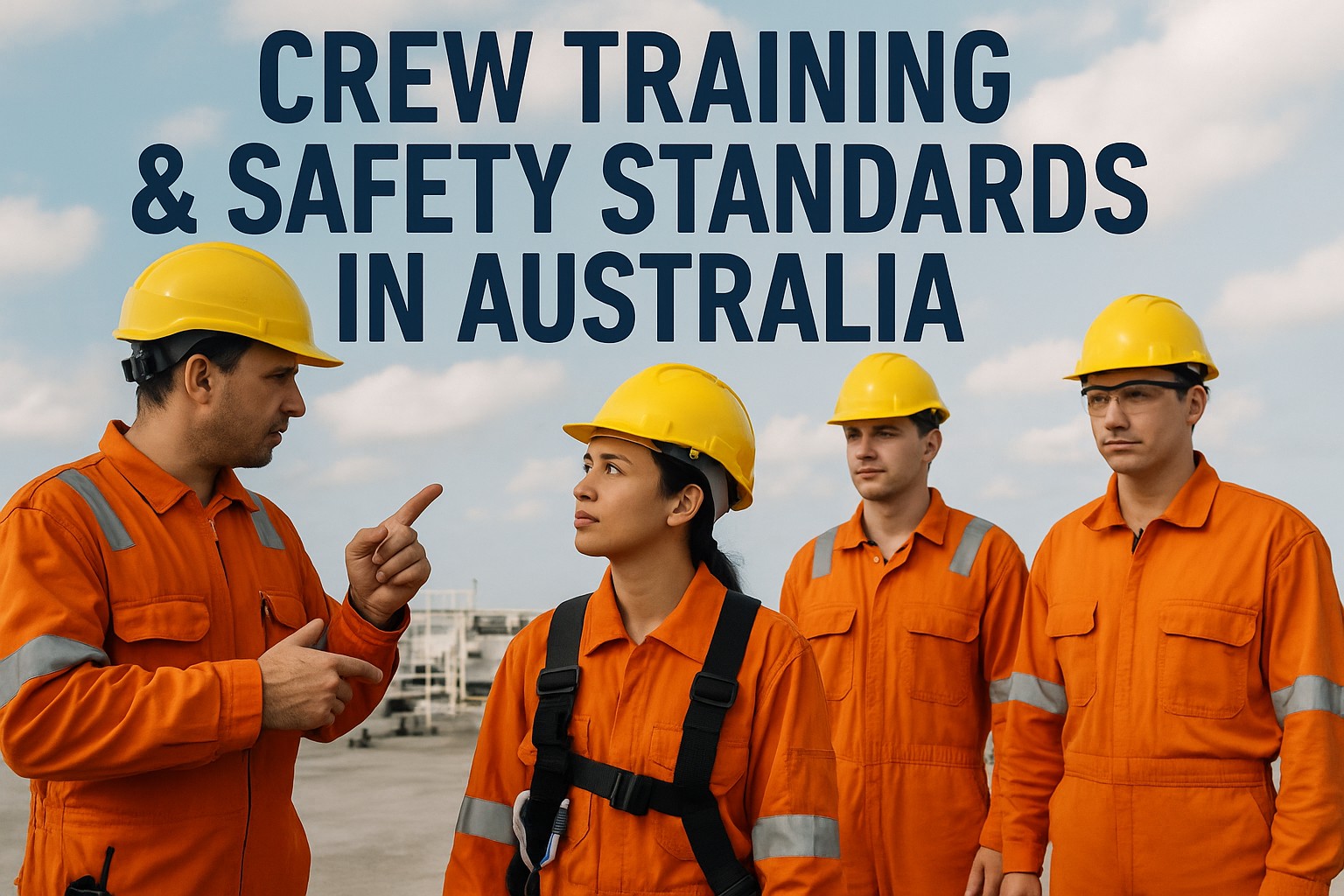
This comprehensive guide eliminates the complexity from crew training and safety compliance in Australia, providing proven strategies that achieve 100% certification compliance, reduce crew-related incidents by 75-85%, and build competent, safety-focused teams capable of operating effectively in Australia's diverse maritime environment. More importantly, it addresses the unique challenges of crewing in Australian operations where international seafarers require STCW certification recognition, domestic commercial vessel crews need Australian qualifications, and all personnel must be prepared for conditions ranging from tropical cyclones to Southern Ocean extremes.
Impact of Crew Training Excellence in Australian Maritime Operations
Ready to Elevate Your Crew Training Standards?
Transform your crew competency management with professional digital solutions ensuring Australian maritime safety compliance.
Understanding Australia's Maritime Crew Training Requirements and Safety Compliance Standards
Australia's maritime crew training regulatory framework integrates international STCW Convention requirements with national certification standards, creating comprehensive obligations for vessel operators to ensure crew competency and safety. AMSA implements STCW through the Navigation Act 2012 and Marine Orders Part 3 (Seagoing Qualifications) for international voyages, while the Marine Safety (Domestic Commercial Vessel) National Law governs domestic commercial vessel crewing through the National Standard for Commercial Vessels (NSCV) Part D. Understanding these interconnected frameworks is essential for operators managing crew compliance across different vessel types and operational areas. Our platform offers comprehensive marine inspection services including crew certification tracking – start your free trial today to streamline your training management while providing the documentation capabilities Australian regulators require.
STCW Convention Requirements
The International Convention on Standards of Training, Certification and Watchkeeping for Seafarers (STCW) establishes minimum training and certification requirements for seafarers on international voyages. Australia, as a party to STCW, recognizes certificates from white-listed countries while maintaining authority to verify crew competency. STCW requirements include basic safety training, certification for specific ranks and functions, endorsements for specialized duties (tanker, passenger ships), and revalidation requirements ensuring currency. AMSA PSC inspectors verify STCW compliance through certificate examination, endorsement verification, and practical competency demonstration when warranted.
Australian Domestic Vessel Certification
Domestic commercial vessels in Australia operate under the National Law with crew certification requirements established in NSCV Part D. Australian certificates of competency include Master, Engineer, and Integrated Rating qualifications at various grades based on vessel size, power, and operational area. Near Coastal and Inshore categories apply different requirements than unlimited operations. Crew must hold appropriate certificates for their duties and vessel characteristics. AMSA issues domestic certificates based on training, sea service, and examination. Understanding the certification matrix ensures vessels carry appropriately qualified crew for their specific operations.
AMSA Enforcement and Inspection
AMSA enforces crew training requirements through Port State Control inspections for international vessels and survey/inspection programs for domestic vessels. PSC inspectors examine certificates of competency, verify flag state endorsements, check medical fitness certificates, review rest hour records, and may assess practical competency through operational demonstrations or interviews. Deficiencies related to crew certification can result in immediate detention until properly qualified crew are embarked. AMSA's marine surveyor network monitors domestic vessel compliance through scheduled surveys, targeted inspections, and incident investigations examining crew competency factors.
Work and Rest Hour Requirements
STCW and MLC 2006 establish work and rest hour requirements preventing fatigue-related incidents. Seafarers must receive minimum rest periods of 10 hours in any 24-hour period and 77 hours in any 7-day period. Australian domestic vessels follow similar principles adapted to operational patterns. AMSA inspectors review rest hour records during inspections, with violations potentially resulting in deficiencies, detention, and investigation of company SMS effectiveness. Digital record-keeping systems help demonstrate compliance while enabling analysis identifying scheduling patterns leading to fatigue risk. Effective fatigue management extends beyond minimum compliance to comprehensive risk management.
Essential Crew Training and Certification Requirements
Comprehensive crew training encompasses mandatory certification, safety training, specialized endorsements, and ongoing professional development ensuring crews maintain competency throughout their careers. Understanding each requirement category enables systematic compliance management. Our platform offers comprehensive marine inspection services with integrated certification tracking – sign up in minutes to get started ensuring all crew training requirements are addressed while maintaining audit-ready documentation for AMSA inspections.
- ✔ Personal Survival Techniques covering water survival, life-saving appliances, and emergency procedures
- ✔ Fire Prevention and Fire Fighting including theory, practical firefighting, and self-contained breathing apparatus
- ✔ Elementary First Aid covering injury assessment, resuscitation, and emergency medical procedures
- ✔ Personal Safety and Social Responsibilities addressing shipboard safety, environmental protection, and emergency response
- ✔ Security Awareness Training meeting ISPS Code requirements for all seafarers
- ✔ Deck officer certificates (OICNW, Chief Mate, Master) for navigation watchkeeping and command
- ✔ Engineer officer certificates (OICEW, Second Engineer, Chief Engineer) for machinery operation
- ✔ Rating certificates (Able Seafarer Deck/Engine) for qualified ratings serving aboard
- ✔ Australian domestic certificates (Master <24m, <35m, <80m, unlimited grades) for domestic operations
- ✔ Flag state endorsements recognizing foreign certificates for service on Australian-flagged vessels
- ✔ GMDSS Radio Operator certificates (GOC, ROC) for distress and safety communications
- ✔ Tanker endorsements (oil, chemical, gas) for personnel serving on tanker vessels
- ✔ Passenger ship training for personnel on vessels carrying more than 12 passengers
- ✔ High-speed craft certification for vessels operating under HSC Code
- ✔ Dynamic positioning certification for offshore operations requiring DP capability
- ✔ Survival Craft and Rescue Boat proficiency for lifeboat and rescue boat operation
- ✔ Advanced Fire Fighting for fire team leaders and emergency response personnel
- ✔ Medical First Aid and Medical Care for designated ship's medical officers
- ✔ Ship Security Officer training for designated security personnel
- ✔ ECDIS type-specific training for navigation officers using electronic chart systems
- ✔ Five-year certificate revalidation demonstrating continued competency through sea service or approved training
- ✔ Basic safety training refresher within five years maintaining currency in survival and firefighting skills
- ✔ Tanker refresher training for personnel returning to tanker service after extended absence
- ✔ Medical fitness certification renewal at intervals based on age and certificate type
- ✔ Continuous professional development maintaining awareness of regulatory and technical developments
- ✔ Vessel familiarization covering specific equipment, procedures, and emergency arrangements
- ✔ Safety management system training on company SMS policies, procedures, and reporting
- ✔ Emergency drill participation demonstrating competency in vessel-specific response procedures
- ✔ Equipment-specific training for specialized cargo handling, ballast, or safety systems
- ✔ Bridge and engine room resource management training for operational teams
Best Practices, Training Programs, and Digital Tools for Enhancing Crew Safety and Performance
Implementing effective crew training and safety management requires combining proven training methodologies with modern digital tools that streamline certification tracking, training scheduling, and compliance documentation. Our platform offers comprehensive marine inspection services designed for maritime professionals – create your free account for instant access to professional crew management tools providing the foundation for training excellence. Proper implementation ensures 100% certification compliance, reduces incidents by 75-85%, and builds competent crews capable of operating safely in Australian conditions.
- ✔ Our platform offers comprehensive marine inspection services with integrated certification tracking – monitor expiry dates, schedule renewals, and maintain audit-ready crew records
- ✔ Automated expiry alerts providing advance notification of certificate and medical renewals requiring action
- ✔ Training matrix management tracking completion status against role requirements for each crew position
- ✔ Rest hour recording and monitoring ensuring STCW/MLC compliance with automated violation alerts
- ✔ Drill and exercise documentation capturing participation, scenarios, and competency assessments
- ✔ Fleet-wide compliance dashboards providing management visibility into training status across all vessels
- ✔ Competency-based training focusing on practical skills demonstration rather than time-based attendance
- ✔ Simulator-based training for high-risk scenarios including bridge resource management and engine emergencies
- ✔ Blended learning combining online modules with practical exercises maximizing training efficiency
- ✔ Regular onboard drills maintaining skills currency and building team coordination
- ✔ Mentoring programs pairing experienced officers with developing crew members
- ✔ Incident-based learning using industry casualties and near-misses as training material
Australia-Specific Training and Safety Considerations
Operating in Australian waters presents specific crew training considerations requiring tailored approaches beyond standard international requirements. Understanding these Australia-specific factors enables effective crew development addressing the unique characteristics of Australian maritime operations.
Australian Environmental Conditions
Australian maritime operations span diverse conditions from tropical cyclone zones in the north to Southern Ocean extremes in the south. Crew training should address cyclone preparation and response for northern operations, heavy weather seamanship for southern routes, heat stress management in tropical conditions, and survival considerations for remote area operations. Great Barrier Reef navigation requires specialized pilotage awareness. Understanding Australian search and rescue arrangements, including AMSA coordination and volunteer marine rescue organizations, ensures crews can effectively respond to emergencies in Australian waters.
Australian Regulatory Recognition
Foreign certificates require recognition for service on Australian-flagged vessels or Australian domestic operations. STCW certificates from white-listed countries are generally recognized for international voyages, though AMSA may require additional endorsements. Foreign seafarers seeking Australian domestic certificates must meet recognition of prior learning requirements. Understanding the recognition pathway enables efficient crew deployment while ensuring regulatory compliance. AMSA's Certificate Recognition Unit processes applications for foreign certificate recognition and Australian endorsements.
Australian Medical Standards
Australian medical fitness requirements follow STCW standards for international operations and NSCV Part D requirements for domestic vessels. Medical examinations must be conducted by AMSA-approved medical practitioners using prescribed forms. Medical fitness categories (I, II, III) correspond to operational areas and duties. Remote area operations may require enhanced medical fitness considering distance from medical facilities. Understanding medical certificate requirements, including renewal intervals based on age and category, ensures crews maintain valid medical documentation supporting their certification.
Australian Training Providers
Australia has numerous AMSA-approved training providers offering STCW courses, domestic certificate programs, and specialized training. Major maritime training centers operate in Sydney, Melbourne, Brisbane, Fremantle, and other coastal cities. Selecting AMSA-approved providers ensures certificates are recognized for Australian operations. Some operators develop in-house training capabilities for company-specific programs while using external providers for statutory certification. Understanding the training provider landscape enables efficient training planning optimizing cost, location, and scheduling considerations.
Implementation Roadmap for Crew Training Excellence
Implementing comprehensive crew training management requires systematic approach progressing through assessment, planning, implementation, and continuous improvement phases. This roadmap provides structured guidance for vessel operators establishing or enhancing crew training programs for Australian operations.
Phase 1: Training Needs Assessment (3-4 Weeks)
Conduct comprehensive assessment of current crew certification status, training records, and competency levels. Identify gaps between current qualifications and regulatory requirements for vessel operations. Review recent PSC inspection results and incident reports for training-related findings. Assess SMS training provisions and compliance with ISM Code requirements. Evaluate work/rest hour compliance identifying fatigue management improvement opportunities. Document findings establishing baseline for training program development and compliance improvement.
Phase 2: Program Development (2-4 Weeks)
Develop comprehensive training program addressing identified gaps with prioritized initiatives based on regulatory requirements and operational risks. Create training matrices defining certification and training requirements for each position. Establish relationships with AMSA-approved training providers for statutory courses. Design company-specific training programs for vessel familiarization, SMS procedures, and operational competencies. Plan certification renewal schedules avoiding expiry gaps. Define performance metrics and compliance verification approaches.
Phase 3: Implementation (8-12 Weeks)
Execute training program systematically across fleet personnel. Deploy digital crew management systems for certification tracking and expiry monitoring. Schedule statutory training courses with approved providers. Conduct company-specific training programs including vessel familiarization and SMS training. Implement enhanced drill programs with documented competency assessment. Establish rest hour monitoring systems ensuring STCW/MLC compliance. Verify implementation effectiveness through internal audits and competency assessments. Address identified gaps through targeted training interventions.
Phase 4: Continuous Improvement (Ongoing)
Maintain and improve crew training through ongoing monitoring, assessment, and program enhancement. Track certification status ensuring timely renewals without compliance gaps. Monitor incident and near-miss reports for training-related factors requiring intervention. Analyze PSC inspection results identifying fleet-wide training improvement opportunities. Review and update training matrices as regulations and operational requirements evolve. Conduct periodic competency assessments verifying training effectiveness. Report to management on crew competency status and training program performance.
Common Training and Certification Challenges
Analysis of crew training management in Australian operations reveals recurring challenges that can undermine compliance and safety if not properly addressed. Understanding these common challenges enables proactive mitigation strategies ensuring successful outcomes.
2. Crew scheduling around training requirements – integrate training planning with rotation schedules minimizing operational impact
3. Foreign certificate recognition delays – allow adequate lead time for AMSA processing of recognition applications
4. Training record documentation gaps – establish systematic recording procedures with digital backup and verification
5. Rest hour compliance monitoring – deploy digital recording systems with automated violation alerting
6. Remote location training access – utilize blended learning and mobile training delivery reducing travel requirements
7. Cost management for training investment – prioritize based on regulatory requirements and risk, leverage group bookings
8. Competency assessment standardization – develop consistent assessment criteria and trained assessors across fleet
Our platform offers comprehensive marine inspection services trusted by thousands of vessel operators – register today to master crew training management with full Australian support included.
Cost-Benefit Analysis: Crew Training Excellence
While comprehensive crew training requires significant investment in courses, systems, and management time, the return on investment proves compelling through avoided incidents, regulatory compliance, and operational efficiency. This analysis demonstrates why crew training excellence represents essential investment for Australian maritime operations.
Strategy for Crew Training and Safety Excellence
Achieving crew training excellence for Australian operations requires commitment to comprehensive competency management extending beyond minimum regulatory compliance. Start by conducting thorough assessment of current certification status, training records, and competency gaps across fleet personnel. Engage leadership support recognizing crew training as fundamental to safety, compliance, and operational performance.
Implement our platform that offers comprehensive marine inspection services and crew management solutions – sign up now for immediate access to digital tools designed for maritime crew training management. Integrated certification tracking, expiry monitoring, and training documentation streamline compliance while providing management visibility into fleet-wide crew competency status.
Develop comprehensive training programs addressing statutory certification, specialized endorsements, and company-specific competencies. Training matrices defining requirements for each position ensure consistent standards while enabling gap identification for individual crew members. Relationships with AMSA-approved training providers enable efficient scheduling of statutory courses while maintaining quality standards.
Invest in safety culture development recognizing that training effectiveness depends on organizational commitment to safe operations. Leadership engagement, reporting culture encouragement, and learning from incidents create environment where training translates into competent, safe performance. Regular drills with realistic scenarios and meaningful assessment build genuine emergency response capability rather than procedural compliance.
Establish continuous monitoring tracking certification status, training completion, and competency assessment results. Digital systems automate compliance monitoring while enabling proactive management of renewal requirements. Incident analysis identifying training-related factors drives targeted improvement initiatives. Excellence in crew training not only ensures regulatory compliance but builds capable teams delivering safe, efficient operations in Australia's demanding maritime environment.
Elevate Your Crew Training Standards Today
Our platform offers comprehensive marine inspection services – join over 5,000 maritime professionals achieving Australian crew safety compliance and operational excellence.