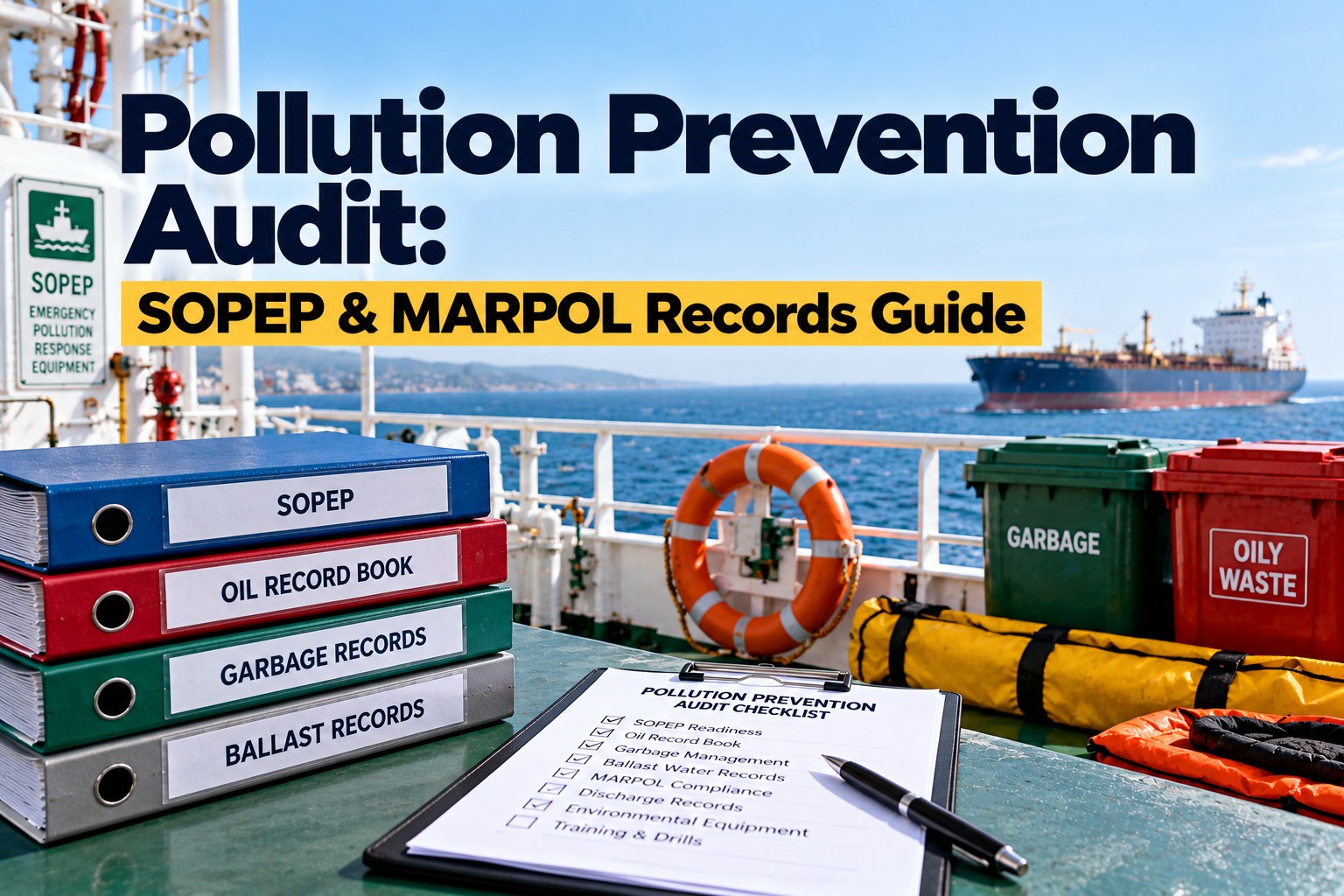
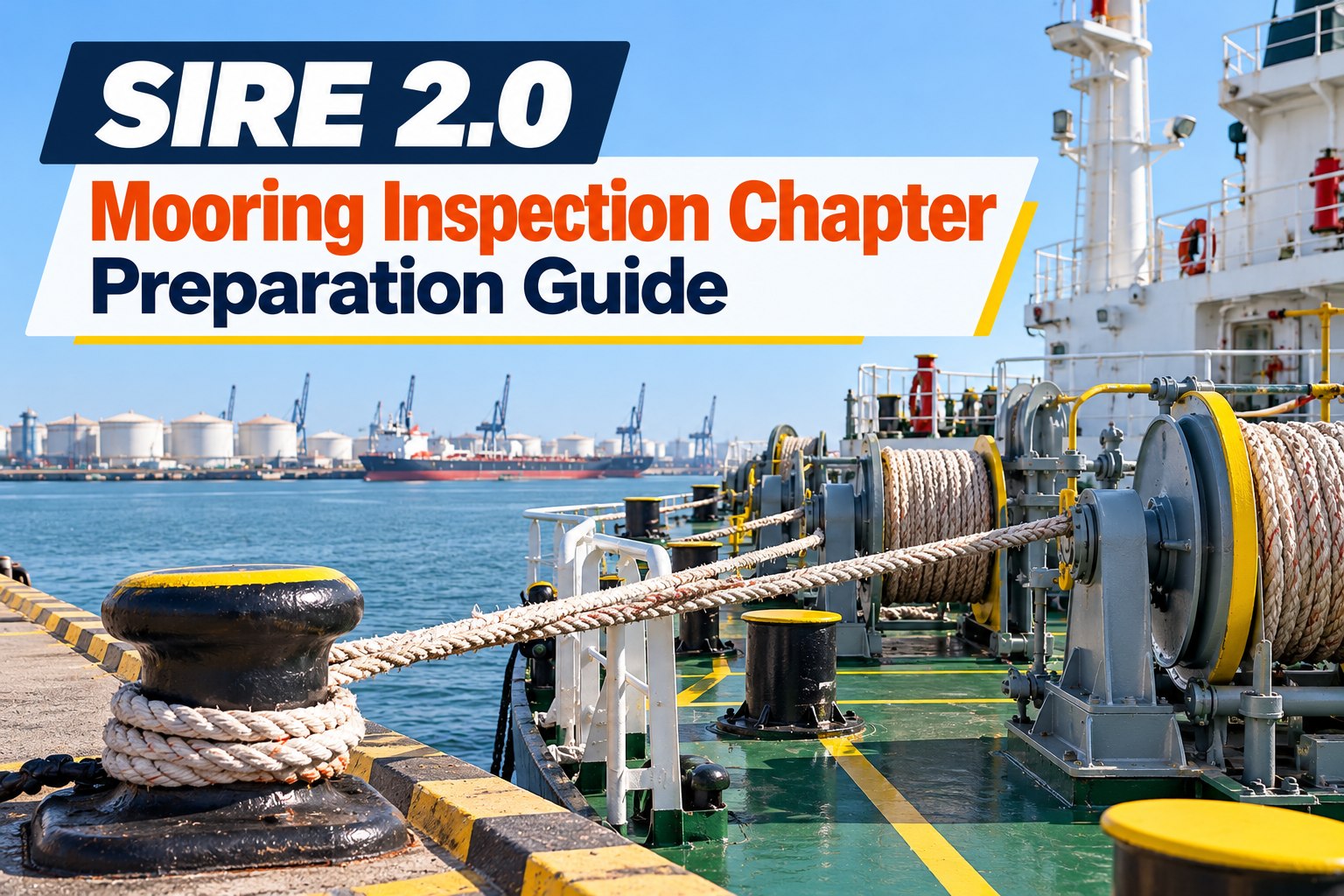
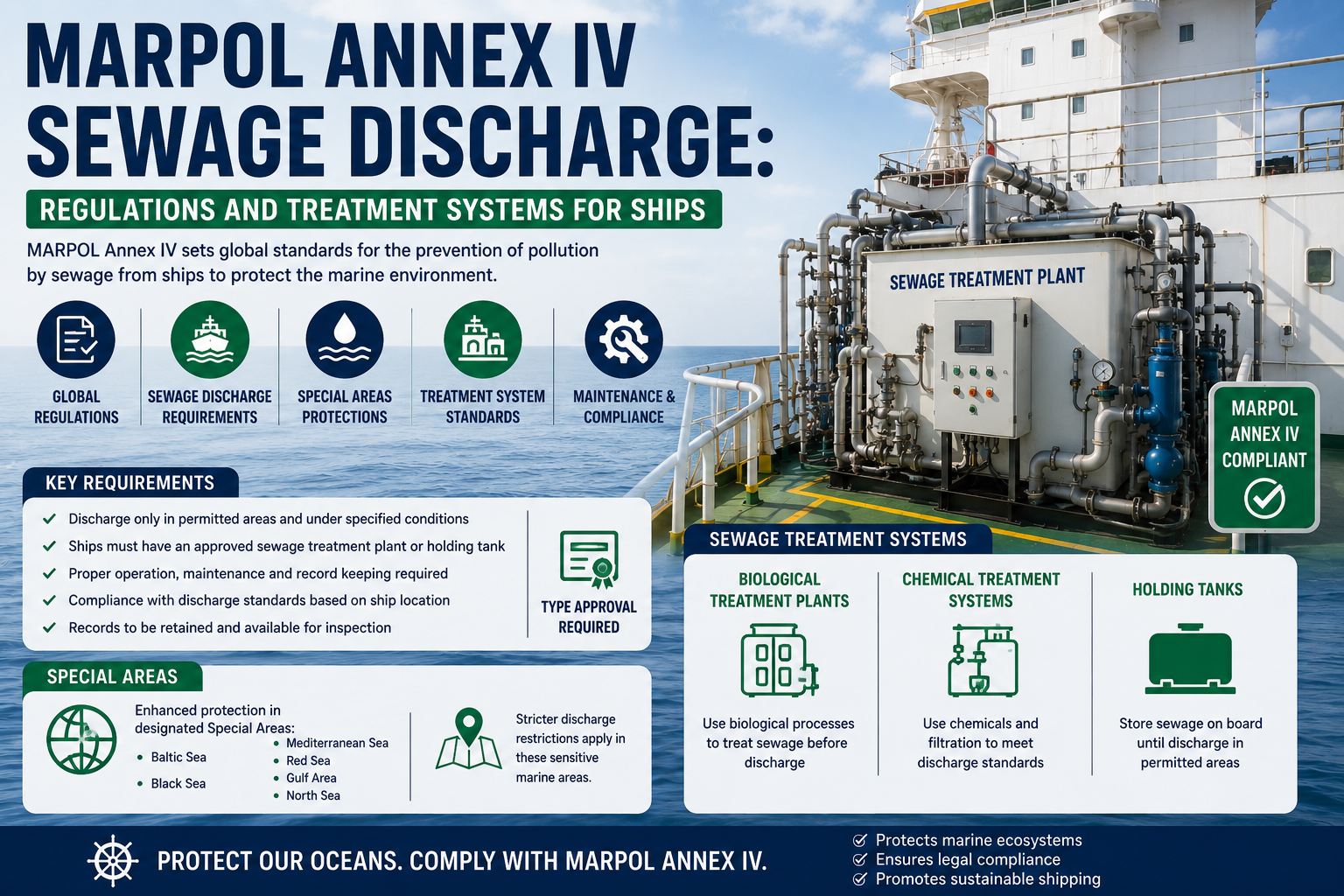
Chapter 6 covers pollution prevention, and it has a property no other chapter shares. Everywhere else an inspector checks a record against the ship. Here they check records against each other. The oil record book has to agree with the cargo and ballast record, the sludge figures have to agree with tank soundings and bunker delivery notes, and the discharge entries have to agree with what the monitoring equipment itself logged. A vessel can be operated impeccably and still answer this chapter badly, because the test is consistency rather than conduct.
SIRE 2.0 · Chapter 6
The chapter that checks your records against each other
Environmental compliance is the one area where three or four separate documents describe the same hours of the same voyage. Where they disagree, the disagreement is the finding — and it is found by arithmetic rather than by inspection of the plant.
The cross-checks an inspector runs
Four reconciliations do most of the work. None of them requires opening a machinery space, and all four can be done sitting at the ship’s office desk with the books in front of you.
Oil record book
must agree with
Cargo and ballast record
Both describe the same tank movements over the same hours. Transfers, washing and ballasting recorded in one and absent from the other is the most frequently found inconsistency on a tanker.
Sludge entries
must agree with
Tank soundings
The quantity recorded as generated, burnt or landed has to leave the tank at the level the sounding book says it is at. A tank that never changes while entries accumulate is arithmetic nobody can defend.
Sludge generation
must agree with
Bunker delivery notes
Residue production bears a relationship to fuel consumed and its quality. Figures far below what the bunkers and the running hours imply raise the obvious question about where the rest went.
Discharge entries
must agree with
Monitoring equipment log
Where equipment keeps its own record of operation, that record and the book should describe the same events at the same times. This is the check most crews do not anticipate.
The mechanics of making individual entries correctly — codes, signatures, corrections — are covered in our guide to oil record book entries. This page is about what happens when a second document is laid beside the first.
Equipment that has to run in front of someone
The other half of the chapter is plant that can be operated on demand. Unlike most shipboard equipment, pollution prevention systems carry alarms and automatic stops whose whole purpose is to intervene, which opens them to a live test in a way a pump is not.
| Equipment |
What can be shown |
The record behind it |
| Oily water separating equipment | That it runs, that the crew can operate it without hesitation, and that nothing has been arranged around it | Running hours, maintenance routines, and entries consistent with both |
|---|
| 15 ppm alarm and automatic stopping device | That the alarm functions and the stopping arrangement acts when it should | Test records at the stated interval, with results rather than ticks |
|---|
| Oil content monitoring for cargo operations | Calibration status, operation, and the officer’s familiarity with what it does when limits are reached | Calibration certification and the equipment’s own operating record |
|---|
| Sludge and residue system | Tank levels, transfer arrangements, and that nothing connects where it should not | Soundings, entries and disposal receipts that reconcile |
|---|
| Incinerator, where fitted | Operation, the material burnt, and the limits the crew work to | Running records tied to the quantities shown as consumed |
|---|
| Sewage and garbage arrangements | Segregation in practice, placards, and that the equipment is in use rather than isolated | The garbage record with disposal receipts attached |
|---|
| Air emission arrangements | Fuel changeover handling and the equipment that supports it | Changeover records with times, positions and quantities |
|---|
Equipment and record are examined together rather than in sequence. A separator in perfect order with no test record behind its alarm answers half the question, and the half it answers is the easier one.
The sludge arithmetic
If one thing on this chapter deserves an afternoon before an inspection, it is the sludge figures, because they are the only part of the environmental record that can be checked against physics.
1Generation against consumption
Residue arising bears a relationship to how much fuel was burnt and what grade it was. The relationship is not fixed, but an implausible figure is recognisable to anyone who has seen a hundred record books.
2Tank level against entries
Every quantity recorded as moved should be visible as a change in the sounding. Entries that accumulate while the tank reads the same have no physical counterpart.
3Disposal against receipts
Quantities landed ashore matched to the receipt for them, with the figures agreeing. A receipt for a round number against a book entry for a precise one invites a question about which was written first.
4Burnt against running hours
Where an incinerator is fitted, quantities shown as burnt should correspond with the hours it ran and what it is capable of. This is the easiest of the four to leave unreconciled.
None of these is a trap. They are the checks a careful chief engineer runs on their own books, and the reason to run them before an inspection is that somebody else certainly will.
Records that reconcile because they came from the same place
Marine Inspection captures tank soundings, transfers, equipment tests and disposal receipts against the vessel and the voyage, so the arithmetic is done continuously rather than discovered during an inspection.
Familiarity, in the same construction as everywhere else
Alongside the arithmetic, the chapter carries the familiarity questions that run through the whole question set. For pollution prevention they attach to procedures crews often treat as the engine room’s private business.
Who may authorise a discharge
The company procedure, and the point at which authority sits with somebody other than the watchkeeper. An officer who cannot say where that line falls has described a system with no control in it.
What happens when equipment fails
The procedure for a separator or monitor out of service, including what stops, what is recorded and who ashore is told. This is where good vessels distinguish themselves, because it is the case nobody rehearses.
Special and emission control areas
The restrictions that apply where the vessel trades, and the practical arrangements for changeover and for discharge restrictions, described by the person who carries them out.
Reporting a spill or exceedance
The immediate actions and the reporting chain, known rather than located. The plan being on board is necessary and is not what the question is asking.
The regulatory background across the annexes sits in our MARPOL Annex I to VI guide, and the wider programme mechanics in our SIRE 2.0 inspection guide.
Where good operations are undone by the book
The painful version of this chapter is a vessel that has done nothing wrong and cannot demonstrate it. Four patterns account for most of those cases.
Entries made from memory at the end of the week
Written up in one hand, in one sitting, with times that are round and sequences that are tidy. Nothing in it is false and all of it looks reconstructed, which is enough.
Two books maintained by two people who do not compare them
The engine room keeps one, the deck keeps the other, and nobody lays them side by side until an inspector does. The inconsistency is usually innocent and always expensive.
Corrections made badly
An amendment that obscures what was there before turns an administrative slip into a question about intent, which is a far worse conversation than the original error.
Receipts filed somewhere else
Disposal receipts in the agent’s file rather than with the record they support. Unreachable evidence has the same effect as absent evidence during the hours an inspector is aboard.
An afternoon with the books open
This chapter rewards a specific, finite piece of preparation better than any other, because the checks an inspector runs are the checks you can run yourself in a few hours with nothing more than the records and a sounding tape.
1Lay the two books side by side
Take the last three months and walk them in parallel, operation by operation. Anything appearing in one and not the other gets resolved now, while the people who were on watch are still aboard and can say what happened.
2Sound the tanks and work backwards
Start from today’s level and reverse through the entries. The figure you arrive at should be the level at the start of the period. Where it is not, the gap is the amount somebody will ask about.
3Gather the receipts into the book
Every disposal receipt filed with the entry it supports rather than in an agent’s folder. This takes an hour and converts a category of question from an investigation into a page turn.
4Run the alarm and record the result
Test the fifteen parts per million alarm and the stopping arrangement, write down what happened rather than that it was done, and have the watchkeeper present so the demonstration and the familiarity are covered together.
5Ask the watchkeeper the authority question
Who authorises a discharge, and when does that move above you. If the answer is hesitant, that is a twenty-minute conversation now rather than an observation later, and it is the same question an inspector will put.
Done once before a likely inspection window and then kept current, this is the difference between a chapter answered by producing documents and one answered by explaining them. You can book a demo to see the reconciliation maintained continuously rather than assembled in an afternoon.
RCRecords that must reconcile
Oil record book and cargo record describe the same operations
Sludge entries match the sounding book movement for movement
Generation figures are plausible against fuel consumed
Disposal quantities match the receipts, which are filed with the book
Entries carry the signatures and dates the format requires
EQEquipment and people
Separator runs and the watchkeeper operates it without hesitation
Alarm and automatic stopping arrangement tested, with results recorded
Monitoring equipment calibration is current and its certificate reachable
Officers can say who authorises a discharge and when that changes
The procedure for equipment out of service is known, not looked up
The left-hand column is an afternoon’s work and removes most of what this chapter finds. You can book a demo to see soundings, transfers and receipts held against the same voyage so the reconciliation is continuous.
Marine Inspection modules for pollution prevention
InspectionOperation Logs · Soundings · Checklist Builder
Captures tank soundings, transfers and discharges as the operation happens, with times and the officer who carried it out, which is what makes an entry written at the time rather than at the end of the week.
MaintenancePlanned Routines · Calibration Register · Test Records
Holds the separator, the 15 ppm alarm and stopping arrangement and the monitoring equipment on routines with their calibration dates, and keeps the test result rather than a completion tick.
Document ControlProcedures · Plans · Receipts Library
Keeps the discharge and emergency procedures at the point of use and files disposal receipts with the record they support, so evidence is reachable within the hours an inspector is aboard.
Crew & CompetenceFamiliarisation · Authority Matrix · Training Records
Records who has been taken through the discharge procedures and who holds authority at each level, which is the answer to the question about where authorisation sits.
Reporting & AnalyticsReconciliation View · Fleet Dashboard
Sets generation, disposal and tank movement side by side so an implausible figure surfaces on the vessel that produced it, in the month it happened, rather than in a report months later.
Vessel RecordsCertificates · Equipment Register
Holds the environmental certification and the equipment it describes together, so the plant fitted, the certificate and the record of its testing all point at the same machine.
Pollution prevention chapter: frequently asked questions
Which chapter covers pollution prevention?
Chapter 6 in the published question library, sitting between safety management and maritime security. It covers both the environmental records and the equipment that supports them.
What makes this chapter different from the others?
Everywhere else a record is checked against the ship. Here records are checked against each other — the oil record book against the cargo and ballast record, sludge entries against soundings and bunker figures, and discharge entries against whatever the equipment logged itself. The test is consistency rather than conduct.
Which reconciliation is most often wrong?
Sludge. Quantities recorded as generated, burnt or landed have to correspond with tank soundings, with the fuel actually consumed and with the receipts for what went ashore. It is the only part of the environmental record that can be checked against physics, which is exactly why it is checked.
What is demonstrated rather than discussed?
The separating equipment running with the watchkeeper operating it, the 15 ppm alarm and the automatic stopping arrangement functioning, monitoring equipment within calibration, and the sludge system with its tank levels and connections. Equipment and the records behind it are examined together.
What familiarity questions arise here?
Who may authorise a discharge and at what point authority moves above the watchkeeper; what the procedure is when a separator or monitor is out of service; the restrictions that apply in special and emission control areas; and the immediate actions and reporting chain after a spill or exceedance.
How can a well-run vessel still answer this chapter badly?
By writing entries up from memory at the end of the week, by keeping two books that nobody compares, by making corrections that obscure what was there before, and by filing disposal receipts away from the record they support. None of those involves doing anything wrong operationally, and all of them cost observations.
Chapter 6 readiness
Do the arithmetic before somebody else does it for you
Marine Inspection records soundings, transfers, equipment tests and receipts against the voyage they belong to and sets them side by side — so the books agree with each other continuously, and the chapter is answered by producing rather than by explaining.