Every SIRE 2.0 inspection ends with a list of negative observations, and every list is read by charterers, who may use it in their vetting decisions. For a QHSE Manager, the question is not how to avoid being inspected but how to make the list shorter, and keep it shorter over time. This guide uses OCIMF's own process pages, published benchmarking figures and a recent vendor analysis to show where observations come from and what actually reduces them.
What the Numbers Say About SIRE 2.0 Observations Today
How the average number of negative observations per inspection has moved since late 2024
A secondary article citing the 2025 INTERTANKO SIRE 2.0 benchmarking report, covering 7,241 inspections, gives an average of 5.24 negative observations per inspection in 2025, down from 6.33 in late 2024. Positive observations rose from 0.27 to 0.88 in the same article. INTERTANKO's own page describes member benchmarking by chapter and by performance influencing factor, but we could not open the report, so treat these as reported figures.
Why a falling industry average still leaves your own vessels exposed to the same weak spots
An industry average hides a wide spread. A vendor analysis by Kaiko Systems, covering about 1,300 SIRE 2.0 reports from 25 fleets, found thoroughly prepared vessels averaged 2.9 observations against a benchmark of 5.2. Because the data is the vendor's own, the safe reading is that preparation and results moved together, not that one caused the other. For the programme itself, see our SIRE 2.0 inspection guide to the OCIMF tanker vetting programme.
Where Negative Observations Come From: People, Process and Equipment
How human factors and performance influencing factors shape the observation list
OCIMF built SIRE 2.0 around human factors. Inspectors pick performance influencing factors from a drop-down list and do not record suggestions as observations. OCIMF describes crew nervousness and fear as a significant performance influencing factor in their own right. The secondary article reports that human factor accounts for 37% of all negative observations, with custom and practice and recognition of criticality the largest factors.
What custom and practice, and recognition of criticality, look like in daily shipboard work
Custom and practice means the task is done the way it has always been done, not the way the procedure says. Recognition of criticality means the crew do not see which step could hurt them. Neither is solved by writing another procedure. Both show up in a short interview or a walkround, which is why preparation that tests real tasks with the crew tends to matter more than preparation that checks documents. This explanation is ours, drawn from the factor names.
The Life of an Observation: From Closing Meeting to Charterer's Screen
What OCIMF says happens after the inspector writes up a negative observation
Under OCIMF's process, the inspector writes up all negative observations before the closing meeting. The submitting company sees the report, validates it and releases it to the vessel operator, who has 14 days to give initial comments on each negative observation. Reports can be amended up until they are submitted. If no comment is added, the report is published automatically without operator comments. Inspectors do not review operator comments.
Why the operator's comment is your only chance to put the observation in context
Because inspectors do not review operator comments and OCIMF does not set inspection frequency, the report recipient reads the observation and the comment together and decides what it means under its own vetting criteria. A short, factual comment that states the cause, the correction and the evidence is more useful to a reader than a defensive one. Operators can keep adding comments after publication, normally during the 12 months the report is active. The comment style advice is ours.
Repeat Observations: The Cheapest Ones to Remove and the Most Expensive to Ignore
How a small set of questions and previously raised findings drive a large share of observations
The Kaiko analysis reports that one in four observations had previously been raised on the same vessel, and ten of roughly 300 questions accounted for 40% of all observations. It also reports that the vessel particulars questionnaire did not match the vessel in one quarter of inspections, and that the same mismatch reappeared on four in ten vessels where it had been raised before. Repeats are the easiest to prevent because the answer is already in your own history.
What closing a finding properly means, compared with simply logging that it happened
A closed finding has a cause, a correction, an owner, evidence and a date for recheck. The table below turns the common observation patterns into evidence trails. It is our suggested checklist, not an OCIMF list: use it to look at your own last three SIRE reports and ask where the same pattern appears twice.
| The observation looks like | Why it happens | Evidence trail to have ready (our suggestion) |
|---|---|---|
| Procedure not followed as written | Custom and practice drifts from the written step | Procedure, a dated photo or record of the real task, and a note on the last review |
| Risk not recognised at the task | Recognition of criticality is weak at the task level | Completed risk assessments for real tasks, with crew able to explain them |
| Defect known but not closed | No owner, deadline or follow-up | Defect log with owner, deadline, closure photo and verification |
| Same finding as last inspection | Corrective action fixed the symptom | Root cause note, closure evidence and a recheck date |
| Records do not match the ship | Particulars or documents are out of date | Reviewed vessel particulars and document update log |
| Officer inspection of space is thin | Walkround is routine, not curious | Dated officer inspection records with findings raised and closed |
Preparation That Works: Timing, Coverage and Closure
What the Kaiko data associates with fewer observations, and the limits of that evidence
Kaiko reports that crews raising 60 or more findings before inspection recorded 22% fewer observations than crews raising fewer, and 30% fewer than vessels doing no preparation. Covering at least 80% of the question set was associated with 31% fewer observations, while preparation below 50% showed no measurable benefit. Closing at least 75% of self-raised findings was associated with 13% fewer. The company says the number of findings alone was not the deciding factor.
A six-week run-up that finds, fixes and proves before inspection week
Kaiko reports that preparation started three to six weeks before inspection outperformed preparation left open for three months or more, and recommends about four weeks. The run-up below is our own plan built on that finding. It keeps finding and fixing apart from proving, so evidence is gathered after the work is done, not before.
Daily Readiness Discipline: Keeping the List Short Between Inspections
Why officer inspection rounds and defect logs decide the next report more than a pre-inspection push
Kaiko reports that officers' safety inspections of deck and machinery spaces were among the recurring weaknesses. A last-month push cannot fix a ship whose daily rounds are thin. Make officer inspections specific: a named space, a named hazard, a dated photo, a finding raised or a clear note that nothing was found. Review the defect log in the weekly meeting, and ask why each item is still open, not only when it will close.
How shore staff can use the report history to coach the ship before the next inspection
Shore staff hold what a single ship does not: the history of every report in the fleet. Review each new SIRE report for patterns, compare it with the last three, and send the ship a short list of repeat items with the evidence expected. Our SIRE 2.0 fleet-wide readiness and multi-vessel strategy guide covers how to run this across several vessels.
Mistakes That Keep the Observation List Long
Six habits that turn one-off findings into repeat observations
Systems That Turn Every Finding Into a Tracked Task With Evidence
How a dated photo repository, task ownership and deadlines make observation reduction visible
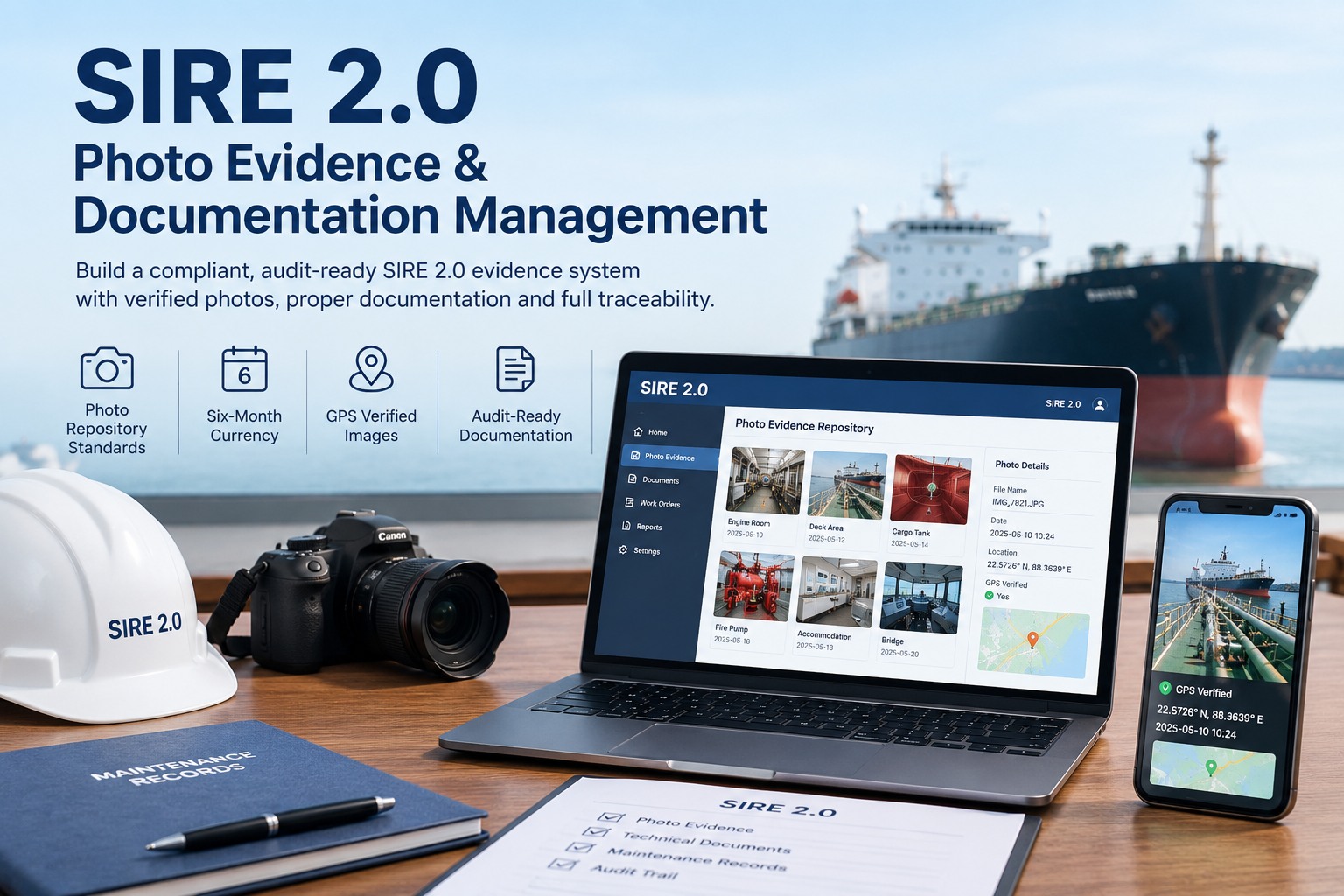
Reducing observations is a record-keeping problem as much as a seamanship one. Marine Inspection supports a dated photo repository, observations turned into tasks with owners, deadlines and evidence, and certificate and equipment tracking. That lets a QHSE Manager see which findings are open, which have repeated, and what evidence exists before the inspector asks for it.