A fire detection system only protects a ship if the crew trust it. Too many false alarms and detectors get isolated, then forgotten. Too little testing and a dead detector sits over the space where a fire starts. This guide covers how the system works, SOLAS and FSS Code requirements, detector testing and the five-year cycle, zone checks, panel faults and how to manage false alarms without switching protection off. Book a demo to track detector tests.
Ship fire detection and alarm system: tested, trusted and never left isolated
How a ship fire detection system works
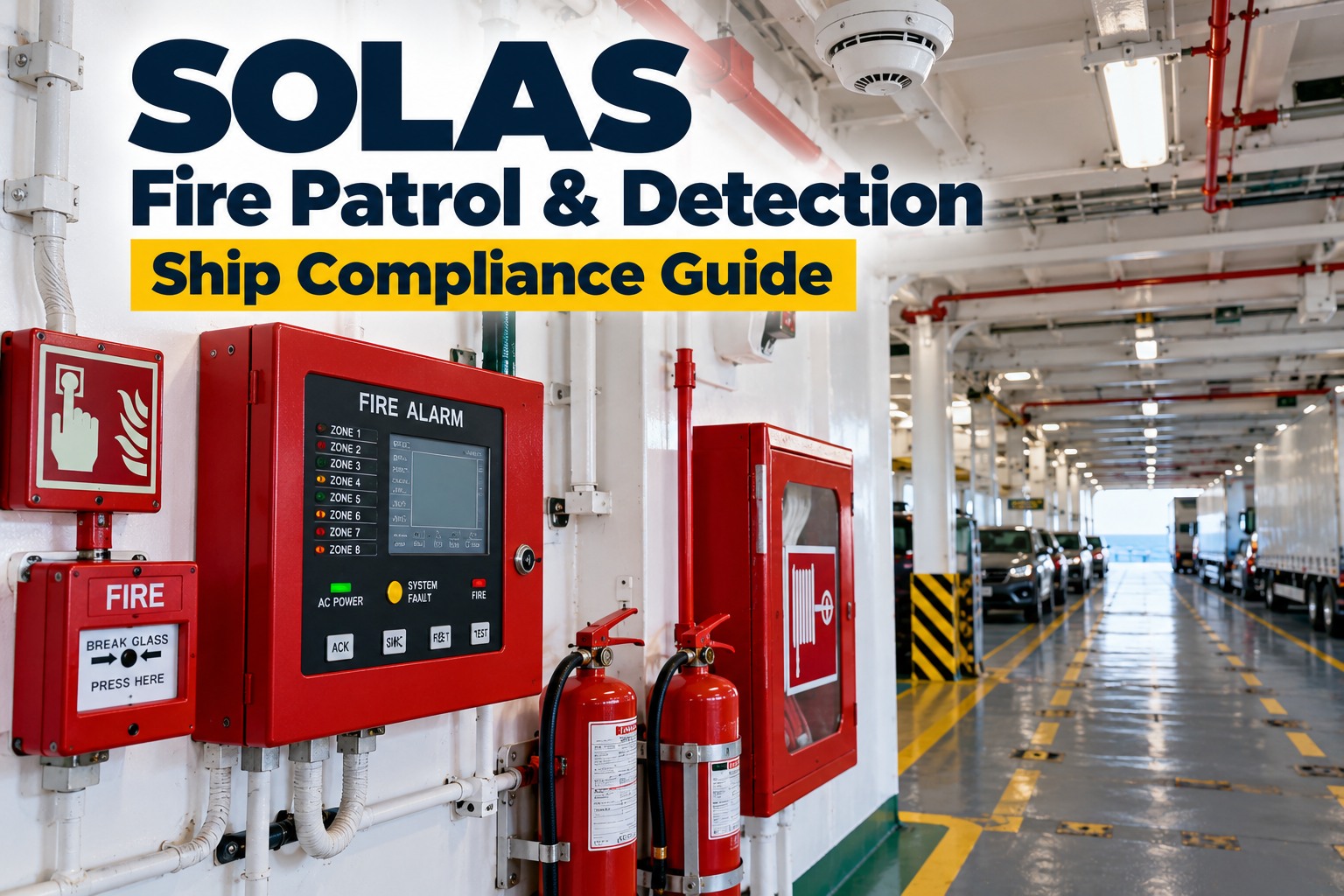
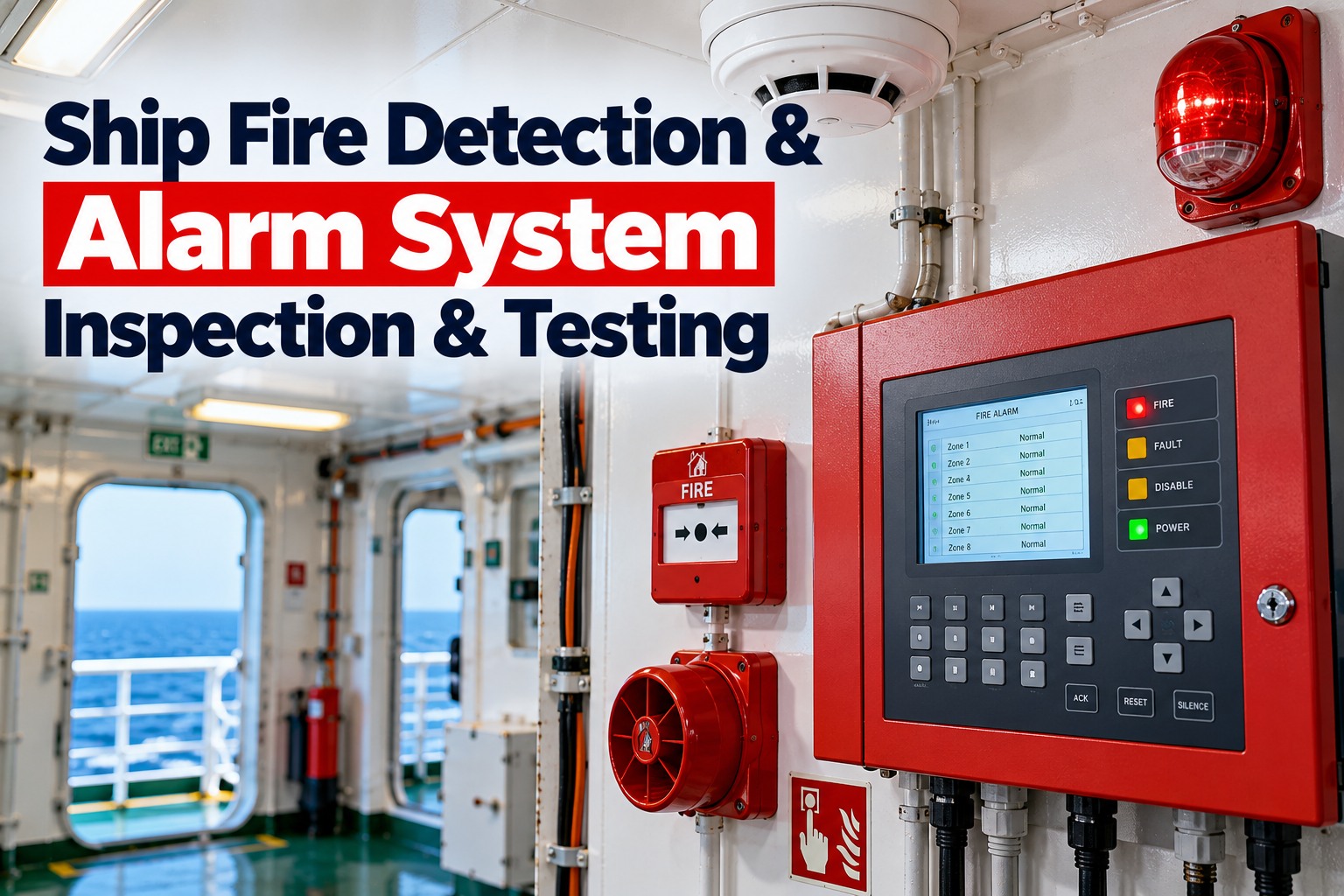
Detectors and manual call points report to a control panel, which raises the alarm and can trigger other safety actions.
SOLAS and FSS Code requirements for fire detection
SOLAS Regulation II-2/7 sets where detection is needed, and FSS Code Chapter 9 sets how fixed systems must perform.
Summary of FSS Code Chapter 9 provisions; details vary with ship type and build date. Amendments in MSC.484(103), from 1 January 2024, clarified fault isolation for individually identifiable systems.
Detector testing: the monthly sample and five-year cycle
Under IMO’s maintenance guidelines (MSC.1/Circ.1432), a sample of detectors and manual call points is physically tested each month, so every device is tested at least once every five years. Bahamas Maritime Authority guidance summarises the method.
How to test each detector type
Use the maker’s approved test equipment and procedure. Before starting, tell the bridge and make sure tests cannot trigger fixed extinguishing systems.
Smoke detector
Approved aerosol test gas applied with a test pole; confirm the alarm at the panel and the correct address.
Heat detector
Heat tester applied to the element. Never use an open flame.
Flame detector
Test lamp suited to the detector type, held at the specified distance.
Manual call point
Operated with the test key; glass or element reset afterwards.
Know which detectors are due this month
Plan the monthly sample by address, record each result and see five-year coverage at a glance.
Fire zone verification
A detector that alarms with the wrong location sends the fire team to the wrong place. Zone checks confirm the panel tells the truth.
Panel matches the plan
Zone and address descriptions match the fire control plan and the ship as built.
Locations correct
Each tested detector shows the right zone, deck and space at the panel.
Changes recorded
After refits or cabin changes, zone text and plans are revised together.
Repeater panels
Bridge and fire control station panels show the same information.
Alarm panel faults and what they mean
A fault is not a fire, but it means part of the ship may be unprotected. German flag PSC guidance notes that a system which is not fully operational affects the safety certificate, needs the flag informed and can lead to detention.
False alarm management without losing protection
False alarms erode trust and tempt crews to isolate detectors. Fix the cause, and control any isolation tightly.
Common causes
- Steam from showers, laundry or galley
- Cooking fumes and toasters near smoke detectors
- Dust from hot work, grinding or cargo
- Wrong detector type for the space
- Dirty or ageing detector heads
Controls
- Change to a better-matched detector type where the cause is permanent
- Isolate only for a set task, under permit, with a time limit
- Fire watch while the detector is isolated
- Re-enable and confirm at the panel when the task ends
- Track repeat false alarms by address and fix the cause
Fire detection system checklist
Use this for weekly and monthly fire detection checks.
How Marine Inspection tracks fire detection testing
Marine Inspection plans the monthly sample by detector address, records results, tracks five-year coverage and logs every isolation with a time limit. Fire equipment sits within our crew safety inspection module. For drills that use the alarm system, see our SOLAS emergency drill guide. The log below is illustrative.
Fire detection system FAQs
How often must fire detectors be tested?
A sample is tested monthly so that every detector and manual call point is tested at least once every five years, under MSC.1/Circ.1432.
How should heat detectors be tested?
With an approved heat tester applied to the element, following the maker’s procedure. Never use an open flame.
What happens if an alarm is not acknowledged?
Under the FSS Code, an alarm not attended within 2 minutes sounds automatically throughout crew accommodation, service spaces, control stations and machinery spaces.
When can a detector be isolated?
Only for a specific task, under permit, with a fire watch and a time limit, and it must be restored and confirmed at the panel afterwards.
Can a detection fault lead to detention?
Yes. A system that is not fully operational affects the safety certificate, requires the flag to be informed and can lead to detention.
Can Marine Inspection track detector tests?
Yes. Book a demo to see detector testing and isolation tracking.
An alarm the crew believe
Every detector tested in turn, faults fixed fast and isolations timed, so the system is trusted when it sounds.