Working at Height Safety on Ships: Equipment and Procedures Guide in 2026
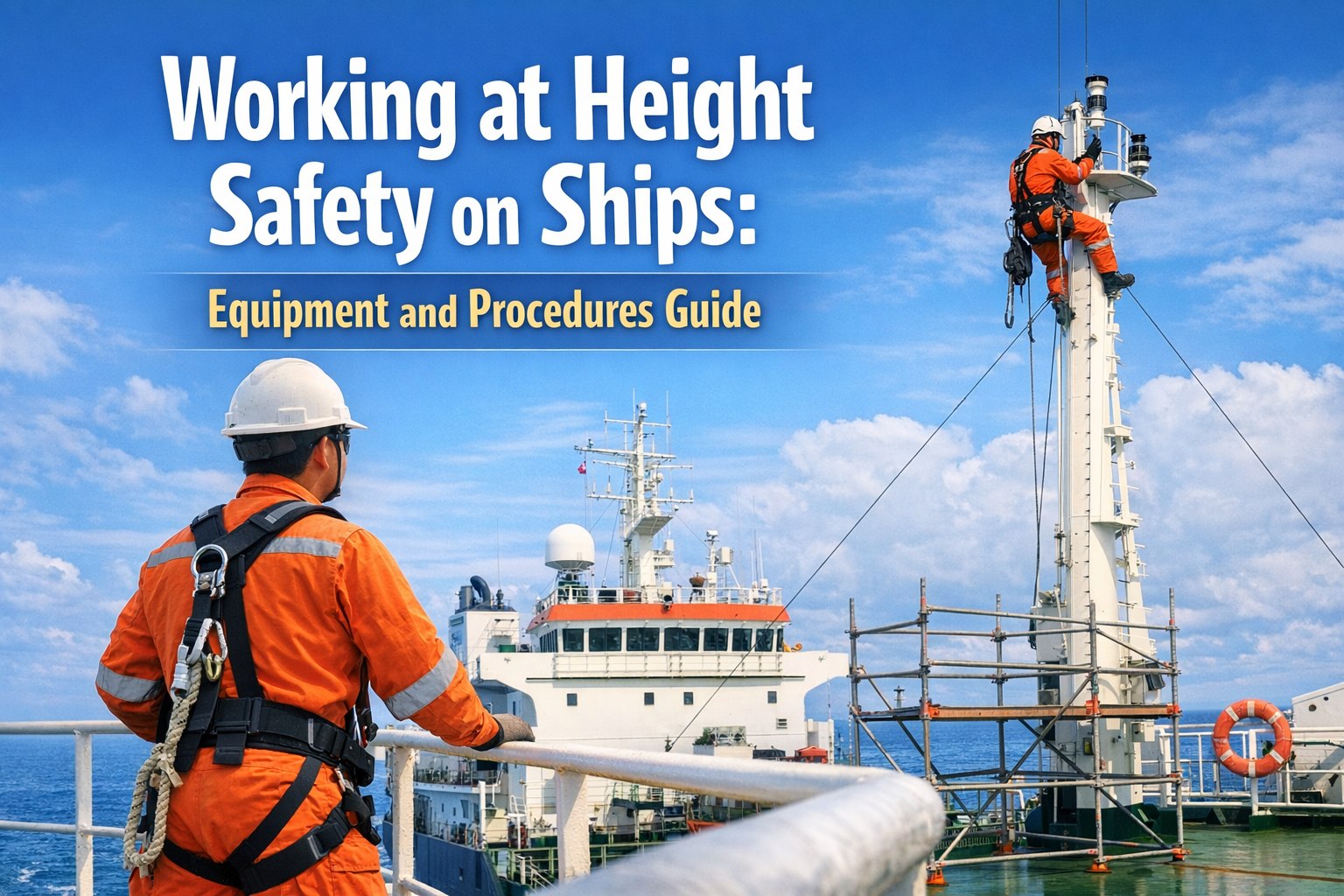
Falls from height remain one of the leading causes of serious injury and death on ships — from mast and funnel maintenance to overside painting, crane operations to cargo hold work. Unlike shore-based construction where work platforms are static, shipboard height work adds the complicating factors of vessel motion in a seaway, wet and slippery surfaces from sea spray and weather, wind forces that increase dramatically with height, and the possibility of falling not onto a solid surface but into the sea or an open cargo hold. The UK Code of Safe Working Practices for Merchant Seafarers (COSWP) Chapter 17 provides comprehensive guidance: personnel working aloft must wear a safety harness with a lifeline or other arresting device at all times; where work is done overside, a working lifejacket must be worn and a lifebuoy with sufficient line must be kept ready for immediate use; personnel should be under observation from a person on deck; and other than in emergency situations, personnel should not work overside while the vessel is underway. A permit to work is required for all height work, with a risk assessment that specifically addresses the fall hazard, weather conditions, vessel motion, access method, tool tethering, and rescue plan. The rescue plan is critically important — a worker suspended in a fall arrest harness can develop suspension trauma (positional asphyxia) within 15-20 minutes, making rapid rescue essential. Marine Inspection digitalises height work permits, harness inspection records, and rescue equipment maintenance across your fleet — book a demo to see how.
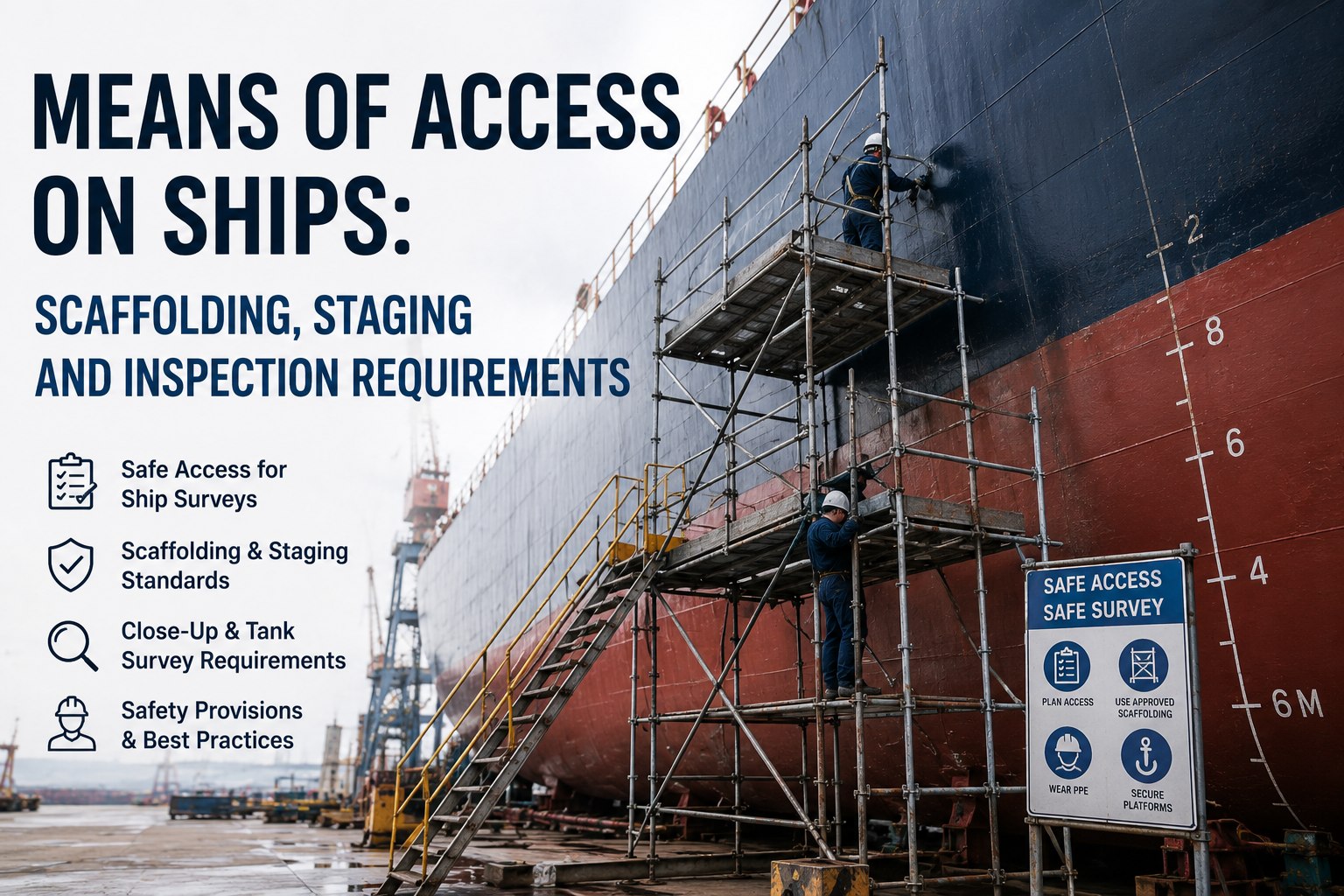
Extended work requiring stable platform. Painting, blasting, structural repair.
Assembled by competent persons only. Guardrails (42-45" top rail + mid-rail + toeboard). Secured to vessel structure. Safe working load displayed.
Before each use. After weather changes. Weekly during extended use.
Never modify or combine parts from different systems. Lock wheels on mobile scaffolds. Tool tethering on platform.
Bosun's Chair
Access to masts, funnels, rigging. Short-duration work at specific locations.
Load tested to 4x working load before each use. Secured with double-sheet bend, end seized. Safety harness worn as backup. Never hauled by powered winch.
Before every use. Gantlines, lizards, shackles inspected each rigging.
Hooks must be non-detachable type with marked SWL. Bow of shackle (not pin) rides on wire. Communication with deck maintained.
Staging (Wooden/Metal)
Overside work. Hull maintenance. Painting.
Platform min 2x 10-inch planks wide. Planks project 6-12 inches beyond supports. Not overloaded. Guardrails if over 5 feet above surface.
Before each use. After any movement or repositioning.
Controlled small movements only. Suspension cables stored dry, protected from corrosion. Insulate from hot work.
Portable Ladders
Short-duration access only — avoid as primary work platform where other methods are practical.
Secured at top and bottom. Positioned at 1:4 angle (1 foot out for every 4 feet up). Extends 1m above landing point. Non-slip feet.
Before each use. Wooden ladders: never paint (hides defects). Store in dry, ventilated space.
Three-point contact maintained at all times. Never carry tools — hoist separately. Safety harness with lifeline above work position.
Scaffold Tower (Mobile)
Open deck work. Funnel access. Accommodation block exterior.
Approved design only. Wheels locked during use. Outriggers deployed. Max height-to-base ratio per manufacturer. Secured to vessel structure if wind exposure.
Before each use. After repositioning.
Never move with personnel aboard. Clear overhead before moving. Access via internal ladder only.
Man-Riding (Crane)
Access where no other method is practical. Only when specifically approved.
Approved man-riding basket/cage. Crane rated for man-riding. Anti-two-block device fitted. Designed by qualified engineer. Max load never exceeded.
Visual inspection before each use by competent person. Crane service per PMS.
Personnel wear harness attached to cage. All body parts inside platform. Dedicated signaller. Smooth controlled movements only.
COSWP Chapter 17: A stage, ladder, scaffolding, bosun's chair, or scaffold tower should be used when work is to be done beyond normal reach. Any equipment must be in good condition.
Fall Protection: Harness, Lanyard, and Anchorage
The fall arrest system is the last line of defence — it only activates after everything else has failed. But if it fails too, the worker dies. Every component must be inspected before every use, and the complete system must work together. Book a Marine Inspection demo to see harness inspection records and equipment lifecycle tracking.
5-Point Full Body Harness
Must be 5-point full body harness — not a simple waist belt (waist belts cause internal injuries during fall arrest). Properly sized and adjusted to wearer. Inspected before each use for: stitching integrity, webbing cuts/abrasion/UV degradation, buckle function, D-ring condition, label legibility. Retired after any fall arrest event. Annual formal inspection by competent person.
Lanyard & Shock Absorber
Appropriate length for work being performed. Shock-absorbing lanyard for fall arrest — limits force transmitted to body during arrest. Double lanyards provide continuous protection when moving between anchor points. Snap hooks properly rated and compatible with anchor points. Inspected for wear, damage, and deployed shock absorber pack.
Anchorage Points
Must support minimum 2,270 kg (5,000 lbs) per person or be designed by qualified engineer. Positioned above the worker's D-ring where possible to minimise fall distance. Inspected for structural integrity, corrosion, and attachment security. Identified and certified anchor points preferred over improvised attachments.
Self-Retracting Lifeline (SRL)
Automatically adjusts to worker movement. Locks and arrests fall within centimetres. Allows greater freedom of movement than fixed lanyard. Must be positioned directly above work area to prevent swing fall. Serviced per manufacturer schedule. Annual calibration.
The Height Work Permit: What It Must Address
Specific Location: Exact location of work — which mast, which side overside, which hold, which crane. Not "working aloft" but "radar platform on foremast, port side."
Weather Assessment: Wind speed and forecast. Sea state and vessel motion. Temperature (cold = reduced grip strength). Precipitation (wet = slippery surfaces). Lightning risk. Work suspended if conditions deteriorate.
Access Method: Which equipment — scaffolding, bosun's chair, ladder, staging, crane basket. Inspected and certified for use. Erected/rigged by competent persons.
Fall Protection: Harness type, lanyard configuration, anchor points identified. Fall distance calculation — is there sufficient clearance for shock absorber deployment before impact?
Tool Tethering: All tools secured with lanyards to worker or harness. Tool bags with secure closures. No loose items carried aloft. Materials raised/lowered by line in containers — never carried in pockets.
Exclusion Zone Below: Area below work barricaded as no-go zone. Warning signs posted. Zone monitored throughout. Size sufficient based on height and potential tool drift.
Communication: Continuous communication between worker aloft and deck observer. Radio, hand signals, or voice. Deck observer has no other duties while monitoring height work.
Rescue Plan: How to rescue a suspended worker within 15-20 minutes (suspension trauma deadline). Equipment positioned. Rescue team identified and briefed. Practice rescue before commencing work.
How Marine Inspection Manages Height Work Safety
Digital Height Work Permits
Weather assessment, fall protection details, rescue plan, tool tethering checklist — all mandatory fields. Auto-expiry. Linked to risk assessment. Master's digital authorisation.
Harness Inspection Records
Every harness, lanyard, and SRL tracked by serial number. Pre-use inspection logged. Annual formal inspection by competent person recorded. Retirement after fall arrest documented.
Equipment Lifecycle Tracking
Scaffolding inspection records, bosun's chair load test dates, ladder condition assessments, crane man-riding basket certifications — all tracked with service intervals and expiry alerts.
Crew Competency Records
Height work training, harness use certification, scaffolding erection competency, crane man-riding authorisation — tracked per crew member across rotations.
A Harness Only Works If It's Inspected, Fitted, and Attached
Marine Inspection tracks every harness serial number, every pre-use inspection, every permit, and every rescue plan — because when a crew member is 30 metres above deck, the only thing that matters is whether the system they're depending on has been maintained.
A worker who falls and is arrested by their harness is not safe — they are in a race against time. Suspension trauma (positional asphyxia) occurs when a motionless body hangs upright in a harness: leg straps compress the femoral veins, blood pools in the lower extremities, venous return to the heart decreases, and cardiac output drops. Within 15-20 minutes, unconsciousness can occur; prolonged suspension without rescue can be fatal. This is why every height work permit must include a rescue plan that can extract a suspended worker within this window. Sign up for Marine Inspection to document rescue plans and practice rescue drill records for every height work activity.
Conclusion
Working at height on ships combines the universal fall hazard with maritime-specific challenges: vessel motion, wet surfaces, wind exposure, and the possibility of falling into the sea or an open hold. COSWP Chapter 17 mandates safety harness with lifeline at all times, lifejacket for overside work, lifebuoy ready for immediate use, and continuous observation from deck. Six access methods (scaffolding, bosun's chair, staging, ladders, scaffold towers, crane man-riding) each have specific requirements for assembly, inspection, and safe use. The fall arrest system (5-point harness, shock-absorbing lanyard, certified anchorage, SRL) is the last line of defence — every component inspected before every use, retired after any arrest event. The height work permit must address weather, access method, fall protection, tool tethering, exclusion zones, communication, and rescue plan — with the 15-20 minute suspension trauma window making rescue planning non-negotiable. Marine Inspection provides the digital platform that connects permits, harness inspections, equipment lifecycle tracking, and crew competency into one system — book a live demo today.
Frequently Asked Questions
FAQ 01
When is a permit required for working at height on a ship?
A permit to work is required for all working at height activities on ships — working aloft (masts, funnels, radar platforms), working overside (hull painting, staging), work in cargo holds from elevated positions, crane and davit maintenance, and any task where a person could fall to a lower level. The permit must include a specific risk assessment addressing fall hazard, weather conditions, vessel motion, access method, fall protection system, tool tethering requirements, exclusion zone below, communication arrangements, and a rescue plan capable of extracting a suspended worker within 15-20 minutes. The responsible officer must continuously monitor weather conditions and has the authority to suspend work if conditions deteriorate. No height work should be conducted overside while the vessel is underway except in emergency situations.
FAQ 02
What type of harness is required for shipboard height work?
A 5-point full body harness is required — not a simple waist belt. Waist belts concentrate fall arrest forces on the abdomen and can cause serious internal injuries. A full body harness distributes forces across shoulders, chest, and thighs. The harness must be properly sized and adjusted to the wearer, inspected before every use (check stitching, webbing condition, buckle function, D-ring integrity, label legibility), and used with a shock-absorbing lanyard or self-retracting lifeline attached to a certified anchorage point capable of supporting at least 2,270 kg per person. Double lanyards provide continuous fall protection when moving between anchor points. A harness must be retired from service after any fall arrest event — the shock absorber deploys permanently and the harness may have sustained invisible structural damage.
FAQ 03
What is suspension trauma and why is a rescue plan essential?
Suspension trauma (positional asphyxia) occurs when a person hangs motionless in a harness after a fall arrest. Leg straps compress the femoral veins in the upper thighs, blood pools in the lower extremities, venous return to the heart decreases, and cardiac output drops — causing unconsciousness within 15-20 minutes and potentially death if rescue is not effected. This means every height work permit must include a rescue plan that can extract a suspended worker within this window. The rescue plan must specify: who will perform the rescue, what equipment they will use (rescue descent device, ladder, crane), where the equipment is positioned, and how they will access the casualty. Rescue teams should practise the rescue procedure before the height work begins — not for the first time during an actual emergency.
FAQ 04
How should a bosun's chair be rigged and inspected?
Per COSWP: every time a bosun's chair is rigged for use, the chair, gantlines, and lizards must be thoroughly examined and load tested to at least four times the load they will be required to lift before a person is hoisted. The chair should be secured to the gantline with a double-sheet bend with the end seized to the standing part. Hooks should not be used unless they are of a type that cannot be accidentally dislodged and have a marked safe working load. When riding on topping lifts or stays, the bow of the shackle (not the pin) must ride on the wire. A safety harness must always be worn as backup when using a bosun's chair. Never use powered winches to haul personnel aloft — manual hauling with controlled movement only. Communication with deck personnel must be maintained throughout.
FAQ 05
What precautions are required for overside work?
COSWP mandates specific precautions for overside work: (1) Working lifejacket (personal flotation device) or buoyancy garment must be worn in addition to the safety harness. (2) A lifebuoy with sufficient line attached must be kept ready for immediate use at the work location. (3) Personnel must be under continuous observation from a person on deck whose sole duty is monitoring the overside workers. (4) Overside work should not be carried out while the vessel is underway except in emergency situations. (5) When alongside, assess the risk of crushing between hull and quay/fender. (6) Propeller/thruster suction zones must be identified and avoided — all propulsion and thrusters confirmed locked out. (7) Staging must be properly secured to the vessel with guardrails and toeboards. (8) Communication between overside workers and deck observer must be continuous.
Book Your Live Demo
Every Harness Inspected. Every Permit Documented. Every Worker Protected.
Marine Inspection tracks height work permits, harness serial numbers, pre-use inspections, equipment certifications, rescue plans, and crew competency — the complete platform for managing the most dangerous routine work on your vessel.