SIRE 2.0 Inspection Timeline: Request to Report Guide
A SIRE 2.0 inspection is usually described as a day on board, which is the smallest part of it. The sequence runs from the moment a member company raises a request to the moment a report becomes visible to every recipient, and a superintendent’s influence over that sequence is distributed very unevenly. Almost all of it sits before the inspector arrives and in one narrow, time-boxed window after the report is submitted — a window that closes on its own whether or not anybody uses it.
SIRE 2.0 · Request to report
Three windows, and you only control two of them
The preparation window is long and quiet, the inspection itself is short and largely out of your hands, and the comment window runs for fourteen days and then publishes regardless. Knowing which stage you are in decides whether an issue is fixable or merely recordable.
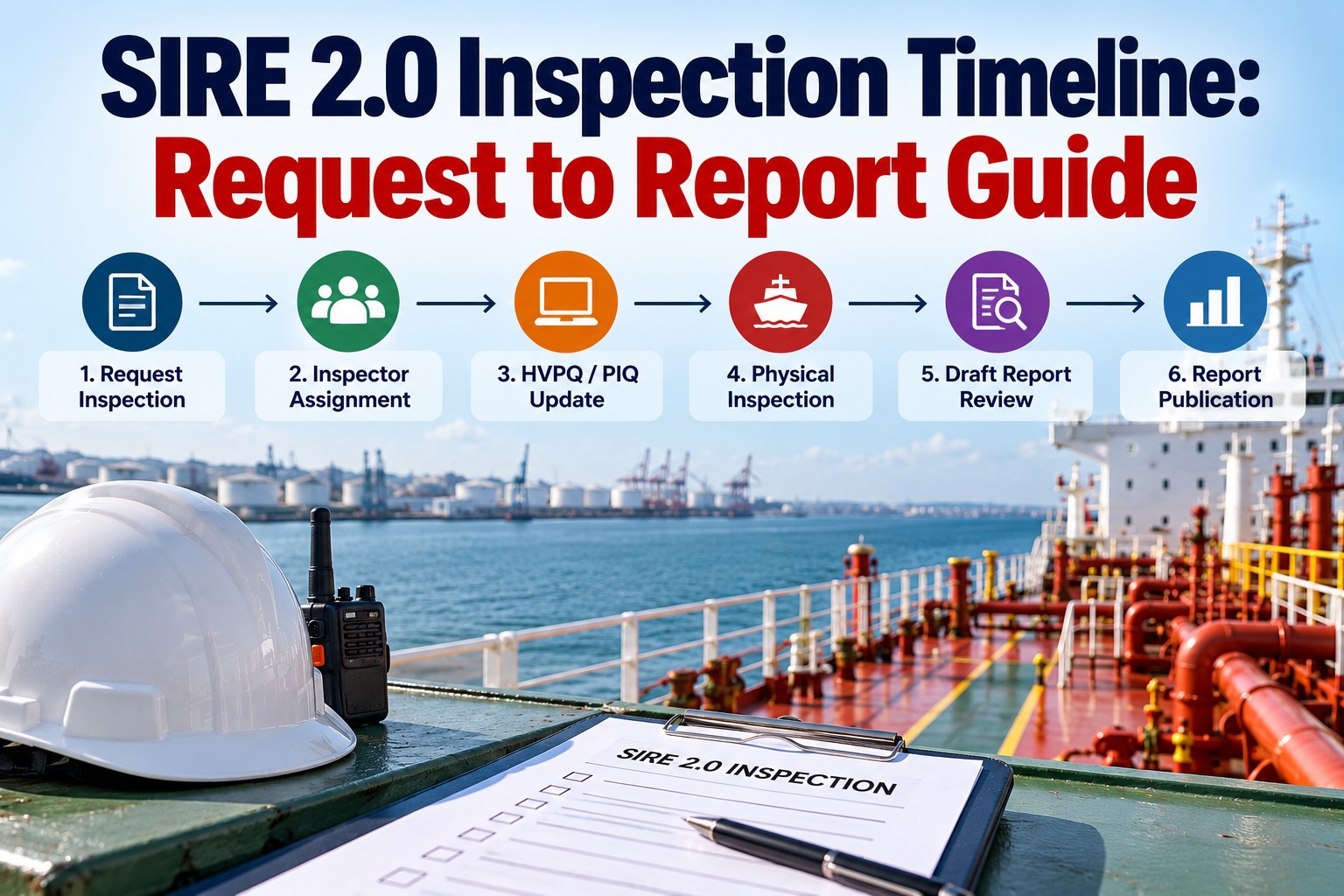
Six stages, three of which happen after the inspector has gone ashore. The programme mechanics behind the question set are covered in our SIRE 2.0 inspection guide; this is the chronology.
Stage by stage, with the actor named
Stage
Who acts
Your part in it
Cost of getting it wrong
Request raised
A member company with a commercial interest in the vessel
None directly, though a cancellation route exists where circumstances change
An inspection arranged at a port call you cannot properly support
Inspector assigned
The programme, with the inspector accepting
Confirming the port call, agent and access arrangements
Lost time at the gangway and a poor opening impression
Observations arising from your own paperwork before anyone looks at the ship
Inspection on board
The inspector, recording in the issued editor
Availability of people, records and spaces during the visit
Findings that reflect what could not be shown rather than what is wrong
Report submitted and reviewed
Inspector, then the submitting member
None — the report may go back to the inspector more than once
Nothing you can influence; this is the quiet stage
Comments and publication
The vessel operator, then the programme
Your written response against the observations, before the clock runs out
A report published with findings and no operator voice beside them
Groundwork before a request ever arrives
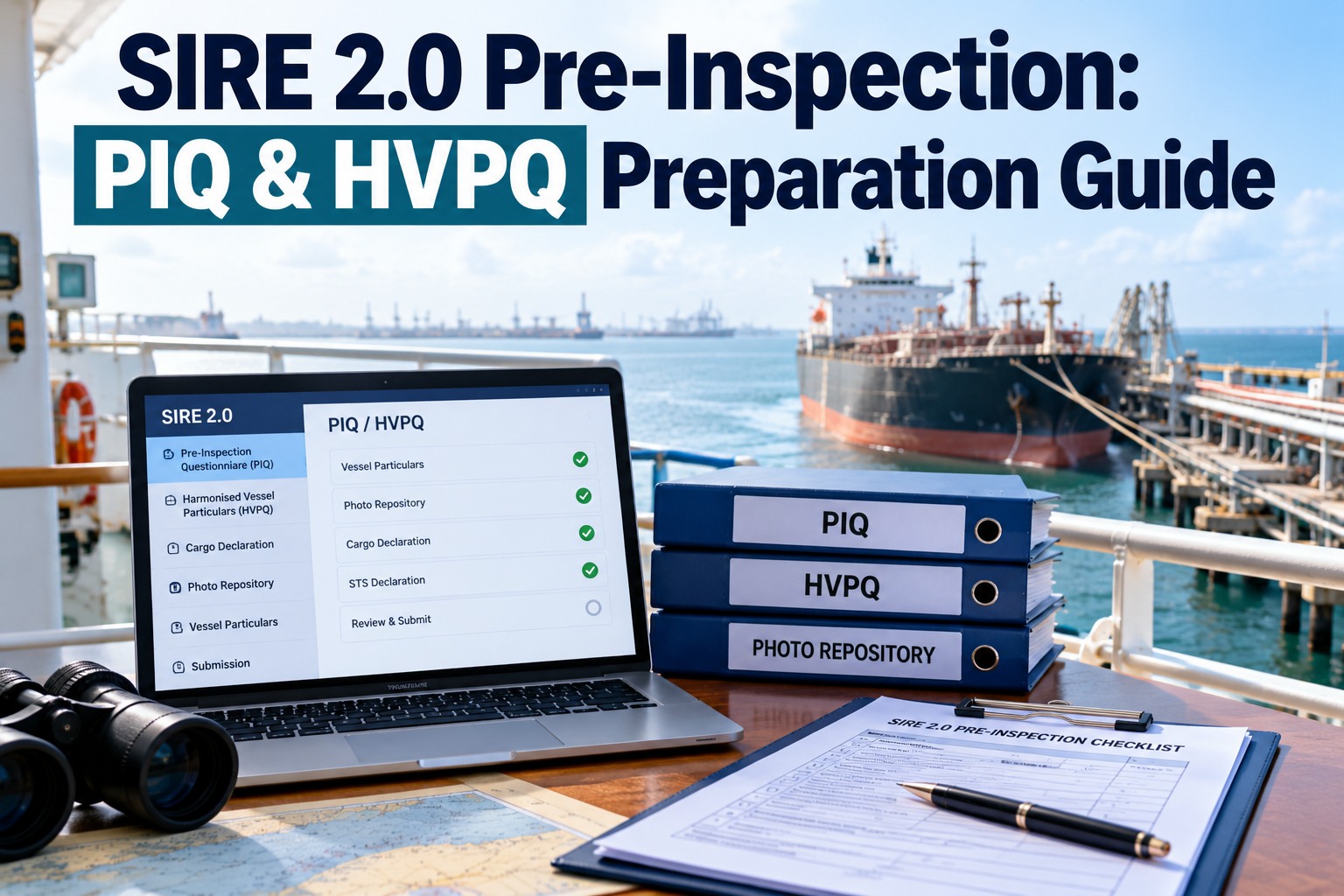
The particulars record and the officer matrix are maintained continuously rather than in response to a booking, and they are read before anyone boards. Errors there have been among the most persistent sources of negative observations since the programme began, which makes them the cheapest findings in existence to avoid.
Vessel particulars
Maintained by the operator in the particulars editor and read in advance. Specifications and equipment details that disagree with the ship are findings waiting to be written, and they are entirely within office control.
Officer matrix
Submitted separately and used to judge the experience mix on board. A matrix that does not match who is actually serving undermines every answer that depends on competence.
The pre-inspection questionnaire
Answered honestly rather than optimistically. Several answers steer which conditional questions appear, so an inaccurate answer either opens scope you did not intend or leaves a contradiction on the day.
Open defects
The open list is handed over at the start. A list produced from a live system reads very differently from one assembled in the days before the visit, and the dates give it away.
PRStanding readiness, checked monthly
Particulars agree with the vessel as fitted today
Officer matrix reflects the crew currently serving
Certificates valid well beyond the next likely port call
Open defect list current, with mitigation and dates on every entry
Previous inspection observations closed with evidence on board
PCOnce a port call is fixed
Agent and access arrangements confirmed with the inspector’s requirements in mind
Key officers rostered to be aboard and available, not ashore
Records reachable in minutes by somebody who will be there
Cargo or bunker operations planned so spaces can be entered
Office contact named and reachable for the duration of the visit
The day itself
The inspector works on the hardened device issued to them, recording against the compiled question set as they go. There is no draft to negotiate at the end of the day in the way older programmes allowed, which changes what a good host does during the visit.
1
Availability beats explanation
A record produced immediately removes a question. The same record found an hour later, after the inspector has moved on, often does not. Staffing the visit properly is worth more than briefing people on what to say.
2
Let the people who do the work answer
Questions carry a human element, and an officer answering on behalf of a rating is itself informative. Prepare the person who performs the task rather than substituting for them.
3
Track what was asked, not just what was said
Keep your own note of the areas examined and the records requested. It is the only contemporaneous account you will have when the report arrives weeks later.
4
Correct in the moment where you honestly can
A document produced, a test performed, a condition put right while the inspector is still aboard is a different outcome from the same thing done the following week.
Which questions appear for your vessel is set by the compiled question set rather than by the inspector’s preference — the categories behind that are covered in our guide to core, rotational, campaign and conditional questions.
The records an inspector asks for, reachable while they are still standing there
Marine Inspection holds certificates, maintenance history, defects and previous findings against the vessel, so availability on the day stops depending on who happens to be aboard.
Once the report is submitted it moves through a defined set of states, and the operator only enters the chain near the end. Knowing the shape of it stops a superintendent chasing people during the stage where nothing is expected of them.
Submitted
The inspector files the report and a document version is produced. The member company that requested the inspection can now read it; you cannot.
Resubmission
Where the submitting member wants changes, the report returns to the inspector, who revises it in the online editor. This can happen more than once, and no new document version is produced each time.
Submitter validated
The member accepts the report, having been able to see what the inspector changed. A fresh document version is produced and the report moves to you.
Operator comments
Your window. Comments are added against the report and you may publish when ready. If you do nothing it publishes in fourteen days.
Published
Visible to programme recipients, with the observations and your comments together in the final version. From here it is a historical record and an input to the next fixture.
Using the fourteen days properly
The comment window is the only point in the whole sequence where an operator writes into the record, and it is routinely wasted either by silence or by argument. Neither reads well to a charterer three months later.
Respond to every observation
Including the ones you accept. A blank beside an observation reads as agreement with no action; a sentence describing what was done reads as a managed response.
State the action, not the excuse
What was corrected, when, and what changed so it does not recur. A comment that only explains why the finding is unfair tells a reader nothing about the fleet.
Disagree sparingly and factually
Where an observation is wrong on fact, say so plainly with the evidence. Where it is a matter of judgement, arguing rarely helps and the energy is better spent on the action.
Diarise the deadline on the day it opens
The window runs on its own schedule, not yours. A superintendent on leave when it opens is the most common reason a report publishes with nothing beside the findings.
Observations that recur across reports say more than any single entry, which is why the closure behind each comment matters more than its wording. The maintenance side of that loop is covered in our guide to planned maintenance systems, and you can book a demo to see observations tracked from report to closure.
Timing a port call against the sequence
Because the back half runs on other people’s schedules, the gap between a visit and a published report is measured in weeks rather than days. That lag has practical consequences for a superintendent planning vessel movements and crew changes.
The report arrives long after the crew has changed
Officers who answered the questions may be ashore by the time an observation needs a response. Capture their account during the visit, while the detail is still available, rather than reconstructing it from a report weeks later.
A fixture can turn on a report in progress
Between submission and publication the requesting member can already read the findings while you cannot. Assume that commercial conversations about the vessel are happening with information you have not yet seen.
Two inspections close together compound
Where a second inspection falls before the first report is closed out, the same unresolved item is recorded twice. Where you have discretion over timing, putting space between them lets the actions land first.
Yard periods are the natural reset
Items that genuinely need a docking are better carried into an inspection with the docking date attached than carried silently. Aligning the next inspection after the yard period, where the trade allows, removes a class of observation entirely.
None of this is within an operator’s gift to decide outright, since the request belongs to a member company. It is within a superintendent’s gift to be ready early and to keep the vessel in a condition where an unexpected request is an inconvenience rather than a problem — and you can book a demo to see readiness tracked continuously across a fleet rather than assembled per visit.
Marine Inspection modules across the lifecycle
Each stage of the sequence maps onto a part of the system, which is the practical answer to a superintendent asking where the work actually gets done.
Holds the particulars, certificate validity and officer matrix that are read before anyone boards, with expiry tracking so the record is current at any moment rather than refreshed when a request arrives. This is the module that prevents the findings that come from your own paperwork.
Runs internal and pre-arrival inspections on the same question shapes the external one uses, so the gaps are found by your own people first. The Finding Register carries each observation from the report through its action to verified closure, across vessels rather than per visit.
MaintenancePlanned Routines · Defect Register · Work Orders
Feeds the open defect list directly: defects raised where they are found, each carrying its risk assessment, compensating measure, owner and date, with the open list produced on demand instead of assembled before a visit.
Keeps the current revision at the point of use and the superseded ones out of circulation, and stores the photographs, test results and job records that turn an answer into something an inspector can be shown within the visit.
Crew & CompetenceCertificates · Familiarisation · Training Records
Tracks who is qualified for what and when they were taken through it, which is what supports the human element of the question set and keeps the officer matrix honest after a crew change.
Shows repeated observations, ageing defects and overdue actions across the fleet, so a pattern becomes a procedure change rather than the same comment written into three separate reports.
SIRE 2.0 timeline: frequently asked questions
Who starts the process?
A member company with a commercial interest in the vessel raises the inspection request through the programme. The operator does not book it, although a defined cancellation route exists where circumstances change after a request is made.
How long does the operator have to comment?
Fourteen days from the point the submitting member validates the report and it moves to you. You may publish sooner once your comments are in; if you do nothing, it publishes automatically at the end of that period with the observations and no response beside them.
Can the report change after the inspector submits it?
Yes, before it reaches you. The submitting member can send it back for resubmission, and the inspector revises it in the online editor. That can happen more than once, and the member can see exactly what changed before accepting it.
Can observations be negotiated on board?
Not in the way older programmes allowed. The inspector records against the compiled question set during the visit, so the practical options are producing the evidence while they are still aboard or responding in the comment window later.
Which stage deserves the most preparation effort?
The one before the request exists. Particulars, the officer matrix, certificate validity and the open defect list are read in advance and maintained continuously, and errors in them generate observations before anyone has looked at the ship.
What should a comment actually say?
What was corrected, when, and what changed so it does not recur. Respond to every observation including accepted ones, disagree only where an observation is wrong on fact, and keep the energy for the action rather than the argument.
Request to report
Spend the effort where the lifecycle gives it back
Marine Inspection carries each stage in the module that owns it — records before the request, inspections and findings during, defects and actions after — so preparation is continuous and the comment window is met with evidence rather than recollection.