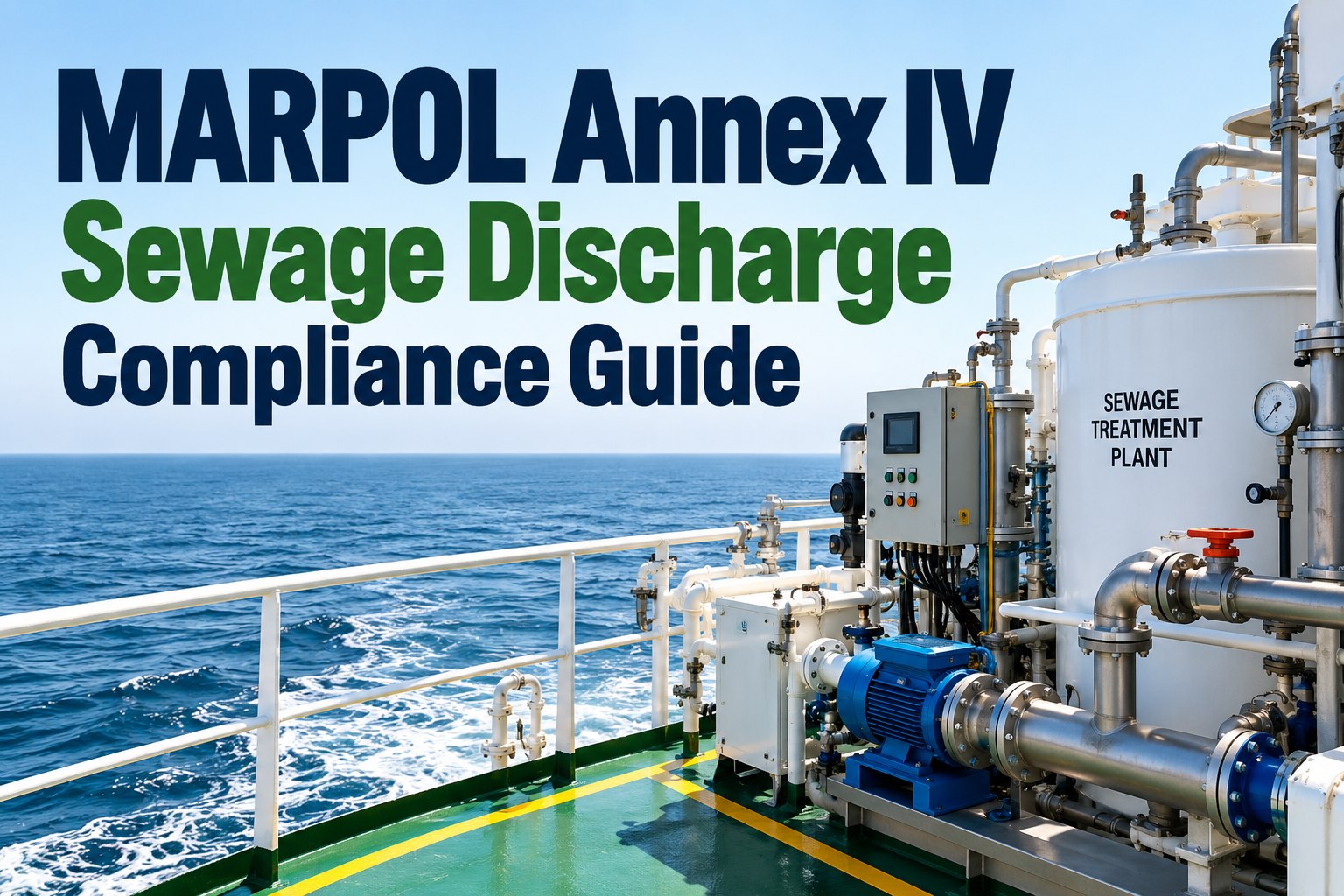
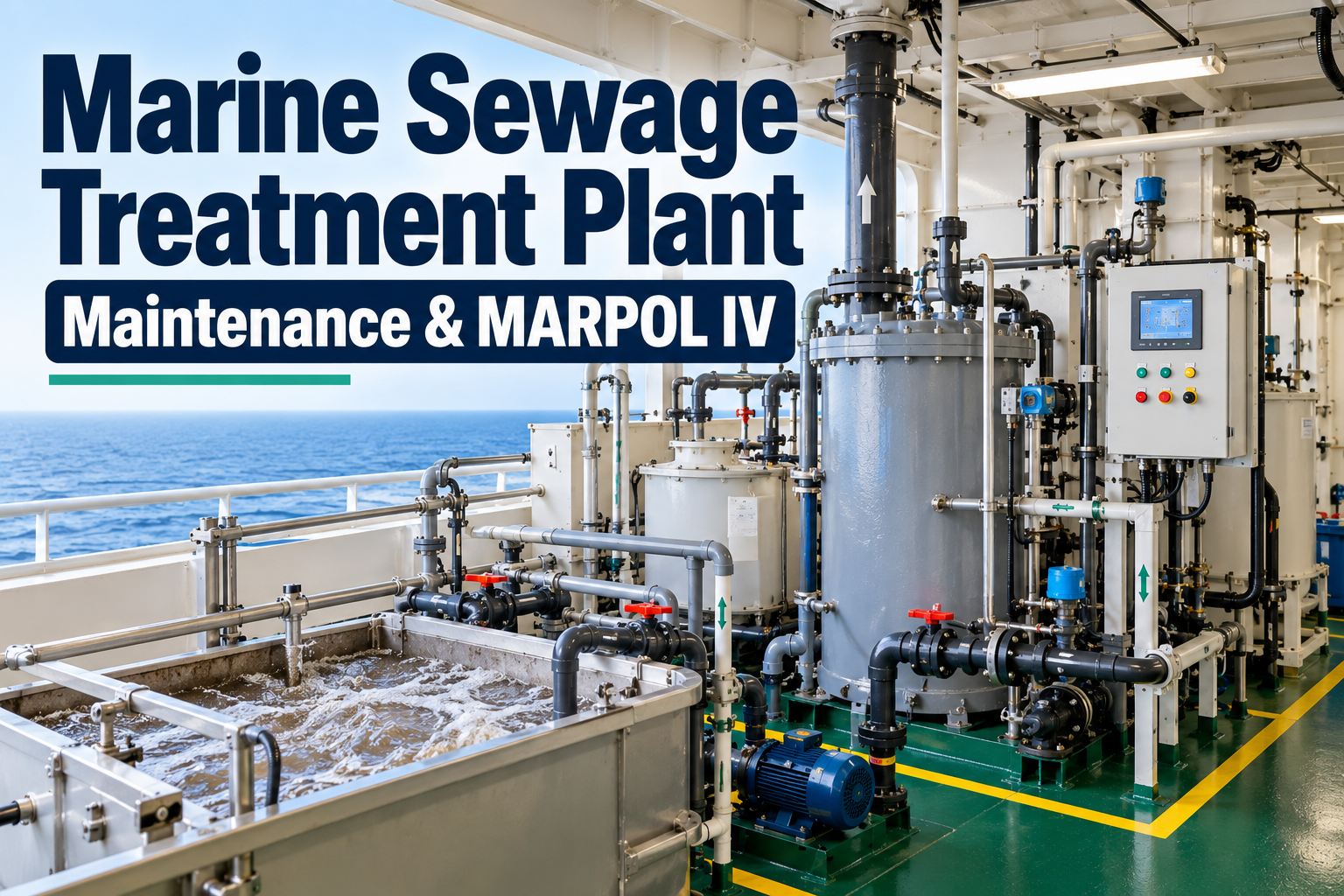
Sewage is the quiet part of MARPOL. It rarely makes headlines, but it can appear in a port state control inspection as a failed treatment plant, a missing certificate or a discharge valve found open in port. For the Designated Person Ashore (DPA) the question is whether the system on board matches what the Safety Management System (SMS) says, and whether the evidence is there to show it. MARPOL Annex IV sets where and how sewage may be discharged, what the treatment plant must achieve and which ships need an International Sewage Pollution Prevention (ISPP) Certificate. This guide explains the discharge distances, the effluent standards, how a biological plant is kept working, special areas such as the Baltic Sea and the records worth keeping now. See how to digitise your sewage plant records in Marine Inspection, with checks, photos and corrective actions stored per vessel.
MARPOL ANNEX IV
Where the Ship Is Decides What Can Go Overboard
Distance from land, the type of treatment and the area all change what is allowed. Read the water before you open the valve.
0 to 3 nmApproved plant effluent only
3 to 12 nmAlso comminuted and disinfected sewage
Beyond 12 nmAlso untreated sewage, en route at 4 knots or more
Land3 nm12 nmOpen sea
Free trial available. Or book a walkthrough built around your own fleet. Special areas and local rules can be stricter than this scale.
Which Ships Need an ISPP Certificate
400 GT+
Ships of 400 gross tonnage and above on international voyages
>15 persons
Smaller ships certified to carry more than 15 persons
5 years
Certificate validity, with no annual or intermediate endorsement
Ships under 400 GT carrying 15 persons or fewer may obtain a statement of compliance on request from some flags. Check your flag's notice. The ship must have one of: an approved sewage treatment plant, a comminuting and disinfecting system, or a holding tank sized for all sewage.
Discharge Rules by Type of Sewage
Distances and conditions follow Annex IV regulation 11 as summarised by flag and P&I sources. Confirm against your ship's ISPP Certificate and flag notice.
Position, speed and valve status are the facts an inspector will ask for. Track sewage checks free so each discharge, valve seal and plant check has a time and a name on it.
Effluent Standards for Treatment Plants (MEPC.227(64))
100
per 100 ml
Thermotolerant coliforms, maximum
35
mg/l
Total suspended solids, maximum
<0.5
mg/l
Residual chlorine, recommended
Limits are as set in the 2012 guidelines for plant testing, shown here without the flow-ratio adjustment. They apply to plants installed on or after 1 January 2016. Older plants follow earlier standards, so check your plant's approval.
Keeping a Biological Plant Alive: Four Things It Needs
A
Air
Aeration must deliver continuous air to the bacteria. Check blowers and diffusers.
B
Bacteria
The colony needs time to establish after start-up and dies if poisoned.
F
Flow
Comminutor, inlet filter, vacuum and return flow must work without blockage.
D
Disinfection
Manufacturer-recommended chemicals must be on board and dosed as the manual says.
What Typically Kills a Plant
Non-biodegradable items flushed into the system
Unapproved cleaning chemicals reaching the plant
Loss of aeration or vacuum left unreported
Crew unfamiliar with the operating manual
What Keeps It Compliant
Crew briefed on what may and may not be flushed
Approved cleaning products only, and a list posted
Planned checks on air, flow and dosing
Defects logged with a repair date
Special Areas: The Baltic Sea Sets the Pattern
1 Jun 2019
New passenger ships must comply
1 Jun 2021
Existing passenger ships must comply
1 Jun 2023
Existing ships on routes east of 28 degrees 10 minutes E
In the Baltic Sea passenger ships may not discharge untreated sewage. They must either use a plant meeting MEPC.227(64), including the nitrogen and phosphorus removal option for special areas, or keep a holding tank with adequate capacity. Coastal states must provide port reception facilities. Local rules such as US no-discharge zones, and national limits on treated black and grey water in some coastal waters, can be stricter still.
Make Sewage Records Easy to Prove
Log plant checks, valve seals, maintenance and defects in one searchable trail, ready for the inspector or the internal audit.
Free trial available. Or book a walkthrough built around your own fleet.
Sewage Records: Keep Now, and What the Revision May Add
Keep Now
ISPP Certificate and the plant's type-approval documents
Routine maintenance and repair records for the system
Records showing overboard valves closed and sealed in port and special areas
Log of any emergency discharge, as your flag requires
Reports on inadequate port reception facilities
Crew training and familiarisation records
Under Revision (Draft)
A sewage record book for discharges, effluent quality and maintenance
A sewage management plan for each ship
Updated type-approval guidelines for treatment plants
Work continues in a correspondence group, with unfinished items due at the 2027 sub-committee
Annex IV does not currently require a dedicated sewage record book. The IMO is revising Annex IV, and a sewage record book and management plan are in draft with no adoption date. Keeping a discharge and maintenance log now puts you ahead of that change.
What Port State Control Treats as Serious
!No valid ISPP Certificate on board
!Treatment system not working
!Untreated sewage discharged directly overboard
!Crew unfamiliar with pollution prevention procedures
These are the detention-level issues listed in Paris MoU guidance on Annex IV. A DPA review of plant checks and crew training before the inspection closes most of these gaps.
How far from land can sewage be discharged?
Untreated sewage must be discharged more than 12 nautical miles from land, with the ship en route at 4 knots or more. Comminuted and disinfected sewage from an approved system must be more than 3 nautical miles from land. Effluent from an approved treatment plant has no set distance under Annex IV, outside special areas and local limits.
Which ships does Annex IV apply to?
Ships of 400 gross tonnage and above on international voyages, and smaller ships certified to carry more than 15 persons. These need an ISPP Certificate, valid for five years.
Is a sewage record book required?
Not at present. A sewage record book and a sewage management plan are in draft under the Annex IV revision. Many companies already keep maintenance and discharge records, and inspectors may ask for them.
See how Marine Inspection keeps sewage records ready for either case.
What are the Baltic Sea sewage rules?
Passenger ships may not discharge untreated sewage in the Baltic Sea special area. They must use a compliant treatment plant or a holding tank. The rules applied from 1 June 2019 for new ships, 2021 for existing ships and 2023 for existing ships on routes east of 28 degrees 10 minutes E.
What does port state control check on sewage?
Inspectors check the ISPP Certificate, plant operation, including aeration, comminutor and chemicals, the discharge valves and crew knowledge. Maintenance records can also be asked for.
Get Your Sewage Records PSC-Ready
One system for plant checks, valve seals, maintenance and findings across every vessel, with a fleet view for the DPA.
Free trial available. Or book a walkthrough built around your own fleet.