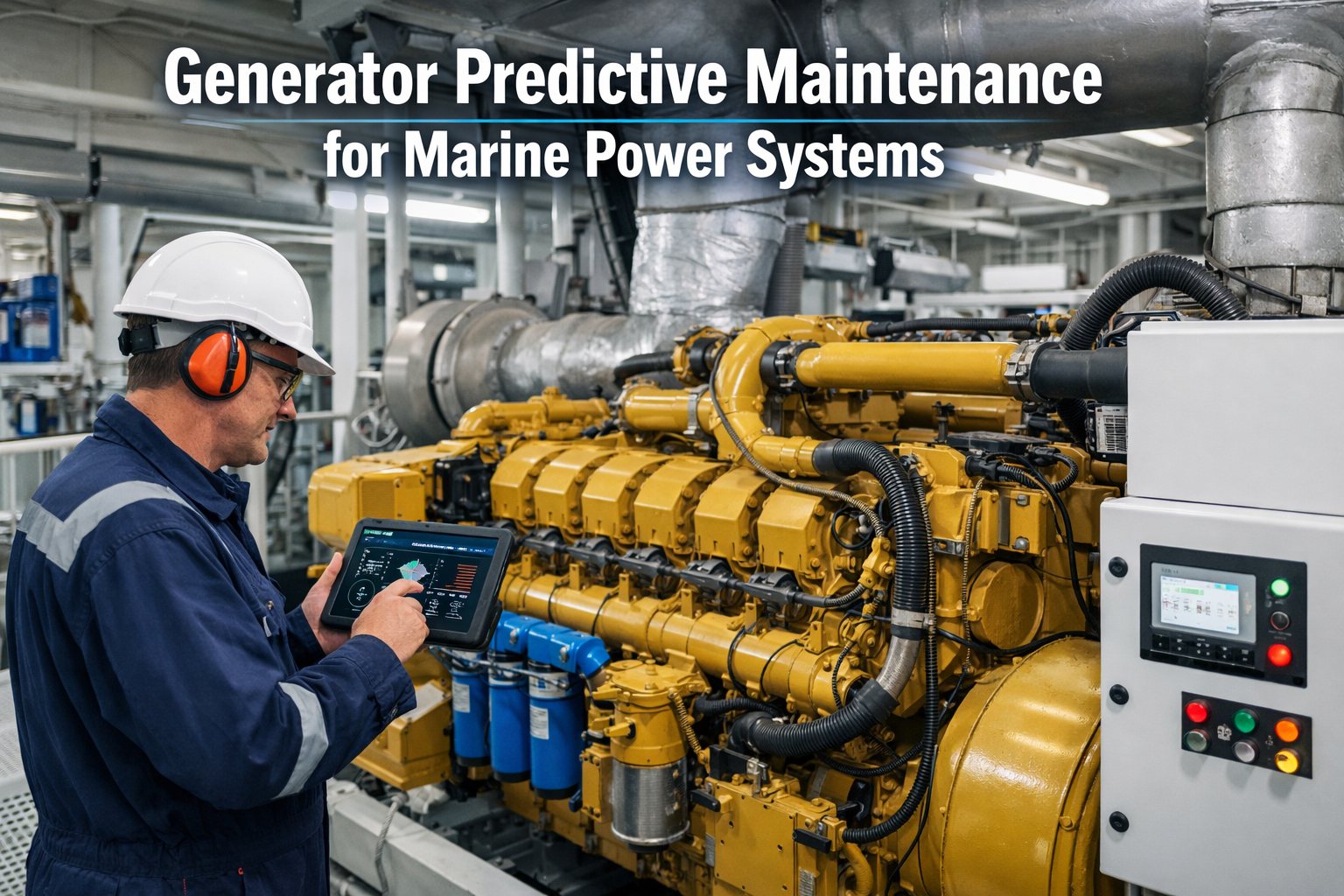
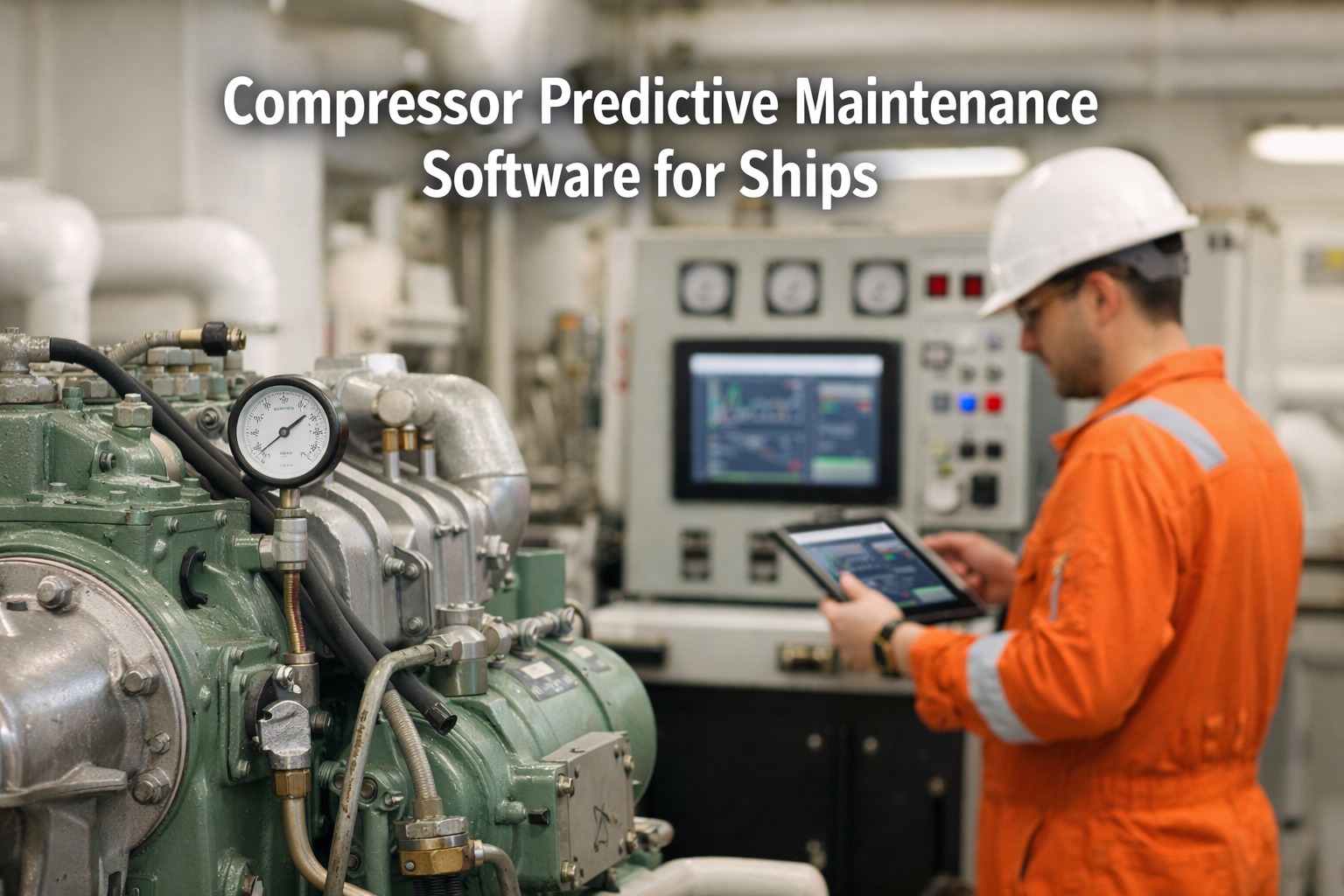
Generator Predictive Maintenance for Marine Power Systems
On March 26, 2024, the container ship Dali experienced two electrical blackouts while departing Baltimore harbor, lost propulsion and steering, and struck the Francis Scott Key Bridge — killing six workers. The NTSB found the initial blackout traced to a single loose wire that could have been identified through routine infrared thermal imaging. USCG data shows more than 6,000 power loss incidents on large vessels in U.S. waters over 22 years — an average of five per week. These are not freak events. They are the predictable result of generator systems running continuously in harsh marine environments while receiving reactive rather than predictive maintenance. Operators ready to build structured generator maintenance can start with a free account and configure schedules immediately.
Shipboard Power Generation: The Failure Landscape
6,000+
Power/Propulsion Loss Incidents in U.S. Waters (22 Years)
60%
Of Maritime Incidents Caused by Machinery Failure (2024)
65-70%
Of Marine Automation Failures Related to Power Plant Systems
900+
Power Loss Incidents Near Bridges (U.S. Only)
Generator Set Subsystems: What to Monitor and Why
A marine generator set comprises a diesel engine, alternator, control systems (AVR, governor, switchboard), and cooling/fuel/starting auxiliaries. Failure in any subsystem takes the generator offline. Marine Inspection lets operators break each generator into components with independent maintenance schedules and condition tracking.
Prime Mover (Diesel Engine)
Lube oil pressure/temperature, exhaust gas temperatures per cylinder, cooling water temperatures, fuel oil pressure, crankcase pressure, running hours
Stator/rotor winding insulation resistance, bearing temperature, vibration, output voltage and frequency, load current per phase
Winding insulation breakdown, bearing failure, air gap eccentricity, exciter diode failure, ventilation blockage causing overheating
Insulation resistance test (6-12 months), air gap check (annually), bearing lubrication (per maker), ventilation cleaning (quarterly)
AVR, Governor and Controls
Voltage stability (+/-2.5%), frequency output (50/60 Hz), load acceptance response, excitation current, rotating diode condition
Loss of excitation causing trip, voltage/frequency instability, poor load sharing in parallel, governor hunting, overspeed trip
AVR card inspection (6-12 months), rotating diode test (annually), governor oil check (monthly), overspeed trip test (annually)
Switchboard and Protection
Breaker operation, bus bar connection tightness, protective relay settings, insulation resistance of bus bars and cables
Loose connections causing arcing, breaker failure, protection relay malfunction, bus bar insulation failure. The Dali blackout traced to a single loose switchboard wire
IR thermography scan (6-12 months), breaker test (6 months), connection tightness (annually), protection relay test (annually)
Lube oil degrades, connections loosen, cooling scales build, AVR components age — detectable weeks or months before failure through structured monitoring.
Prevention: Running-hour servicing, oil analysis, IR thermography, insulation testing
2
Running Generator Trips
Protection system detects low oil pressure, high temperature, or overcurrent and trips the generator. With only one unit online, the vessel loses its main power source.
Prevention: Parallel operation when maneuvering, protection relay testing, alarm verification
3
Standby Generator Fails to Start
Auto-start fails from dead batteries, low starting air, or breaker left in manual mode. SOLAS requires emergency power within 45 seconds — only if the system works.
Prevention: Weekly start tests, battery checks, starting air pressure monitoring
4
Full Blackout
Propulsion, steering, navigation, and communications fail simultaneously. The Dali covered the distance to the bridge in approximately 4 minutes from its first blackout.
Build a Generator Maintenance Program That Prevents Blackouts
Track every generator subsystem independently — prime mover running hours, alternator insulation trends, AVR condition, protection system tests, and emergency generator readiness — with fleet-wide shore visibility.
Marine auxiliary generators accumulate 5,000-8,000 running hours per year. Modern engines allow piston/liner intervals up to 16,000 hours, but older engines follow 8,000-hour cycles. Marine Inspection manages mechanical and electrical schedules simultaneously. Shore superintendents can create an account to standardize generator maintenance fleet-wide.
Diesel Generator Running-Hour Framework
250 Hours
Routine Service
Clean lube oil and fuel oil filters
Clean turbocharger air intake filters
Check coolant level and treatment
Inspect for leaks (fuel, oil, water)
1,000 Hours
Minor Service
Change lube oil and all filters
Pressure test and adjust fuel injectors
Check and adjust tappet clearances
Crankcase inspection and crankshaft deflection
4,000 Hours
Half Decarbonization
Remove, overhaul, decarbonize cylinder heads
Inspect, lap, and test exhaust/inlet valves
Overhaul starting air valves
Clean cooling water spaces, renew gaskets/O-rings
8,000-16,000 Hours
Major / Complete Overhaul
Piston/liner withdrawal and inspection
Main and connecting rod bearing inspection
Turbocharger overhaul, renew bearings
Fuel pump overhaul, crankshaft deflection check
Alternator overhaul: bearings, insulation, air gap, AVR
Expert Review: Why Generator Maintenance Must Become Predictive
Industry Evidence
The NTSB's Dali investigation (November 2025) found the initial blackout was caused by an improperly installed wire label band that prevented full terminal insertion — a fault detectable through infrared thermal imaging. DNV's Maritime Safety Trends report confirmed machinery failure caused 60% of all maritime incidents in 2024 (up from 38% a decade earlier), with vessels over 25 years involved in 41% of incidents. Allianz recorded 250 fire incidents in 2024 — the decade's highest — with engine room fires dominating marine equipment insurance claims.
Research published in Energies (2024) found that 65-70% of all marine automation failures relate directly to power plant systems, with the AVR identified as particularly challenging to test under real operating conditions. The common thread is not equipment complexity — it is maintenance gaps: deferred servicing, inadequate switchboard inspections, untested backups, and undocumented condition data. Marine Inspection addresses these gaps with structured schedules, running-hour triggers, and documented completion records visible to both ship and shore. Operators can book a platform walkthrough to see this in action.
Protect Your Fleet's Power Generation Systems
Running-hour schedules for diesel engines, insulation trending for alternators, protection system testing logs, and emergency generator readiness verification — all in one platform with fleet-wide shore visibility.
Can the platform track diesel engine and alternator maintenance on separate schedules?
Yes. Each generator set can be broken into subsystems with independent schedules. The diesel engine tracks running-hour tasks (250h filter clean, 1,000h injector test, 4,000h cylinder head overhaul) while the alternator tracks calendar-based electrical tasks (6-month insulation resistance, annual air gap check). Both run simultaneously and overdue tasks are flagged separately.
Does the platform support logging condition monitoring data like insulation resistance and exhaust temperatures?
Yes. Insulation resistance readings, exhaust gas temperatures per cylinder, lube oil analysis results, vibration readings, and bearing temperatures can all be recorded against each generator. Over time this builds trending history that reveals gradual deterioration — giving engineers data to plan interventions before failure.
How does the platform handle emergency generator testing documentation?
Emergency generator testing — weekly auto-start tests, monthly load tests, quarterly blackout drills — can be configured as recurring tasks with mandatory completion fields. Each test generates a documented record visible to shore management and creates an audit trail for PSC inspections and ISM audits.
Can shore management monitor generator compliance across multiple vessels?
Yes. The fleet dashboard displays completed, due, and overdue generator tasks for every vessel. Superintendents can filter by subsystem or by vessel, enabling coordinated decisions without relying on monthly reports.
How quickly can generator maintenance be set up?
Signup is instant and free. For a vessel with three main generators and one emergency generator, setup typically takes one to two hours. The system then manages schedules automatically, tracks running hours, and flags overdue tasks.