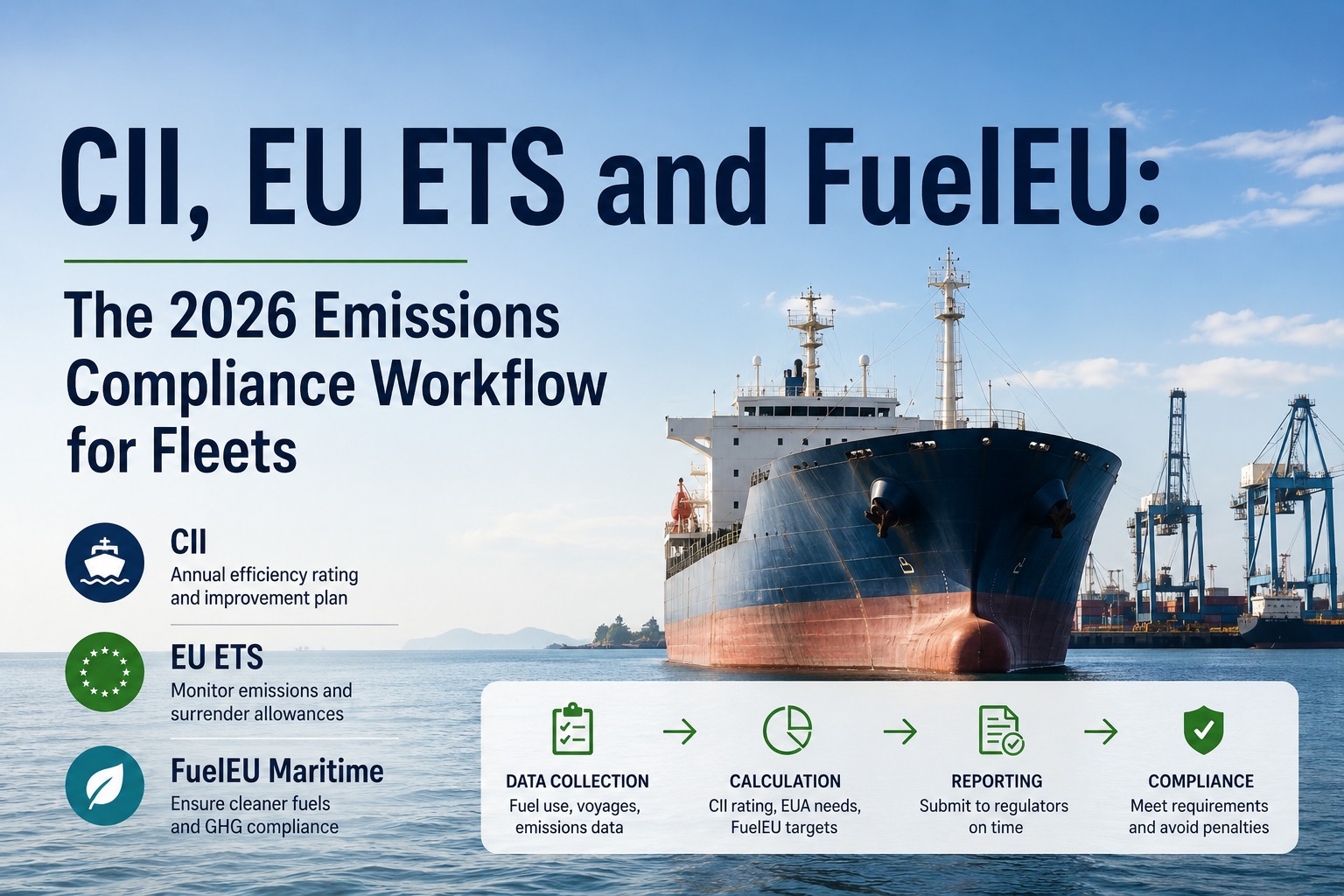
Norway's maritime sector faces unprecedented emission control complexity in 2026 as four overlapping regulatory frameworks—IMO CII ratings, EU ETS carbon costs, FuelEU Maritime intensity limits, and Norwegian national targets—create simultaneous compliance requirements for 1,800+ vessels. Norwegian operators now manage CII ratings determining vessel charterworthiness, EU ETS costs reaching $180-$320 per ton CO2, FuelEU Maritime penalties potentially exceeding $850,000 annually, and domestic 55% emission reduction mandates by 2030. The operators achieving compliance without operational disruption implement integrated digital emission monitoring platforms connecting fuel consumption tracking, equipment performance analytics, and automated regulatory reporting into unified systems. Norwegian shipowners ready to implement digital emission monitoring—start your free trial can leverage Marine Inspection's platform providing systematic data collection, performance optimization, and compliance automation required to meet 2026 regulatory requirements across Arctic, North Sea, and international operations.
Regulatory Frameworks
4 Major
IMO CII, EU ETS, FuelEU Maritime, Norwegian targets
EU ETS Carbon Cost
$180-320
Per ton CO2 for EU trade routes (2026)
2030 Reduction Target
55%
Norwegian maritime emissions vs 2008
Annual Penalty Risk
$2.8M
Non-compliant mid-size operator exposure
IMO Carbon Intensity Indicator (CII): Performance Rating System
The IMO's CII system assigns annual ratings (A through E) based on CO2 emissions per transport work—vessels achieving D rating three consecutive years or E rating once face mandatory corrective action plans potentially restricting operations. Norwegian operators managing cargo vessels and tankers face CII challenges: harsh North Sea weather increasing fuel consumption 8-15%, Arctic route deviations adding voyage distance, and aging fleet segments operating at lower baseline efficiency. Operators implementing digital CII monitoring—schedule your demo report real-time rating visibility versus year-end surprises, identifying operational modifications delivering measurable improvement before ratings finalize.
A
Superior Performance
Top 20% efficiency. Charter premium 5-8% above market rates, preferred vessel selection.
B
Above Average
21-50% tier. Standard market access, no operational restrictions.
C
Moderate Performance
51-80% tier. Charter preference shifting toward higher-rated vessels.
D
Underperformance Warning
Bottom 20%. Corrective action required after 3 consecutive D ratings.
E
Critical Underperformance
Bottom 10%. Immediate corrective action mandatory, potential operational restrictions.
EU ETS Maritime: Carbon Cost Implications
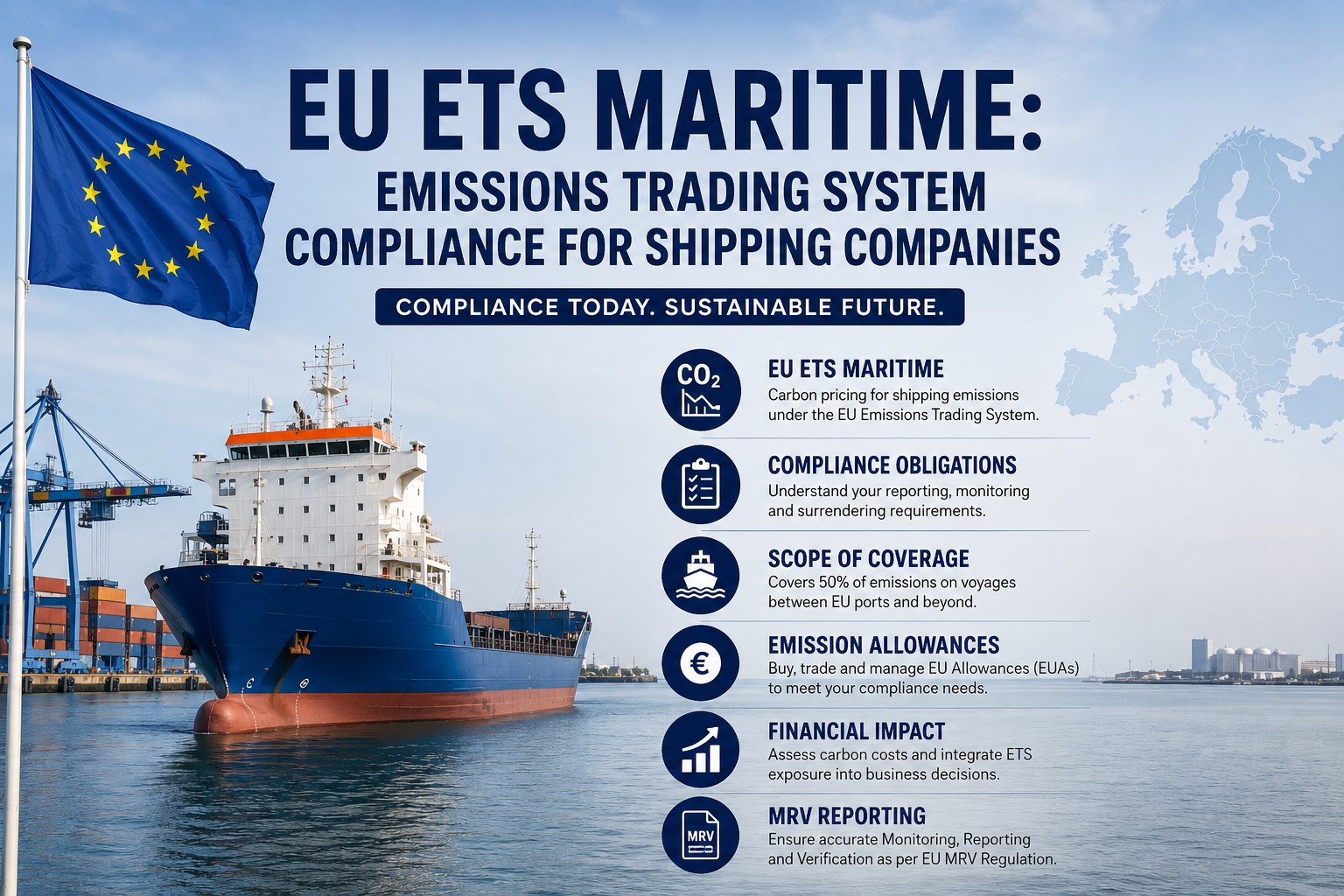
EU ETS expanded to maritime in 2024, creating direct carbon costs for vessels calling EU ports. The 2026 compliance year represents full phase-in: 100% of intra-EU emissions, 50% of EU/non-EU voyage emissions, and 100% of port stay emissions require allowances. Norwegian operators trading to EU ports—62% of vessel voyages—face $240,000-$520,000 annual ETS expense for typical 8,000 DWT cargo vessel. Vessels minimizing costs implement operational efficiency reducing emissions 8-15%, accurate monitoring preventing over-reporting, and strategic voyage planning maximizing non-EU trade where feasible.
62%
Norwegian voyages to EU ports
~28,000 annual calls subject to ETS
$240K-520K
Annual ETS cost per vessel
8,000 DWT cargo, 45 EU calls
100%
2026 compliance coverage
Full emission reporting phase-in
$420M
Norwegian fleet total exposure
Estimated annual cost across fleet
Automate EU ETS Compliance Monitoring
Marine Inspection automates fuel tracking, voyage allocation, emission calculations, and regulatory reporting—eliminating manual processes causing 15-25% over-reporting while reducing compliance time 65-75%.
FuelEU Maritime: GHG Intensity Limits
FuelEU Maritime establishes greenhouse gas intensity limits for energy used onboard vessels calling EU ports, with penalties for exceeding limits. Requirements escalate from 2% reduction versus 2020 baseline (2025) to 80% reduction (2050). Vessels exceeding limits face penalties potentially reaching $850,000-$1.8M annually. Norwegian operators require comprehensive energy monitoring—sign up now tracking main engines, auxiliary generators, boilers, and all shipboard energy sources contributing to intensity calculations.
2025-2029
Initial Phase: 2% Reduction
Achievable via operational efficiency—speed optimization, hull performance, equipment maintenance.
2030-2034
Acceleration: 6-13.5% Reduction
Alternative fuel adoption required—LNG, biofuels, or shore power necessary for compliance.
2035-2039
Deep Decarbonization: 31% Reduction
Advanced biofuels, e-methanol, or ammonia required for compliance pathway.
Digital Emission Monitoring: Multi-Framework Compliance Solution
Norwegian operators facing simultaneous CII, EU ETS, FuelEU Maritime, and national targets cannot manage compliance through manual logs and spreadsheets. Digital platforms automate data collection from vessel fuel systems, allocate consumption across frameworks, calculate metrics in real-time, and generate regulatory reports automatically. Operators implementing comprehensive platforms report 65-75% reduction in compliance time, 100% verification success versus 15-25% manual error rates, and proactive management identifying violations months before deadlines when corrective action remains feasible.
Automated Data Collection
Direct integration with fuel systems eliminating manual entry and 8-15% transcription errors
Real-Time Compliance
Continuous CII, EU ETS, and FuelEU monitoring providing months-advance warnings
Multi-Framework Reporting
Single data source generating all regulatory reports automatically—no duplicate entry
Performance Analytics
Historical patterns, efficiency degradation identification, predictive maintenance triggering
"Managing CII, EU ETS, FuelEU Maritime, and Norwegian targets through manual processes became impossible by mid-2024. We spent 120+ hours monthly across 18 vessels just collecting data and preparing reports—still discovering errors costing $85,000-$140,000 in disputed allowances. Digital monitoring transformed this from reactive firefighting to proactive management. We now see real-time CII projections, automated ETS tracking, and FuelEU monitoring flagging violations 6-8 months early. The platform reduced compliance time 70% while achieving 100% verification success—but the real value is strategic visibility enabling emissions management as operational priority rather than year-end surprise."
Predictive Maintenance Supporting Emission Reduction
Equipment degradation directly increases fuel consumption beyond regulatory thresholds. Fouled heat exchangers increase auxiliary load 8-12%, worn fuel injectors reduce efficiency 3-7%, hull fouling increases resistance 6-15%, and propeller damage degrades propulsion 5-10%. Digital platforms connecting emission monitoring with predictive maintenance identify when equipment degradation correlates with fuel increases, triggering interventions before efficiency losses become violations. Norwegian operators using integrated platforms report 12-18% efficiency improvement through condition-based maintenance. Operators can see integrated platform—book your demo demonstrating how Marine Inspection connects equipment tracking, fuel monitoring, and maintenance scheduling.
Integrate Emission Monitoring with Predictive Maintenance
Marine Inspection connects equipment condition tracking, fuel analytics, emission calculations, and maintenance scheduling—enabling identification of efficiency degradation triggering maintenance before regulatory violations occur.
Conclusion: Digital Integration for Norwegian Emission Compliance
Norway's emission control landscape demonstrates that regulatory complexity—simultaneous CII, EU ETS, FuelEU Maritime, and national targets—cannot be managed through fragmented manual processes and reactive reporting. Norwegian operators achieving compliance while maintaining competitiveness implement integrated digital platforms providing automated data collection, real-time compliance calculations, proactive violation warnings, and optimization recommendations. As requirements intensify through 2030, competitive advantage belongs to operators with digital infrastructure supporting systematic optimization rather than reactive compliance. Norwegian companies ready to implement emission monitoring—see demo now can leverage Marine Inspection's system designed for Norwegian fleet complexity across diverse vessel types, challenging environments, and overlapping regulatory jurisdictions.
Frequently Asked Questions
How do Norwegian operators manage simultaneous CII, EU ETS, and FuelEU Maritime compliance with different calculation methods?
The three frameworks use different bases: CII measures CO2 per transport work, EU ETS measures absolute CO2 emissions, FuelEU measures well-to-wake GHG intensity. Digital platforms maintain single fuel consumption dataset automatically allocated across frameworks—same fuel burn generates CII transport work calculations, EU ETS totals with voyage segment allocation, and FuelEU intensity conversions. Operators using integrated systems manage all frameworks through unified workflows versus separate manual processes.
What operational modifications deliver CII rating improvement for Norwegian vessels in harsh North Sea conditions?
Norwegian operators achieve CII improvement through: weather routing reducing consumption 4-8%, dynamic trim optimization improving efficiency 2-5%, hull cleaning every 4-6 months reducing fouling 6-12%, speed optimization during ballast legs, and port time minimization reducing auxiliary consumption. Combined implementation delivers 8-15% improvement without capital investment—sufficient to move from C to B rating or prevent D rating triggering corrective requirements.
How does EU ETS verification work and what prevents disputes costing $50,000-$150,000 per vessel?
EU ETS requires annual third-party verification confirming emission report accuracy. Disputes arise from inconsistent measurement methodology, missing voyage allocation documentation, calculation errors, and incomplete audit trails. Digital platforms prevent disputes by maintaining complete data provenance, automated consistency checking, GPS-tracked voyage allocation, and verification-ready documentation. Norwegian operators using Marine Inspection report 100% verification success versus industry average 15-25% dispute rates.
What alternative fuel strategies help Norwegian operators meet FuelEU 2030-2035 targets requiring 13.5-31% reduction?
FuelEU targets require alternative fuel adoption: LNG dual-fuel delivering 20-28% reduction meeting 2030 requirements, advanced biofuel blending (30-50%) achieving 25-40% reduction, shore power during EU calls counting as zero-emission energy, and e-methanol/ammonia for newbuilds delivering 65-95% reduction. Norwegian operators implement phased strategies: operational efficiency plus LNG/shore power meeting 2025-2030, biofuel blending bridging 2030-2035, and zero-emission planning for post-2035 compliance.
How does Marine Inspection address Norwegian offshore vessel emission monitoring complexity?
Offshore vessels face unique challenges: dynamic positioning consuming fuel without transport work creating poor CII ratings, extended standby with high hotel loads elevating FuelEU intensity, frequent port calls complicating EU ETS allocation, and hybrid battery systems requiring multi-source energy accounting. Marine Inspection provides offshore-specific features: DP fuel categorization separate from transit for CII analysis, hotel load tracking during standby, automated voyage segment detection, and battery integration for FuelEU calculations. Users report accurate monitoring versus generic solutions missing 25-40% of offshore consumption patterns.