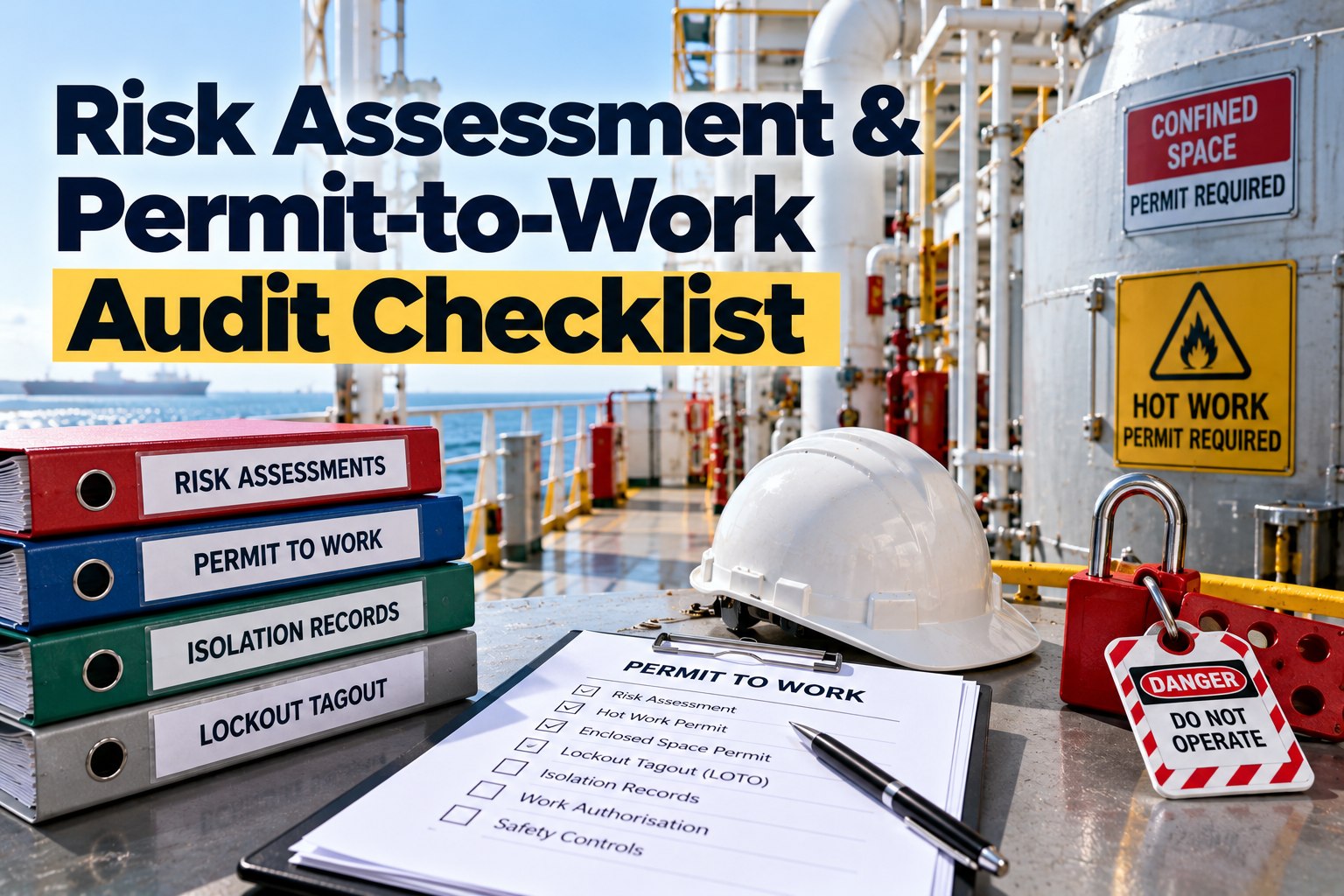
A permit-to-work system usually looks perfect in the file: every permit signed, every risk assessment attached. The audit question is whether those signatures happened in the right order, at the right time, with the right isolations in place. This checklist shows DPAs how to test risk assessments, hot work and enclosed space permits, and lockout-tagout records against what really happened, and how to run the audit with evidence in Marine Inspection.
Risk assessment and permit-to-work audit checklist: test the sequence, not just the signatures
Every permit follows the same chain. A link done late, out of order or not at all is where incidents start, and it is what a good audit looks for.
Why audit the permit-to-work and risk assessment system
Enclosed space deaths have not fallen meaningfully in more than 25 years of industry records, and most happen where a permit system was supposed to be in force. For permit design and how to set the system up, see our permit-to-work implementation guide; this page is about proving it works. See permit audits across a fleet.
Figures from InterManager’s enclosed space statistics, published March 2025.
Risk assessment audit: telling a real assessment from a copied one
A risk assessment written for the job looks different from one copied from the library. Put a few side by side and the copies stand out. The test is simple: could this assessment belong to any ship, on any day? If yes, it did not shape the work. Flag repeated assessments automatically, free.
- Names the space, the equipment and the time of day
- Hazards include the conditions on board that day: cargo, weather, other work
- Each control is something someone will do, with a name against it
- Residual risk sometimes stays medium, with extra controls stated
- Reviewed after the job, and after any near miss
- Identical wording across different jobs and dates
- Generic hazards such as “slips, trips and falls” only
- Controls written as “take care” or “follow procedures”
- Every residual risk rated low
- Signed by people who were not at the toolbox talk
Permit sampling: how to audit closed work permits
Open permits show what is happening now; closed permits show what really happened. Take a sample of each permit type from the last three months and trace each one end to end. Ten permits traced properly tell you more than a hundred skimmed. See a permit traced with its linked records.
Risk assessment first
The assessment is dated and signed before the permit was issued, not after.
Isolation logged
Isolation register shows locks applied before work started, by name and lock number.
Readings recorded
Gas readings taken just before entry and at intervals, with instrument and calibration date.
Times agree
Permit times agree with the deck or engine log, alarm log and work order.
Closed properly
Work area handed back, isolations removed and signed off, equipment tested.
Enclosed space entry permit audit against the revised IMO recommendations
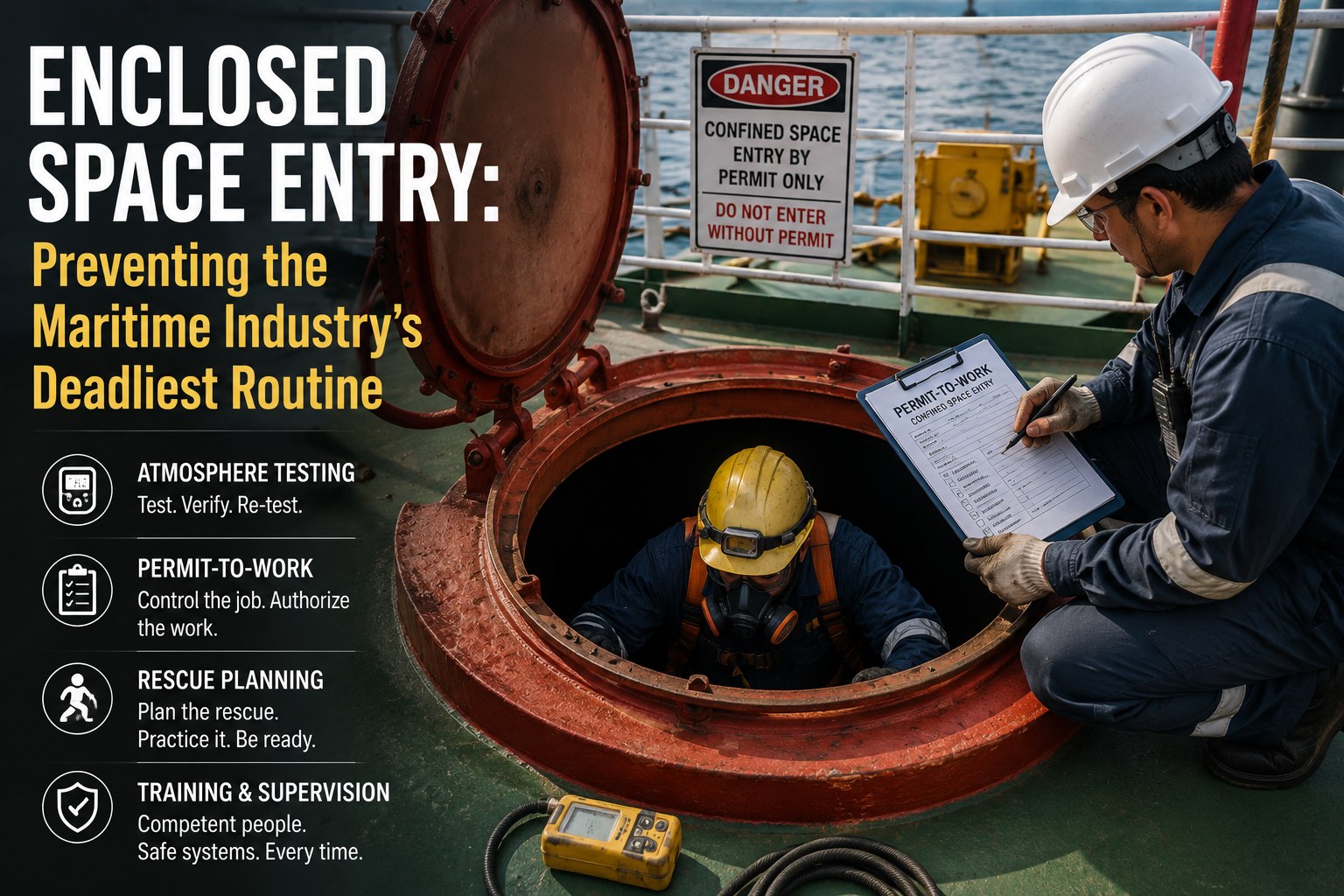
IMO’s revised recommendations for entering enclosed spaces (resolution MSC.581(110)) replace resolution A.1050(27). They add carbon dioxide to the atmosphere checks, ban single-person entry and require each ship to keep a register of its enclosed spaces. The step-by-step entry procedure is in our enclosed space entry guide; log gas readings against each permit free.
Permits, isolations and gas readings that prove each other
Link every permit to its risk assessment, isolation locks and readings, so an audit takes minutes and nothing closes while a lock is still on.
Hot work permit audit: before, during and after the job
Hot work fires often start after the welder has gone, when a smouldering spark finds insulation or oil. The audit checks that the permit controlled the whole period, including the fire watch afterwards. Procedures are in our hot work permit procedures guide; see hot work permits linked to fire watch records.
Before
- Hot work done in the workshop where possible; permit only if not
- Area and adjacent spaces cleared of combustibles and checked on both sides
- Gas-free confirmation for tanks, pipes and nearby spaces
- Fire detection isolation, if any, controlled and logged
During
- Dedicated fire watch with extinguisher and communication
- No hot work while bunkering or transferring fuel nearby
- Equipment, cables and gas bottles in good condition
- Permit posted at the work site
After
- Fire watch kept on for the period set in the procedure
- Both sides of bulkheads and decks checked
- Fire detection restored and tested
- Permit closed with times recorded
Lockout-tagout and isolation register audit
The isolation register should tell you, at any moment, which equipment is locked off, by whom, and for which permit. Audit it by walking from the register to the locks and back. Keep the isolation register digital, free.
Permit-to-work audit checklist
Tick these items during the audit. Take the permit sample first, so each item is checked against real records.
Risk assessment
Permits
Enclosed space and hot work
Isolation
How Marine Inspection catches permit-to-work clashes before they happen
The most dangerous permit is the one that is fine on its own but clashes with another: hot work next to a tank being ventilated, or a pump started while someone works on its line. Marine Inspection lays every active permit and isolation on one timeline by area, and flags overlaps before the second permit is authorised. The board below is an illustrative engine room day.
!Fuel transfer requested while hot work is still open in the purifier room. Authorisation held until PTW-114 is closed and the fire watch is complete.
Risk assessment and permit-to-work audit FAQs
What does a permit-to-work audit check?
That high-risk work is controlled in the right sequence: a job-specific risk assessment, isolation, atmosphere testing where needed, authorisation, safe work, closure and de-isolation, with records that agree with each other.
How many permits should an auditor sample?
There is no fixed number. A practical sample is several closed permits of each type from the last few months, traced end to end, plus all permits open at the time of the audit.
What are the atmosphere limits for enclosed space entry?
Under IMO’s revised recommendations: 20.9% oxygen, carbon dioxide below 0.5%, flammable gases below 1% of the lower flammable limit and toxic gases below 50% of their occupational exposure limit.
How long is an enclosed space entry permit valid?
No more than 8 hours under the revised IMO recommendations, and it must be withdrawn if conditions change.
How often are enclosed space drills required?
SOLAS requires enclosed space entry and rescue drills at least every two months, with each drill recorded.
What makes a risk assessment fail an audit?
Generic wording copied between jobs, controls nobody is assigned to, every risk rated low, and signatures from people who were not at the toolbox talk. Marine Inspection can flag repeated assessments across the fleet.
Control every job, prove every control
Digital permits, linked risk assessments and an isolation register the DPA can audit from shore.