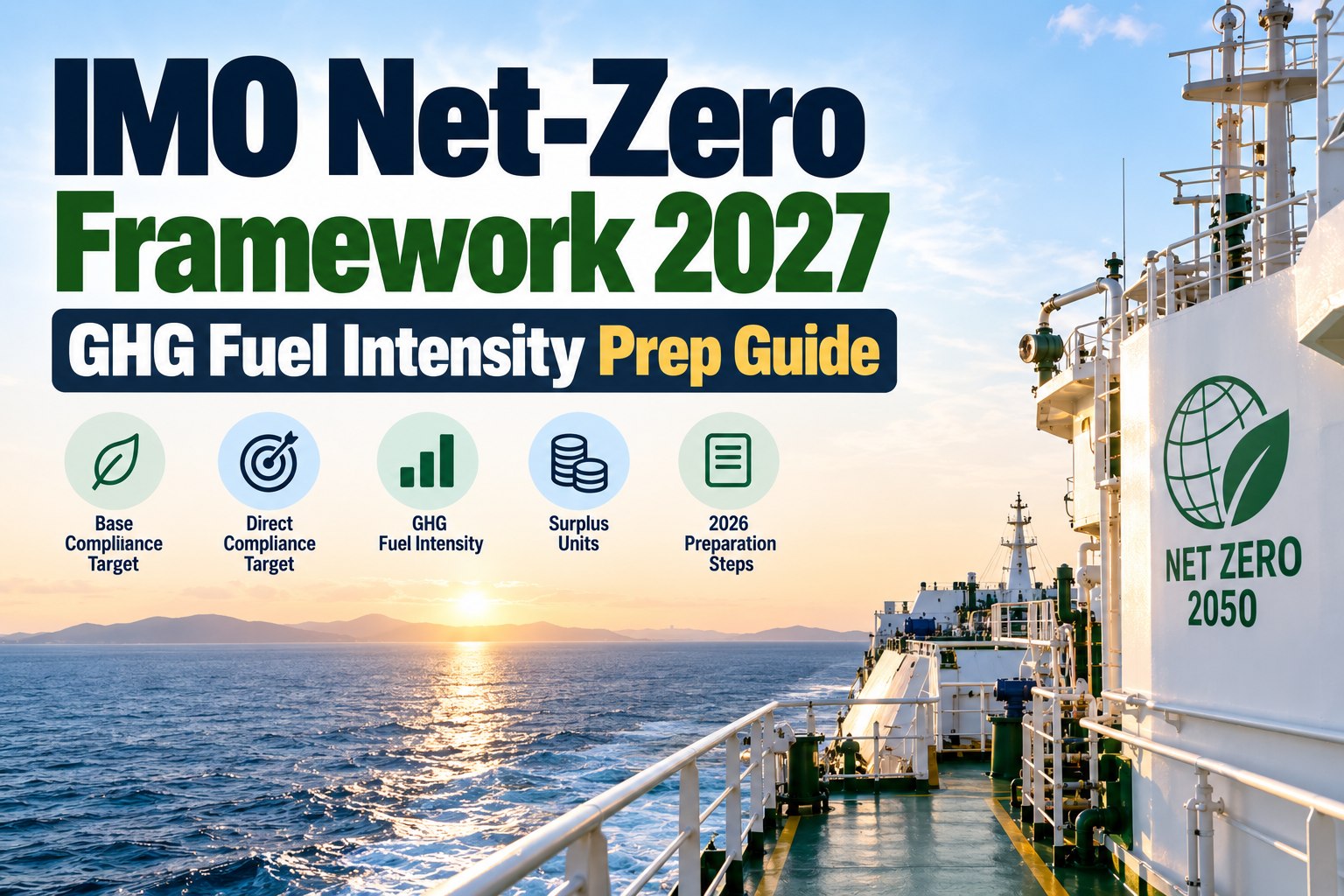
The IMO Net-Zero Framework is the most important shipping rule that is not yet in force. It would put a global limit on the greenhouse gas intensity of the energy a ship uses, and charge for missing it. For a Technical Superintendent the useful question is not whether it will pass exactly as drafted, but which fuel, engine and data decisions made in 2026 will hold up under any outcome. The framework was approved at MEPC 83 in April 2025, but adoption was adjourned in October 2025 and it is still being negotiated. This guide explains the GHG Fuel Intensity metric, the Base and Direct Compliance targets, surplus and remedial units, the current timeline and a practical 2026 preparation plan. Start a free trial of Marine Inspection to keep fuel, consumption and compliance data in one clean trail.
NOT YET ADOPTED
Two Targets, One Fuel Intensity Curve: What the Draft Asks of Your Fleet
Required reduction in GHG Fuel Intensity against the 2008 reference value of 93.3 gCO2e/MJ, in the draft text, by year.
Base target (%)Direct Compliance target (%)
Free trial available. Or book a walkthrough built around your own fleet.
STATUS CHECK
MEPC 84 in 2026 kept the framework on the table but made no final decision. Reports list two intersessional meetings in 2026, MEPC 85 from 30 November to 3 December 2026 and a resumed extraordinary session on 4 December 2026. If the text is adopted, it is expected to enter into force about 16 months later, so the first compliance year in the draft is 2028, not 2027. Confirm dates on the IMO website before you plan around them.
The Five Terms Every Superintendent Should Be Able to Explain
1
GHG Fuel Intensity (GFI)
Well-to-wake greenhouse gas emissions per unit of energy used on board, in gCO2e/MJ. It covers fuel production, transport and combustion, including methane slip.
2
Base target
The less strict yearly GFI limit. Missing it is the more expensive outcome.
3
Direct Compliance target
The stricter yearly GFI limit. Beating it earns surplus units.
4
Surplus units
Earned by over-compliance. They can be banked for later years or transferred, within the limits in the text.
5
Remedial units
Bought by paying into the IMO Net-Zero Fund to cover a deficit. Draft prices for 2028 to 2030 are USD 100 and USD 380 per tonne CO2e.
Where Your Ship Lands: The Three Compliance Zones
ABOVE BASE TARGET
Deficit, highest price
The ship buys remedial units at the higher tier (USD 380 per tonne CO2e in the draft) for the part above the Base target.
BETWEEN THE TARGETS
Deficit, lower price
The ship buys remedial units at the lower tier (USD 100 per tonne CO2e in the draft) for the gap to the Direct Compliance target.
BELOW DIRECT TARGET
Surplus
The ship earns surplus units that can be banked or traded within the text's limits.
Zone descriptions are our simplified reading of the MEPC 83 draft. The final text, unit prices and rules for using surplus units may change.
Illustrative Cost of a 1 gCO2e/MJ Gap on a Ship Burning 10,000 t of Fuel a Year
At lower tier, USD 100
~$40k
At higher tier, USD 380
~$153k
Our own simplified example, assuming fuel of about 40 MJ/kg (10,000 t is about 400,000 GJ), so each 1 gCO2e/MJ of gap is about 400 tonnes CO2e. Bar lengths in the last two rows are scaled to each other, not to the first row. It is a sizing aid, not a forecast.
Sizing exposure needs clean fuel and energy data per vessel. See how Marine Inspection tracks fuel and compliance data across the fleet.
Not the Only Rule: How the Draft Sits Next to EU Regimes
| Regime | What it measures | Status for owners |
|---|
| IMO Net-Zero Framework | Well-to-wake GHG Fuel Intensity, ships over 5,000 GT | Approved in draft, not adopted. Still negotiated in 2026 |
| FuelEU Maritime | GHG intensity of energy used on voyages to, from and between EU ports | Applies now. Reduction steps start at 2% in 2025 and rise over time |
| EU ETS | Allowances for CO2 emissions on EU voyages | Applies now, with the surrender share phased in to 100% by 2026 |
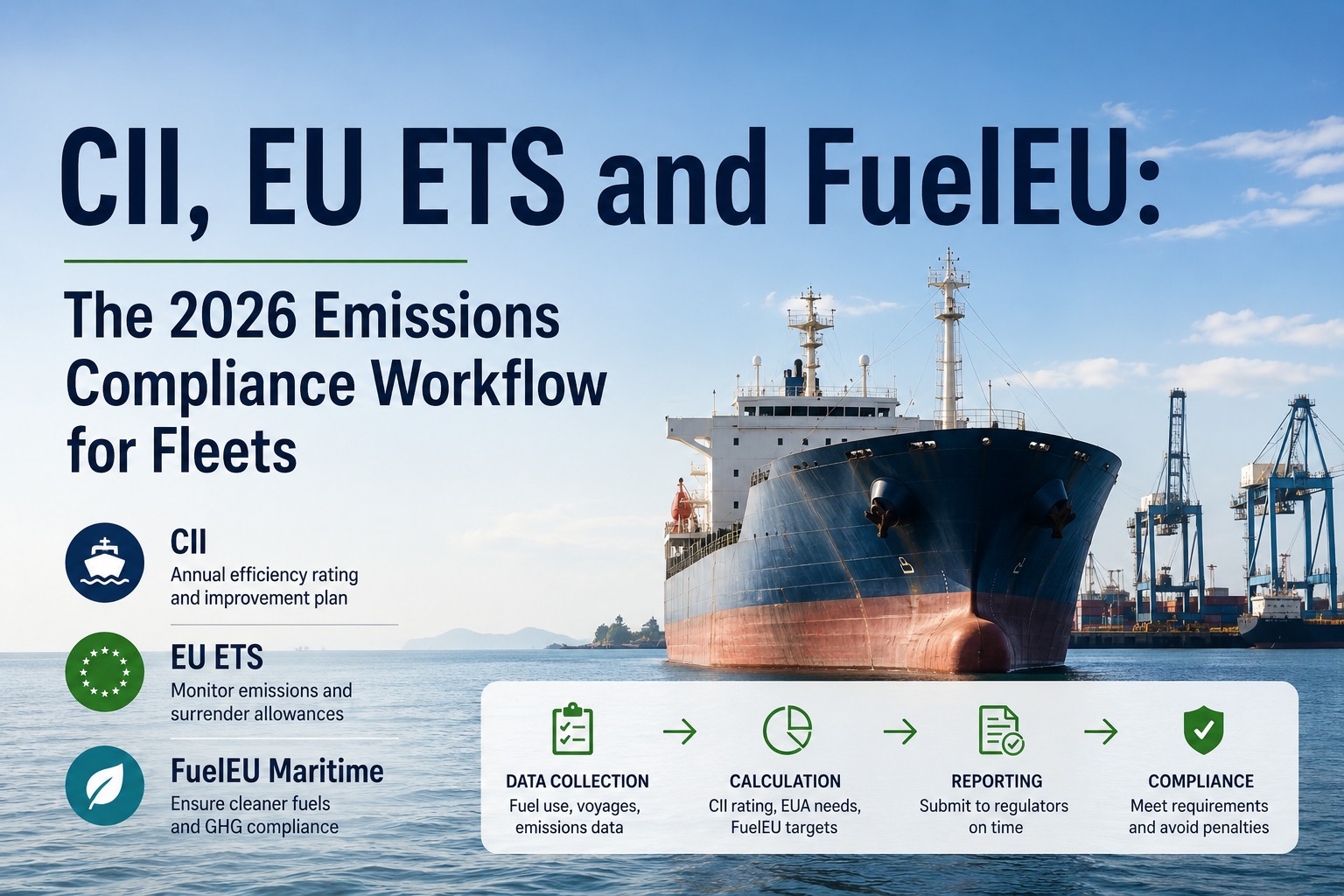
| IMO CII and EEXI | Operational carbon intensity rating and design efficiency | Applies now. Separate from the Net-Zero Framework |
A comparison to help planning. Check each regime's current text, and your flag and class guidance, for exact figures and dates.
Technical Superintendent's 2026 Preparation Plan
1
Build a clean fuel data baseline
Fuel type, quantity and bunker delivery details per vessel and per voyage, kept in one place and matched to noon reports.
2
Collect fuel pathway evidence
Well-to-wake data and certification from suppliers. The framework is built around life-cycle emissions, not just tailpipe CO2.
3
Review engines and fuel flexibility
Which ships can burn alternative or blended fuels, and what is the methane slip position on dual-fuel engines.
4
Rank the fleet by exposure
Sort ships by fuel use, age and trade. Use scenarios under the draft targets and the EU regimes.
5
Prepare the commercial side
Check charter party clauses on who bears fuel intensity costs, and how surplus and deficits would be shared.
6
Set a decision trigger
Agree in advance what you will do after the December 2026 session, whatever its outcome.
This plan is our own suggested sequence for a technical team, not an IMO requirement.
Get Fuel Intensity Data Ready Before the Rule Is
Keep fuel, bunker and consumption records tidy per vessel, so any scenario for the framework can be run in hours, not weeks.
Free trial available. Or book a walkthrough built around your own fleet.
Common Misreadings of the Net-Zero Framework
Myth: It starts in 2027
Fact: The draft sets first targets for 2028, and only if adopted. Entry into force would follow about 16 months after adoption.
Myth: It only counts CO2 at the funnel
Fact: The metric is well-to-wake and covers methane slip.
Myth: Every ship is covered
Fact: The draft covers oceangoing ships over 5,000 GT, with exclusions such as domestic-only voyages.
Myth: It replaces CII
Fact: CII and EEXI are separate measures and continue to apply.
Is the IMO Net-Zero Framework in force?
No. MEPC 83 approved the draft in April 2025, adoption was adjourned in October 2025, and negotiations continued through 2026. It would enter into force about 16 months after adoption.
What is the IMO's 2050 goal?
The 2023 IMO strategy aims for net-zero greenhouse gas emissions from international shipping by or around 2050. The framework is meant to deliver the measures for it.
What is the difference between the Base and Direct Compliance targets?
Both are yearly GFI limits. The Direct Compliance target is stricter. Beating it earns surplus units, and falling short costs remedial units at a lower or higher tier.
Book a walkthrough of fleet fuel tracking to size your exposure.
What are surplus units?
Credits earned by a ship that beats the Direct Compliance target. In the draft they can be banked for later years or transferred, within limits.
Which ships are covered?
Oceangoing ships over 5,000 gross tonnage in the draft, with some exclusions.
Be Ready for Any Net-Zero Outcome
One trail for fuel, bunker and consumption records across every vessel, so IMO, FuelEU and ETS scenarios run from the same data.
Free trial available. Or book a walkthrough built around your own fleet.