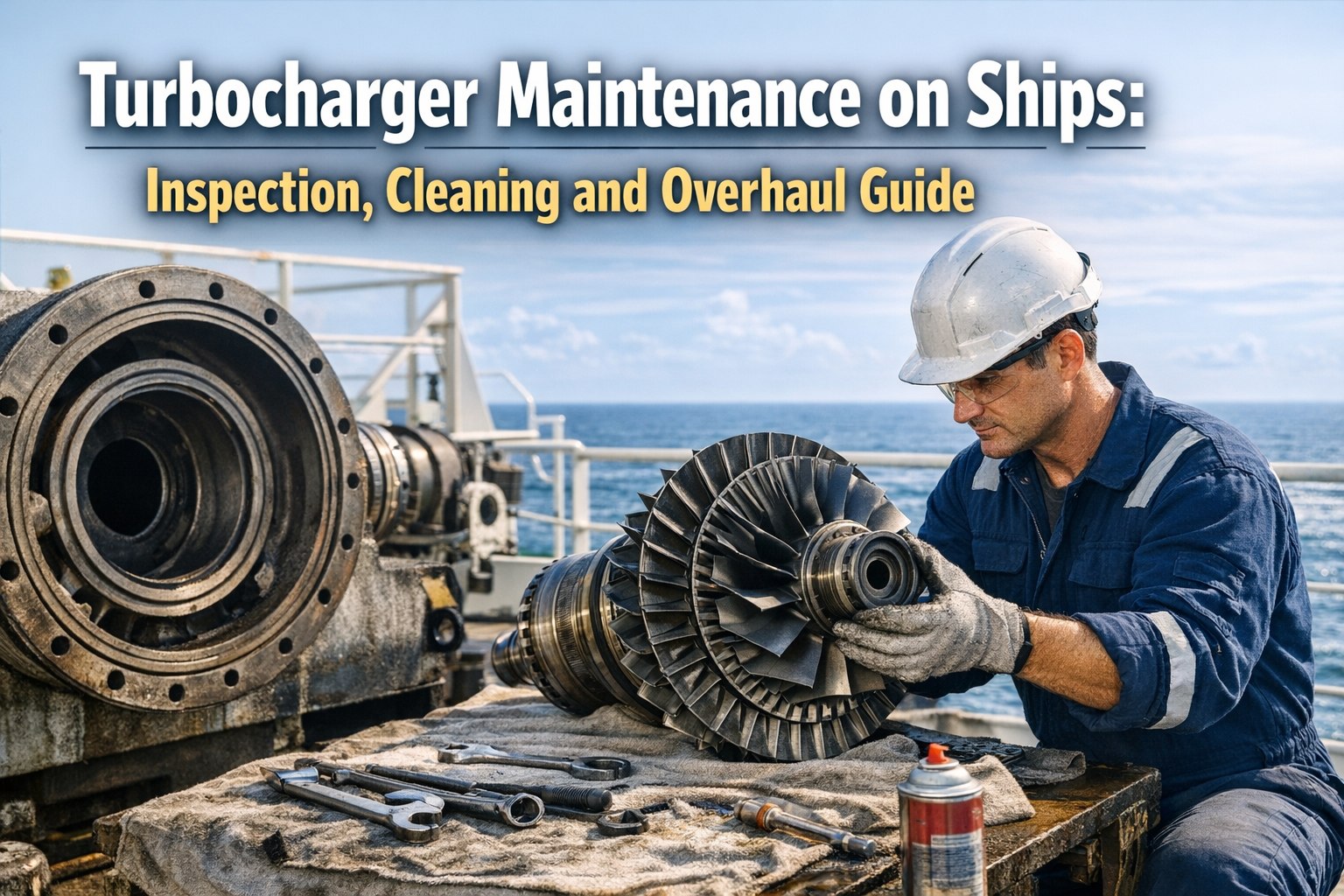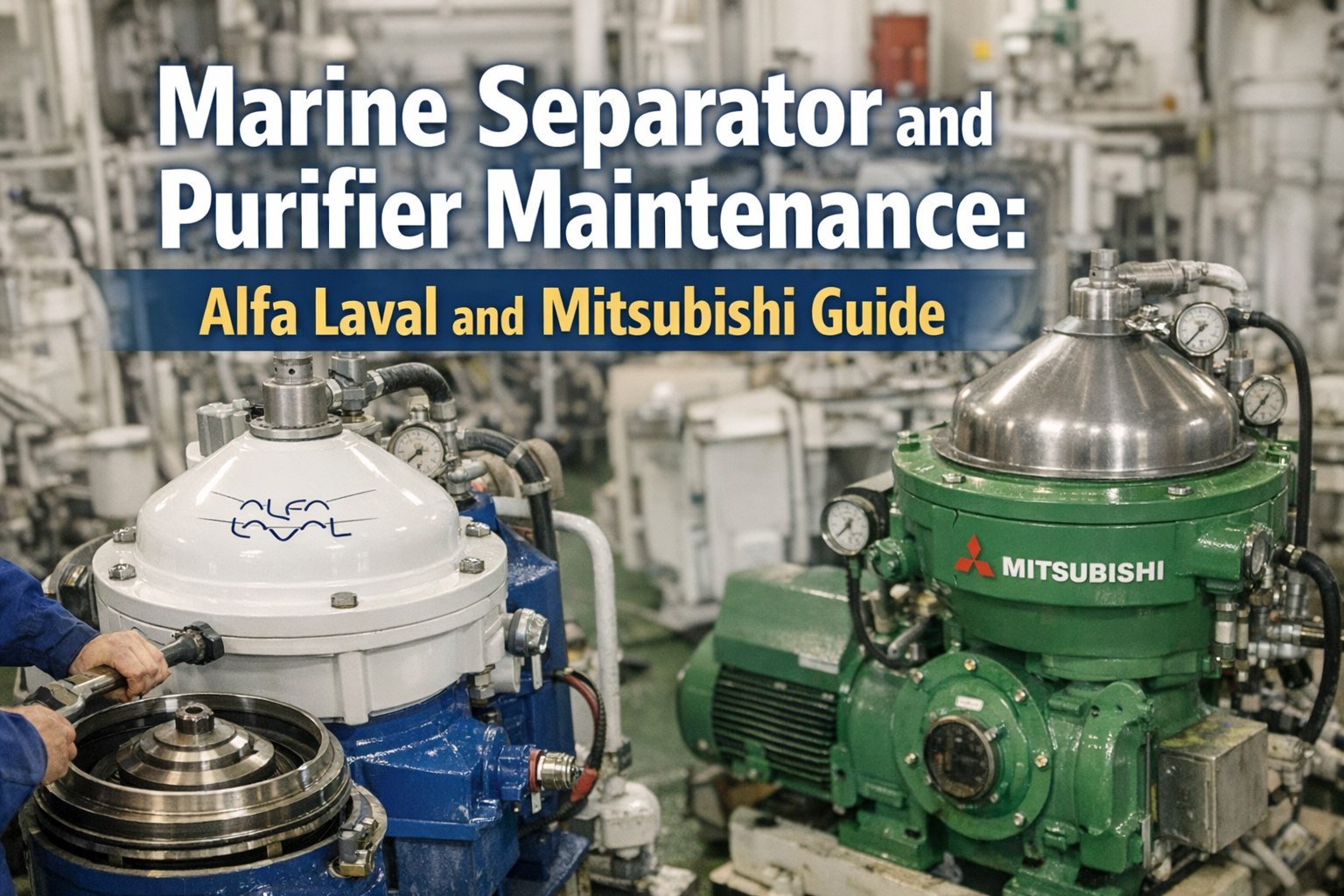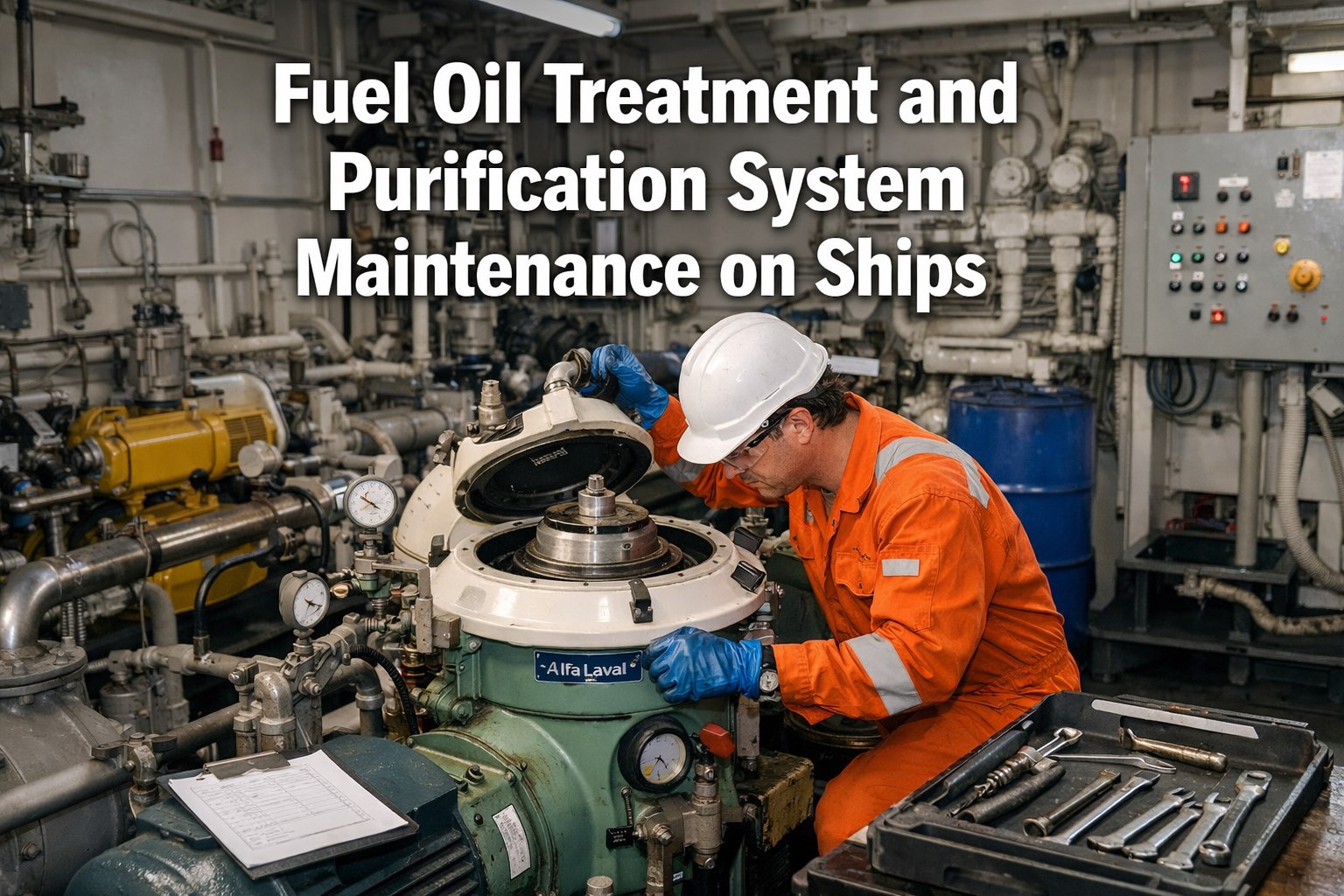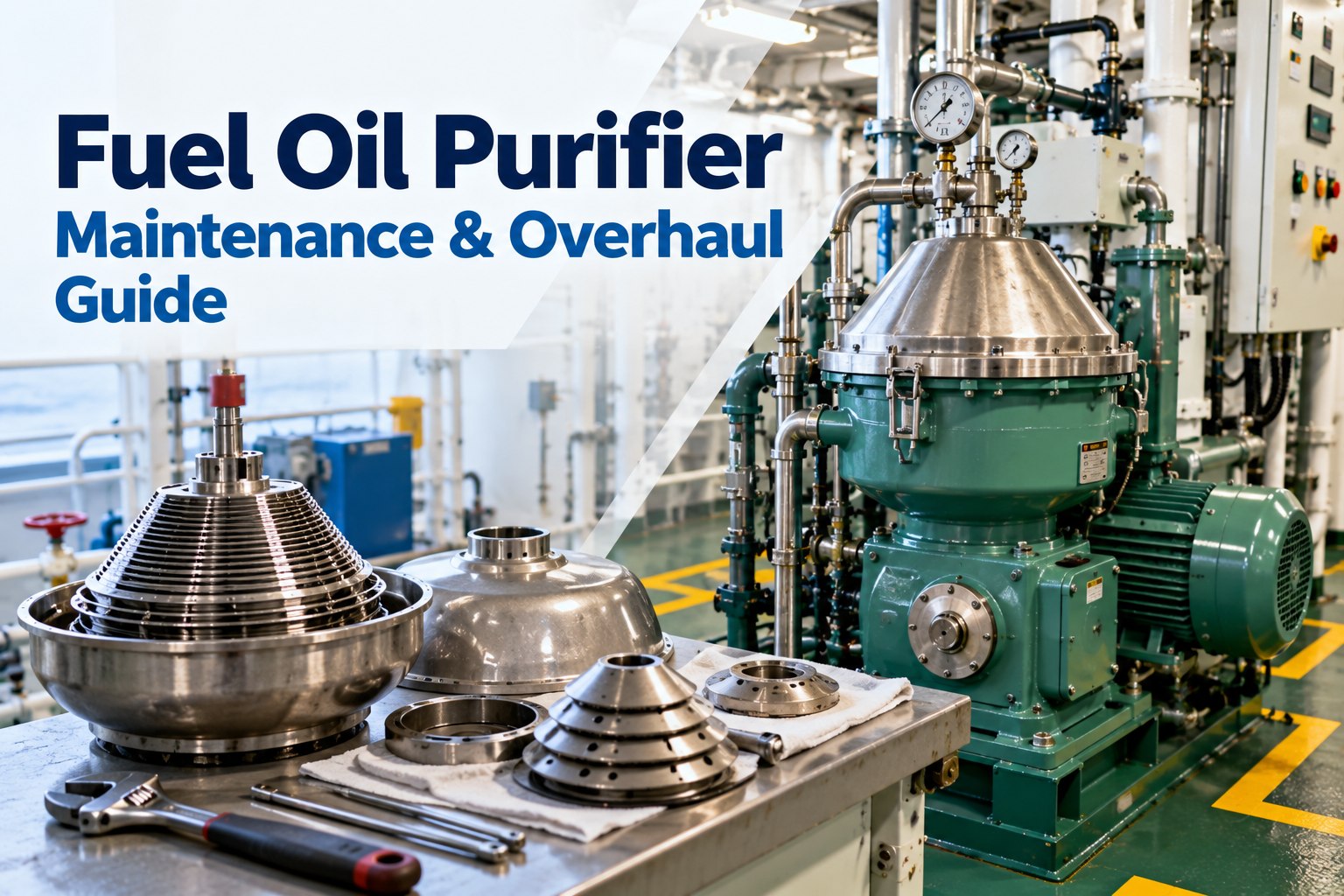
Fuel oil purifier maintenance is the routine of servicing the centrifugal separators that clean fuel and lube oil before they reach the engines: bowl cleaning, intermediate and major overhauls, seal and bearing renewal, gravity disc checks and sludge discharge testing. It matters because the purifier is the last real defence against cat fines and water in modern fuels. Get it wrong and the cost shows up as liner and ring wear, damaged fuel pumps and injectors, oil lost to the sludge tank and overhaul records that do not stand up at audit.
Clean fuel starts at the bowl: keeping separators efficient between overhauls
Bowl cleaning, service intervals, discharge faults and the records that prove it, in one routine your engineers can follow.
Free sign-up · Offline checklists at sea · Signed PDF reports
Source: UK P&I Club cat fines bulletin
On most ships the fuel treatment system runs two or three separators: heavy fuel purifiers, sometimes a clarifier in series, and a lube oil purifier for the main engine system oil. They run around the clock, at high speed, on dirty oil. The difference between a separator that removes most of the cat fines and one that lets them through is rarely the machine itself. It is how well the bowl, discs, seals and operating water system are kept.
This guide covers why separator efficiency matters, overhaul intervals, bowl cleaning step by step, gravity disc choice, sludge discharge faults, lube oil purifiers and the records surveyors and auditors expect. To put the bowl cleaning and service checklists on your crew’s phones, offline, you can start logging purifier maintenance free.
Fuel oil purifier maintenance and cat fines: why separator efficiency decides engine wear
Cat fines are hard aluminium and silicon particles left over from refinery catalytic cracking. They embed in liners, rings and fuel pumps and grind them down. The purifier is expected to remove most of them, and the gap between what arrives in the bunker and what the engine can tolerate is wider than many crews assume.
Required removal against what separators achieve
Figures from the UK P&I Club’s cat fines bulletin, including Brookes Bell’s in-service findings. Fuel at 80 mg/kg treated at 65% still leaves at least 28 mg/kg.
The practical lessons are the same ones Skuld and UK P&I both stress: hold the right inlet temperature, run at the lowest feed rate the consumption allows (two separators in parallel where possible), fit the correct gravity disc and keep the machines in good order. A worn or dirty separator is the easiest of those to fix. For the wider fuel system, see fuel system maintenance.
Purifier overhaul interval: intermediate and major service
Separator makers set service levels by running hours or calendar time, whichever comes first. Alfa Laval’s separator service guide, for example, lists an intermediate service every 3 months or 2,000 hours, covering the inlet and outlet, the bowl and the operating mechanism, with longer-interval full overhauls that add bearings and frame parts. Your own separator’s manual sets the real figures, and fuel quality can shorten them.
Running checks
Inlet temperature, feed rate, back pressure, bowl speed or motor current, vibration and noise, discharge alarms.
Function checks
Sludge discharge working, operating water tank level, strainers and heater outlet temperature steady, gear case oil level.
Bowl cleaning
Open and clean the bowl and disc stack. Heavy or poor fuel needs it more often; reduced separation or frequent alarms are a signal.
Intermediate service
Bowl, inlet, outlet and operating mechanism overhauled; seals, gaskets and lube oil renewed.
Major or full overhaul
Everything in the intermediate service plus bearings, operating water module seals and frame parts as the maker lists.
Example intervals from Alfa Laval’s service guide. Always follow the manual for your separator model.
Purifier bowl cleaning: step-by-step dismantling and inspection
Bowl cleaning is routine, but a separator bowl stores a great deal of energy and its parts are balanced as a set. Follow the maker’s procedure and tools every time.
Stop and wait
Stop the separator and wait until the bowl has completely stopped. Never start dismantling while it is still turning.
Isolate and lock out
Isolate power, feed, heater and operating water. Drain the oil and allow the bowl to cool.
Dismantle with the special tools
Use the maker’s lock ring spanner and lifting tools. Keep every part together; bowl parts are not swapped between machines.
Clean the disc stack
Soak in cleaning fluid, then clean each disc without scratching. Keep the discs in their order.
Inspect every part
Erosion, corrosion and cracks on the bowl body, discs and sliding bowl bottom; seal rings and O-rings for wear and hardening.
Reassemble and test
Renew seals as required, check alignment marks and the lock ring position, then start, check speed and test a discharge.
Never miss a purifier service, and keep the proof of every bowl you open
Services fall due from running hours, parts come off the job, and disc and seal photos stay with the record.
Free to start · Works offline on board · Export to signed PDF
Gravity disc choice for fuel oil purifiers
In a purifier, the gravity disc sets where the oil and water interface sits in the bowl. The right disc depends mainly on the oil’s density at the separating temperature, which is why it should be checked against the maker’s chart whenever fuel density changes.
Disc too small
Interface moves in towards the disc stack. Water and fines carry over into the clean oil.
Correct disc
Interface sits just outside the disc stack. Best separation without breaking the seal.
Disc too large
Interface moves out. The water seal breaks and oil leaves through the water outlet.
For disc sizing by density and temperature in detail, see our purifier gravity disc and separation tuning guide.
Purifier sludge discharge fault and troubleshooting
Most purifier faults show up around the discharge: oil in the sludge tank, a bowl that will not close, or no discharge at all. Start with the operating water system, then the seals.
| Symptom | Likely cause | Check | Fix |
|---|---|---|---|
| Oil at sludge ports continuously | Bowl not closing: low operating water, faulty solenoid, worn main seal ring | Operating water tank and pressure, solenoid, seal ring | Restore water supply, repair solenoid, renew seal ring |
| Overflow straight after discharge | Slow bowl closing; dirty pilot valve or water block filter | Water block filter, pilot valves, closing sequence | Clean or renew filter, clean pilot valves |
| No sludge discharge | Blocked ports, faulty discharge solenoid, low water pressure | Ports, solenoid, operating water pressure | Clean ports, test solenoid, restore pressure |
| Oil at water outlet | Water seal broken, gravity disc too large, back pressure high | Seal water at start, disc against chart, back pressure | Re-establish seal, fit correct disc, reset back pressure |
| Low bowl speed, high current | Brake on, sludge build-up, bearing or friction fault | Brake, bowl condition, gear case oil | Release brake, clean bowl, inspect bearings |
| Vibration | Sludge in bowl, wrong assembly, worn bearings | Stop at once; bowl assembly and bearings | Clean and reassemble correctly, renew bearings |
Based on Merchant Navy Decoded’s Alfa Laval troubleshooting notes and a published study of a purifier where a scaled water block filter and degraded PTFE seal ring caused repeated bowl leakage. Always confirm against your separator manual.
Lube oil purifier maintenance: what is different from fuel purifiers
The lube oil purifier keeps the main engine system oil free of water, soot and wear debris. The machine is often the same type as the fuel purifiers, but the job is different.
| Point | Fuel oil purifier | Lube oil purifier |
|---|---|---|
| Main contaminants | Cat fines, water, sludge | Water, soot, wear metals, oxidation products |
| How it runs | Feeds the service tank from the settling tank | Usually continuous bypass on the engine sump |
| Temperature | Around 98°C for heavy fuel (UK P&I) | As the oil and separator makers set |
| What to trend | Before and after samples for Al+Si and water | System oil analysis: water, viscosity, base number, wear metals |
| Warning sign | Cat fines or water rising after the purifier | Water in system oil, sludge build-up, falling base number |
Water in system oil also damages engine bearings, so a lube oil purifier that is not removing water deserves the same urgency as a fuel purifier fault.
Purifier records class surveyors and auditors check
Where separators are in your class PMS or continuous survey list, the surveyor checks that overhaul intervals were kept and the work was recorded. Auditors and port state control look at the same records from another angle: was the fuel treatment system maintained, and where did the sludge go?
Overhaul history
Every bowl cleaning, intermediate and major service, with running hours at the time and the next due date.
Parts used
Seal rings, O-rings, bearings and kits used, linked to the job and to stock on board.
Before and after samples
UK P&I recommends sampling before and after the separator when bunker Al+Si exceeds 40 mg/kg.
Sludge in the Oil Record Book
Sludge collected and disposed of is recorded in Oil Record Book Part I under MARPOL Annex I.
How Marine Inspection supports fuel oil purifier maintenance
Marine Inspection connects the purifier routine from the moment a service falls due to the record the surveyor sees.
Due by hours
Running hours entered weekly bring the 2,000-hour service due automatically.
Work order with parts
The job opens with the service kit and seals reserved from stock.
Offline checklist
Bowl cleaning steps and inspection points completed at the separator, signal or not.
Photo evidence
Discs, seal rings and bowl wear photographed and attached.
Signed report
A signed PDF record ready for the office, the surveyor and the auditor.
Spares used on each service draw down stock in maintenance inventory. Plans scale from one ship to a fleet; see Marine Inspection pricing.
Fuel oil purifier maintenance: keep the bowl clean and the records cleaner
Good fuel oil purifier maintenance is not complicated: hold the inlet temperature and feed rate, fit the right gravity disc, clean the bowl before separation suffers, service the machine on time and record every overhaul with its running hours, parts and photos. Do that and the separator does its job against cat fines, the engines last longer and the surveyor sees a clean history. Keep the running hours that drive it all in a digital engine room logbook.
Turn every purifier overhaul into a record the surveyor trusts
Services due by hours, parts linked, photos attached and signed reports ready when you need them.
Free sign-up · Offline at sea · Signed PDF reports