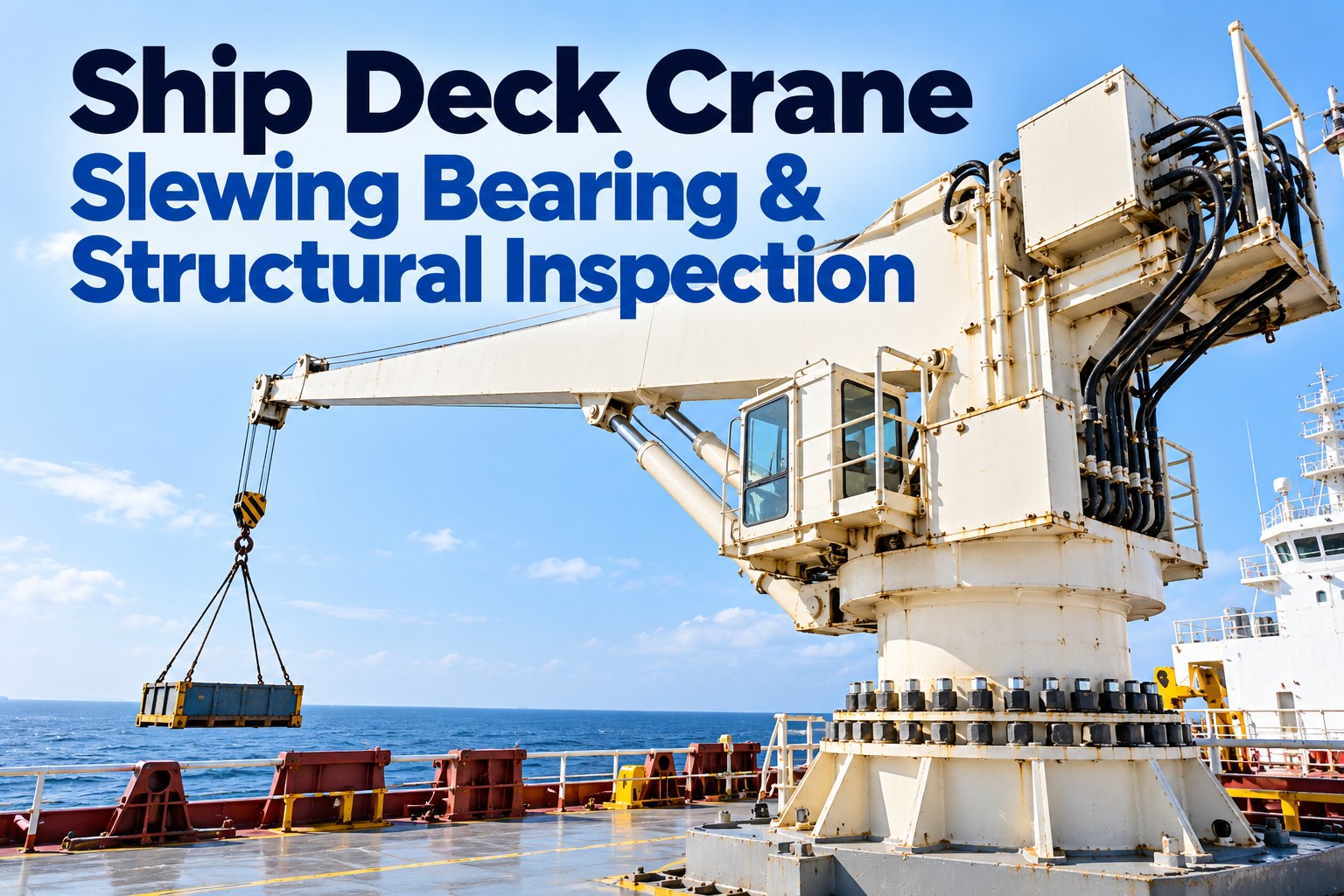
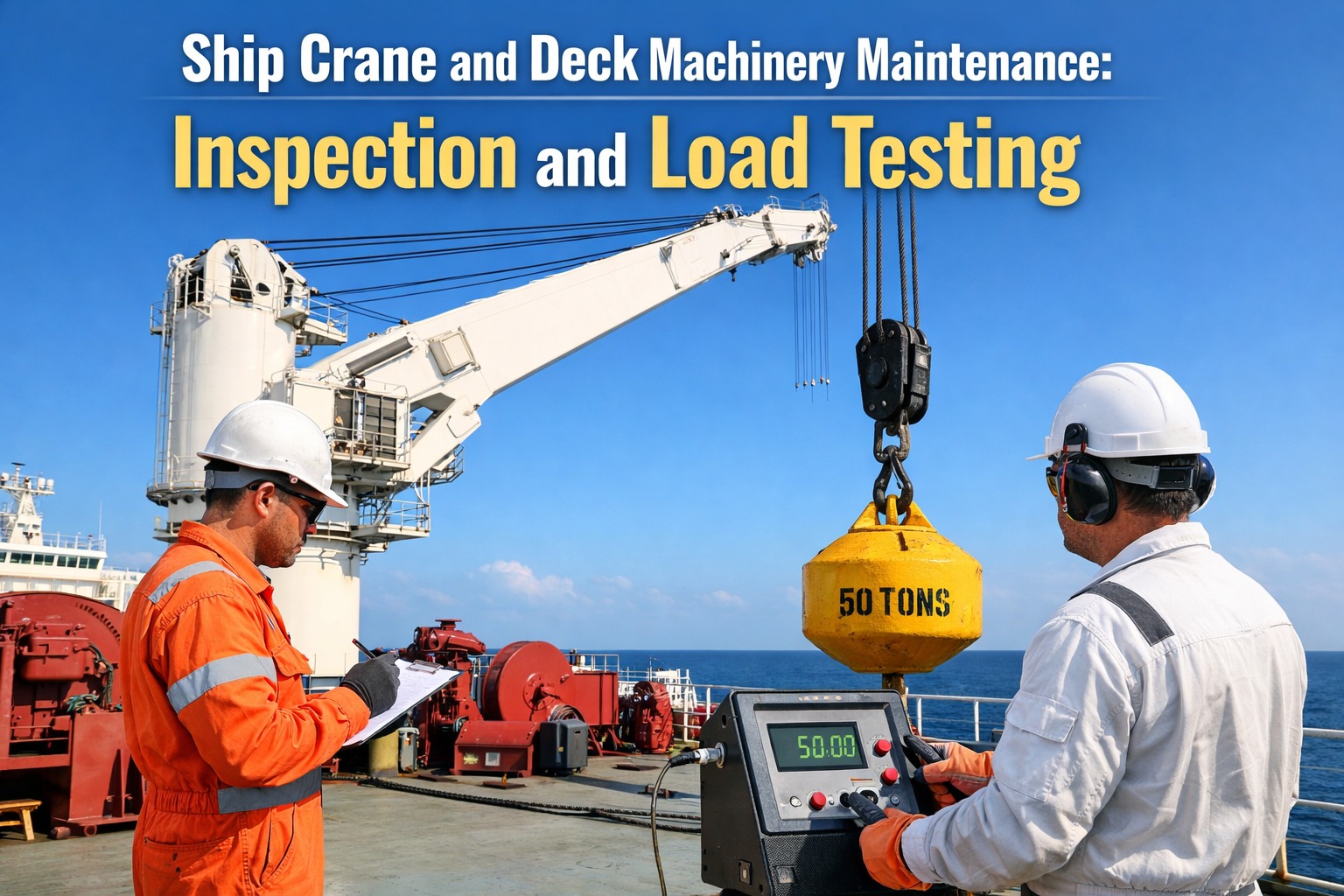
SOLAS II-1/3-13 is not a difficult regulation to understand. Onboard lifting appliances and anchor handling winches now sit inside SOLAS, with design to recognised standards, permanent safe working load marking backed by documentary evidence, load testing and thorough examination, manufacturer manuals and a register kept on board. Read once, it is clear. The difficulty is entirely in execution: a fleet of twenty ships has perhaps two hundred lifting appliances between them, an unknown number of which have never had a certificate, spread across renewal survey dates that fall in different months, competing for a finite pool of service providers who are being asked for the same work by every other operator at the same time. That is a programme management problem, and the operators who struggle in 2026 will not be the ones who misread the regulation — they will be the ones who started the inventory too late. This guide sets out how to run II-1/3-13 across a fleet: what is in scope and what is excluded, the five workstreams, the route for appliances with no documentation, sequencing against survey dates, cost drivers, and how to track it to closure. Start a free trial of Marine Inspection to build the appliance inventory and run the programme ship by ship.
SOLAS II-1/3-13 — fleet implementation
The regulation is simple. Getting twenty ships through it is not.
Compliance is assessed at each vessel’s first renewal survey on or after 1 January 2026, so the fleet does not have one deadline — it has as many deadlines as it has ships, and they arrive in sequence.
Vessel
Inventory
SWL evidence
Manuals
Testing
Register
Survey
Ship A
done
done
done
done
done
Feb
Ship B
done
done
open
booked
open
May
Ship C
done
gaps
none
not booked
not started
Aug
Ship D
partial
unknown
none
not booked
not started
Nov
The board a superintendent needs is per appliance, not per ship — but this is the view that shows which vessel runs out of time first, and it is usually not the one with the earliest survey.
Why this is a scheduling problem before it is a technical one
Every ship has its own deadline
Existing appliances are assessed at the first renewal survey on or after 1 January 2026. Across a fleet those surveys are spread through the year, so there is no single date to work towards and no fleet-wide push that fixes everything at once.
The work needs people who are not on board
Load testing and thorough examination require certified personnel. Those providers are being asked for the same work by every operator in the same window, and availability tightens as the year progresses rather than easing.
Manuals have a lead time
Where the manufacturer’s manual cannot be found, one prepared by a competent third party is accepted — but commissioning it takes weeks, and it cannot be done during the survey.
Testing needs a place as well as a person
Load testing needs test weights or an approved alternative, a suitable berth and time alongside. That is a port call decision made months ahead, not a job squeezed into a turnaround.
Class can withhold the certificate
Where a retrofit has been fitted without the required certification, the recognised organisation may be unable to issue or endorse the safety construction certificate. That converts a paperwork gap into a trading problem.
Surveys can be harmonised, if you ask early
Lifting appliance attendance can be folded into annual and renewal class survey requests to reduce vessel visits and align with docking. That only works if the request is made in advance.
What is in scope, and what is not
Scoping errors are the most expensive mistake in this programme, in both directions — missing an appliance means a finding, and including things that are not caught means paying for testing you did not need. See how each appliance carries its own scope decision, so the reasoning survives the crew change that follows.
In scope
Cargo cranes and derricks
Provision and stores cranes
Engine-room cranes and fixed lifting beams
Hose-handling cranes
Anchor handling winches
Appliances added during a refit on the owner’s account
Generally outside, or treated differently
Lifeboat davits and rescue boat launching appliances — unless they serve a dual purpose
Liferaft launching appliances, on the same basis
Appliances below 1,000 kg SWL, where the flag has exercised its discretion
Equipment already certificated before 1 January 2026 under other instruments such as ILO 152
Two scoping rules worth writing into the inventory template
Dual purpose changes the answer. A davit that also lifts stores is not simply a launching appliance any more, and the inventory should record what each appliance is actually used for rather than what it was installed as. The 1,000 kg line is a flag decision, not an exemption you can take. Some administrations have exempted appliances below one tonne; others have not. Get the position in writing, file it with the register, and record it against each small appliance in the inventory so nobody has to re-litigate it at the survey.
The five workstreams
1
Inventory
Walk each ship and list every lifting appliance, including the ones nobody thinks of — the beam over the purifier flat, the davit at the bunker station, the jib on the steering flat. Record location, type, SWL as marked, maker and serial number, and what the appliance is actually used for. Everything downstream depends on this list being complete, and it is the only workstream the crew can do alone.
2
SWL evidence
For each appliance, what is it marked with and what document supports that figure. Unmarked appliances and marked appliances with no traceable evidence are two different problems: the first needs marking, the second needs the evidence found or established. Repainting has erased more SWL markings than corrosion ever did.
3
Manuals
Manufacturer operation and maintenance manuals where they exist; one prepared by a competent third party where they do not. Start this early because it has the longest lead time of anything in the programme and the shortest visible progress.
4
Testing and thorough examination
Booked against a port call with the weights, the berth and the certified personnel all in the same place at the same time. Ask for it to be harmonised with the annual or renewal class survey. This is the workstream that fails for logistical reasons rather than technical ones.
5
Register and records
The Register of Ship’s Lifting Appliances and Cargo Handling Gear in the formats set out in MSC.1/Circ.1663, with certificates and the routine inspection and maintenance records, kept on board. A register held only in the office system is not where the inspection happens.
Programme control
Run it per appliance, report it per ship
Every crane, davit and winch as its own record with SWL evidence, manual, certificates and due dates — rolled up into a fleet view that shows which vessel runs out of runway first.
This is the case that worries owners most, and there is a route through it. For appliances installed before 1 January 2026 that were never certified, a factual statement can be accepted in place of full certification where the appliance can be shown to meet baseline criteria — design, construction and installation in accordance with class rules or an equivalent standard.
1
Establish what the appliance actually is. Maker, model, year, SWL and any surviving documentation, including drawings held ashore or with the original yard.
2
Demonstrate it meets baseline criteria. Design, construction and installation to class rules or an equivalent standard. This is an engineering assessment, not a declaration.
3
Engage class early. Recognised organisations are integrating lifting appliance data into their systems and issuing requirements where information is missing. Reporting a gap yourself is a better position than having it found.
4
Do not assume it applies to retrofits. An appliance fitted without the required certification can prevent the safety construction certificate being issued or endorsed. The factual statement route addresses historic undocumented equipment, not uncertified retrofits.
5
File it with the register. Whatever you end up with — certificate, factual statement, or the flag’s written position on a sub-tonne appliance — it lives with the register on board.
Sequencing the programme across a year
Workstreams against the survey calendar
Workstream control: what good looks like
Workstream
What good looks like
Who owns it
Evidence held
Inventory
Every appliance on every ship listed with location, type, SWL, maker, serial and actual use
Ship, verified by superintendent
Inventory per vessel, dated and signed off
Scope decisions
Each appliance classified in or out, with the reason recorded — including dual-purpose davits
Technical office with flag confirmation
Flag’s written position on sub-tonne appliances, filed with the register
SWL marking
Every in-scope appliance permanently marked and legible
Ship, to a specification from the office
Photograph of each marking against the appliance record
SWL evidence
Documentary evidence supporting every marked figure
Technical office
Maker documentation, original certificate, or factual statement
Manuals
Operation and maintenance manual available on board for each appliance
Technical office, commissioned early
Manufacturer manual or competent third-party manual
Existing certification
Pre-2026 certificates under other instruments located before new testing is ordered
Technical office
ILO 152 or equivalent certificates, dated before 1 January 2026
Load testing
Booked against a port call with weights, berth and certified personnel aligned
Superintendent with the service provider
Test certificate in the MSC.1/Circ.1663 format
Thorough examination
Carried out by certified personnel, with defects closed out and the closure recorded
Service provider, tracked by the office
Examination report plus evidence that findings were closed
Survey harmonisation
Attendance folded into annual or renewal class survey requests
Superintendent
Survey request showing the lifting appliance scope included
Register
Register on board in the required formats, complete and findable by someone who did not build it
Ship, maintained
Register with certificates and routine inspection and maintenance records
Recurring cycle
Annual thorough examination and five-yearly load test scheduled per appliance with alerts
Planned maintenance system
Due dates visible fleet-wide, not buried per ship
Cost and capacity: what actually drives the number
The number of appliances, not the number of ships. A fleet budget built per vessel will be wrong. Build it per appliance once the inventory is complete, because the spread between ships is wide.
Undocumented appliances cost several times a documented one. Establishing evidence, commissioning a manual and arranging assessment is the expensive path, and it is entirely avoidable for anything where the paperwork merely needs finding.
Attendance is the hidden cost. Getting certified personnel to a ship is often more expensive than the testing itself, which is the whole argument for harmonising with class attendance and batching work per port.
Late work costs more than early work. Provider availability tightens as more operators reach their renewal windows, and premium rates for short-notice attendance are a predictable consequence of a late start.
A missed survey window is the expensive failure. Conditions of class, or a certificate that cannot be endorsed, cost more than the entire testing programme for that vessel.
Test weights and berth time. Where weights have to be hired and a berth held, the logistics can dominate the cost for a single appliance and argues for combining several in one call.
Where these programmes fail
The inventory is never finished
Started on the big cranes, never completed for the small ones. Every later workstream inherits the gap, and the appliance that is missing from the inventory is the one the surveyor asks about.
Manuals left until last
The workstream with the longest lead time and the least visible progress, so it gets deferred behind work that looks more urgent. It then becomes the thing that cannot be finished in time.
Testing booked without weights or a berth
A service provider confirmed and no means of applying the load. The booking looks like progress on a tracker and delivers nothing.
Existing certificates never searched for
Money spent re-testing appliances that already held valid pre-2026 certification under another instrument, because nobody looked in the old files first.
Register built ashore
A complete, well-organised register in the office system and nothing on board. The inspection happens on the ship.
No recurring cycle set up
The 2026 push completed and nothing scheduled afterwards, so the annual examinations drift and the same programme has to be run again from a worse starting position.
Tracking it to closure
Appliances identified
Count per ship, and whether the inventory is signed off as complete. An inventory that keeps growing is not yet an inventory.
Percentage with SWL evidence
Marked and documented, as two separate measures. Marked without evidence is a different problem from unmarked.
Manuals held
Per appliance, with the ones in commissioning shown separately so the lead-time exposure is visible.
Testing booked versus completed
Booked is not done. Track both, because the gap between them is where the programme slips.
Days to each ship’s survey
The only deadline that matters, per vessel. Sort the fleet by it and work the top of the list.
Open findings from examinations
Defects raised by the examination and not yet closed. An open finding carried into the survey is worse than the original defect.
Frequently asked questions
When does each ship actually have to comply?
At its first renewal survey on or after 1 January 2026 for existing appliances. That makes the deadline vessel-specific, so a fleet has as many deadlines as it has ships and they fall in sequence through the year.
Are lifeboat davits included?
Generally not — lifeboat davits and liferaft and rescue boat launching appliances sit outside the scope, unless they serve a dual purpose. A davit also used to lift stores should be recorded in the inventory for what it is actually used for, because that changes the answer.
What about appliances below one tonne?
Some flag administrations have exempted appliances with an SWL below 1,000 kg; others have not. It is a flag decision rather than an exemption the ship can take, so obtain the position in writing and file it with the register.
What if an appliance has never been certified?
For appliances installed before 1 January 2026, a factual statement may be accepted in place of full certification where the appliance can be shown to meet baseline criteria for design, construction and installation to class rules or an equivalent standard. Engage class early rather than presenting it at the survey.
Do pre-2026 certificates still count?
Yes. Appliances holding valid certificates issued before 1 January 2026 under other international instruments, such as ILO Convention No. 152, satisfy the requirement. Search the old files before commissioning testing you may not need.
Can lifting appliance surveys be combined with class attendance?
Yes, and it is worth asking. Attendance can be included in annual and renewal class survey requests to reduce vessel visits and align with docking schedules, which is the single most effective way to control attendance cost.
What happens if a retrofit was fitted without certification?
The recognised organisation may be unable to issue or endorse the safety construction certificate. That turns a documentation gap into a trading problem, which is why owner-fitted equipment added during past refits deserves attention early in the inventory.
What are the recurring intervals once compliant?
Thorough examination annually, and load testing at least once every five years or after any repair or alteration of a major character. Set both up per appliance with alerts, or the 2026 programme will simply have to be repeated later.
Start with the inventory
The ships that struggle will be the ones that counted late
Build the appliance list, attach the evidence as it arrives, and sort the fleet by days to survey — so the programme is driven by the deadline that actually applies to each vessel.