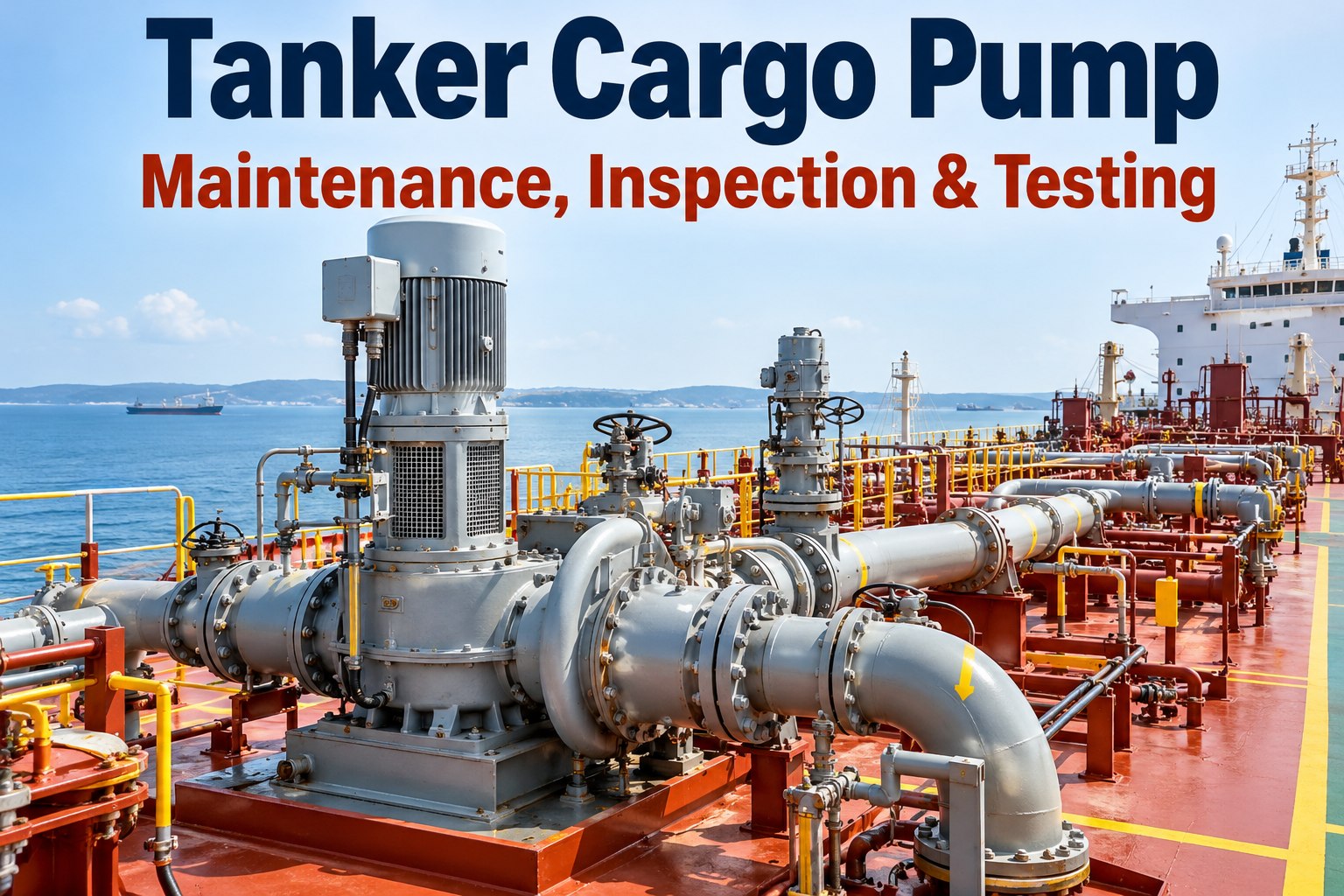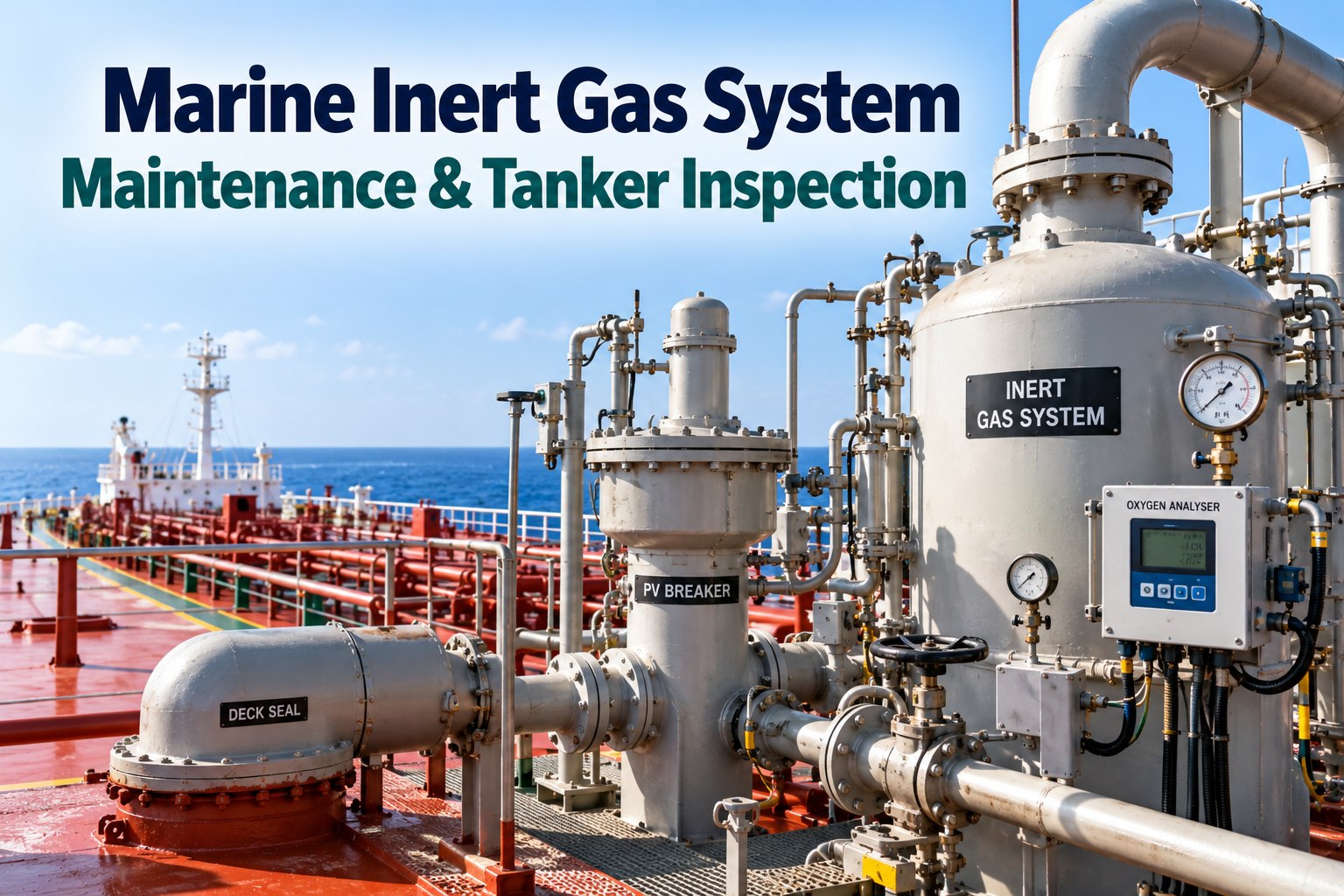
A cargo pump seal that weeps today can be a pump room fire next month, and the evidence for that is not new. What does tanker cargo pump maintenance need to cover, what do pump-room incident reports say about how failures develop and what should a Chief Engineer be able to show a superintendent or vetting inspector? This guide covers cargo pump maintenance and inspection on oil and chemical tankers, concentrating on the conventional pump room: seals, bolting, vibration and temperature trends, gas detection, ventilation and records. It draws on MAIB and Malta investigation reports and IMO guidelines and says which sources are old. For the vetting programme itself, see our SIRE 2.0 inspection guide for tanker vetting in 2026.
How a Cargo Pump Failure Develops: The Esso Mersey Chain From Missing Screw to Seal Failure
A 1991 explosion, and why its pattern still matters
The MAIB's report on the 1991 Esso Mersey explosion is old, but it remains one of the clearest published accounts of how a cargo pump failure builds. A loose impeller locknut, with two locking grub screws absent, unbalanced the rotor. Vibration worked the bearing pedestal bolts loose and the seal faces shattered, spraying petrol that ignited from sparks at the drive coupling. The report names failures of quality control in a contractor's 1989 refurbishment, parts omitted during the ship's 1991 bearing renewal, no systematic bolt checks and records too thin to allow trend analysis.
Two points carry across to current practice. Vibration was a known, recurring problem and was handled by trial and error, and the maintenance records did not show what had been investigated. Esso had by then added studded pedestal fixings, seal leak alarms, bearing accelerometers and pump room gas detection, which shows how the industry's answer was monitoring plus better records.
Pump Room Safety Systems on a Tanker: Temperature, Ventilation, Gas and Bilge Alarms
What the IMO fire prevention guidelines expect
IMO MSC.1/Circ.1321, adopted on 11 June 2009 as Guidelines for measures to prevent fire in engine-rooms and cargo pump-rooms, is the most specific published source we reached. The table summarises its main provisions. We could not obtain the full text of SOLAS regulation II-2/4.5.10, so the table is the circular's guidance as reproduced in a Hong Kong notice, not a legal reading of the regulation, and your flag and class decide what applies to your ship.
| Protection | What the circular says | What to evidence on board |
|---|---|---|
| Temperature monitoring | Temperature monitoring systems for pumps should be provided, with sensing points at bulkhead shaft glands, bearings and pump casings | Alarm tests, sensor checks and the temperature log for each pump |
| Ventilation | Cargo pump-rooms should be mechanically ventilated at 20 air changes per hour | Ventilation function tests, fan and duct condition, running before and during entry |
| Gas detection | Alarms should be set at no higher than 10% LFL | Calibration records, sampling point condition and test results |
| Bilge level monitoring | SOLAS regulation II-2/4.5.10 allows bilge high-level alarms in place of level monitoring devices (as reproduced in a consolidated text we reached) | Alarm test records and bilge condition at each entry |
| Emergency lighting | Where lighting doubles as emergency lighting it should be interlocked with the ventilation, without blocking emergency lighting on a power loss | Lighting and interlock test results |
Three Pump Room Incident Files and What Each One Says About Maintenance
An explosion, a fatality and a fire, each with a different maintenance lesson
Lesson: a vibration history with no systematic bolt check, incomplete records and parts missed during a bearing renewal.
Lesson: fixed gas alarms did not activate, his personal detector was found switched off and a small valve leak left oily water in the bilge.
Lesson: the MAIB stressed inspection and maintenance to prevent spills and an effective protective coating on cargo pipework insulation.
The Valtamed report, MSIU Report 03/2021, concerns a pumpman who died during pre-arrival bilge alarm tests. The investigators found the fixed gas system did not alarm and had been flagged as possibly obsolete after a September 2019 service. The Malta safety investigators issued no recommendations because the company's safety actions, including relocating the sensor, upgrading the gas detection and requiring escape breathing devices for pump room entry, were considered sufficient. A Steamship Mutual risk alert drew the same lessons. None of the three incidents is a statistic, and together they are a small sample, but each shows a maintenance gap in a safety system, not only a pump.
Cargo Pump Vibration, Temperature and Performance Trends That Catch Faults Early
Why a trend beats a single reading
A single reading tells you little, but a series shows direction. The Esso Mersey report found that incomplete records had made trend analysis difficult, which is the opposite of what the later monitoring was meant to achieve. Record vibration at the same points, temperature at glands and bearings, and discharge pressure and flow at the same operating conditions. Then compare each reading with the pump's own baseline, not with a general figure. The chart below is our invented illustration of the idea and is not data.
Performance and the maker's limits
We found no independent published limit for pump performance loss or vibration, so take acceptance values from the pump maker and class. Record the conditions when you take a reading, such as load, product and tank level, so that the trend is meaningful. Tracking each pump through your planned maintenance and {L3} keeps the baseline and the history in one place, and engine room routines sit alongside it in our {L2}.
Cargo Pump Troubleshooting: Seal Leaks, Vibration, Heat and Gas Alarms
A first-check guide linked to the published cases
Use the table as a first-check guide. It is our summary of the causes in the reports we reviewed, and it does not replace the maker's troubleshooting chart or your emergency procedures. A pump showing rising vibration or a seal leak should be investigated for its cause, not simply restarted.
| Symptom | Likely cause | First check | Typical action |
|---|---|---|---|
| Seal leak or seal alarm | Seal wear, damage or rising vibration, as in Esso Mersey | Seal leak indication, vibration trend, bolting and alignment | Stop the pump where your procedure requires and investigate before restart |
| Rising vibration | Unbalance, loose fixings, misalignment or bearing wear | Trend against baseline, pedestal and coupling bolts, shaft guard clearance | Find the cause and record it. Do not rely on trial and error |
| High bearing or gland temperature | Lubrication problem, misalignment or gland rubbing | Temperature sensor log and alarm test, lubrication | Reduce load or stop under the procedure, and inspect |
| Pressure or flow below the usual trend | Wear, internal leakage or a suction problem | Compare with the previous trend at the same conditions | Plan an internal inspection and record the result |
| Oily water in the pump-room bilge | Valve or flange leak, as at Valtamed | Source of the leak, bilge alarm function | Repair promptly and keep the bilge clean |
| Gas alarm in the pump room | Leak, sensor fault or ventilation problem | Ventilation status and sensor function | Treat as real until cleared and follow your emergency procedure |
Cargo Pump and Pump Room Checklist for the Chief Engineer
A checklist with a checkpoint type on each item
Use this checklist alongside the pump maker's manual and your enclosed space procedures. For SOLAS tracking across the ship, see SOLAS compliance tracking.
| Item | What to check | Checkpoint type |
|---|---|---|
| Pump seals | No leak, seal alarms tested and records current | Test |
| Bolting and guards | Bearing pedestal bolts, coupling bolts and shaft guards secure with adequate clearance | Visual |
| Vibration | Readings recorded at the same points and compared with the trend | Record |
| Bearing and gland temperature | Sensors and alarms tested, temperature log reviewed | Test |
| Bulkhead shaft glands | Condition, lubrication and temperature checked | Visual |
| Ventilation | Fans start and airflow confirmed, ducts clear | Test |
| Fixed gas detection | Calibrated, sampling points clear and close to the places that matter, alarms tested | Test |
| Personal gas detectors | Switched on, bump tested, charged and logged | Test |
| Bilges | Clean, no oily water, level alarms tested | Visual |
| Lagging and pipework | No oil-soaked lagging and an effective coating over insulation | Visual |
| Entry and rescue | Permits, standby and rescue drill records, escape breathing device for entry | Record |
| Maintenance records | Every pump job recorded in enough detail to trend, including parts replaced | Record |
Six Cargo Pump and Pump Room Habits That Precede a Failure
What the Esso Mersey, Valtamed and Bitfjord reports point to
Keeping Pump Records, Readings and Defects in One System
How a dated photo repository, task ownership and deadlines support cargo pump reliability
Pump problems repeat when the readings are in one place, the repairs in another and nobody owns the defect. Marine Inspection supports a dated photo repository, observations turned into tasks with owners, deadlines and evidence, and certificate and equipment tracking. A dated photo of a seal, a task for a rising vibration reading with a named owner, tracked gas detector calibration dates and a record of every part replaced give a Chief Engineer the trail the Esso Mersey report found missing. It does not replace the pump maker's manual, the ship's SMS or class. See Marine Inspection pricing for plans.