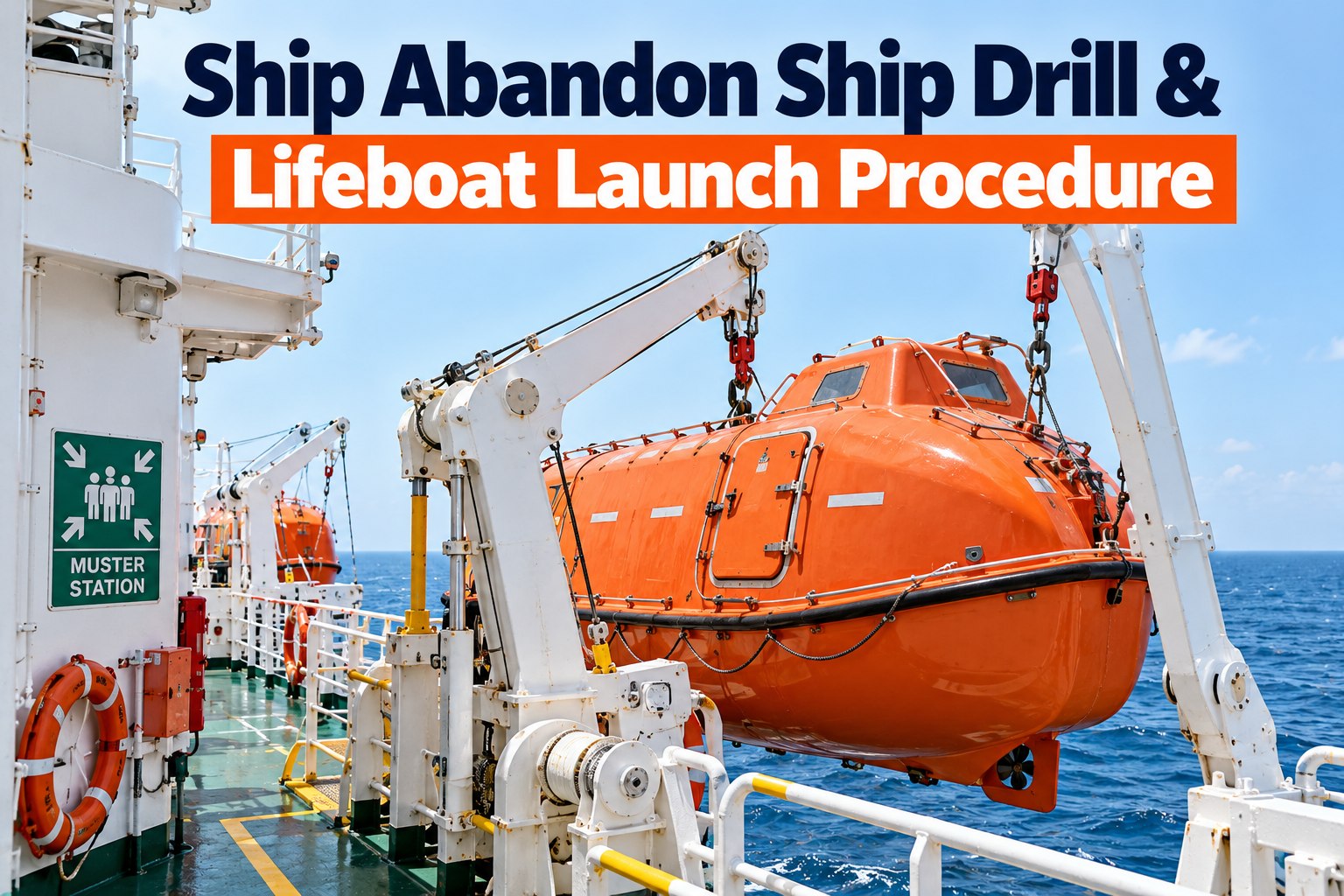
An abandon ship drill is the one exercise that must work when everything else has failed, and lifeboat drills themselves have killed seafarers. A good drill gets every person mustered, dressed and counted, launches a boat safely, and brings it back without putting anyone under a suspended load. This guide covers SOLAS frequency rules, what each drill must include, boat preparation, safe launching and recovery, and the records inspectors check. Book a demo to track drills and launches.
Ship abandon ship drill and lifeboat launch: muster to recovery, safely
SOLAS abandon ship drill frequency
SOLAS Regulation III/19 sets how often crew muster and how often boats go in the water. For the full drill calendar, see our SOLAS emergency drill requirements guide.
Summary of SOLAS III/19 and III/30 as described in Liberia Marine Notice SAF-004 and The Nautical Institute’s drill summary. Check your flag’s requirements.
What each abandon ship drill must include
SOLAS lists the elements of every abandon ship drill. Plan the drill so each element is done and recorded.
Passenger ships also carry out a mock search and rescue of passengers trapped in cabins. Emergency lighting for mustering and abandonment is tested at each drill.
Muster station and donning: the first ten minutes
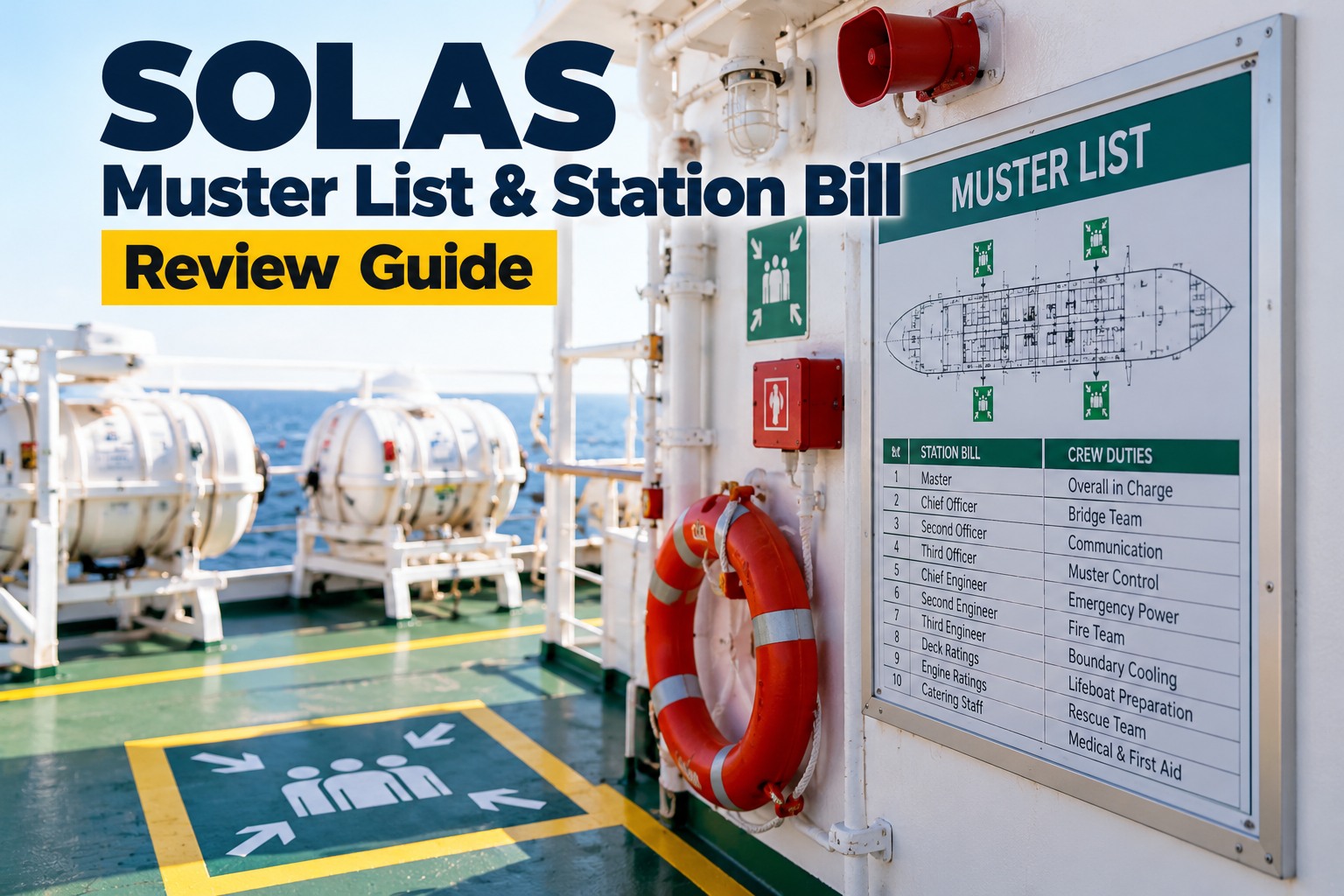
Most of what makes an abandon ship drill realistic happens before any boat moves. Use the muster list and check each person properly.
At the muster station
- Headcount against the muster list; missing persons reported to the bridge
- Each person knows their station, duty and boat
- Station officer in radio contact with the bridge
- Emergency lighting working on routes and at stations
Dress and donning check
- Warm clothing, long sleeves, hat and sturdy footwear
- Lifejacket fitted and secured, light and whistle in place
- Immersion suit carried or donned, as the drill requires
- Rescue boat crew in their protective suits
Lifeboat preparation before launching
Preparation errors cause many lifeboat incidents. Work through the boat in a set order, following the maker’s instructions posted at the station. Our lifeboat inspection checklist covers routine condition checks.
Never miss a three-month launch
Track each boat’s last lowering, free-fall or simulated launch, and record why any launch was not possible.
Safe lifeboat launching and recovery
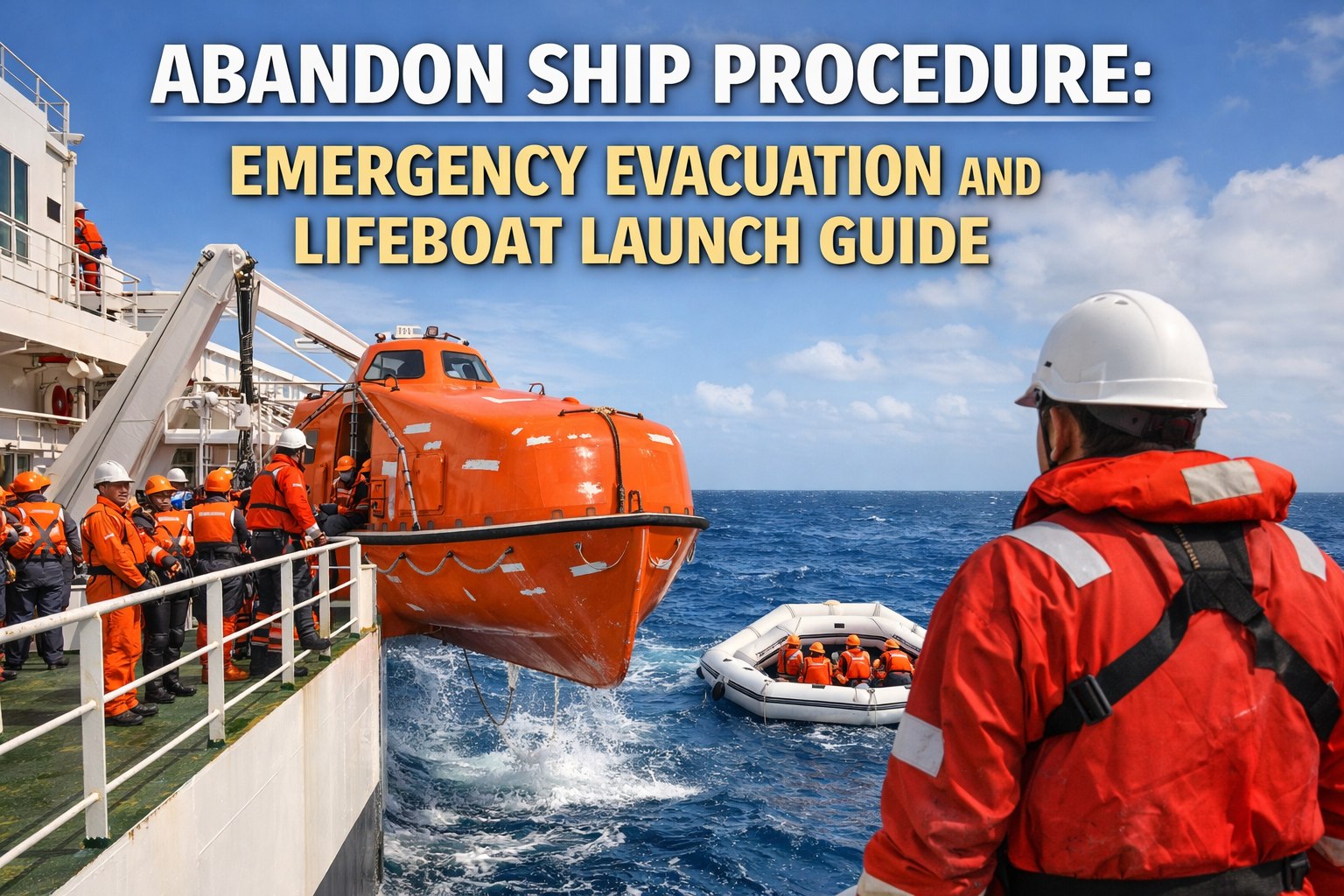
IMO’s guidelines on safety during abandon ship drills using lifeboats (MSC.1/Circ.1578) aim to stop people riding a boat while its release gear is under test. Liberia’s notice summarises the method.
Lower empty first
Lower an enclosed boat about 2–3 m without crew (open boats about 2 m), then raise it so the crew can board safely.
Minimum operating crew
Only the three or four people needed to release, operate and recover the boat go on board.
Experienced officer in charge
Supervises the drill and keeps communication with the boat crew throughout.
Manoeuvre in the water
Once waterborne, run the engine ahead and astern and manoeuvre the boat.
Recover with care
Re-engage hooks fully and confirm locking before hoisting; keep hoisted people to a minimum.
Stay alert when stowed
A boat back on its ramp but not yet locked can still move. Use fall protection at open doors and edges.
The Nautical Institute’s Mariners’ Alerting and Reporting Scheme describes a fatal fall when a recovered lifeboat’s hook released during reset on its ramp.
Free-fall lifeboat drills
Release gear and davit servicing
Since 1 January 2020, IMO resolution MSC.402(96) has set who may examine and service lifeboats, launching appliances and release gear.
Abandon ship drill records
Drill dates are recorded in the log book. If weather, port rules or safety prevent a lowering or launch, the log must state the circumstances, what was done and why, and the launch must be made up at the next safe chance.
Example entry, illustrative.
Abandon ship drill checklist
Use this for each abandon ship drill.
How Marine Inspection tracks abandon ship drills
Marine Inspection records each drill, tracks the three-month and six-month launch clocks per boat, and links release gear servicing. It sits within our crew safety inspection module. The board below is illustrative.
Abandon ship drill FAQs
How often must an abandon ship drill be held?
Every crew member takes part at least monthly. Passenger ships hold one weekly, and a drill is needed within 24 hours of sailing if over 25% of crew missed last month’s drills.
How often must lifeboats be launched?
Each lifeboat is lowered and manoeuvred in the water at least every three months. Free-fall boats are launched by free fall or simulated launch at least every six months.
Must crew be in the boat when it is lowered?
No. Guidance is to lower the boat a short way empty first, then let the minimum operating crew board, keeping people out of a boat under release gear testing.
Who services lifeboat release gear?
Crew do weekly and monthly checks. Annual thorough examinations and five-yearly overhauls are done by authorised service providers under MSC.402(96).
What if the boat cannot be launched?
Record the circumstances, what was done and why in the log, and complete the launch at the next safe opportunity.
Can Marine Inspection track lifeboat launches?
Yes. Book a demo to see launch clocks and drill records per boat.
Muster fast, launch safe, recover safer
Realistic drills, careful boat handling and records that show every launch, on time.