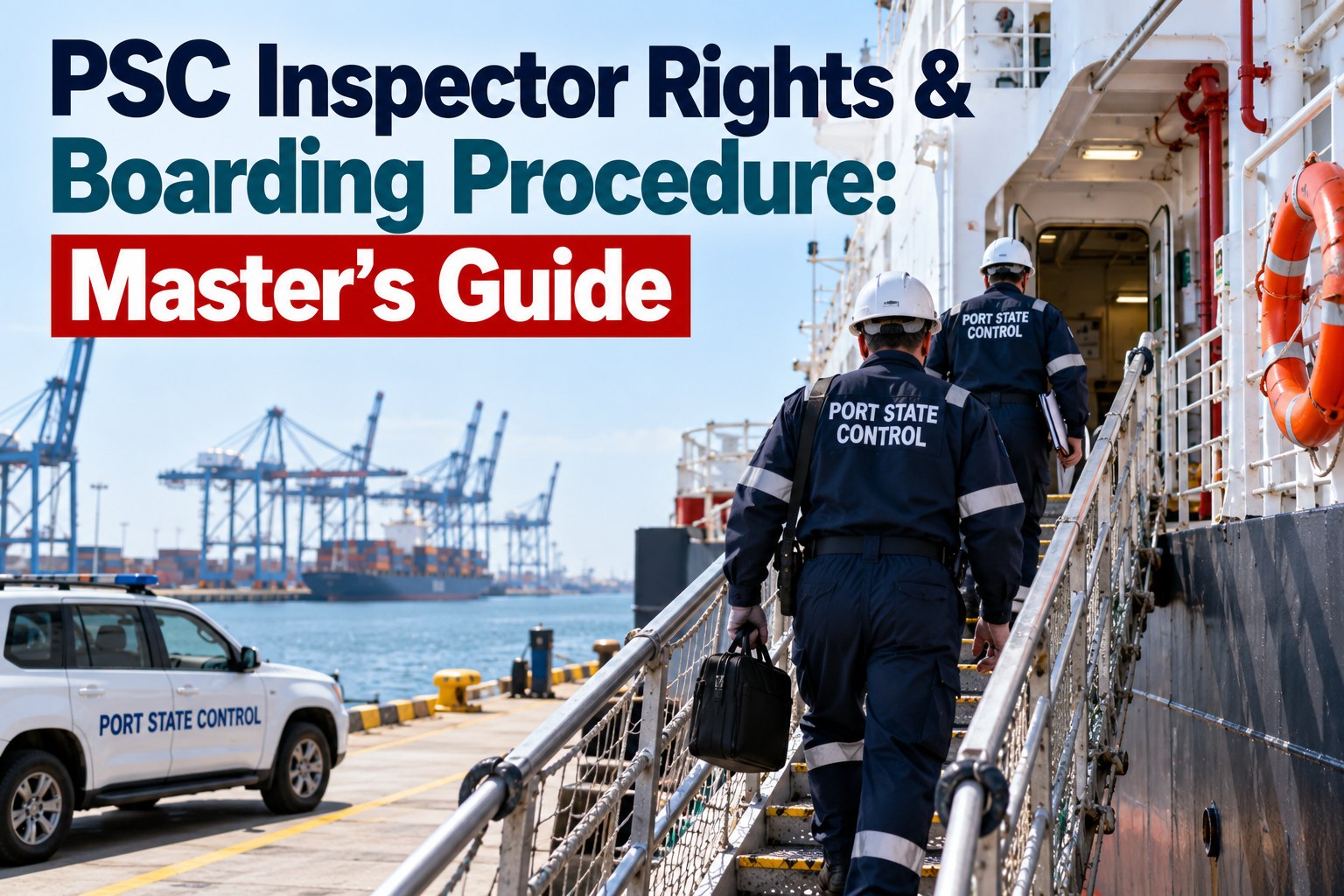
A port State control officer has wide authority to board, inspect and detain, but that authority has limits, and the master has rights too. This guide covers the inspector’s authority, what turns a short visit into a more detailed inspection, and the conduct each side can expect. Book a demo to prepare ships for every boarding.
PSC inspector rights and boarding procedure: what the officer may do, and what you may ask
Authority on one side, rights on the other, and a written report at the end.
The inspector may
Board and inspect in port Check certificates and records Ask crew to demonstrate Expand the inspection on clear grounds Detain an unsafe shipThe master may
See the officer’s ID Know why the ship is inspected Get findings explained, in writing Contact flag, class and company Complain and appealWhere the PSC inspector’s authority comes from
Port State control rests on the IMO conventions themselves, such as SOLAS, MARPOL, Load Lines, STCW and the MLC, which let a port State inspect foreign ships in its ports. IMO’s Procedures for Port State Control guide how officers apply that power; the 2023 edition, A.1185(33), was revised again by A.1206(34) in December 2025, which brings ISPS security checks into the same inspection. Regional MoUs add their own procedures. Try the platform free.
PSC boarding procedure: what happens, step by step
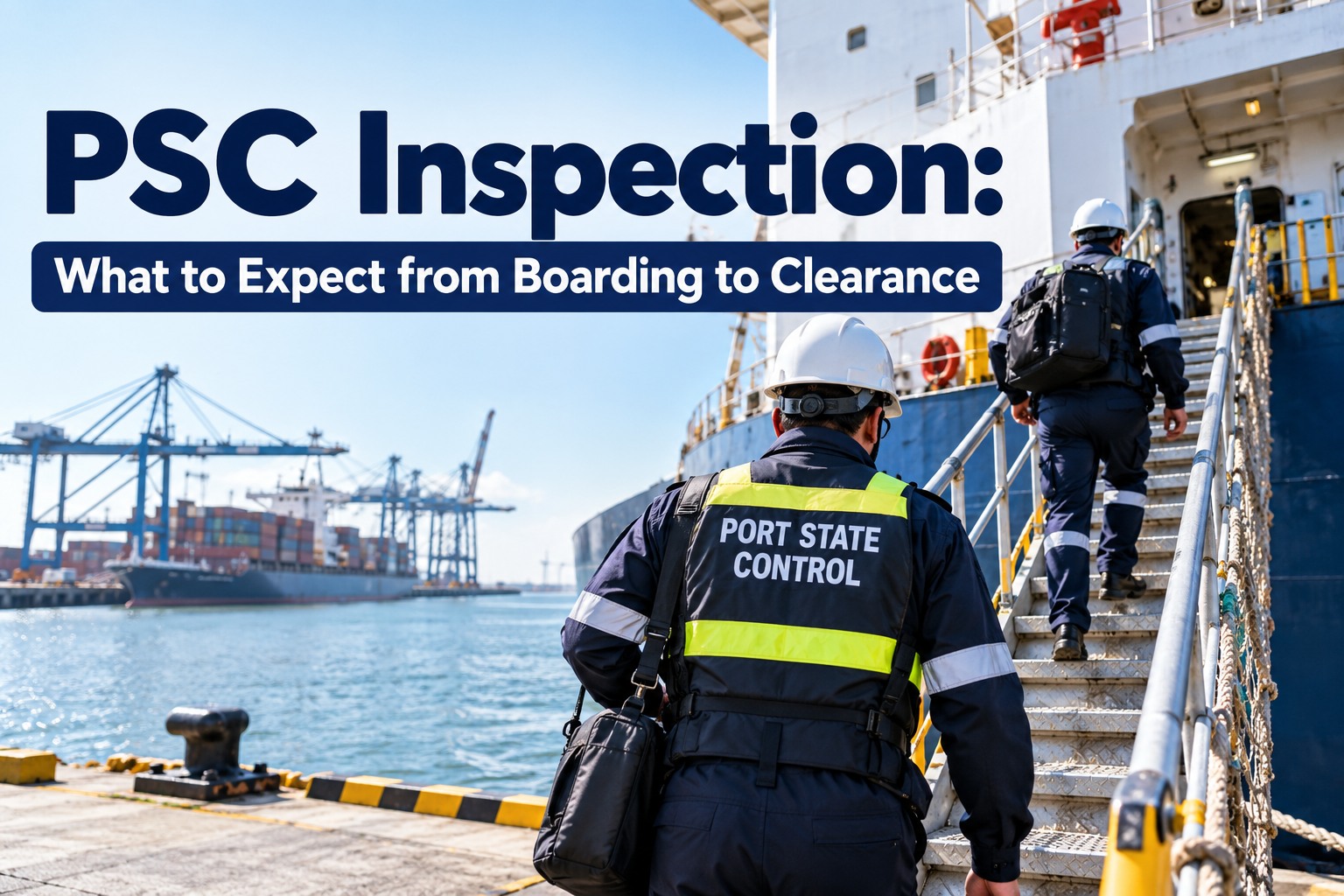
Most inspections follow the same order. For the full sequence through to clearance, see what to expect from boarding to clearance.
PSC clear grounds: what triggers a more detailed inspection
An initial inspection becomes a more detailed one only when the officer has clear grounds to believe the ship, its equipment or its crew do not meet the conventions. The examples below are the kind listed in IMO procedures, in plain words.
The officer does not have to reveal who made a complaint. Expanded inspections in some MoUs are risk-based and do not need clear grounds; see our guide to how inspections get triggered.
Give the inspector no clear grounds
Current certificates, closed findings and drilled crew keep an initial inspection short. Track all three per ship.
The master’s rights during a PSC visit
The Paris MoU’s Code of Good Practice for officers sets out what the master can expect. Similar codes apply in other MoUs.
IMO procedures also say port States should make every effort to avoid unduly detaining or delaying a ship, and a ship unduly detained or delayed should be entitled to compensation for loss or damage.
PSC conduct during the visit: what each side should expect
Inspections go best when both sides follow the same simple rules.
The inspector should
The ship should
If you disagree with a PSC finding or detention
Disagree at the right time, in the right way. Our guide on challenging an unjust detention covers the appeal route in detail.
PSC visit checklist for masters
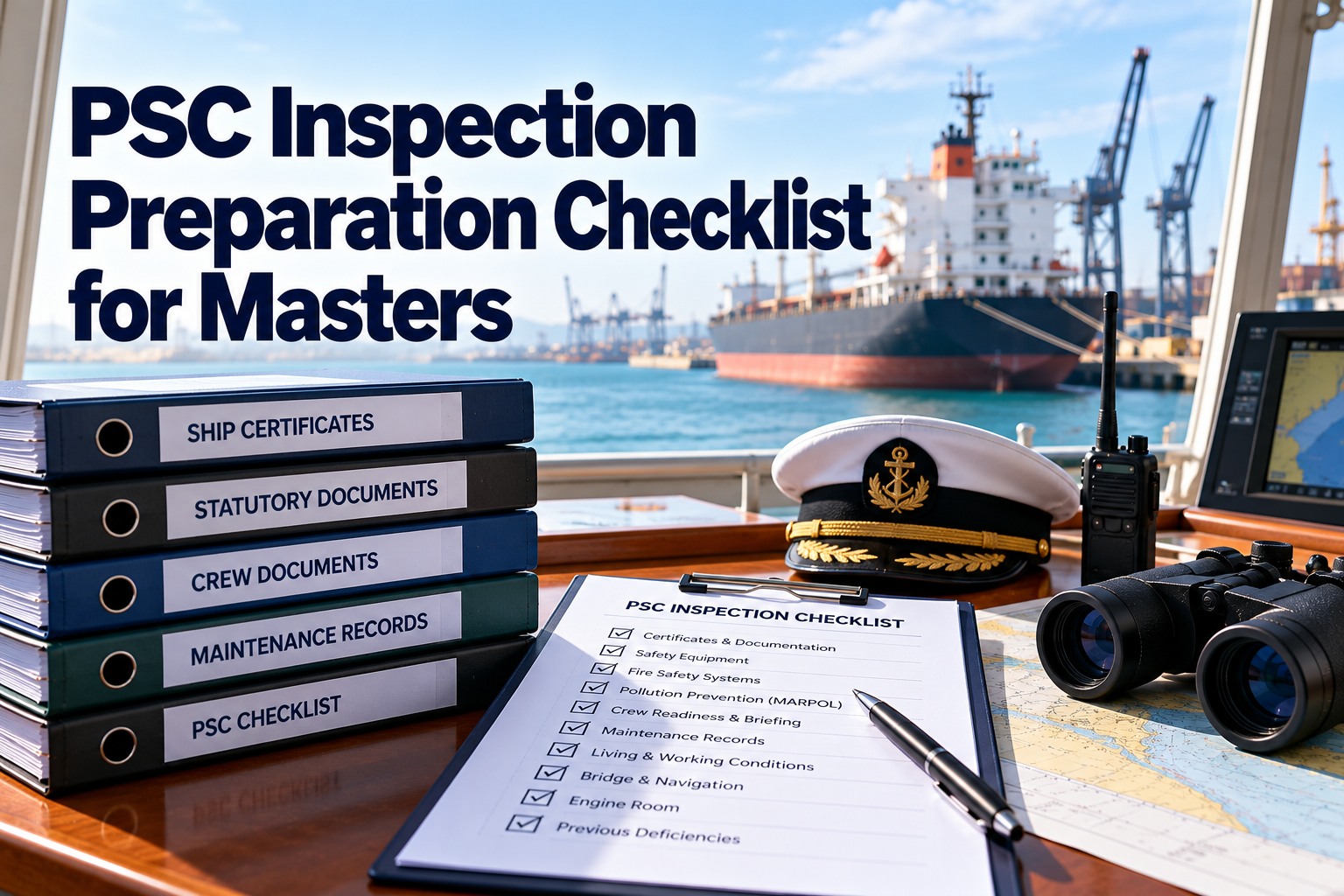
Use this before arrival and during the visit. Our PSC preparation guide covers the technical checks.
How Marine Inspection prepares ships for PSC boarding
Marine Inspection keeps the evidence an inspector looks for ready on every ship: certificates with expiry alerts, closed findings with proof, drill records and pre-arrival self-inspections. The panel below is an illustrative readiness view.
PSC inspector rights FAQs
Can a PSC officer board without notice?
Yes. Port States may inspect foreign ships in their ports under the conventions, and an inspection does not need advance notice to the ship.
What are clear grounds in port State control?
Evidence that the ship, equipment or crew do not meet the conventions, such as invalid certificates, missing equipment, poor condition or crew unable to carry out essential operations. They allow a more detailed inspection.
Must the inspector show identification?
Yes. Under the Paris MoU Code of Good Practice, the officer presents an ID card to the master or owner’s representative at the start of the inspection.
Can the master refuse a PSC inspection?
No. Obstructing an authorised inspection can lead to detention and penalties. The master can ask for the reason, see ID and record disagreements.
What can the master do if he disagrees with a detention?
Raise it at the closing meeting, involve flag and class, use the complaint or MoU review route, and the port State’s formal appeal within its time limits.
Can Marine Inspection help prepare for PSC?
Yes. Book a demo to see boarding readiness tracked per ship.
Know the rules on both sides of the gangway
A prepared ship and a master who knows the procedure turn a PSC visit into a short, professional meeting.